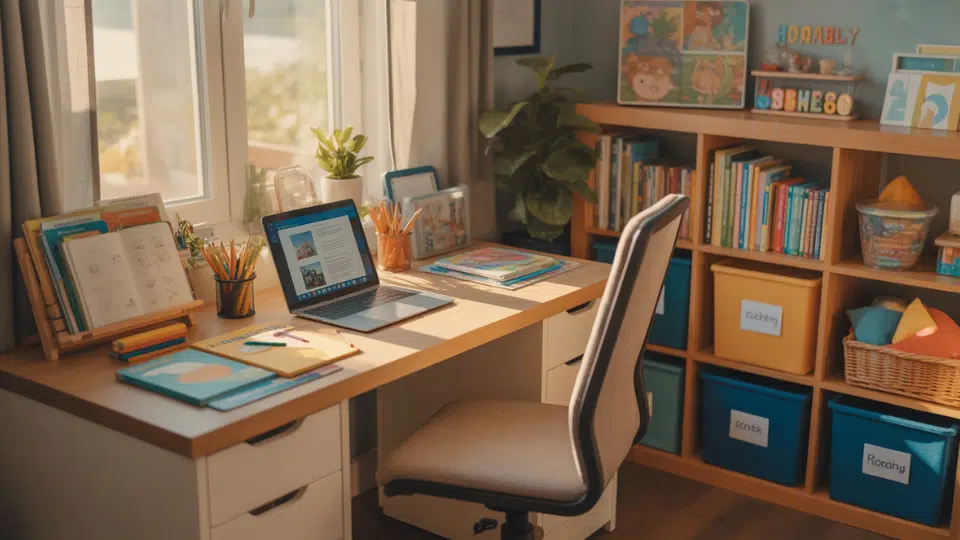
Are you homeschooling from your kitchen table, thinking why focus feels impossible? Or maybe you’re staring at a spare corner, thinking it could never become a real homeschool room idea worth trying? I’ve been there.
The chaos of scattered supplies and constant distractions makes teaching harder than it needs to be. But here’s the good news: converting any space into an effective homeschool setup is simpler than you think.
I’ll walk you through why dedicated spaces matter, practical setup steps that actually work, and DIY homeschool room ideas for every budget and style. Also crucial consideration before you start building your ideal learning environment.
The Link Between Space and Learning Progress
Homeschooling is an educational approach in which parents or guardians take primary responsibility for teaching their children at home rather than enrolling them in a traditional school.
Families choose homeschooling for many reasons, such as flexible learning styles, personalized curriculum, safety, travel, lifestyle freedom, or the desire for a slower and more intentional pace of education.
It helps children distinguish study from play, boosting focus and reducing distractions. A well-designed homeschool room also simplifies organizing books, supplies, and curriculum, enabling smooth lessons.
If you have a whole spare room or a small corner, the correct setup supports consistent learning and helps the entire household stay more organized.
Creative Homeschool Room Ideas
Looking for creative homeschool room ideas that balance style, function, and budget. These setups blend full room inspiration with easy DIY projects parents can recreate.
Note: All measurements and costs mentioned here are estimated and may vary based on location, retailer, material quality, and individual project requirements. Always verify before purchasing.
1. Small-Space Homeschool Nook with DIY Closet Desk
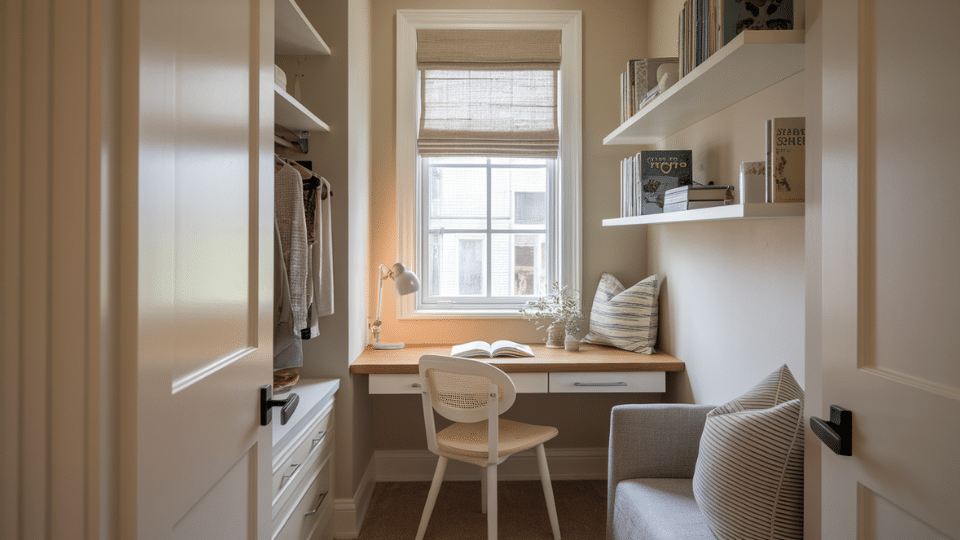
A tiny closet can become a homeschool nook with a DIY desk and good lighting. Add floating shelves to keep books off the table, ideal for small homes.
Install the desk at 28-30 inches for elementary students. Use LED lighting (450+ lumens) to cut eye strain. Budget $75-150 for materials, including mounting brackets and a desktop. Installation takes 3-4 hours.
- Shelf spacing: Position shelves 12-14 inches apart for optimal textbook storage
- Best age range: Works effectively for children ages 6-12 on focused subjects
- Required tools: Basic drill, level, stud finder, and measuring tape are needed
2. Minimalist Scandinavian-Style Room with Simple DIY Wall Shelves
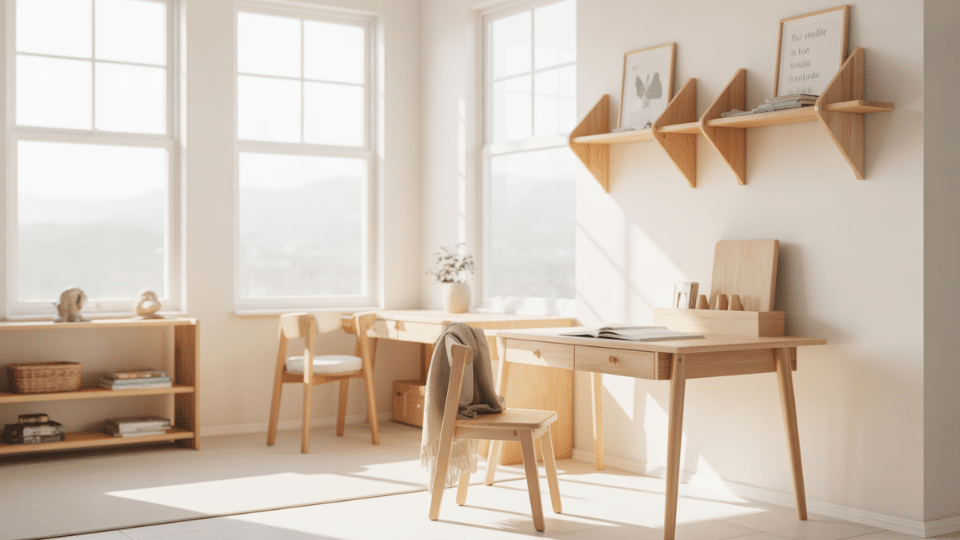
Use white or light oak finishes to maximize natural light reflection. Mount shelves at varying heights between 36-60 inches for visual interest. The minimalist approach reduces distractions, improving concentration for children with attention challenges or sensory sensitivities.
- Color palette: Stick to whites, light grays, and natural wood tones throughout
- Materials cost: Budget $100-200 for pine boards, brackets, and non-toxic finishes
- Maintenance benefit: Simple surfaces make daily cleaning take just 5-10 minutes
3. Montessori-Inspired Space with DIY Toy Rotation Bins
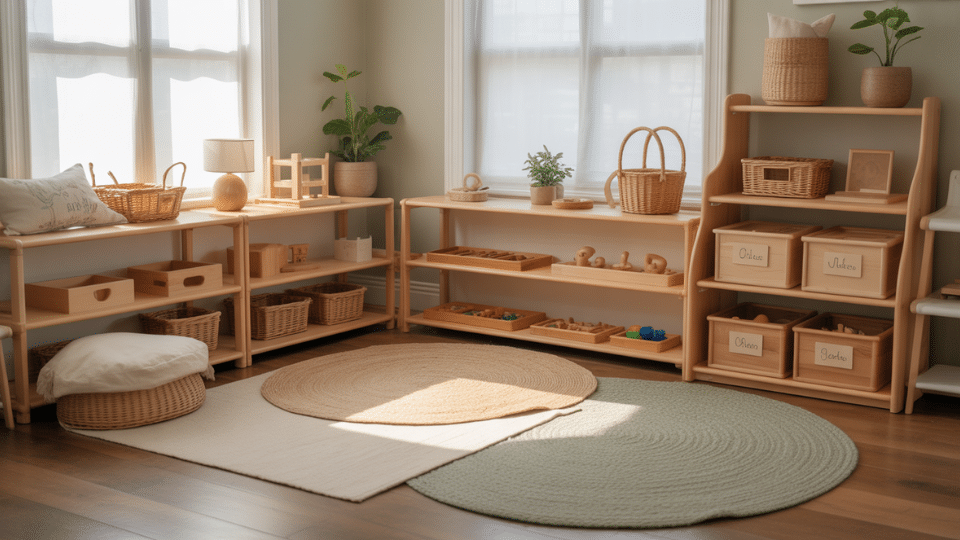
A Montessori layout keeps everything at child’s height, fostering independence. DIY rotation bins manage clutter and refresh activities. Add low tables and soft rugs for a peaceful space.
Position materials 18-36 inches high for children aged 2-8 to access easily. Rotate bins weekly with 4-6 activities visible to keep children engaged. Use natural materials like wood and fabric for a calming atmosphere.
- Bin labeling: Use picture labels for pre-readers, word labels for readers
- Table height: Choose 18-20 inch tables for toddlers, 22-24 inch tables for elementary
- Safety consideration: Ensure all bins have rounded edges and weigh under 5 pounds
4. STEM-Focused Zone with a DIY Pegboard Tool Wall
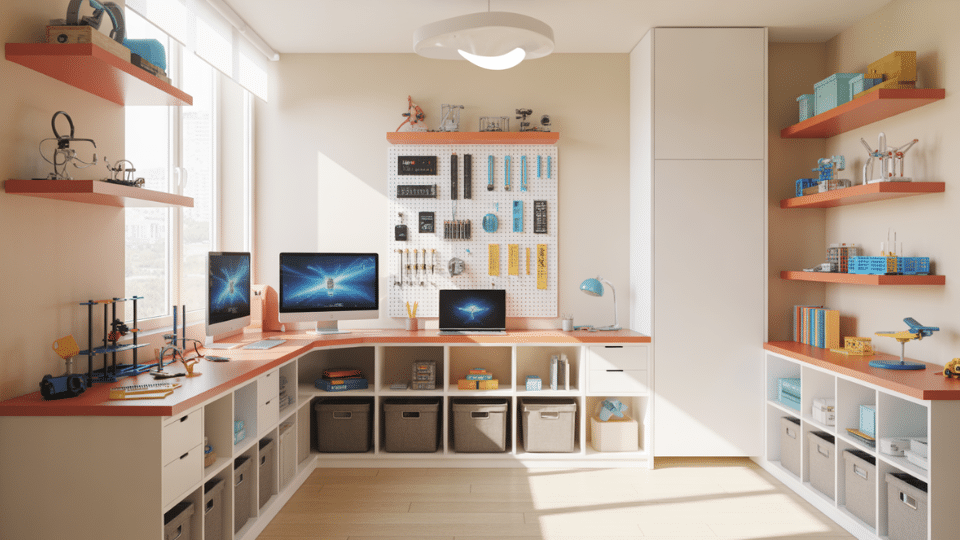
A STEM room benefits from adaptable storage like a DIY pegboard wall that holds robotics tools, science kits, headphones, and small parts, fostering active learning.
Install a 4×4-foot pegboard with labeled hooks and bins, 12 inches from the work surface. This flexible system suits everything from basic circuits to robotics.
- Weight capacity: Standard pegboard supports up to 50 pounds with proper anchors
- Hook variety: Stock 15-20 different hook types for tools and supplies
- Setup cost: Complete pegboard system costs $40-80, including board and accessories
5. Colorful Art-Heavy Room with a DIY Chalkboard Wall
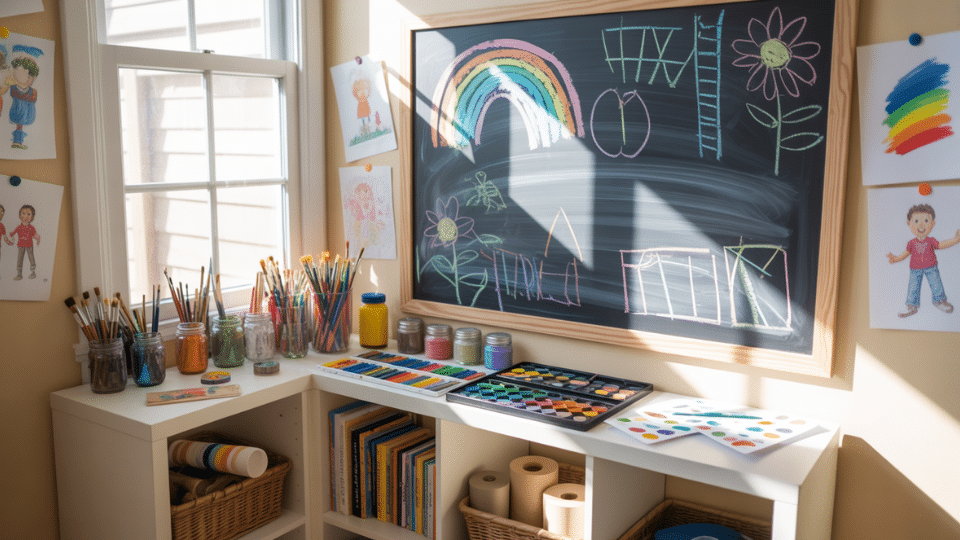
This idea energizes the room with colors, art supplies, and tools. A DIY chalkboard wall provides kids a space to draw, brainstorm, and practice handwriting. Open shelving for paints and paper fosters daily creativity.
Apply two coats of chalkboard paint to a 4×6-foot wall section, allowing 4 hours drying time between coats. Position the surface 24-30 inches from the floor for younger children. Install a ledge below for chalk and erasers.
- Paint coverage: One quart covers 40-50 square feet; costs approximately $15-25
- Dust management: Use dustless chalk to reduce cleanup and prevent irritation
- Magnetic option: Consider magnetic chalkboard paint for added functionality and versatility
6. Budget-Friendly Room Using Dollar-Store Organizers
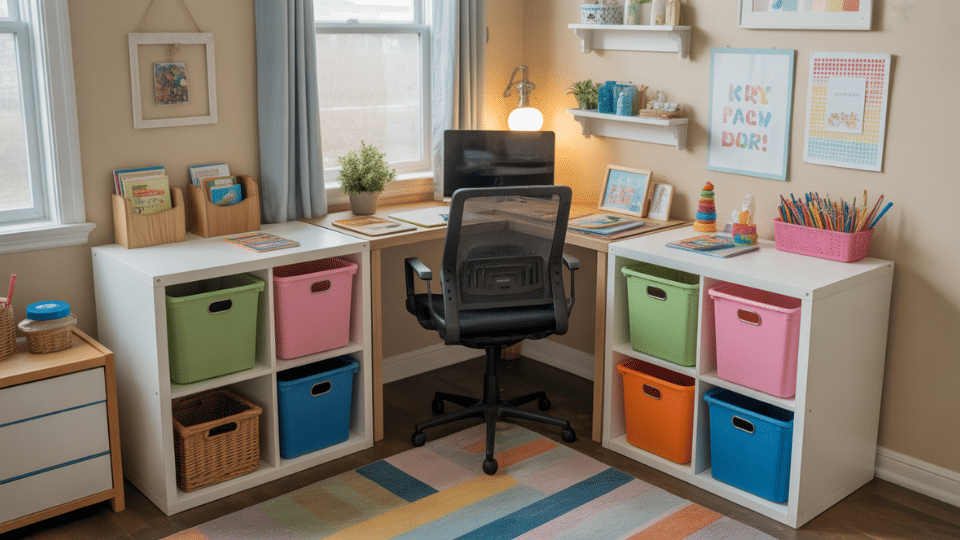
You can build a functional homeschool room on a small budget using dollar-store bins, file holders, and caddies to organize supplies. Add a folding table and stackable cubbies for affordability.
Combine dollar-store items with thrifted or Facebook Marketplace furniture to create an elementary learning space for under $150. Spend on ergonomic seating while saving on storage and decor.
- Shopping strategy: Visit dollar stores monthly as inventory rotates with seasonal products
- Durability check: Test bin hinges and handles before purchasing for longevity
- Space efficiency: Use vertical stackable options to maximize 100-square-foot areas effectively
7. Farmhouse-Inspired Homeschool Room
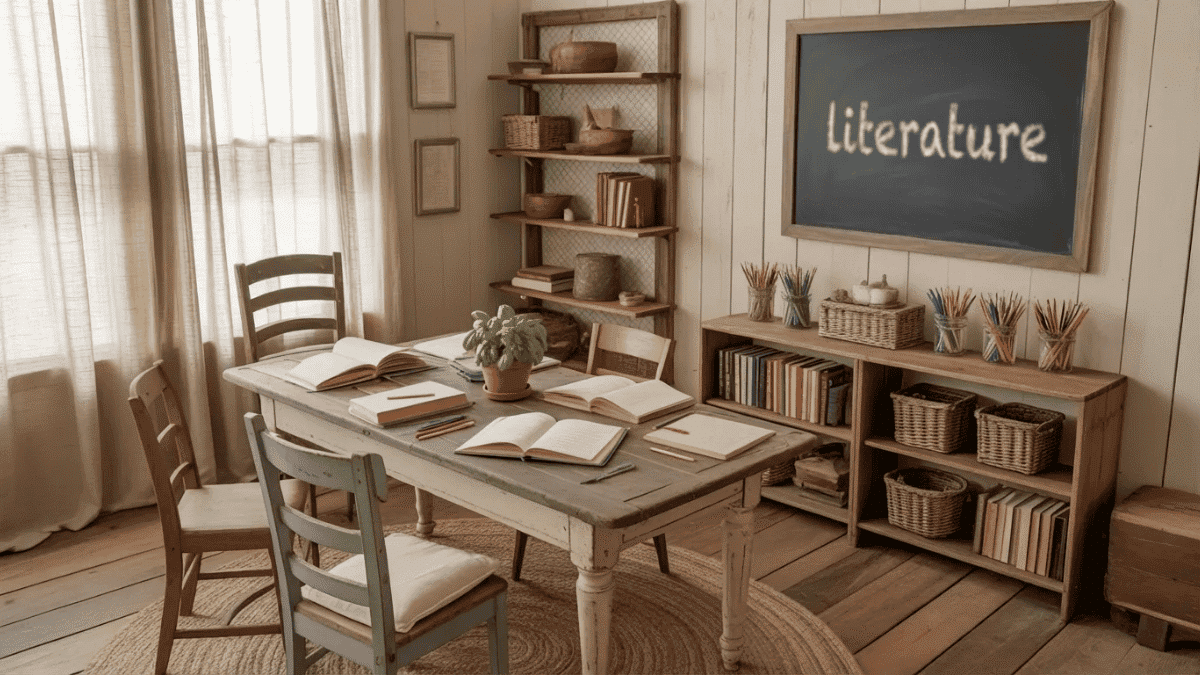
Farmhouse style brings country charm indoors with chunky tables, barnwood shelves, and cast-iron details that seem timeless.
Use a sturdy oak or pine table as the centerpiece, add a bench, stack crates as cubbies, line shelves with burlap baskets, and hang chicken wire to display work, charming and affordable.
- Paint selection: Chalk paint in muted, earthy tones, cream, sage, or warm grey, works beautifully on raw or reclaimed wood with no primer needed
- Sourcing furniture: Farm auctions, salvage yards, and Facebook Marketplace are goldmines for solid farm tables and barn wood pieces under $80
- Time commitment: Expect 6–8 hours per piece, including drying time between coats
8. Multi-Child Shared Space with DIY Table Dividers
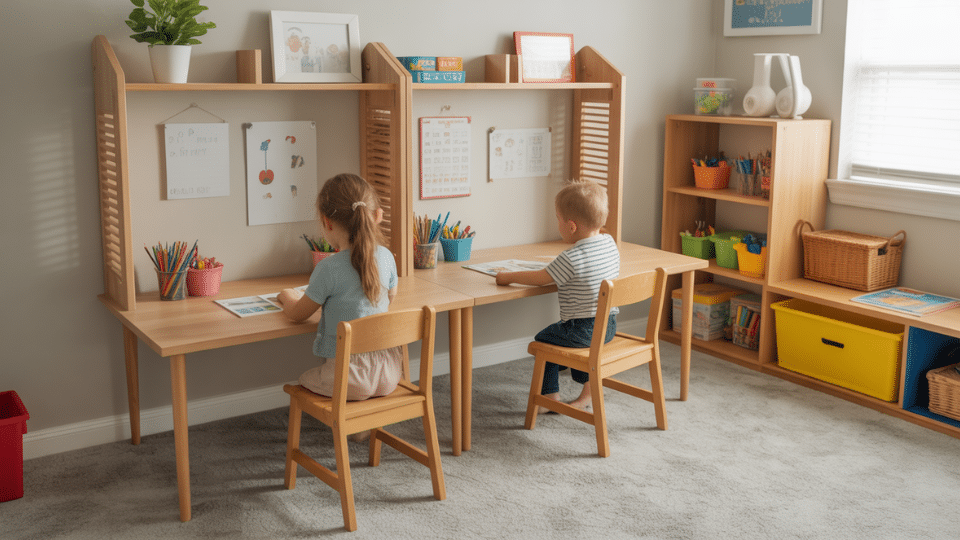
Shared rooms work best with clear zones. DIY dividers from wood or foam help children stay focused. Color-coding supplies prevents clutter.
Create 18-24 inch dividers from plywood or presentation boards. Position to reduce distractions and keep sight lines. Assign each child a unique color for folders and bins.
- Material costs: Foam core dividers cost $8-12 each; wooden versions cost $20-30
- Acoustic benefit: Fabric-wrapped dividers reduce noise transfer between workstations by 30%
- Flexibility factor: Use hinged panels that fold flat for collaborative group work
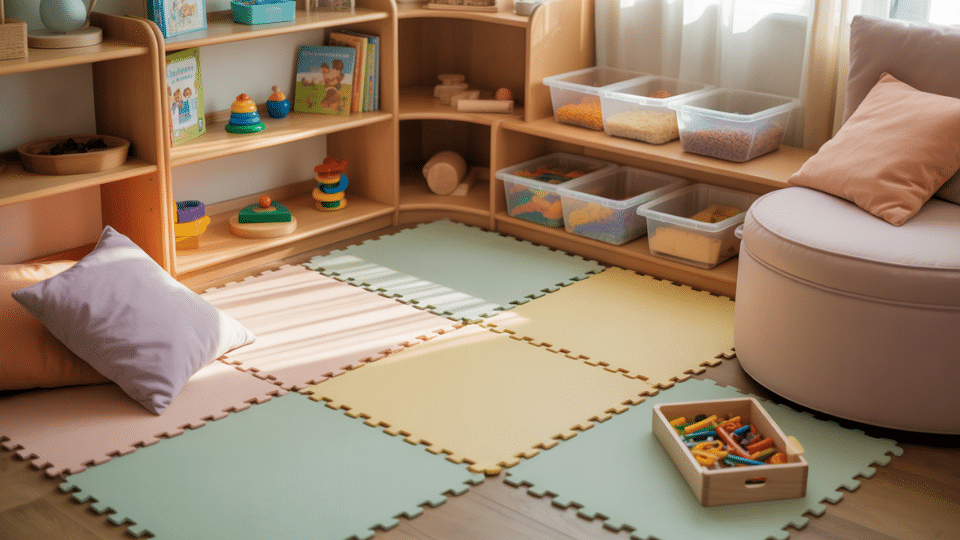
9. Toddler-Friendly Learning Corner with DIY Sensory Bins
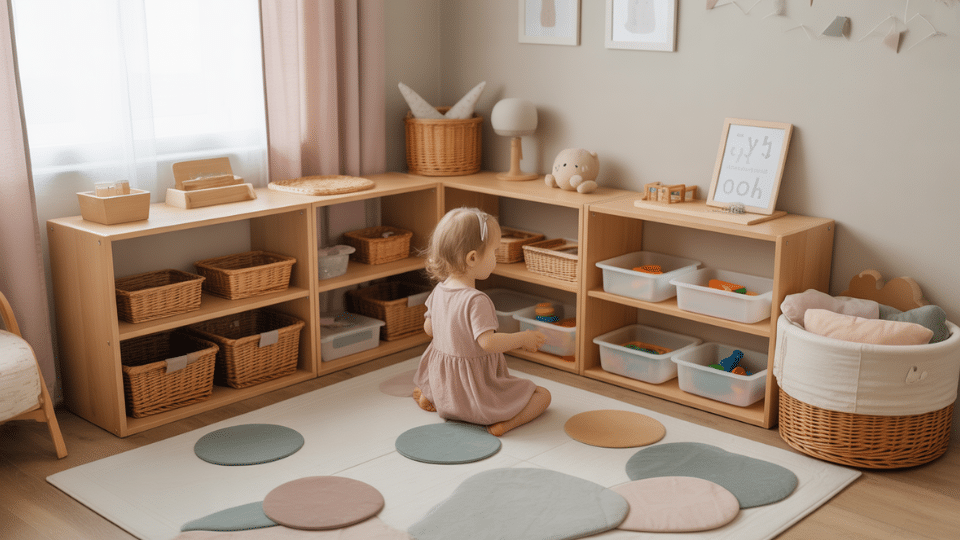
Toddlers learn through interactive experimentation with a simple corner featuring soft mats, low shelves, and DIY sensory bins to foster curiosity without overwhelming.
Use themed bins like water play, scooping, or textures for quick activity changes. Fill shallow bins with dried beans, rice, sand, or water beads. Supervise children under 3 during sensory play to prevent choking. Rotate contents every 3-5 days for variety.
- Mat selection: Use washable, 1-inch thick foam mats to cushion falls
- Bin quantity: Keep 3-4 bins prepared, but display only 1-2 for focus
- Cleanup system: Place a small broom and dustpan at toddler height for participation
10. Teen Study Room with DIY Floating Book Ledges
A teen-friendly homeschool room benefits from a more mature look. DIY floating book ledges create a clean, modern display for textbooks and decor. Add a supportive desk chair and task lighting for long study sessions.
Install 24-36 inch ledges using concealed brackets rated for 20+ pounds. Position the work surface at 28-30 inches with monitor screens at eye level to prevent neck strain. Invest in an adjustable chair with lumbar support for extended use.
- Lighting standard: Provide 500-750 lumens at desk level for reading and computer use
- Ledge depth: Use 4-6-inch deep ledges to accommodate textbooks efficiently
- Cable management: Add adhesive clips under the desk to organize charging cords neatly
11. Nature-Themed Homeschool Room with DIY Botanical Decor
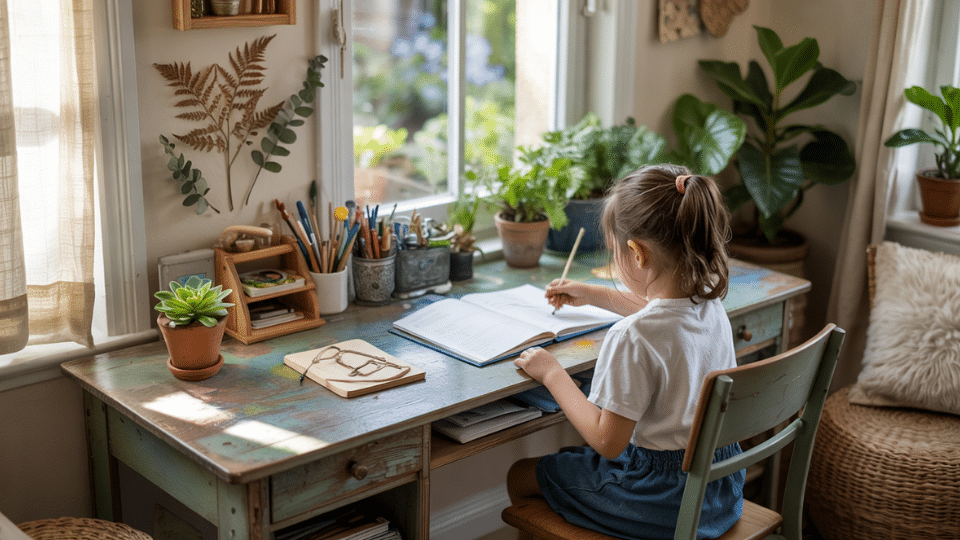
A nature-inspired design with greens, woods, and textures creates a peaceful space ideal for reading, writing, and science. Add DIY botanical prints or pressed leaves for a personal touch.
Gather leaves, flowers, or ferns, press for 2-3 weeks, then frame. Use earth tones like sage green, terracotta, and cream to reduce distraction. Nature themes boost focus and lower stress in educational areas.
- Preservation method: Press botanicals in parchment paper to prevent moisture damage
- Frame sourcing: Purchase budget frames at thrift stores for $2-5 each
- Plant additions: Include 2-3 low-maintenance plants like pothos for air quality
12. Boho-Chic Homeschool Room with DIY Macrame Wall Art
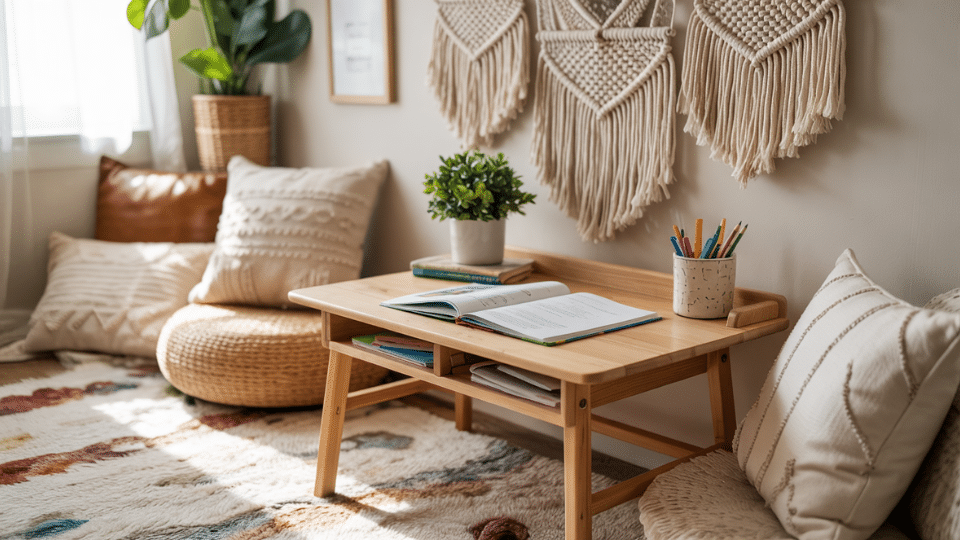
The boho look features warm colors, layered textures, and relaxed seating. DIY macrame or yarn wall art add character without high cost. Floor cushions or a soft rug invite reading and creative activities.
Create simple macrame wall hangings using 3mm cotton cord and dowel rods from craft stores, with projects taking 2-4 hours for beginners. Layer rugs and textiles in warm neutrals, burnt orange, and mustard yellow for visual warmth.
- Cord requirements: A 24-inch wall hanging needs approximately 150-200 feet of cord
- Seating options: Use 18-24 inch floor cushions with removable, washable covers
- Tutorial resources: Follow free YouTube macrame tutorials designed specifically for beginners
13. DIY Rolling Cart Station for Daily Supplies
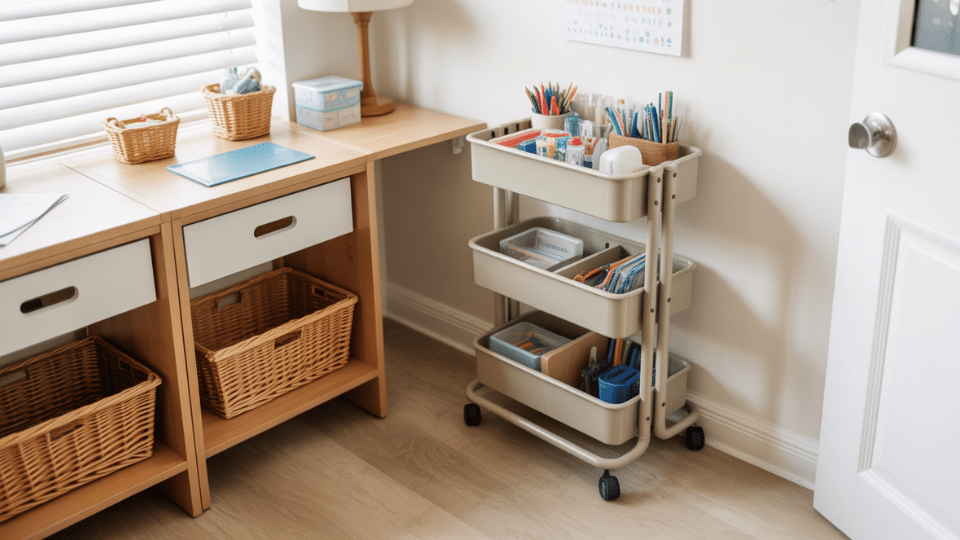
A rolling cart stores frequently used items and moves easily between rooms. Add cups for markers, trays for notebooks, and small baskets for manipulatives. It’s useful for families homeschooling in multiple areas.
Choose three-tier metal carts with locking wheels supporting 30+ pounds per shelf. Organize the top for current materials, the middle for weekly supplies, and the bottom for overflow. Ideal for families using kitchen tables or moving between spaces.
- Cart dimensions: Standard 15×30-inch carts fit through doorways and under tables
- Weight distribution: Place heavier items like textbooks on the bottom shelf to prevent tipping
- Cost comparison: Quality rolling carts range $25-60; avoid flimsy models under $20
14. Cork Pinboard Display Wall in Homeschool Room
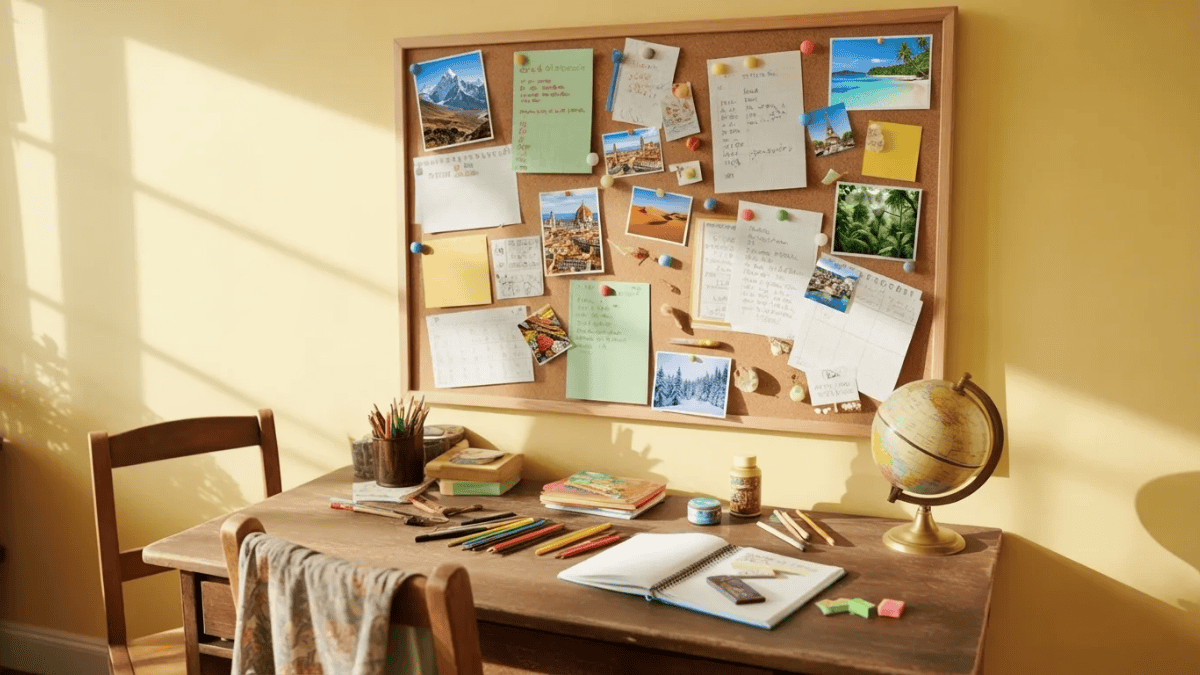
A cork pinboard simplifies displaying assignments and artwork in one lively spot. Pin up schedules, spelling lists, and drawings for a look that’s personal and ever-changing.
The display boosts kids’ pride and keeps loose papers off desks. Mount a large board or a grid of cork tiles using Command strips or small nails.
Position it at your child’s eye level, typically 40–48 inches from the floor for elementary ages. Rotate work weekly to keep it current without creating clutter.
- Board selection: Use thick cork tiles of at least ½ inch, they hold pins better and support heavier artwork
- Spacing guidelines: Leave 2–3 inches between tiles for easy pinning and removal
- Display rotation: Archive older pieces monthly in a memory box to prevent accumulation
15. DIY Repurposed Dresser for Books and Supplies
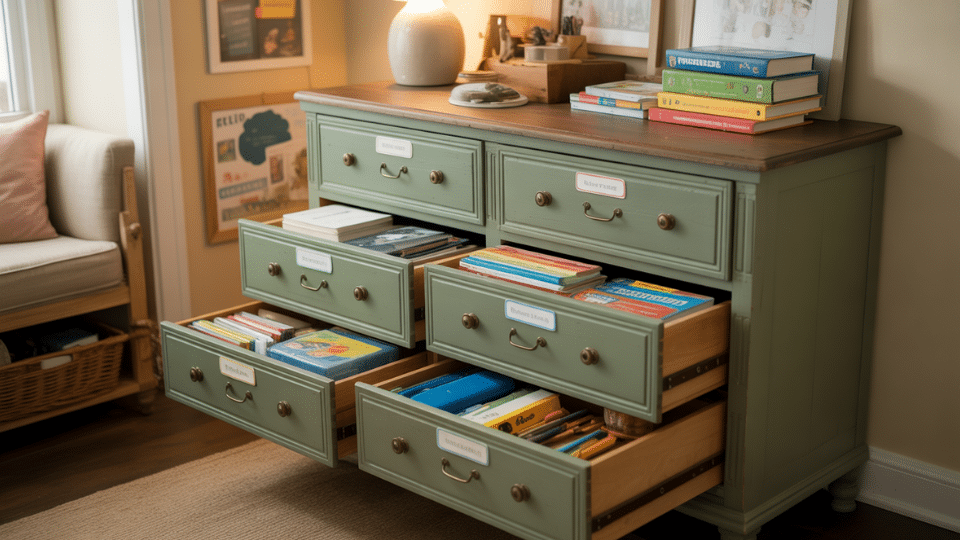
An old dresser can become a highly effective homeschool organizer. Deep drawers hold curriculum, binders, and craft supplies.
Repainting or adding new hardware turns it into a statement piece that anchors the room.
Remove one or two drawers to create open cubby spaces for frequently accessed items. Line drawers with shelf paper to protect painted interiors and make cleanup easier. A standard 6-drawer dresser provides storage equivalent to three medium bookcases.
- Drawer organization: Use plastic dividers or small boxes inside drawers to separate items
- Hardware upgrade: New drawer pulls cost $2-5 each and instantly modernize furniture
- Weight capacity: Solid wood dressers hold 40-50 pounds per drawer when reinforced
16. Small Room with DIY Vertical Storage Solutions
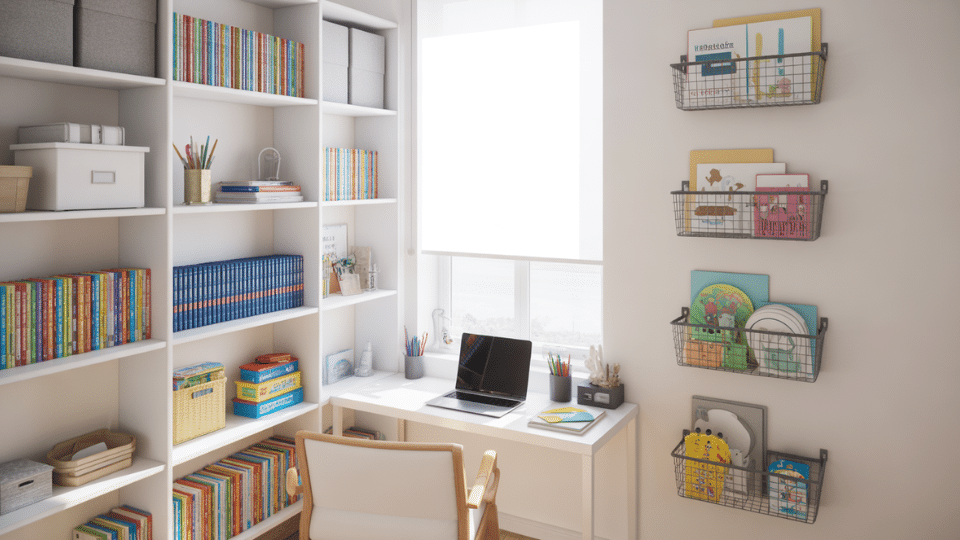
When space is limited, vertical storage becomes essential. DIY tall shelving, hanging baskets, or wall-mounted rails increase storage without cluttering the floor. This approach keeps everything visible and within reach.
Install floor-to-ceiling shelving units (72-84 inches tall) along one wall to maximize cubic footage in rooms under 120 square feet. Use the top 24 inches for rarely accessed items and keep daily materials between 30-60 inches from the floor.
- Shelf depth: Limit vertical shelving to 10-12 inches deep to prevent overwhelming spaces
- Hanging weight: Standard wall rails support 20-30 pounds when mounted into studs
- Visual trick: Paint vertical storage the same color as the walls to minimize clutter
17. Kids Art Zone with a DIY Craft Table
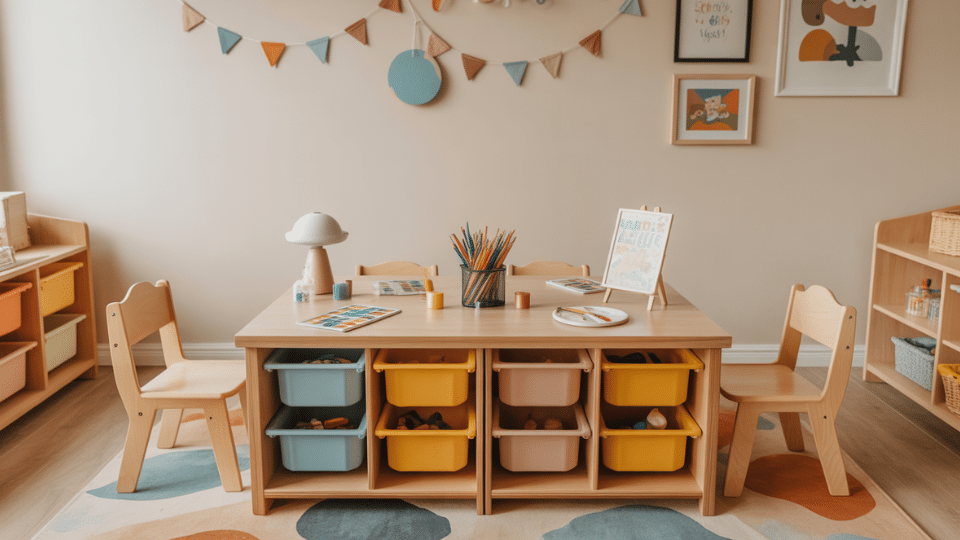
A craft table from plywood or Ikea hacks serves as a creative hub. Add bins for paper, paint, and glue. Organization promotes easier cleanup and fosters independent creativity.
Build a simple 3×4 foot table using ¾-inch plywood on sturdy legs, sealed with polyurethane for spill protection.
Set table height at 22-24 inches for ages 5-10. Create divided sections using small bins or a lazy Susan for shared supplies.
- Surface protection: Apply 2-3 coats of water-based polyurethane for a wipe-clean, stain-resistant finish
- Supply organization: Use clear plastic bins so children can identify contents easily
- Cleanup station: Position a table near a sink or keep a bucket with soapy water
18. DIY Homeschool Room Idea Using Upcycled Pieces
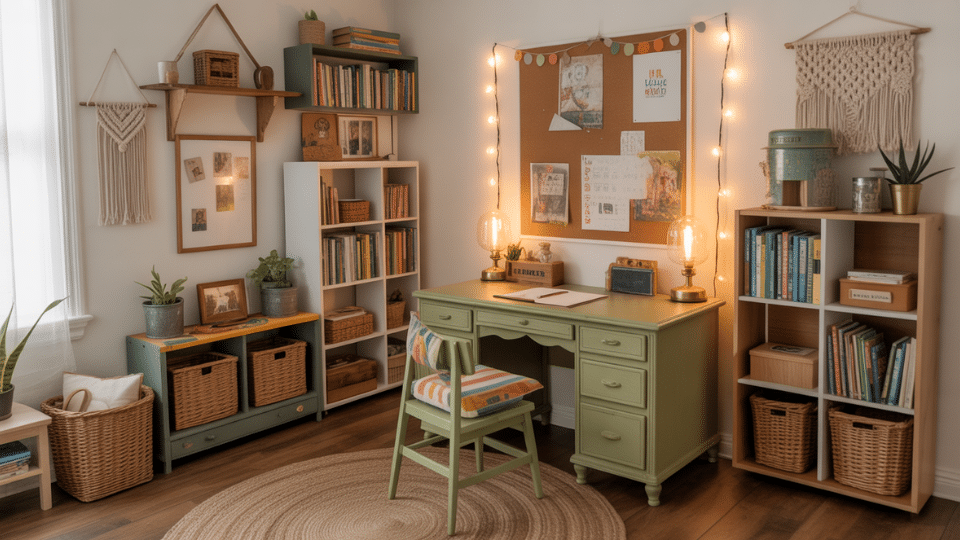
Thrifted furniture and a tin of paint can transform a plain room into a homeschool space kids actually want to sit in.
Pick up a solid wood desk and shelves secondhand, paint them in a cohesive palette, sage green, cream, or dusty blue, then add wicker baskets and fairy lights for personality on a budget.
Clean all pieces with a basic degreaser before painting, and decide on your colour scheme before shopping to keep everything cohesive. Take it one piece at a time to keep it manageable.
- Furniture sourcing: Weekday mornings at thrift stores get you first pick before the weekend crowd
- Project timeline: Allow 8–12 hours of work per weekend over 3–4 weekends
- Total investment: Complete room makeovers typically cost $200–400 versus $1,500+ buying new
Key Factors That Shape Your Homeschool Room
Before you buy a single bin or paint a wall, think through these five practical factors that impact how your homeschool room actually functions day-to-day.
- Your Budget Reality: Start with what you have and add slowly. List everything you already own before buying anything new.
- Multiple Kids: Use color-coded supplies and foam dividers to create personal zones. Assign each child a color and label everything accordingly.
- Room vs. No Room: A corner works just as well as a spare room. Pick one dedicated spot and commit to using it daily.
- Lighting: Place desks near windows and switch to warm-toned LED bulbs. Move the desk closest to a natural light source first.
- Growth & Flexibility: Choose adjustable chairs and modular shelves that grow with your child. Replace one fixed item with an adjustable alternative to get started.
Addressing these factors early saves time, money, and frustration down the road. A well-thought-out space makes daily learning smoother and more enjoyable for everyone involved.
How Your Homeschool Space Should Grow With Your Child
One thing experienced homeschool families do well is building spaces that evolve over time. A setup that works for a six-year-old will frustrate a twelve-year-old. Here is a rough guide to thinking about space by stage:
| Age (Stage) | Space Priority | What to Emphasize |
|---|---|---|
| Ages 2–5 (Early) | Safety, sensory exploration | Low shelves, soft mats, sensory bins, open floor space |
| Ages 6–9 (Elementary) | Organization, variety | Labeled bins, art zones, reading nooks, chalkboard walls |
| Ages 10–12 (Middle) | Focus, independence | Defined desk space, STEM tools, personal storage |
| Ages 13+ (Teen) | Autonomy, professional feel | Ergonomic chair, task lighting, minimal visual clutter |
Invest in adjustable and modular pieces like height-adjustable desks, floating shelves, and repurposable storage bins. One thoughtful investment can serve your child across multiple stages of learning.
Bottom Line
Creating your homeschool room doesn’t require perfection or a big budget; it just needs intention. A full spare bedroom or a simple closet nook can both support meaningful learning when set up thoughtfully.
The homeschool room ideas I’ve shared here give you practical ways to choose the right zone, organize supplies efficiently, and see creative setups that match your family’s unique style.
From simple tweaks to full DIY homeschool ideas, there’s something for every home. Start small, adapt as you grow, and remember that consistency matters more than aesthetics.
Your ideal homeschool room is closer than you think, so pick one idea from this guide today and begin building a space where learning thrives!