
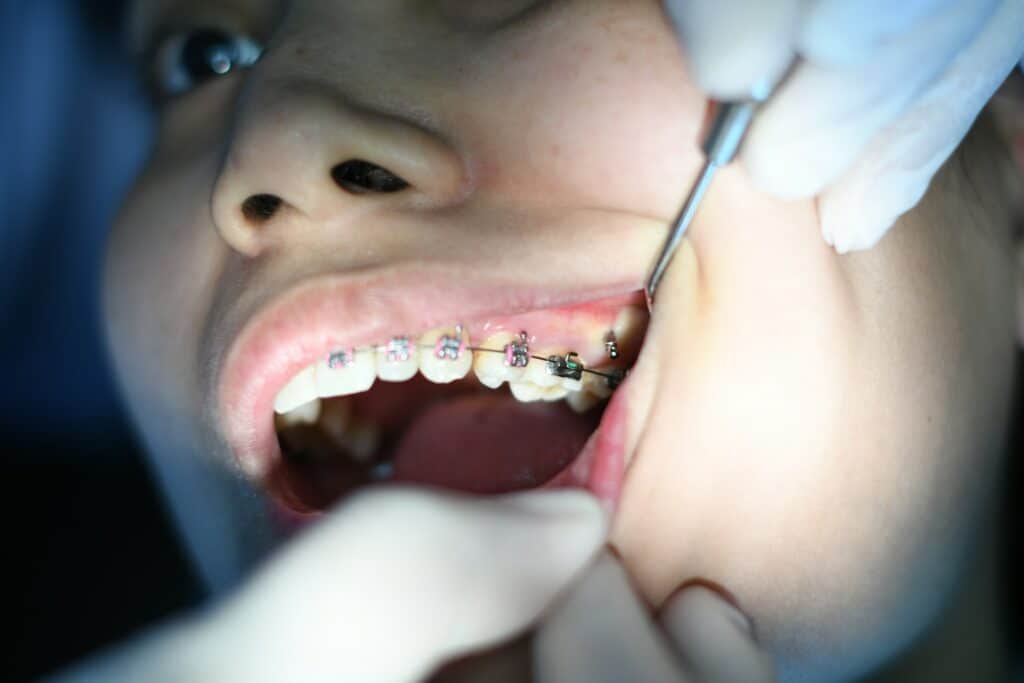
Most patients undergoing corrective orthodontics, such as braces or Invisalign, know very well that these sorts of treatments can cause discomfort during the day, whether it be while eating, talking, and simply just getting used to the pressure all come with a learning curve.
Now, what tends to catch people off guard is how noticeably uncomfortable braces or invisalign can become at night.
When the day winds down and you are trying to fall asleep, even the smallest irritation can feel like a prick in your back. Pressure, rubbing, or soreness that seemed manageable earlier in the day can suddenly become the only thing you can focus on.
The good news is that most of these issues come down to a few predictable issues. More importantly, we learned a few simple habits after speaking with Dr. Thomas Dobie, the owner of Dobie Revolution Orthodontics, that can make nights just a little bit easier.
Why Braces or Invisalign Can Feel Worse at Night
While frustrating, there is a good reason orthodontic discomfort tends to feel more intense when you are lying in bed.
During the day, your attention is split between work, school, conversations, and going through the motions. At night it’s different, as there are far fewer distractions as you head to bed and even small sources of irritation become much more noticeable.
There is also a natural adjustment period that plays a role, especially early in treatment. It is fairly common for the mouth to take a few weeks to adjust after getting braces and sometimes Invisalign.
That initial phase can include tenderness, pressure, morning jaw pain, and even minor irritation from brackets or aligners, all of which tend to stand out more at night.
The Bedtime Habits That Can Make Braces or Invisalign More Comfortable
The difference between a rough night and a manageable one almost always comes down to what you do before bed.
Use Orthodontic Wax Before Bed
If there is one spot in your mouth that keeps rubbing or catching, it will almost always feel worse when you are trying to sleep.
A simple fix here is applying orthodontic wax over the area before bed to reduce friction, and as Dr. Dobie noted, “If a certain area is bothersome, applying wax over the area can greatly prevent ulcers as well.”
This works by creating a barrier that can make a night-and-day difference overnight.
Add a Warm Salt Water Rinse to Your Night Routine
If your mouth feels irritated or sore, a warm salt water rinse can help calm things down before you lie down.
While it may seem simple, it can be quite effective, where Dr. Dobie recommends “A warm salt water rinse twice a day is also a great way to help the mouth heal faster.”
Adding this to your evening routine is a quick task that can reduce inflammation and make it a little easier to relax.
Don’t Ignore a Poking Wire
Some discomfort is normal, but a sharp or persistent irritation is not.
If a wire is actively poking or causing repeated irritation, it is unlikely to improve just by sleeping on it.
When it comes to a more serious issue such as this, Dr. Dobie stated that “Fixing a poking wire is the best way of helping with relief but in the meantime wax over that area can be a huge help.”
So, while there are some home remedies, the issue continues, it is better to address it directly instead of hoping it resolves on its own.
Poor Oral Care Habits Can Make Nights More Uncomfortable
What you do during the day can have a direct impact on how your mouth feels at night, with one of the biggest factors being how thoroughly you clean your teeth.
Rushing Through Flossing
A quick, rushed flossing routine often leaves behind debris and plaque that can lead to irritation later in the day.
Dr. Dobie noted that this is an issue he sees occasionally, stating “I think a lot of people floss incorrectly because they rush through it and don’t take the time to be meticulous.”
That irritation does not always show up immediately, but it can become more noticeable once you are trying to fall asleep.
Missing Key Areas in Your Mouth
Even people who floss regularly often miss important spots that can accrue plaque.
When it comes to the most common mistakes Dr. Dobie sees, “not flossing behind the last tooth in the mouth.” as one of the biggest offenders.
Incomplete cleaning can leave certain areas more sensitive or irritated, especially during orthodontic treatment when plaque buildup happens more easily.
The Right Tools Can Reduce Nighttime Irritation
Your routine is not just as much about the tools you are using as it is about consistency.
Replace Your Toothbrush More Often With Braces
Braces put extra strain on toothbrush bristles during brushing, causing them to wear out faster over time than patients might be used to.
“If you are going through orthodontic treatment with braces, it is advised to change it every 2 – 3 instead due to the added wear from brackets.” states Dr. Dobie.
Worn bristles are less effective, which can lead to more buildup and more irritation over time.
Stick With Soft Bristles Only
It might seem like brushing harder would be a good idea, but it usually does the opposite.
Dr. Dobie agreed on this point, explaining that “You should only be brushing with SOFT bristles so that you do not damage your gums and enamel.”
Aggressive brushing can increase sensitivity and make your mouth feel worse, especially at night.
When to Call Your Orthodontist Instead of Waiting It Out
While it is important to not “cry wolf” every time your braces or invisalign have the smallest issues, not every issue should be handled at home.
If irritation is not improving, or if it is getting worse, it is better to get it checked sooner rather than later.
“If wax and other at home remedies are not helping enough, it’s a good idea to reach out and be seen in the office at their earliest convenience” says Dr. Dobie, also adding that “waiting for their regularly scheduled appointment.”
Addressing small issues early can prevent several uncomfortable nights.
Small Changes Make a Big Difference at Night
Braces and Invisalign come with an adjustment period, and some discomfort is part of the process, but most nighttime issues are not one-off issues. These problems are usually tied to small, fixable habits.
A better evening routine, proper cleaning, and addressing irritation early can make a noticeable difference in how you feel when your head hits the pillow.
And when your mouth feels better, falling asleep becomes a lot easier.