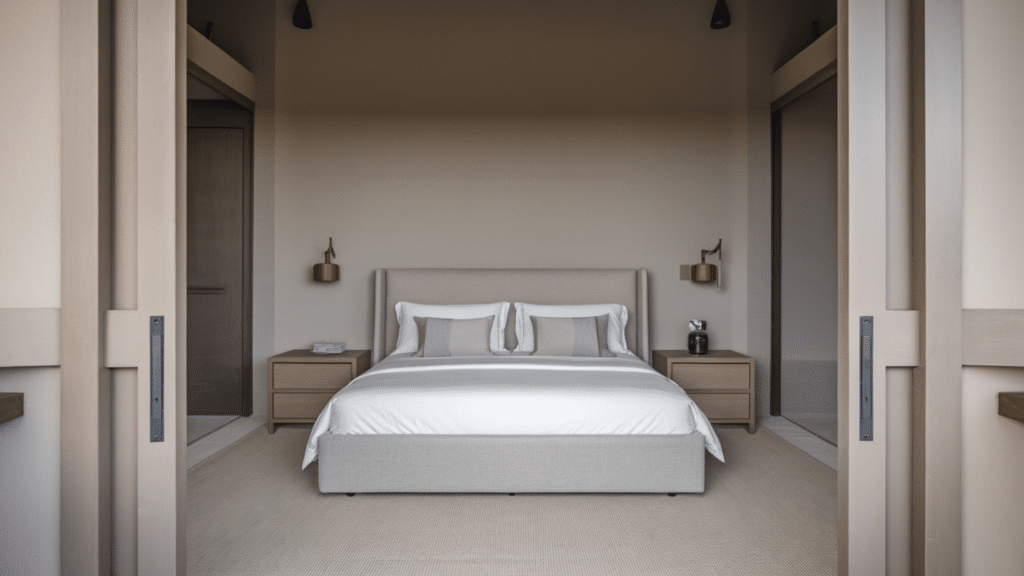


Creating a peaceful environment is the first step toward achieving the deep and restorative sleep your body deserves. When your bedroom feels cluttered or chaotic, your mind often follows suit, making it difficult to transition into a restful state at the end of a long day.
Simple changes to your daily habits can lower your stress levels and signal to your brain that it is time to unwind. By focusing on small and manageable adjustments to your surroundings, you can transform your home into a sanctuary that supports better health and consistent comfort.
Take a look at these surprisingly easy habits to help you reclaim your peace and enjoy a better night of rest starting today.
1. Build Your Cozy Decompression Zone
The brain loves a consistent cue. When you repeatedly sit in the same spot at the end of the day and associate it with rest, your brain starts to relax the moment you settle in. This is basic habit-loop science. A dedicated decompression zone does not need to be elaborate; it just needs to be distinctly yours.
Clear the visual clutter to create a corner that signals it is time to exhale. Include a warm lamp instead of overhead lighting and keep a soft throw blanket within arm’s reach. Most importantly, ensure no work materials are in sight.
Your seating choice plays a major role in how well you unwind. Anchoring your space with supportive seating creates a comfortable foundation for your evening. Choosing a reliable loveseat from Home Reserve provides a practical base, especially with features like washable covers, so you never hover anxiously over a mug of herbal tea.
2. Dim Declutter and Power Down
Your surroundings must transmit the correct signals before your body is able to reach a state of full relaxation. Melatonin, the hormone that triggers sleep, is suppressed by bright overhead lamps and the blue-spectrum light emitted from screens.
Research indicates that more than 60% of parents and 45% of children have a television located in their sleeping quarters. Over one-third of adults and children leave the television on as well.
Screen usage at night is a major hurdle to a truly calm evening. This environmental shift takes about ten minutes and easily runs on autopilot once established. Switch off the overhead lights and click on a warm lamp instead.
Leave your phone face down in another room entirely. Finally, do a 60-second visual sweep of your living space. This is not a deep clean; simply tuck away anything cluttering the coffee table or floor. Tossing surface clutter into an ottoman or under-seat compartment takes less than a minute, leaving the room feeling noticeably quieter.
3. Trade Screen Time for Tactile Hobbies

Photo from Thread & Maple
Swapping your phone for a hands-on activity is one of the most effective ways to lower your heart rate before bed. Engaging in a low-stakes hobby allows your mind to shift away from the day’s stresses and into a repetitive, meditative flow. Unlike the blue light of a tablet, a physical craft encourages your body to produce melatonin naturally.
Keep your supplies organized and accessible so there is no friction when you want to start. Having your favorite yarn and stitch markers from Thread & Maple tucked into a nearby basket makes it easy to choose a calming project over a digital distraction. This simple shift in focus prepares your brain for a deeper and more restorative night of sleep.
4. Do a Gentle Body Reset
A gentle body reset requires five minutes of slow, quiet movement designed to release tension, not build strength. Your body holds onto stress all day without you noticing, and this reset permits it to let that bracing go. No mat or gear is required; you can do these micro-movements right from your seat.
- Seated forward fold: Sit on the edge of your seat, hinge forward slowly from the hips, and let your arms hang loosely. Hold this position for five slow breaths.
- Slow neck roll: Drop one ear toward your shoulder, hold for a few seconds, then slowly roll to the opposite side in an unhurried motion.
- Chest opener: Clasp your hands behind your back, gently squeeze your shoulder blades together, and lift your chest slightly. Hold for three to five breaths.
Pair each movement with intentional breathing. A 4-7-8 pattern works beautifully by inhaling for four counts, holding for seven, and exhaling for eight. This activates the parasympathetic nervous system effectively. To deepen the sensory experience, utilize a lavender or eucalyptus diffuser nearby.
5. Do a Brief Tomorrow Prep
Many people lie awake staring at the ceiling because the brain is desperately trying to hold onto tomorrow’s unfinished tasks. This is not a malfunction; the brain is simply scanning for dropped responsibilities.
A brief, intentional prep session gives your mind permission to let go, knowing everything is safely recorded. Grab a small journal and quickly write down three specific categories.
- Three things that went okay today: They do not need to be perfect or grand, since small, ordinary victories count.
- Two things for tomorrow: Write down just the two most important tasks, rather than an overwhelming master list.
- One small joy: Note something highly specific, like the first sip of morning coffee or the way the evening light looked.
This micro-joys journaling is a low-effort entry point into mindfulness that does not require meditation experience. It simply asks you to acknowledge what was real and good today. Closing your notebook provides a definitive end to your waking hours.
Your Next Steps
You do not have to do all five rituals perfectly, nor do you need to follow them in exact order. You just need to start somewhere. Use this quick reference checklist to guide your evening.
Calm is not something that randomly happens to you; it is something you build quietly and consistently with small choices. You deserve an evening that feels like genuine rest, and tonight is the perfect time to begin. Start small, stay consistent, and watch how your evenings transform.