
If you feel more tired when you wake up than when you went to bed, you notice you are a bit more irritable than usual, or you have difficulty concentrating, the reason could be that you aren’t getting the kind of sleep you need to thrive. If so, you certainly aren’t alone.
Around one-third of all adults in the US do not get the recommended minimum of seven hours of sleep, and 20% report experiencing daytime sleepiness.
The good news is that by simply understanding what good sleep quality is, you can make a few small changes that will make a big difference in getting the rest you need.
What Is Good Quality Sleep?
The National Sleep Foundation notes that good-quality sleep involves falling asleep within half an hour of getting into bed, waking up no more than once during the night, feeling refreshed when you wake up, and being awake for no longer than 20 minutes after waking during the night.
That is, even if you are in bed for nine hours a night, frequent waking can disrupt the natural sleep cycle. For instance, you could miss out on deeper sleep and experience reduced REM sleep, which could lead to issues such as poor physical recovery and poorer memory, mood, and cognitive function.
So what exactly impacts the quality of sleep? The answer is that daily habits play a big role. Avoiding caffeine, screens, and stressful situations before bedtime can all help you fall asleep more quickly. However, the design of your bedroom also comes into play. For instance, choosing a quiet, cool, and completely dark place to sleep can greatly enhance your sleep quality.
Surrounding Yourself With Calming Visuals
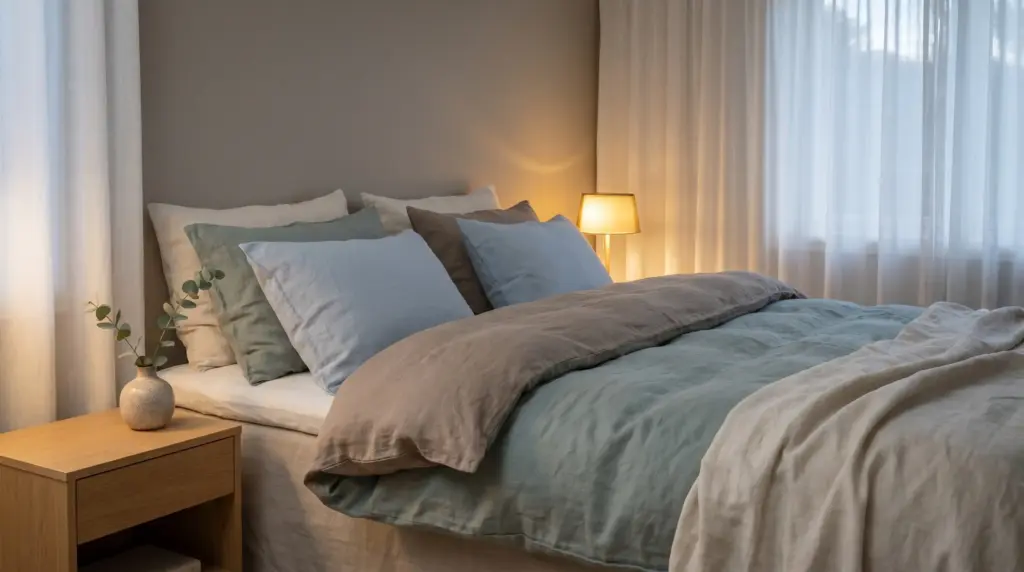
The key elements of optimal bedroom design include color and imagery. Research in environmental psychology and sleep science has shown that colors significantly influence relaxation, heart rate, and sleep quality. The color blue, for instance, is strongly linked to lower heart rate and blood pressure, as it is associated with the sky and the sea. Shades and hues matter, too.
For a calming bedroom, consider powder blue, sky blue, or muted navy. Another excellent choice is soft green, as it is associated with nature and helps lower stress. Shades such as sage green, pale olive, and mint are all on trend. A third choice is muted lavender, which combines the calming effect of blue with the subtle warmth of red.
Go for light, desaturated tones for optimal effect. Finally, warm, earthy neutrals (such as beige, taupe, and light gray) also have a powerful stress-relieving effect. In contrast, stimulating, energy-inducing colors include bright red, orange, and yellow, as well as high-contrast patterns.
Embracing Decorative Touches That Matter
Don’t just stick to paint; extend your chosen hues to decorative elements such as picture frames, cushions, and other small decorative pieces. The key is to embrace primarily monochrome looks rather than stark contrast. From a beautiful work of art hanging above your bed to a small decorative vase for an indoor plant, small touches can make a big difference in instilling a sense of peace and calm.
Of course, support these design choices with regular tidying up and cleaning. Researchers at the Princeton University Neuroscience Institute have found that clutter causes stress and cognitive overload, forcing your brain to work harder and reducing your ability to focus and process information. Untidy surroundings also increase the rate at which you feel mentally fatigued.
Introducing the Soft but Firm Touch
Ergonomics is key to getting a good night’s sleep. Ensure that the mattress you sleep on is just the right level of firmness for your sleeping position. For instance, those who sleep on their backs typically require firmer support, while those who sleep on their sides may benefit from a slightly softer mattress that allows their shoulders and hips to sink in just enough to keep their spine aligned. Finally, stomach sleepers often need a medium-to-firm surface to prevent their lower backs from arching excessively.
Good sleep quality isn’t just about sleeping for seven or more hours. It also involves falling asleep quickly and staying asleep without too many interruptions. To ensure you get the quality sleep you need, aim to use calming colors and imagery, and invest in a mattress that is just the right level of firmness for your unique needs.