

Do you know the exact width of a king-size bed and why it matters for your bedroom layout? Most people skip checking this crucial detail and end up regretting their purchase later when the bed arrives.
I want to help you make a smart decision by understanding these measurements before you spend your money.
Getting the right size means you can move freely in your room and enjoy your personal space comfortably. Different king variations come in different widths, so choosing the perfect one depends on your specific sleeping needs.
I believe knowing these dimensions helps you create a bedroom that feels spacious rather than cluttered every day.
The Basics of Bed Width and Room Planning
Bed width directly affects how much space you have left for moving around and placing other furniture. A wider bed leaves less room for nightstands, dressers, and comfortable walkways on each side of it.
Planners and designers always check width measurements first because they determine your entire bedroom layout and functionality.
Width impacts whether you can open closet doors, fit additional furniture, or walk freely without bumping into things.
You can visually estimate if a King bed will work by using painter’s tape on your floor. Outline the bed’s footprint with tape and walk around it to see how cramped or balanced it feels. If you’re constantly squeezing past the taped area, the bed is probably too wide for your space.
The Width of a King Size Bed: All Types
Knowing the exact width of a King bed helps you plan your bedroom layout and furniture placement effectively. Understanding different King variations ensures you choose the size that fits your room and sleeping needs best:
1. Standard King Size Bed Width
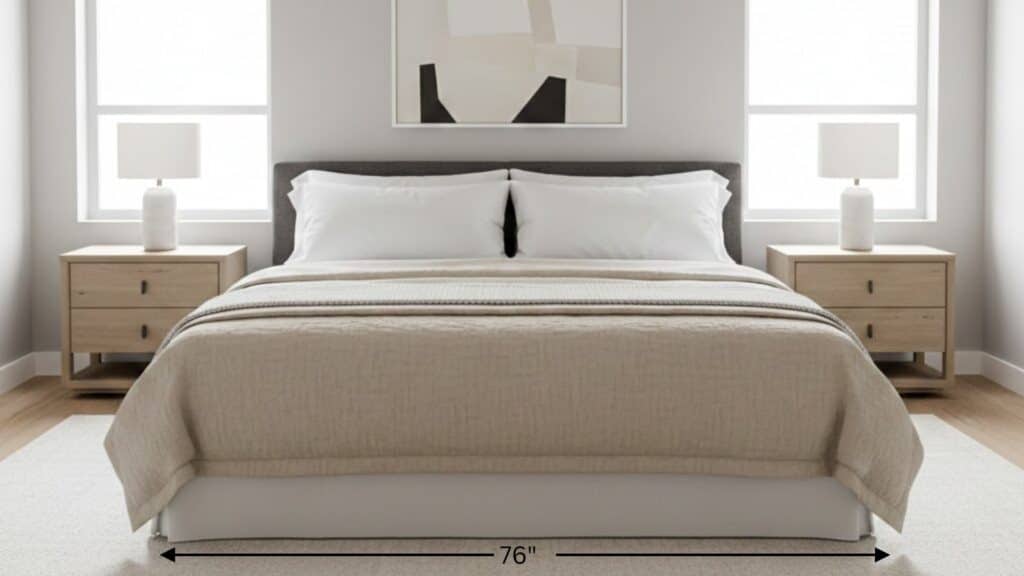
A standard King size bed measures exactly 76 inches wide and 80 inches long in total. This mattress works best for couples who want plenty of side-to-side space while sleeping together each night.
The generous width gives each person about 38 inches of personal space, similar to sleeping on a Twin bed. Standard King beds fit well in square or wide bedrooms that have adequate floor space available.
2. California King Size Bed
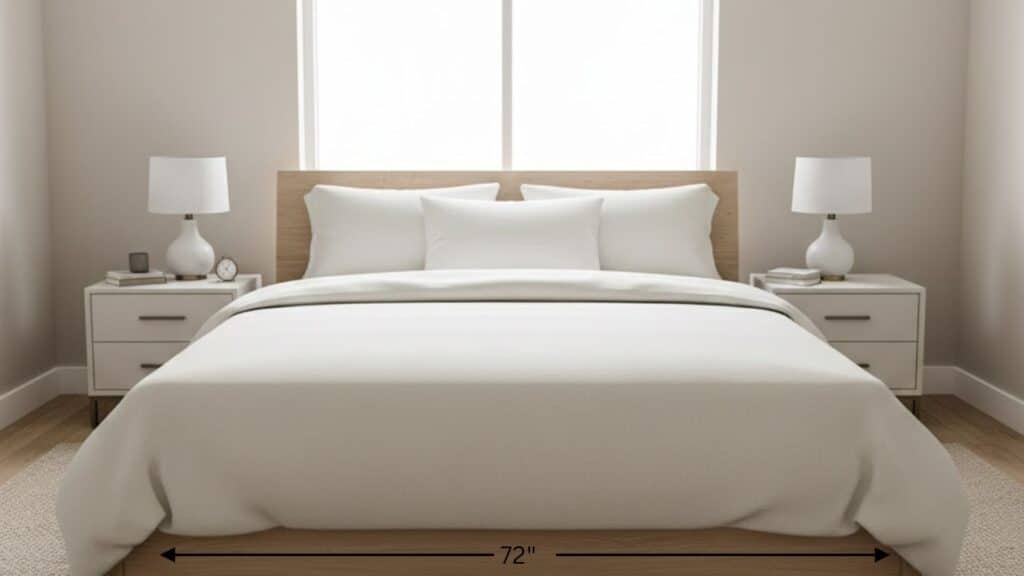
A California King bed measures 72 inches wide and 84 inches long, making it narrower but longer. This size benefits taller sleepers who need extra legroom but don’t require as much side-to-side width.
The four-inch reduction in width compared to a standard King may feel tighter for some couples. California Kings work perfectly in long, narrow bedrooms where a standard King would feel too wide.
3. Split King Size Bed
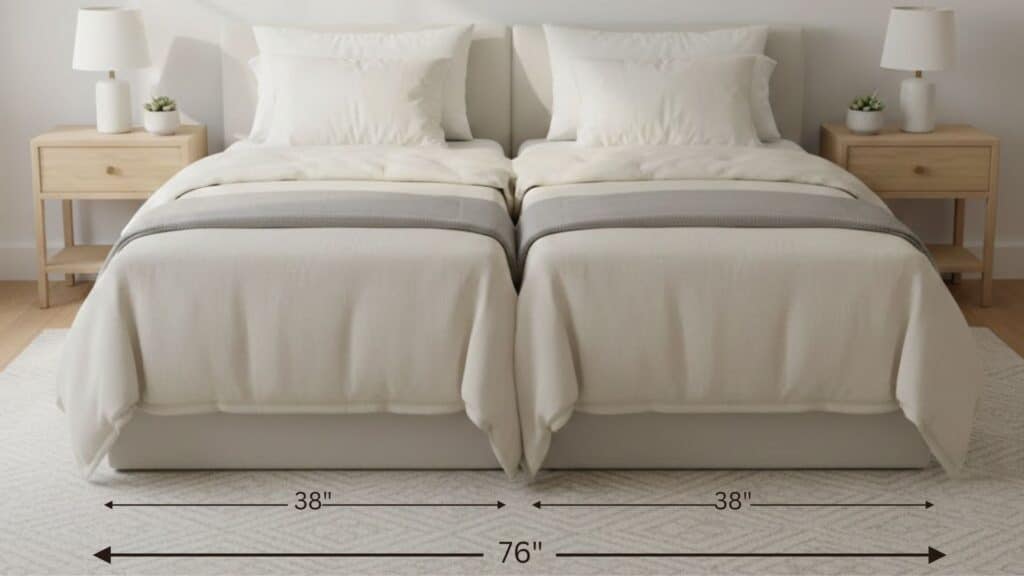
A Split King consists of two Twin XL mattresses placed side by side, totaling 76 inches wide. Each Twin XL measures 38 inches wide and 80 inches long, matching a standard King’s total dimensions.
This setup allows couples to adjust each side independently with separate sheets and adjustable bases if desired. Split Kings work well for partners with different firmness preferences or sleep positions they prefer nightly.
4. Texas King Size Bed
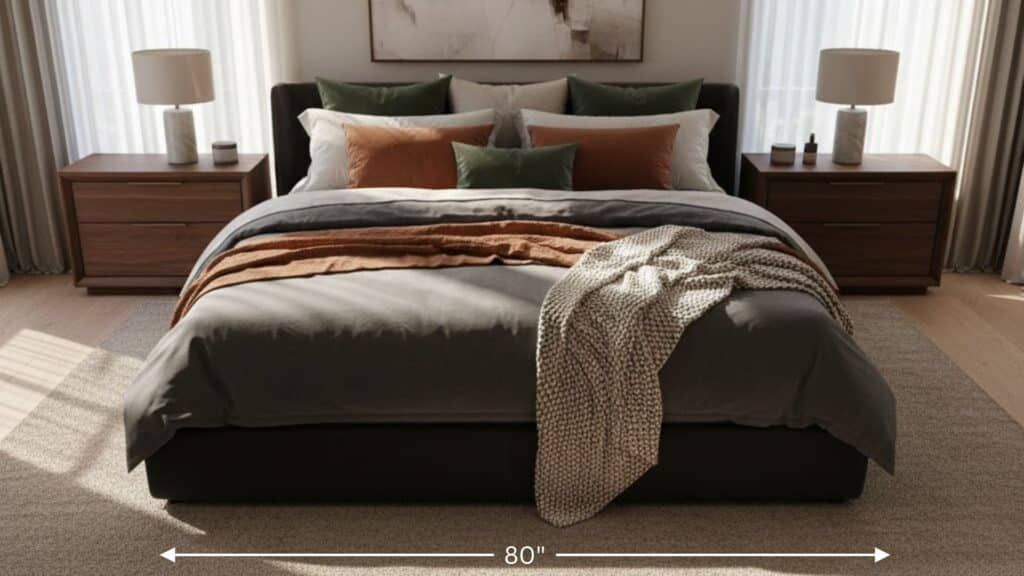
A Texas King bed measures 80 inches wide and 98 inches long, offering significantly more space. This oversized mattress provides extra room for couples, children, or pets who share the bed regularly.
The additional width and length make it one of the largest standard mattress sizes available today. Texas Kings require very spacious master bedrooms with plenty of clearance around all sides for comfortable movement.
5. Wyoming King Size Bed
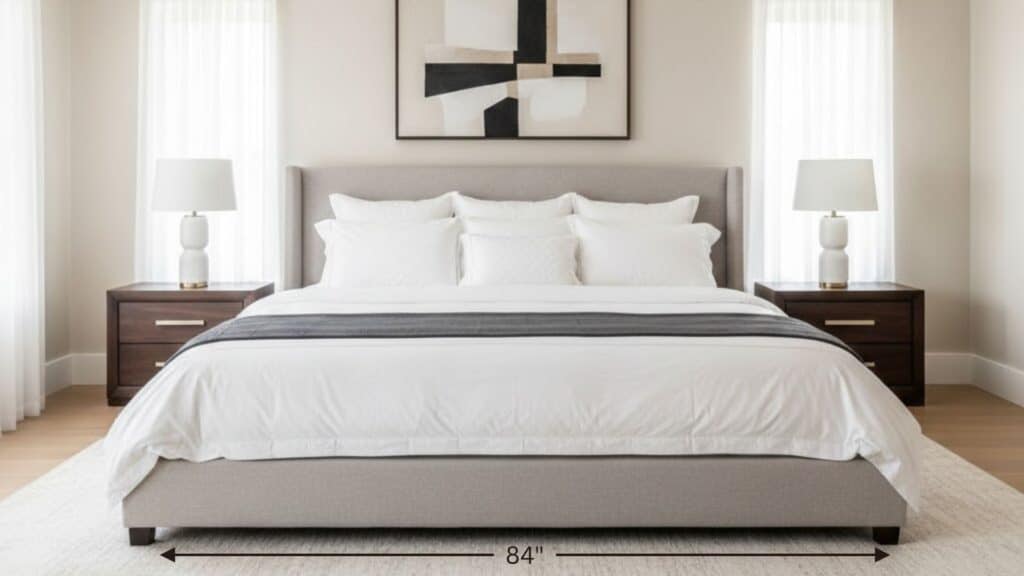
A Wyoming King bed measures 84 inches wide and 84 inches long, creating a perfect square shape. This size offers substantial width for couples who spread out or share their bed with pets.
The square dimensions provide balanced space in both directions without favoring length over width specifically. Wyoming Kings need large bedrooms with enough clearance for comfortable access and additional furniture placement around them.
6. Alaskan King Size Bed Width
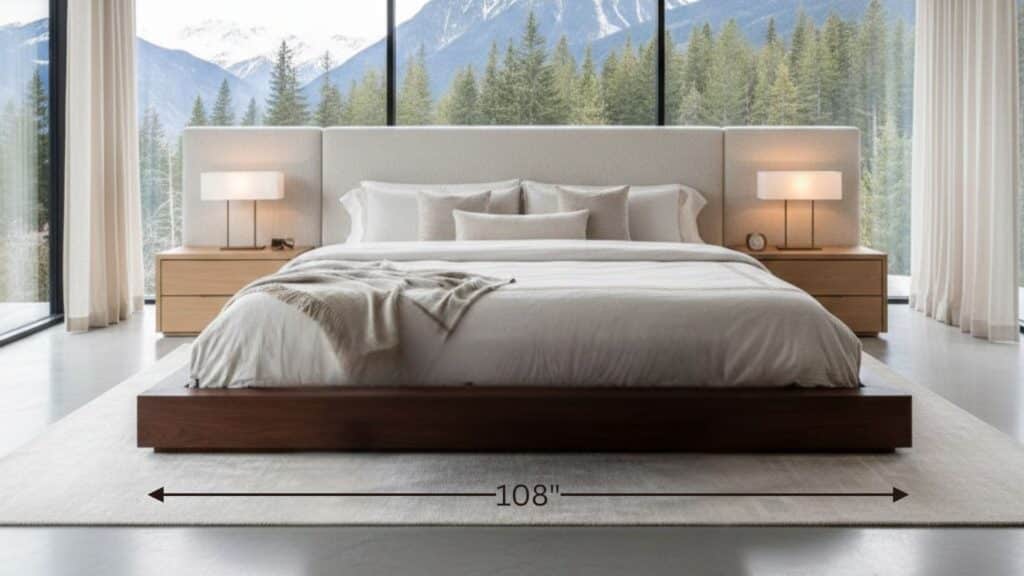
An Alaskan King bed measures an impressive 108 inches wide and 108 inches long for maximum space. This is the largest standard mattress size you can find, perfect for very large families or pet owners.
The extraordinary width provides ample room for multiple sleepers without anyone feeling cramped or crowded at all. Alaskan Kings require exceptionally large master bedrooms and custom bedding that can be difficult to find anywhere.
Benefits and Drawbacks of a King Size Bed
A King size bed offers substantial benefits but also comes with some practical drawbacks you should weigh. I’ll show you both sides so you can make a confident decision about if this size suits your needs:
| Pros | Cons |
|---|---|
| Provides significantly more sleeping space for couples or families | Requires a large bedroom with adequate clearance on all sides |
| Each person gets about 38 inches of personal sleeping width | Takes up substantial floor space, limiting room for other furniture |
| Reduces sleep disturbances when your partner moves or shifts positions | Costs more upfront compared to smaller mattress sizes available |
| Accommodates pets, children, or co-sleeping arrangements comfortably | Bedding, sheets, and comforters are more expensive to purchase |
| Offers a luxurious feel and enhances bedroom’s appearance significantly | Difficult to move through doorways, hallways, and up staircases |
| Motion isolation varies by mattress type, but benefits from size | May overwhelm smaller bedrooms and create cramped walking paths |
Balancing these advantages and disadvantages against your specific situation helps clarify if a King bed works for you. Your bedroom size, budget, and sleeping arrangements should guide your final decision about which mattress size to purchase.
How to Measure Your Bedroom to See If a King Fits?
Accurate measurements are essential for me to determine if a king-size bed will fit comfortably in my bedroom. Before purchasing a king bed, follow these simple steps to assess your room:
- Step 1: Measure the room’s length and width from wall to wall using a tape measure, recording these dimensions in feet and inches.
- Step 2: Calculate the space needed for the king mattress footprint (76″ x 80″) plus at least 24-30 inches on each side for comfortable movement.
- Step 3: Mark the mattress footprint on your floor using painter’s tape to create a rectangle matching the king bed dimensions.
- Step 4: Walk around the taped outline to test mobility and ensure you can comfortably access doors, windows, and closets.
- Step 5: Measure the clearance for doorways and hallways leading to the bedroom to confirm the mattress can navigate through during delivery.
These measurements will give you a clear view of a king bed suits your space. With accurate dimensions in hand, you can confidently make your purchase decision.
What to Consider Before Buying a King Size Bed
Choosing a King size bed requires thinking beyond just the mattress size and measurements alone. I’ll walk you through the essential lifestyle and space factors you should evaluate before making this investment:
- Plan your bedroom layout by measuring walking paths around the bed to ensure at least two feet of clearance.
- Think about who will sleep in the bed regularly, including couples, children who might crawl in, or pets.
- Consider how your bed frame style affects the overall width and footprint of your sleeping area significantly.
- Check that King size sheets, comforters, duvet covers, and headboards are readily available and affordable for you.
Creating a floor plan sketch with these factors included helps prevent costly mistakes before you commit to purchasing. Taking time to evaluate these considerations now prevents regret and returns after your new bed arrives at home.
King Size Bed Width and Length Comparison With Other Sizes
Comparing mattress widths helps you understand how much space you gain or lose with each size option. Here’s how King size beds compare to other common mattress sizes available today:
| Mattress Size | Width | Length | Best For | Sleeping Comfort |
|---|---|---|---|---|
| Twin | 38 inches (97 cm) |
75 inches (191 cm) |
Children, single adults | Half the width of King |
| Twin XL | 38 inches (97 cm) |
80 inches (203 cm) |
Tall single sleepers, dorms | Half the width of King |
| Full | 54 inches (137 cm) |
75 inches (191 cm) |
Single adults, guest rooms | Tight for two adults |
| Full XL | 54 inches (137 cm) |
80 inches (203 cm) |
Taller single sleepers | Tight for two adults |
| Queen | 60 inches (152 cm) |
80 inches (203 cm) |
Couples, standard bedrooms | 30 inches per person |
| King | 76 inches (193 cm) |
80 inches (203 cm) |
Couples wanting maximum width | 38 inches per person |
I hope this comparison makes it easier to visualize the size differences between King and other mattresses. I recommend using these measurements alongside your room dimensions to determine which size fits your space best.
Wrapping It Up
Now you have a complete understanding of the width of a king size bed and how it impacts your space. Measuring your bedroom carefully before purchasing prevents costly mistakes and ensures the bed fits comfortably in your room.
Take time to mark the floor with tape and walk around to see how it feels in real life. I recommend checking your doorways and hallways to make sure movers can actually get the mattress into your bedroom.
The right bed size changes your bedroom into a comfortable retreat instead of a cramped and frustrating space.
Share your bedroom dimensions in the comments below and let me know which king size works best.