

Compression socks are having a moment, not just with travelers and nurses, but with people who are simply tired of going to bed with heavy, achy legs.
The catch?
Sleep is a different situation than daytime wear. When you’re lying flat, gravity isn’t pooling blood in your lower legs the same way it does when you’re standing or sitting, so the “wear them 24/7” approach doesn’t automatically make sense. (Most guidance still frames compression as a daytime tool unless a clinician recommends otherwise.)
Here’s how to think about compression and sleep in a way that’s practical, safe, and actually helpful.
First, what compression socks really do (and why timing matters)
Most compression socks are “graduated,” meaning they’re snugger at the ankle and gradually looser as they move up the leg. That gradient helps support circulation back toward the heart and can reduce swelling and that end-of-day heavy-leg feeling.
Because swelling tends to be lowest first thing in the morning, clinical guidance commonly recommends putting compression on early in the day and removing it at night, unless your clinician has told you otherwise.
When compression can help your sleep
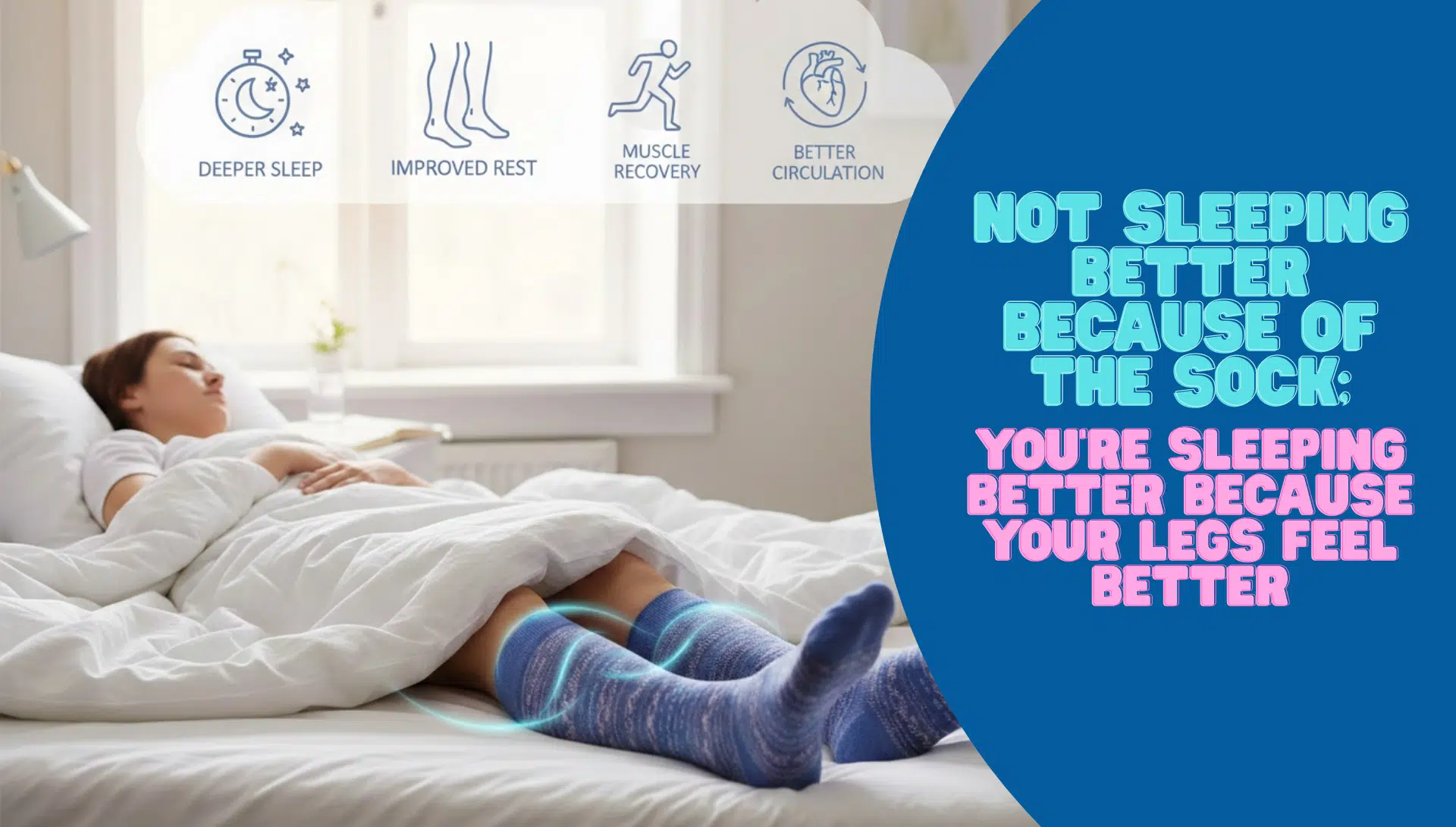
You’re not sleeping better because of the sock; you’re sleeping better because your legs feel better
The most common “sleep win” is indirect: wearing compression during the day reduces discomfort later. If your legs usually feel tight, puffy, or restless by bedtime, daytime compression can make the night feel calmer.
This is where knee-high compression socks for swelling relief often fit best: they’re easy to wear, don’t feel as restrictive as full stockings, and target the ankle-to-calf area where a lot of swelling shows up, from the ankle through the calf. For many people, that coverage is the sweet spot: enough graduated pressure to help with that heavy-leg, end-of-day puffiness, without the “too much” feeling that can make higher coverage styles hard to stick with.
If you’re looking for a pair that’s supportive and actually wearable day-to-day, VIM & VIGR knee-high compression socks are a popular option because they’re designed to feel like part of your wardrobe, not a medical device.
They come in style-forward patterns and colors (so you’ll genuinely reach for them), and they’re built around that practical knee-high profile that works well for commuting, desk days, travel, and pregnancy swelling; basically, the situations where you want steady support without sacrificing comfort or style.
You’re taking a nap (short-term use)
For most people, leaving compression on for a short nap isn’t a big deal. Cleveland Clinic notes it’s generally not harmful to wear compression while sleeping for short periods (like a nap), though regular overnight wear is a different question.
You’ve been specifically told to wear them overnight
There are situations where a clinician may recommend compression at night; for example, certain wound-care or post-procedure cases (like venous ulcers). If you’ve been given that instruction, follow it, and make sure you’re using the correct compression level and fit.
When compression socks don’t help sleep (and can be a bad idea)
You’re using them for “recovery” or “better circulation while lying down”
When you’re horizontal, your veins don’t have to fight gravity the way they do during the day. That’s one reason many experts say there’s usually no added circulation advantage to wearing compression overnight for the average person.
You’re wearing the wrong size or too much compression
The fastest way for compression to backfire is a poor fit. Too tight can cause discomfort, skin irritation, pressure marks that don’t fade, numbness/tingling, or worse. This isn’t just “annoying” — it can be risky for certain conditions.
You have risk factors where compression should be used cautiously
Medical compression has known contraindications and situations where you should talk to a clinician first, especially:
- Severe peripheral arterial disease (PAD/PAOD)
- Severe neuropathy/sensory loss (you may not feel excessive pressure or skin injury)
- Severe heart failure (in some cases)
- Active skin infection, fragile skin, or material allergy
If any of these apply, don’t make compression a DIY experiment; ask your provider.
So… should you wear compression socks to bed?
For most people: not routinely.
A simple rule that matches a lot of hospital/clinic instructions is:
- Put them on in the morning
- Take them off at bedtime
Healthline summarizes a similar takeaway: doctors commonly recommend removing them before bed, with exceptions based on medical need.
If you’re considering overnight wear because your legs bother you at night, it’s usually smarter to fix the bedtime leg problem, not force compression through sleep.
What to do instead (better options for calmer legs at night)
“Compression timing” that actually supports sleep
If your goal is a better bedtime:
- Wear compression during the day, especially on days you’re standing, sitting long hours, traveling, or in hot weather.
- Put them on before swelling starts (morning is ideal).
- Take them off at night, then switch to nighttime strategies below.
Elevate your legs; but do it comfortably
You don’t need an extreme “feet on the wall” routine. Try:
- A pillow under calves/ankles for 15–20 minutes while you read or scroll
- Or a wedge pillow if you regularly get ankle swelling
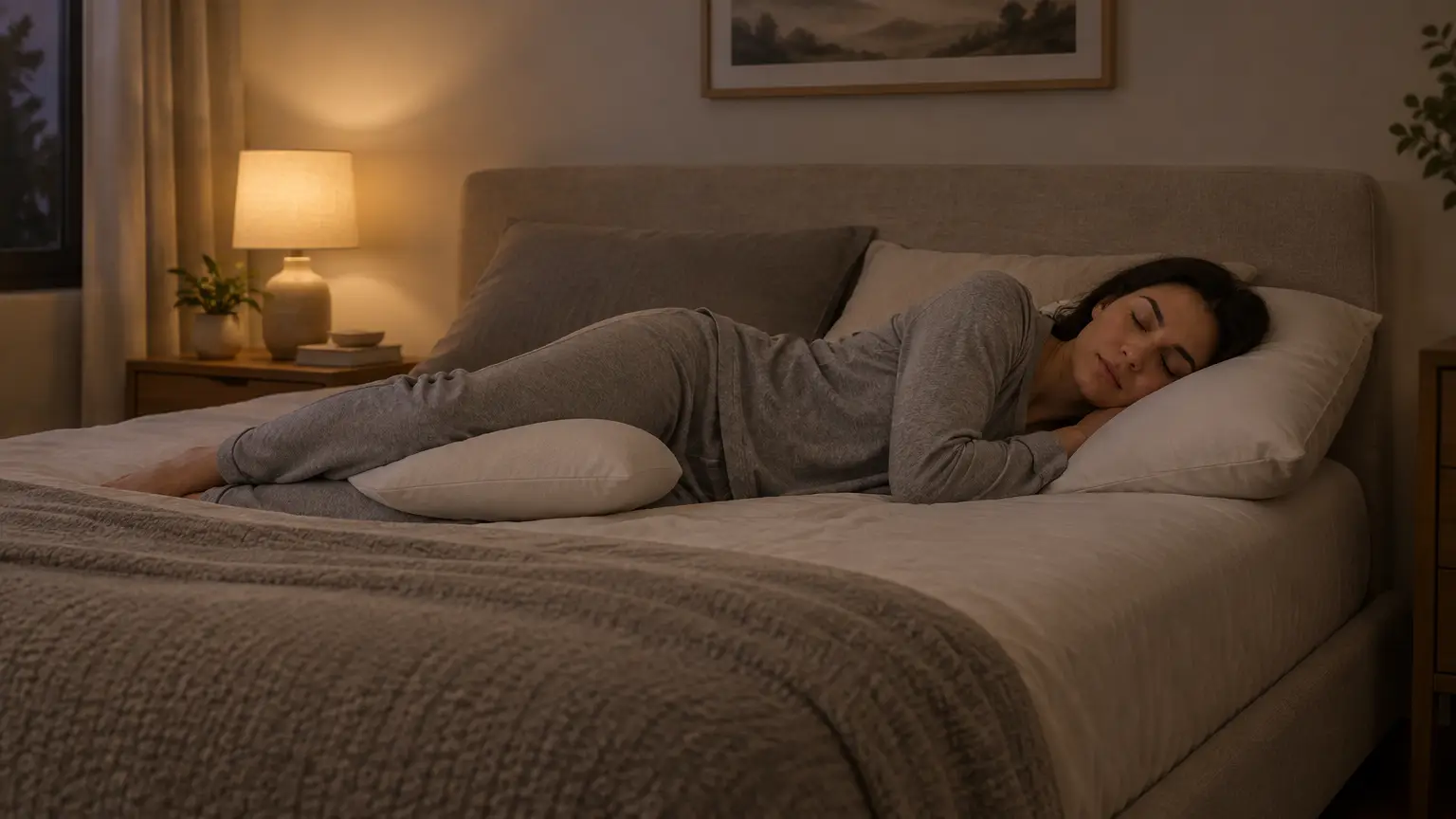
- Strategic bed positioning techniques that can help you sleep better
The point is gentle drainage before you sleep.
Build a 2-minute circulation reset before bed
This helps when legs feel “wired” or restless:
- 30–60 seconds ankle pumps (point/flex)
- 10 slow calf raises (holding onto a wall)
- 30 seconds easy calf stretch
It’s simple, but it signals your legs to downshift.
Warm shower or warm foot soak (not hot-hot)
Warmth can relax tight calves and make your body feel sleepier. If swelling is a big issue, keep it comfortably warm rather than very hot.
Address the sneaky culprits that worsen leg discomfort
These aren’t always the headline, but they matter:
- Long sitting without breaks
- Dehydration + high-salt meals late in the day
- Shoes with poor support (they can make calves work harder)
How to choose compression
If you want compression to support better sleep indirectly, focus on daytime comfort:
- Start with the right compression level: If you’re buying without a prescription, don’t jump straight to “strongest.” If you have medical conditions (varicose veins, chronic swelling, pregnancy, DVT history), ask for guidance.
- Fit is everything: Measure your ankle and calf (and follow the brand chart). Too-small socks are the #1 reason people hate compression.
- Prioritize breathable fabric: If you run warm, choose moisture-wicking materials; otherwise you’ll rip them off by afternoon.
- Put them on early: Morning wear is when they’re easiest to put on and most effective.
When to check in with a clinician
Compression socks are generally safe for many people, but get medical advice if you have:
- New or one-sided swelling
- Pain, warmth, redness (possible clot concerns)
- Numbness/tingling with compression
- Known PAD, neuropathy, or significant heart disease
Bottom line
Compression can absolutely support better sleep, but usually by improving how your legs feel before bed, not by being worn all night. For most people, the sweet spot is: wear compression early in the day, remove it at bedtime, then use leg elevation + a short wind-down routine to make sleep feel easier.
FAQs
1.Can you sleep in compression socks?
For most people, it’s not recommended as a nightly habit. Many do better wearing them during the day and taking them off at bedtime, unless a clinician advises overnight use. Read our
2. When do compression socks help sleep the most?
When they’re worn earlier in the day to prevent swelling and that heavy-leg feeling that can make bedtime uncomfortable.
3. When should you not wear compression socks at night?
Skip overnight wear if they feel too tight, cause tingling/numbness, leave deep marks, or if you have circulation/nerve issues unless your doctor has cleared it.
4. What’s the best time to put compression socks on?
In the morning, before swelling builds up. That’s when they’re easiest to put on and most effective.
5. What’s better than sleeping in compression socks for night leg discomfort?
Try a simple combo: 15–20 minutes of leg elevation, a quick ankle-pump routine, and staying hydrated (plus limiting late salty meals).