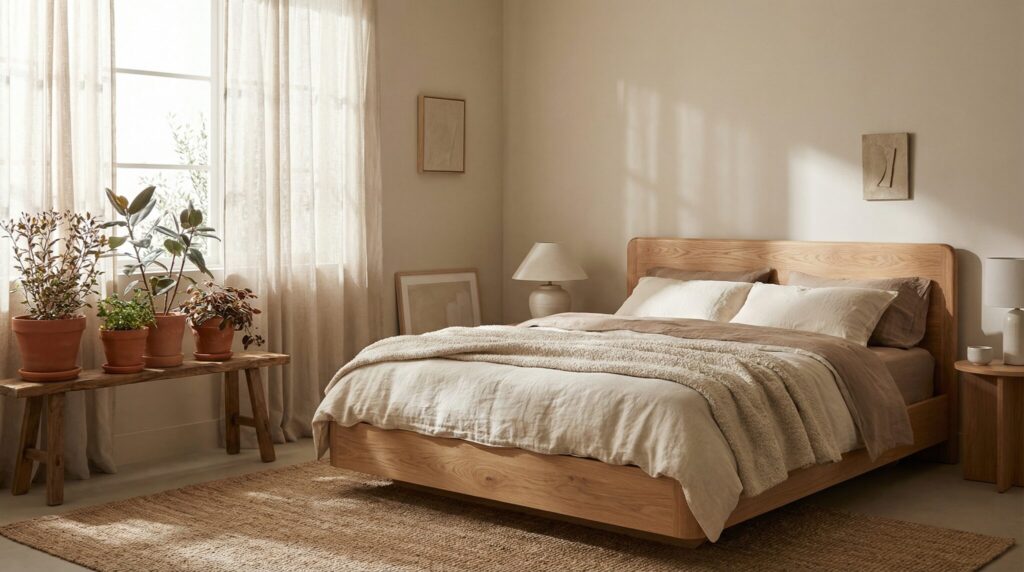
Organic Modern Bedroom: What Actually Makes It Work (and Not Look Like a Sad Hospital Room)
If you’ve ever walked into a bedroom and thought, “Ahhh… I can finally breathe in here,” you’ve felt the whole point of organic modern. It’s that sweet spot where the room is simple and uncluttered, but still warm like modern design stopped being emotionally unavailable and learned how to hug.
Because here’s the problem: “minimal” can go two directions.
1) Calm, spa like, expensive looking.
2) Cold, echo-y, “did someone just move out?” vibes.
Organic modern is how you get #1 without living inside a beige void.
And no, you don’t need to replace every stick of furniture you own and start sleeping on a linen wrapped cloud. You just need the right ingredients, in the right order, with a little restraint (the hardest design skill of all).
So… What Is Organic Modern, Really?
My unofficial definition: clean lines + natural materials + cozy texture, with the clutter edited down. Minimalism, but someone turned the warmth back on.
If your room doesn’t have these three things, it won’t read “organic modern,” it’ll just read “neutral stuff”:
- Warm neutrals (cream, warm white, soft taupe, greige that doesn’t pull blue). Undertones matter more than whatever poetic name is on the paint chip.
- Natural materials as the main event (wood, linen, wool, stone, rattan). Not “one little basket to prove you’re earthy.” These are the bones.
- Modern shapes, softened (rounded edges, gentle curves, low profile pieces). Sharp, aggressive angles tend to scream “corporate waiting room.”
A Quick “Do I Have This?” Bedroom Audit
If your bedroom is giving organic modern, you’ll usually see:
- Walls in cream or warm white (not icy bright white)
- Visible wood grain with a matte/low sheen finish
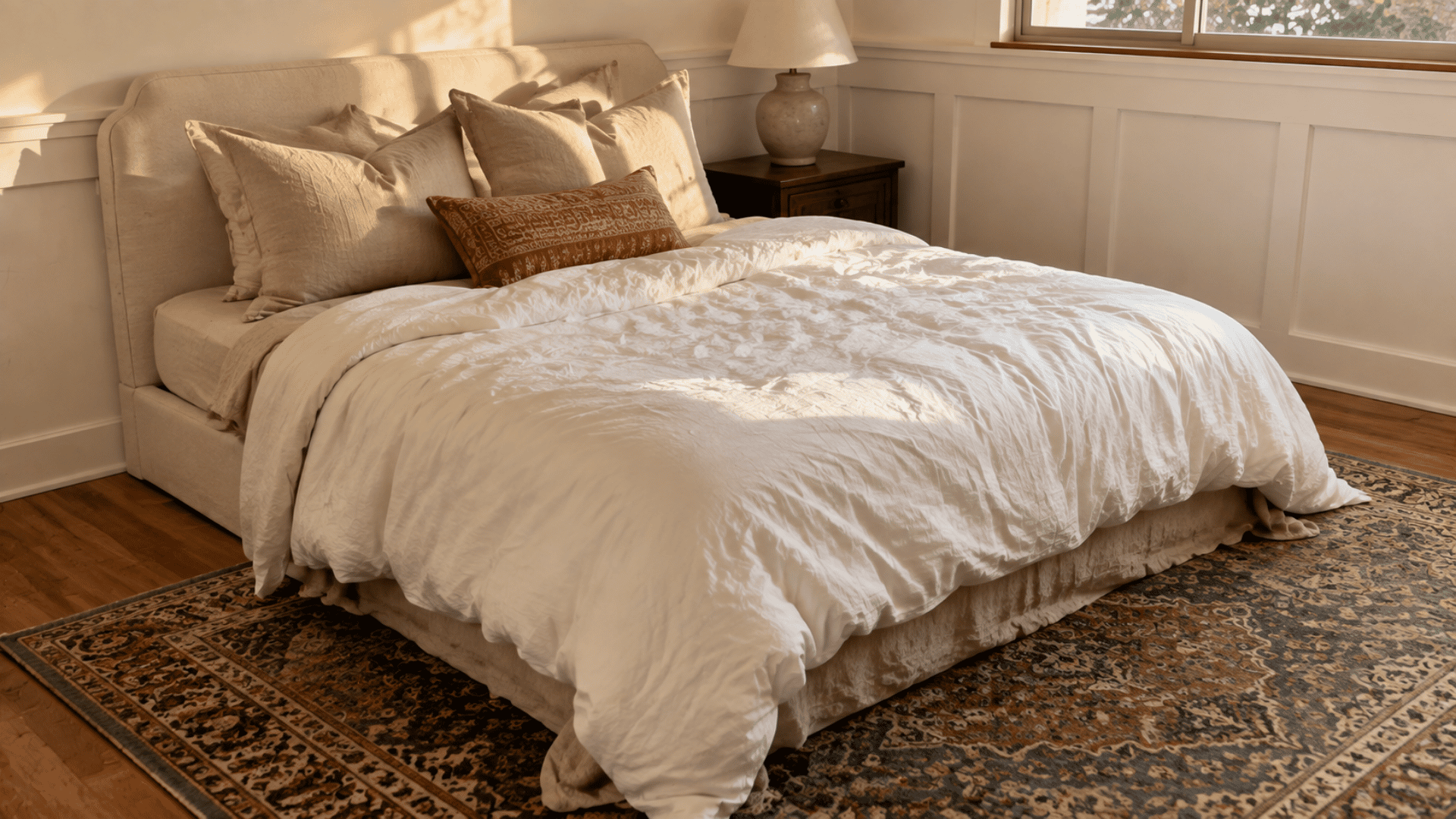
- Bedding that looks touchable (linen, cotton, wool stuff with texture)
- A few objects that feel intentional (not 47 “cute” things)
- Mostly matte or honed finishes
- Warm metal accents (a little brass goes a long way)
- Actual breathing room: empty wall space, clear surfaces, calmer visuals
If it’s drifting off course, it’s usually because of one of these:
- Too many patterns competing (your room starts arguing with itself)
- Bright colors everywhere instead of nature muted tones
- Cool gray/blue undertones taking over
- Chrome, high gloss, shiny shiny finishes
- Decor multiplying like it pays rent
(And yes, I have personally fallen into the “just one more cute thing” trap. Spoiler: it’s never just one more.)
The Materials That Make This Style Look Expensive (Even If It Wasn’t)
1) Wood: Your Anchor
Wood sets the mood before you even try. Light woods (oak, ash, maple) feel airy. Darker woods (walnut, teak) feel grounded and a little moody in a good way.
The big rule: let the grain show. This style wants wood that looks like wood, not wood that looks like it’s wearing a plastic raincoat. Go for matte or low sheen finishes. High gloss tends to kill the calm.
If you’ve got something reclaimed or a little imperfect? Even better. Organic modern doesn’t need “perfect,” it needs “real.”
2) Fabric: Where the Cozy Lives
If organic modern had a mascot, it would be linen slightly wrinkly, effortlessly cool, and completely unbothered. (Linen’s wrinkles are not a flaw. They’re a personality.)
You don’t have to go all linen everything, though. Cotton is great. Wool is great in throws. A natural fiber rug (like jute) can work too just make sure it’s not the kind that feels like you’re stepping on a kitchen scrub brush.
My personal favorite move: keep patterns quiet and let texture do the talking. The goal is “touchable,” not “busy.”
3) Stone/Ceramic/Metal: Little Pops, Not a Whole Personality
A ceramic lamp. A hand thrown vase. A travertine tray. Small touches like that add depth without adding clutter.
Keep finishes matte/honed where you can polished stone and shiny surfaces can read cold fast.
For metal: warm metals win (brass, aged bronze, copper). Chrome usually screams “bathroom fixture,” and I’m not trying to sleep in a bathroom fixture.
The Color Palette (AKA: The Undertone Situation)
If you only take one thing from this post, take this: organic modern lives and dies by undertones.
You want a palette that feels like nature, not like printer paper.
Here’s the simple version:
- Big neutral base: warm whites, creams, soft taupes
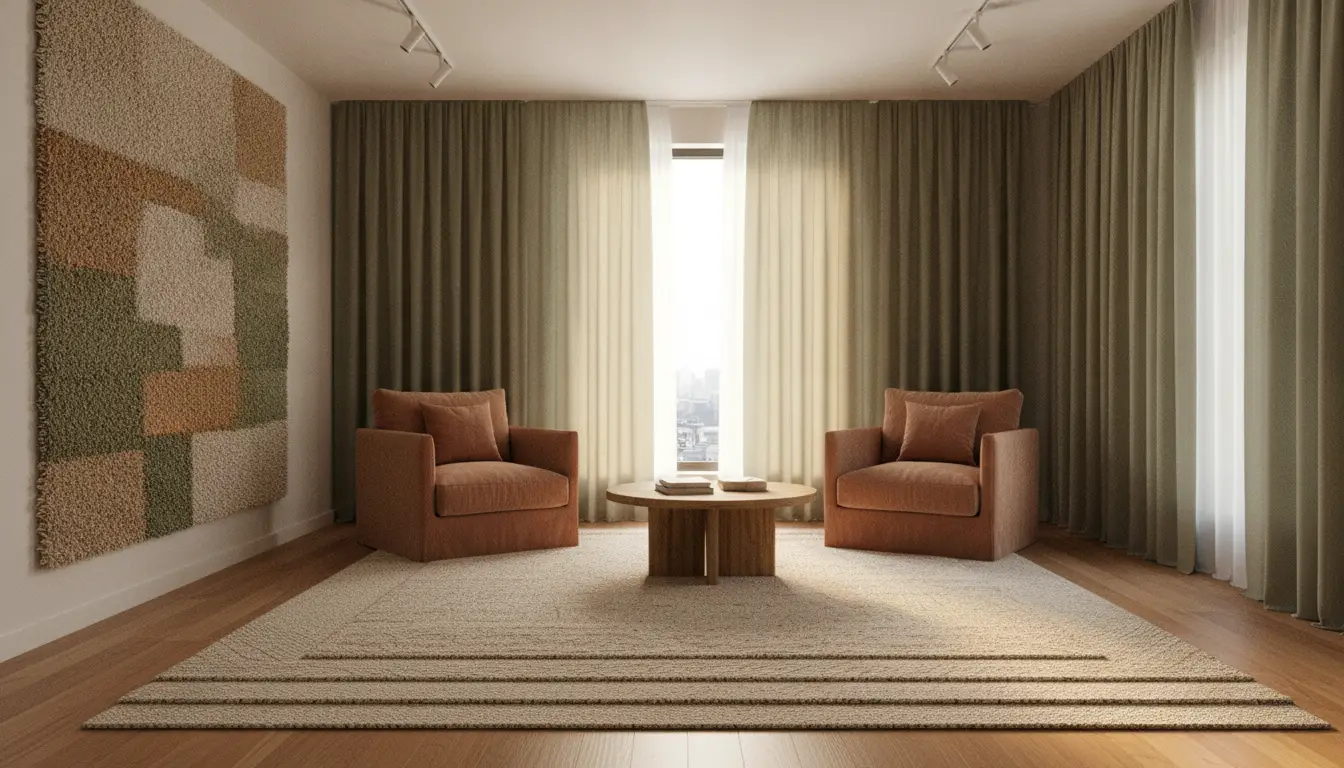
- A little nature color: olive, moss, dusty terracotta, slate-y blue (muted, not neon)
- A tiny bit of contrast: charcoal/soft black in hardware or frames
And please, for the love of calm bedrooms everywhere: avoid a cool gray that turns your room into an overcast Tuesday.
Also: matte or eggshell paint looks better here with paint and bulb choices. Gloss bounces light around like it’s trying to start drama.
Shapes + Texture: The “Why This Feels Good” Part
Organic modern looks best when it’s not all hard rectangles. Add a curve. A rounded headboard. A mirror with soft edges. A chunky knit throw that makes you want to nap immediately.
For bedding, I like a simple texture stack (no need to overthink it):
- Base: linen or cotton sheets
- Middle: a quilt/blanket with texture
- Top: one nubby or chunky layer (pillow or throw)
That’s it. You don’t need seventeen decorative pillows. Your bed isn’t auditioning for a catalog. You’re sleeping there.
Plants: Not an Afterthought
In organic modern, plants aren’t just “cute extras.” They’re basically the bridge between clean modern lines and the whole nature thing.
My favorite trick: make one plant zone instead of scattering random single plants all over like you’re leaving little green breadcrumbs.
One larger plant (olive tree, fiddle leaf fig, rubber plant) can anchor the room. Then maybe one or two smaller ones nearby.
And yes pots matter. Terracotta, ceramic, woven baskets. If it’s still in the crinkly plastic nursery pot, it’s giving “I meant to deal with this later.” (Same.)
My Real Life “Do This in Order” Organic Modern Bedroom Plan
You can absolutely do this without ripping your whole bedroom apart. Here’s the order that keeps you from spiraling:
- Stand in the doorway and edit. Take 2-3 photos. Notice what’s shouting. (There’s always something shouting.)
- Lock in your warm neutral. Pick your wall color or your biggest textile neutral and commit. Test it morning and night, because lighting is a liar.
- Choose one wood tone to lead. Not every wood has to match perfectly, but you do need a “main character” wood so the room feels intentional.
- Upgrade the bedding textures. This is the fastest mood shift for the least effort. Linen-ish + textured blanket = instant calm.
- Swap shiny and chilly finishes. If something’s super glossy, chrome, or cold gray, it’s probably the thing making the room feel sterile.
- Create your plant moment. One zone. Not twelve tiny plants scattered like you’re hiding them from the landlord.
- Final edit: clear surfaces. Nightstands especially. Put back only what you actually use or genuinely love and leave some empty space.
If you can’t paint right now, start with bedding and a rug. If you can paint, paint first because matching textiles to a wall color is way easier than matching a wall color to textiles you already bought at 11:47 p.m. during an “I’m changing my life” moment.
Three Quick FAQs (Because I Know You’re Wondering)
Is this the same as mid century modern?
Not quite. Mid century is more retro shapes, bolder colors, and geometric patterns. Organic modern is quieter, softer, more “nature spa” than “Mad Men.”
How do I keep it from feeling cold or too empty?
Texture. Always texture. If the palette is calm but the room feels flat, add linen, wool, woven pieces, a plant, and a warmer light bulb. (Yes, light bulbs matter. A bad bulb can ruin your whole vibe like a wrong song at a dinner party.)
Will this work in a small bedroom?
Honestly, it works better in small bedrooms because it’s all about restraint. One beautiful wood piece, a simple bedding stack, and a couple plants will make a tiny room feel more spacious.
Putting It All Together (Without Losing Your Mind)
An organic modern bedroom isn’t about buying a bunch of “aesthetic” things. It’s about making a few smart choices that bring in warmth wood grain, touchable textiles, soft shapes, and a little life (hi, plants) while keeping the visual noise turned down.
If your room feels chaotic right now, start small: swap your bedding for something with texture, clear your nightstand, or replace one cold/shiny element with something warmer and matte. You’ll be shocked how fast cozy low lift updates make the whole room stop feeling like it’s bullying you.
And if you end up standing in the paint aisle whispering “is this warm or is this secretly blue,” just know you’re not alone. That’s the organic modern rite of passage.