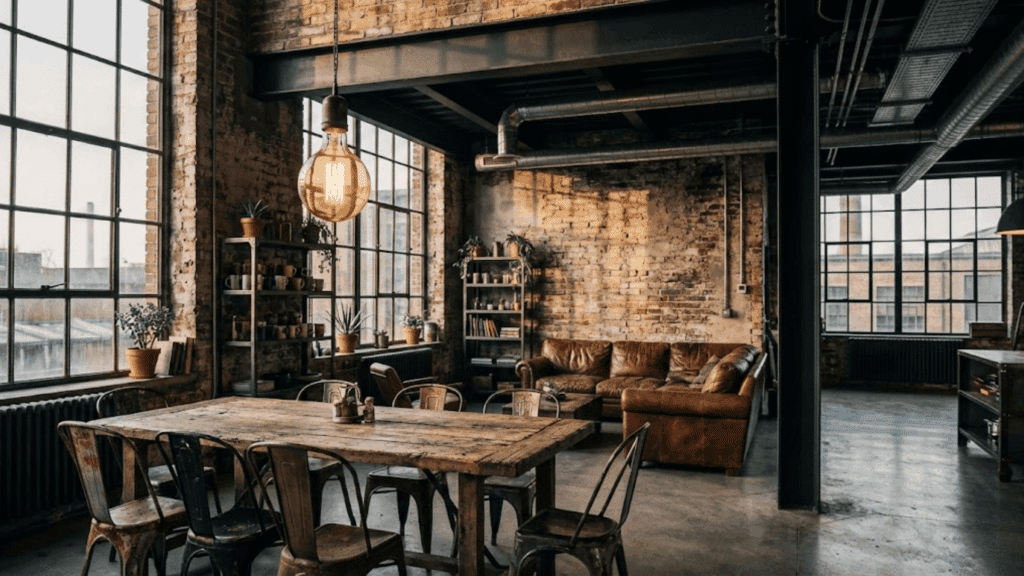
I’ve always been drawn to spaces that feel a bit raw and unfinished, yet somehow perfectly complete.
That’s what industrial interior design does best: it celebrates exposed brick, weathered metal, and honest materials in their most authentic form.
If you’re refreshing a city loft, reimagining your home office, or dreaming up the perfect café corner, this style speaks to anyone craving that effortlessly cool, lived-in vibe.
It never goes out of fashion because it doesn’t try too hard, blending grit with warmth in ways that feel both nostalgic and refreshingly modern.
Let me walk you through what makes this aesthetic so deeply inspiring.
The Origins & History of Industrial Interior Design
Industrial design was born out of necessity during the Industrial Revolution, when factories and warehouses prioritized function over form.
These raw, utilitarian spaces weren’t meant to be beautiful, but there was something undeniably honest about them.
Fast forward to the mid-twentieth century, and artists began converting old lofts into living spaces, keeping exposed pipes and brick walls as character rather than flaws.
What started as a practical solution in urban centers slowly became a sought-after aesthetic.
Today, industrial style has grown beyond its factory roots, finding its way into homes, cafés, and offices everywhere, constantly evolving while staying true to its unpretentious origins.
Core Principles of Industrial Interior Design
Industrial design rests on a few foundational ideas that keep it grounded and real. Here’s what defines this aesthetic at its core:
- Function always comes first, with every element serving a clear purpose
- Raw materials like metal, wood, and concrete stay visible and unpolished
- Structural elements such as beams, pipes, and ductwork become part of the design
- Honest construction means no hiding imperfections or wear
- Comfort balances the rough edges, making industrial spaces livable and warm
These principles work together to create spaces that feel both sturdy and inviting.
Key Characteristics and Essential Elements That Define Industrial Interior Design
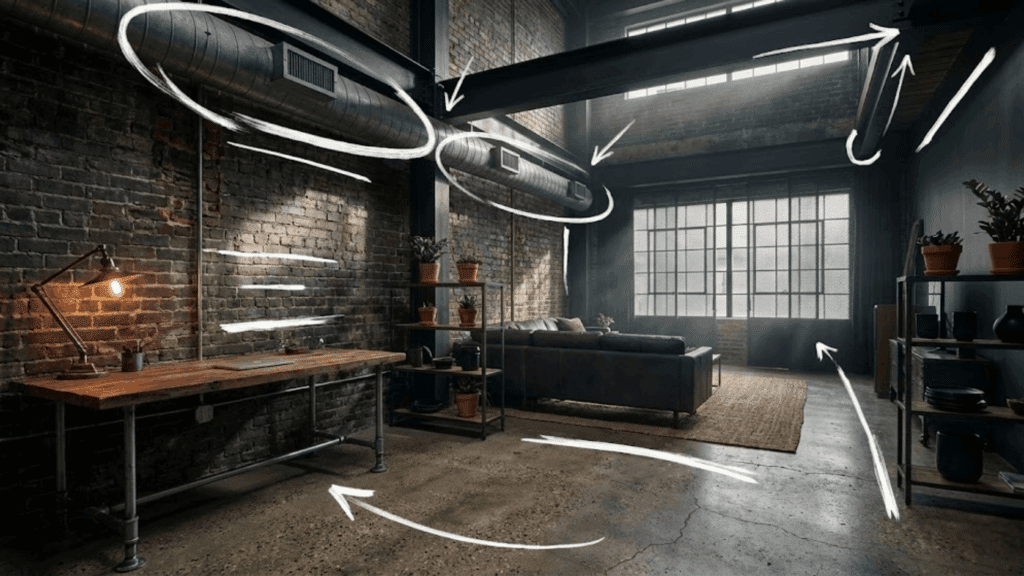
Industrial spaces reveal their bones without apology. Here are the key characteristics that make this style instantly recognizable.
1. Exposed Structural Elements
Visible beams, ductwork, brick walls, and pipes aren’t hidden behind drywall; they’re the stars of the show. This architectural honesty turns what most styles conceal into striking design features.
Exposed elements add texture, depth, and a sense of history to any room. They remind us that beauty exists in the framework itself, not just the finishes we layer on top.
2. Open Floor Plans & Spacious Layouts
Industrial design borrows the openness of factory floors, creating spaces that feel unconfined and breathable.
| Element | What It Does | Design Benefit |
|---|---|---|
| High ceilings | Amplify vertical space | Makes rooms feel larger and airier |
| Minimal dividers | Remove visual barriers | Creates seamless flow between zones |
| Anchor points | Define areas subtly | Organizes space without walls |
| Clutter control | Maintains openness | Keeps the aesthetic clean and intentional |
3. Raw & Unfinished Materials
Concrete, steel, iron, and reclaimed wood dominate the material palette. These textures bring weight and character that polished finishes simply can’t replicate.
Rough surfaces tell stories: scratches, patina, and weathering become part of the appeal. The unfinished quality grounds a space, making it feel lived-in and authentic from day one.
4. Neutral & Earth-Toned Color Palette
The industrial palette stays grounded, letting materials take center stage while accent colors add personality.
| Color Type | Shades | Best Used For | Pairing Suggestion |
|---|---|---|---|
| Base neutrals | Gray, black, white, brown | Walls, large furniture, and flooring | Layer different shades for depth |
| Warm metallics | Copper, brass, bronze | Light fixtures, hardware, accents | Pair with dark woods or concrete |
| Earth tones | Rust, terracotta, olive | Textiles, artwork, plants | Balance with cool grays |
| Deep jewel tones | Forest green, navy, burgundy | Accent chairs, cushions, rugs | Use sparingly against neutral backgrounds |
5. Minimalist & Functional Design
Every piece of furniture should earn its place by being useful first, beautiful second. Purpose-driven design means no excess, no frills; just clean lines and thoughtful choices.
This minimalism doesn’t feel cold because the raw materials provide warmth and texture. Less clutter allows the structural elements to shine even brighter.
6. Raw Materials & Surface Finishes
These foundational materials create the textural backbone of industrial spaces, each contributing distinct character and visual weight.
| Material | Character It Brings | How to Use It | Visual Impact |
|---|---|---|---|
| Reclaimed wood | Warmth and history | Flooring, accent walls, furniture | Softens hard edges with natural grain |
| Exposed brick | Rustic authenticity | Feature walls, backsplashes | Adds color variation and tactile interest |
| Concrete | Raw, grounding presence | Floors, countertops, walls | Creates a neutral, durable foundation |
| Metal | Industrial edge | Beams, railings, fixtures | Introduces shine and structural contrast |
7. Industrial Furniture & Fixtures
The proper furniture balances rugged utility with modern comfort, making industrial spaces livable without losing their edge.
- Metal-framed pieces with clean lines anchor the space with strength and simplicity.
- Leather seating ages beautifully, gaining character and patina over time.
- Utilitarian shelving in steel or iron doubles as storage and display.
- Vintage and modern pieces mixed together create layers of history and freshness.
8. Statement Lighting
Pendant lights, Edison bulbs, and cage fixtures do more than illuminate; they anchor a room. Industrial lighting often references old factory or warehouse fixtures, with exposed bulbs and metal shades that cast shadows.
These pieces become sculptural elements that set the mood and draw the eye upward. Dimmer switches help shift the ambiance from energizing to cozy.
9. Textural Contrast & Layering
Industrial spaces come alive through deliberate contrast, where opposing textures balance and complement each other.
| Texture Pairing | Why It Works | Where to Apply |
|---|---|---|
| Smooth metal + rough wood | Creates visual tension and balance | Tables, shelving, furniture frames |
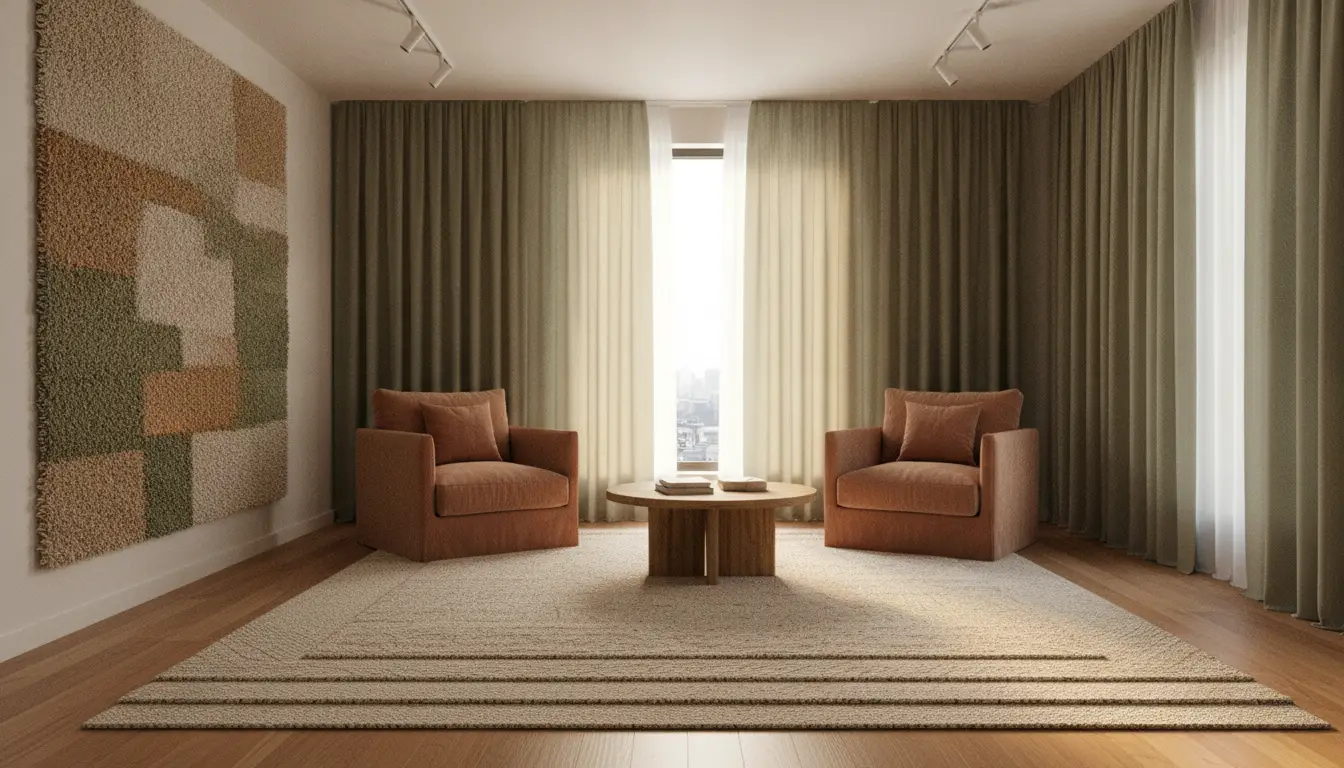
| Hard concrete + soft textiles | Prevents coldness, adds comfort | Rugs on concrete floors, cushions on metal chairs |
| Matte finishes + glossy accents | Adds depth without overwhelming | Mix painted walls with polished metal fixtures |
| Woven fabrics + industrial steel | Brings warmth to utilitarian pieces | Linen curtains, wool throws, jute rugs |
10. Sustainable & Repurposed Design
Reclaimed materials aren’t just about aesthetics; they’re inherently sustainable. Salvaged wood beams, vintage factory equipment, and repurposed metal give materials a second life while reducing waste.
Industrial design naturally aligns with eco-friendly practices because it values durability and authenticity over disposable trends. Choosing pieces with history means your space has a smaller footprint and more soul.
Industrial Style Variations & Hybrid Looks
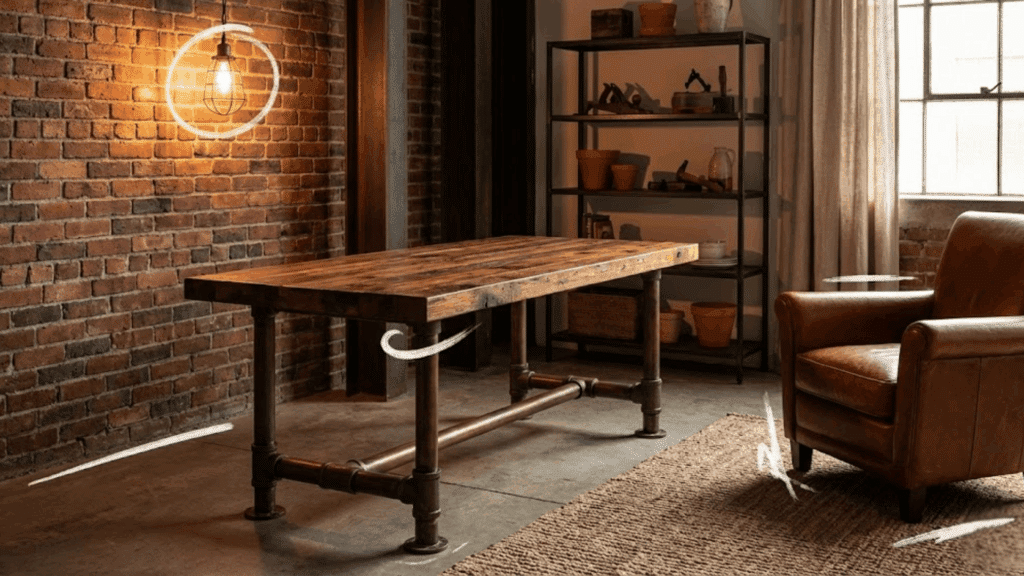
Industrial style adapts easily, blending with other aesthetics to create hybrid looks.
Here’s how different variations reinterpret the core elements while maintaining that authentic industrial spirit.
| Style Variation | Key Characteristics | Color Palette | Industrial Interpretation |
|---|---|---|---|
| Modern Industrial | Sleek finishes, polished metals | Monochrome, black and white | Refines raw materials with smooth surfaces |
| Industrial Farmhouse | Reclaimed wood, vintage finds | Warm neutrals, cream, natural tones | Softens edges with rustic charm |
| Scandinavian Industrial | Light woods, minimal clutter | Whites, pale grays, pastels | Brightens the palette, keeps functionality |
| Industrial Chic | Luxe textures, metallic accents | Jewel tones, brass, velvet | Elevates raw materials with glamour |
Each variation proves that industrial design isn’t rigid; it’s a flexible foundation that welcomes personal interpretation. The core principles remain, but the mood shifts based on what you layer in.
Room-by-Room Industrial Design Tips
Industrial design works differently in every room, adapting to the space’s function while keeping that raw, authentic feel. Here’s how to bring this aesthetic into each area of your home.
1. Living Room
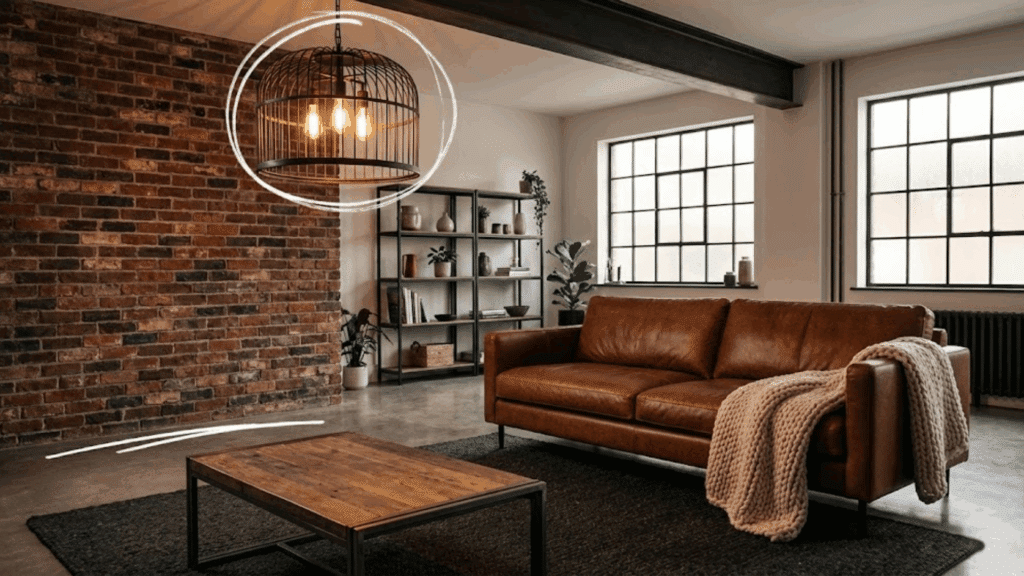
Start with statement lighting: a large pendant or exposed bulb fixture sets the tone immediately. Anchor the space with a leather sofa or metal coffee table, then add raw textures with brick accent walls or concrete floors.
Add warmth with wool throws and area rugs to balance the harder materials. Keep furniture low-profile to maintain that open, airy factory feel.
2. Kitchen
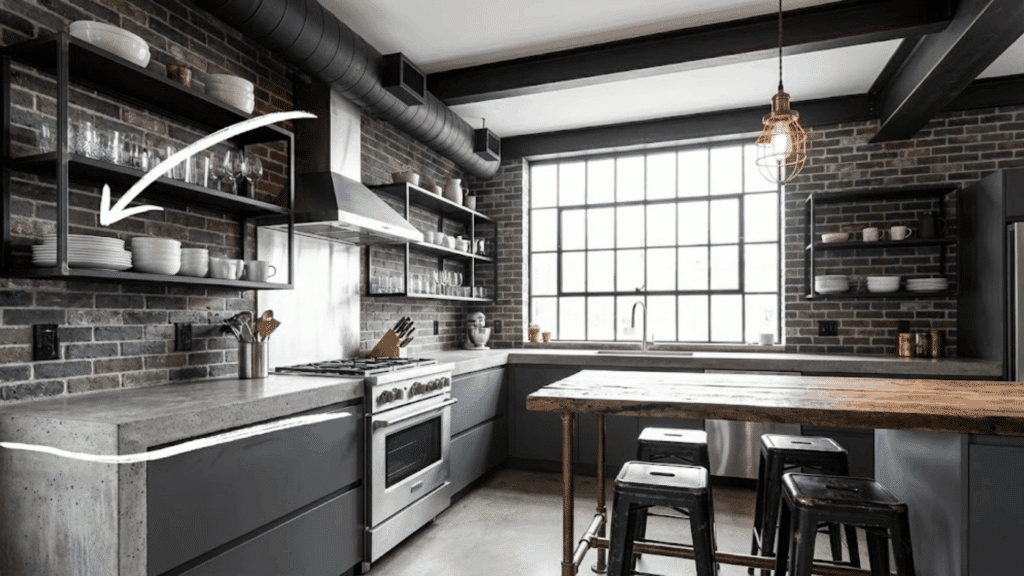
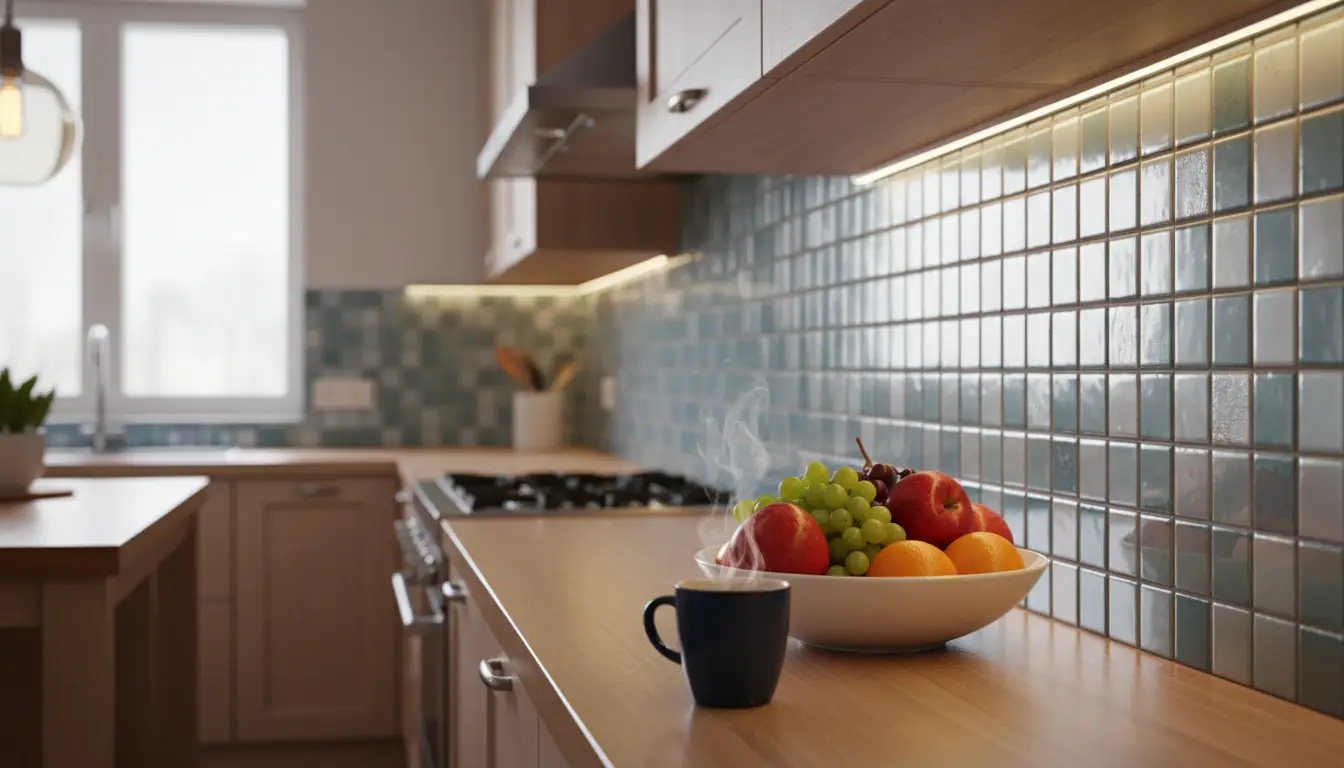
Open shelving in metal or reclaimed wood replaces upper cabinets, putting dishes and glassware on display. Consider concrete countertops paired with stainless steel appliances for that utilitarian vibe.
Metal stools at a kitchen island or breakfast bar add seating without bulk. Expose upper cabinetry hardware or opt for handle-free designs to keep lines clean and functional.
3. Bedroom
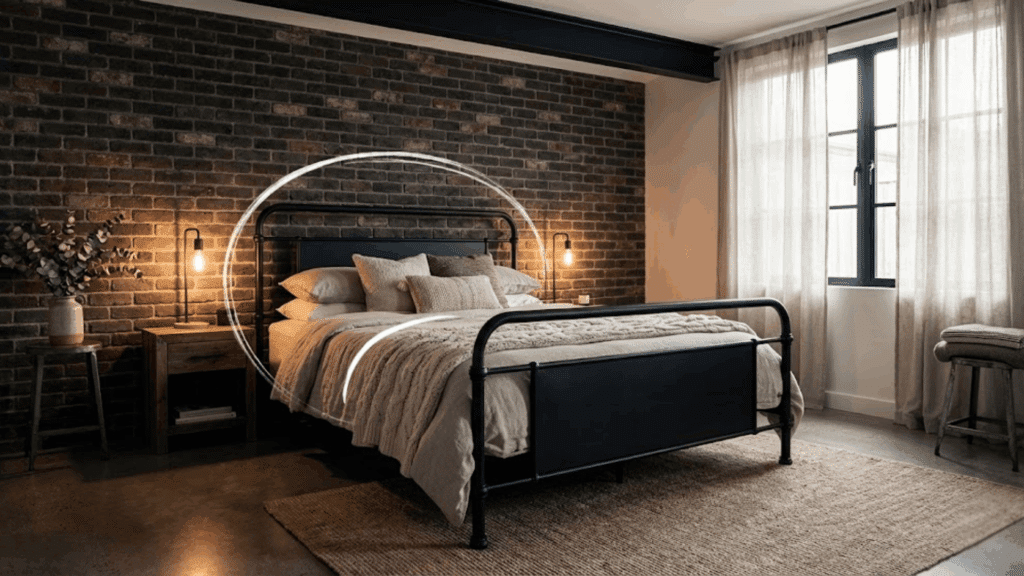
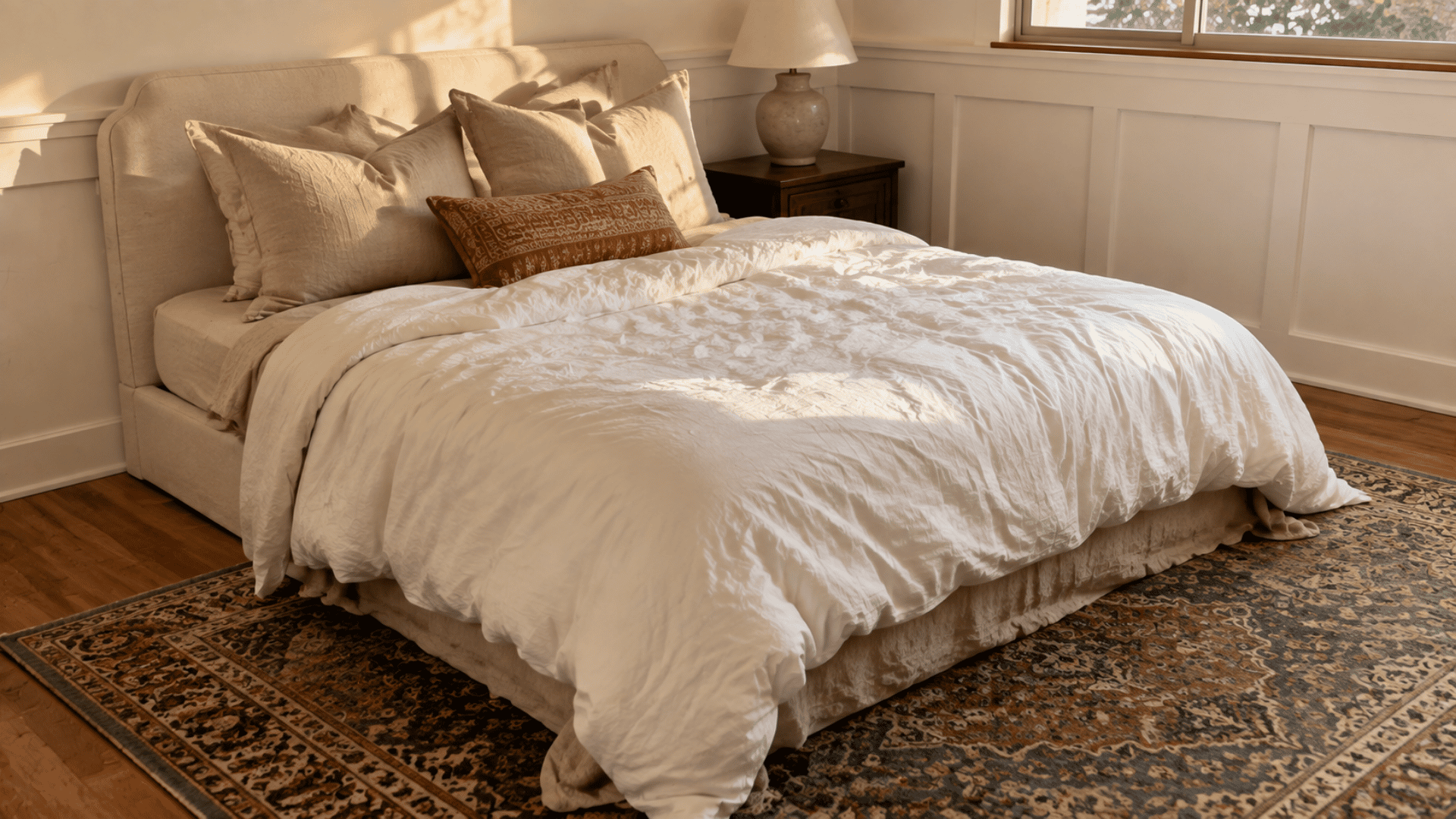
A metal bed frame (whether iron, steel, or brass) becomes an instant focal point. Soften the industrial edge with warm textiles like linen bedding, chunky knit blankets, and layered pillows.
Keep nightstands simple with wood or metal side tables. Exposed brick or a concrete accent wall behind the bed adds texture without overwhelming the space where you rest.
4. Office & Studio
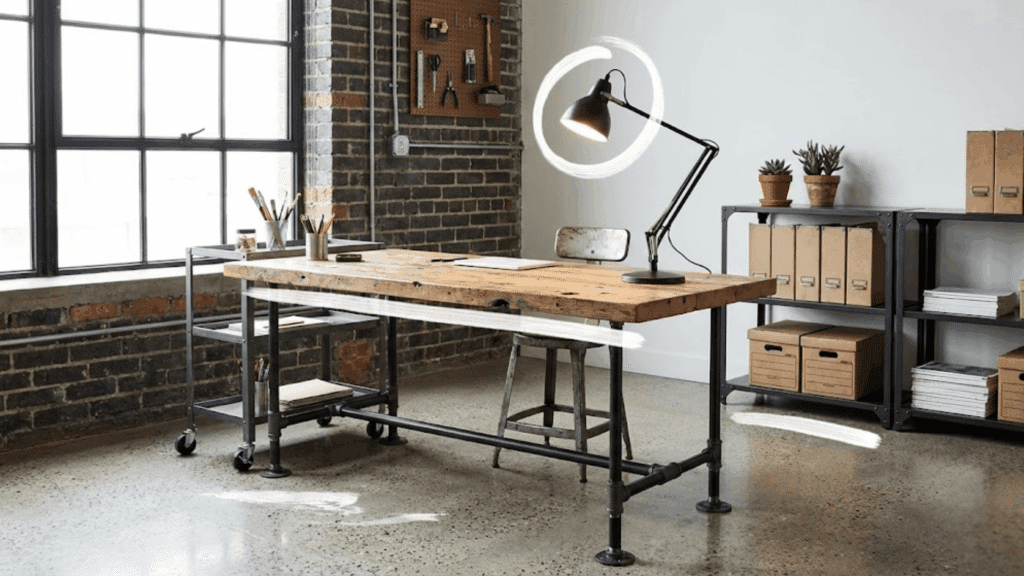
Design a flexible, workflow-adaptive layout with modular shelving and rolling carts for easy reconfiguration. Choose a mixed material workspace: a wood desktop on metal legs or a reclaimed door as a desk surface.
Industrial lighting, like adjustable task lamps, keeps things functional. Open storage solutions help you see what you need while maintaining that uncluttered, efficient factory aesthetic.
Industrial Interior Design: Common Mistakes to Avoid
Even the most well-intentioned industrial spaces can miss the mark if certain pitfalls aren’t avoided. Here are the most common mistakes and how to sidestep them.
- Overloading with raw materials creates visual chaos instead of intentional design.
- Ignoring scale makes furniture feel cramped in smaller rooms or lost in larger ones.
- Skipping soft textures leaves spaces feeling cold and uninviting.
- Forgetting adequate lighting turns moody into dark and unwelcoming.
- Using too little contrast flattens the space and loses visual interest.
Getting industrial design right is about balance, not just piling on exposed brick and metal. A little restraint goes a long way.
The Bottom Line
Industrial interior design has this rare ability to feel both strong and inviting, never asking you to choose between style and substance.
I hope this guide helps you see how accessible this aesthetic really is, from sprawling lofts to cozy apartments. It all comes down to honest materials, thoughtful contrast, and the freedom to make it your own.
Start small with one raw element or go bold with a complete room makeover. This style grows with you, adapting as your taste evolves without losing its edge.
What’s your favorite industrial element? Drop a comment below and let’s chat about how you’re bringing this look into your space.