


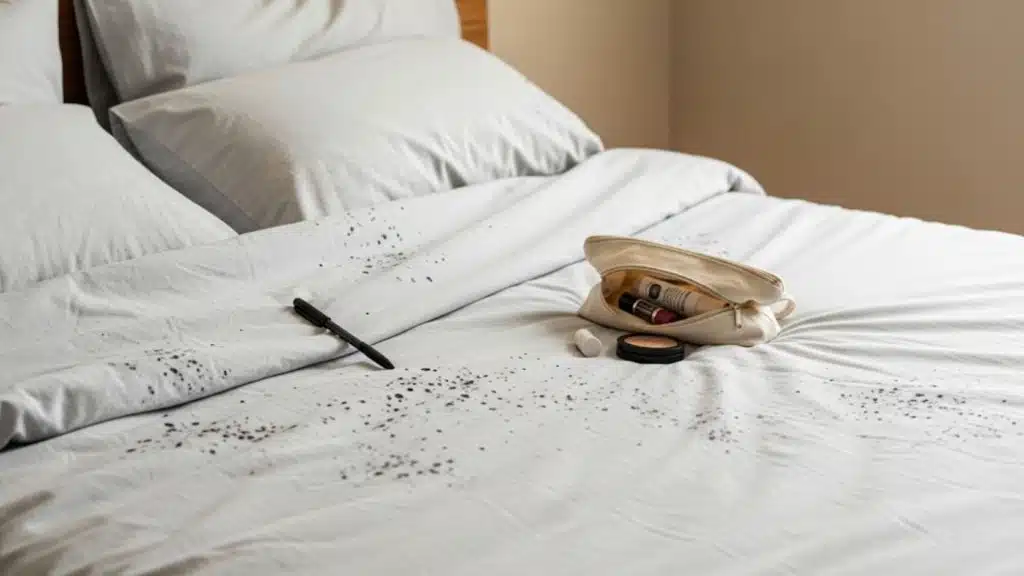
Have you ever woken up to find mysterious black spots on your clean sheets? I understand how scary this can be when you first notice them. You might immediately think about bed bugs crawling around your bed at night.
But here’s some good news for you. Most black spots on sheets are not bed bugs at all. You don’t need to panic or throw away your favorite bedding right away. These mysterious marks have simple explanations that you can figure out yourself.
I’ll show you how to identify what’s really happening in your bedroom. You’ll learn easy ways to clean these spots and keep them away forever. Let’s crack this case together and get your bed back to normal.
Why Black Spots on Sheets Matter More Than Bed Bugs
Black spots on your sheets might not be bed bugs crawling around. They could be something much worse for your health. These dark patches can release harmful substances into the air you breathe every night.
When you sleep on spotted sheets, you’re exposing yourself to potential health risks. Some people develop allergies and breathing problems from these spots. Others get headaches, skin rashes, or throat irritation.
The spots can also create bad smells in your bedroom. This makes sleeping uncomfortable and affects your rest quality. Your family members might experience similar symptoms, too.
Don’t ignore these warning signs on your bedding. Take action quickly to protect your health and sleep better at night.
All Causes of Black Sheet Spots: Beyond Bed Bugs
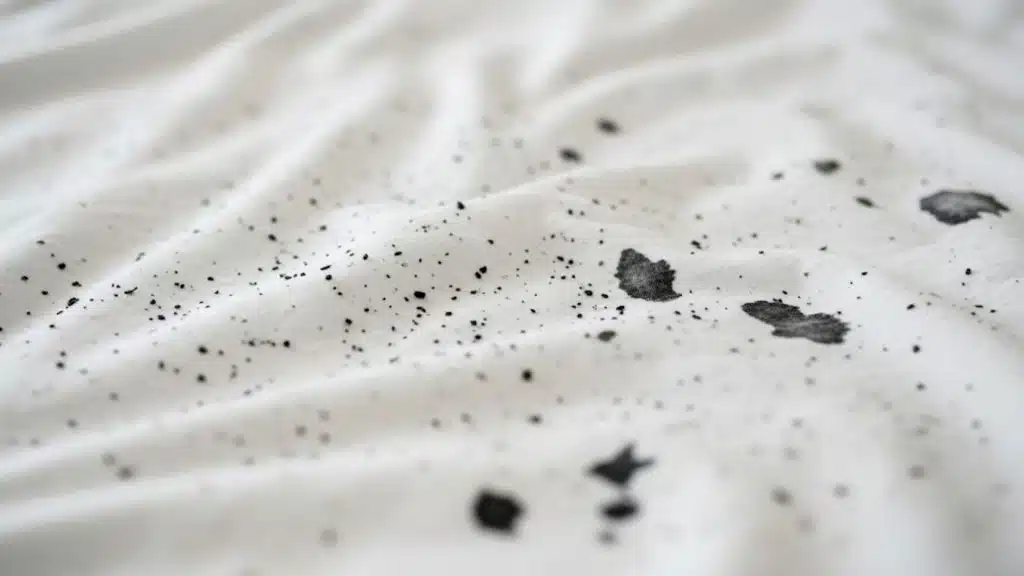
I know finding black spots on your sheets can be scary, but they’re usually not bed bugs. You’ll find these spots come from common household issues like pet fleas, mold, or even your own makeup.
1. Flea Dirt
Flea dirt looks like tiny black pepper sprinkled on your sheets. It’s actually flea poop made from digested blood. When you add water to these specks, they turn reddish-brown.
This happens because blood changes color when wet. You’ll mostly see this if you have cats or dogs at home. Check your pet’s fur for these same black specks.
2. Cockroach Droppings
These dark spots look like coarse coffee grounds scattered around your bed. Cockroaches love warm, humid places with poor air flow. They usually stay near kitchens and bathrooms, hunting for food scraps.
Sometimes they crawl across beds while scouring at night. Their droppings are small but visible to the naked eye. Look for them in corners and along the baseboard, too.
3. Mold or Mildew
Trapped moisture in your bedding creates perfect conditions for mold growth. These spots start black but can turn green or gray over time. You’ll notice a musty, damp smell coming from your sheets.
The spots often spread if you don’t clean them quickly. Sweaty nights and humid weather make this problem worse. Wash bedding in hot water regularly to prevent mold.
4. Ink or Cosmetic Stains
Leaky pens and makeup create smudgy black marks on pillowcases and sheets. Mascara and eyeliner are common culprits that transfer during sleep.
These stains usually appear near where your head rests each night. Unlike bug droppings, these marks will smear when you touch them. They don’t change color when water hits them either.
5. Fabric Damage or Debris
Old sheets sometimes develop dark particles from wear and tear. Lint buildup and detergent residue can also create mysterious black specks.
These harmless particles often appear after washing or drying your bedding. They don’t smear like stains or change color like flea dirt. Most fabric debris brushes off easily with your hand.
How to Identify the Source: At-Home Tests
Sometimes black spots show up without warning, and it’s hard to tell where they came from. These tips can help you figure it out at home:





Each of these steps helps you narrow down the cause without needing anything fancy. Trust your senses and go one step at a time.
How to Clean and Remove the Black Spots
You can get rid of those black spots with some simple cleaning steps. Start by washing your sheets in hot water with regular detergent. Hot water kills germs and breaks down most stains better than cold water.
For tough spots, add half a cup of white vinegar to your wash cycle. This helps remove mold and neutralizes bad smells from your bedding. You can also use oxygen bleach for stubborn stains without damaging colored sheets.
Clean your mattress by sprinkling baking soda over the surface and letting it sit overnight. Vacuum it up in the morning to remove odors and moisture. Always let everything dry completely before putting fresh sheets back on.
When to Call Pest Control
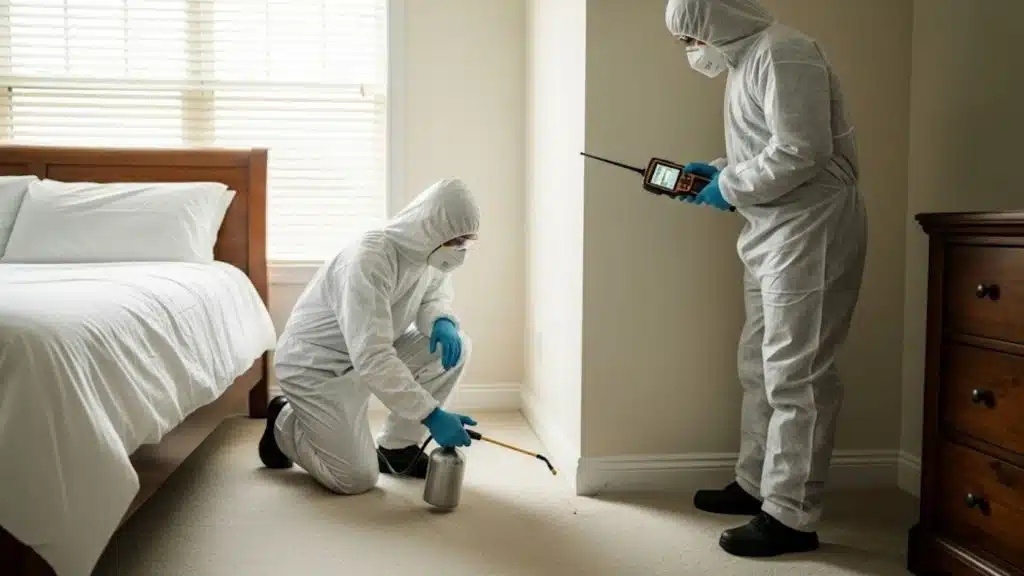
You should call professionals when black spots keep coming back even after deep cleaning. Sometimes the problem is bigger than what you can handle alone. Look for multiple signs happening at the same time in your home.
Call pest control if you see droppings in several rooms, not just your bedroom. Fresh droppings that appear daily mean you have an active pest problem. Also, watch for strange smells, scratching sounds in walls, or actual bugs crawling around.
If you have pets but still find black specks after treating them for fleas, call experts. When family members start getting sick with breathing problems or skin rashes, don’t wait. Professional pest control can identify what’s causing your problem.
How to Prevent Black Spots in the Future
I’ve learned that stopping black spots before they start is much easier than cleaning them later. You can protect your bedding with these four simple prevention steps.




Following these tips will keep your sheets cleaner and help you sleep better. You’ll save time and money by avoiding bigger cleaning problems down the road.
Final Thoughts
You now know that black spots on sheets are not bed bugs; they are usually the real problem. I hope these tips help you sleep peacefully without worrying about creepy crawlers. Most of these spots come from harmless everyday things around your home.
Take action quickly when you spot something unusual on your bedding. Clean everything properly and check your pets regularly for the best results. Remember that prevention always works better than trying to fix problems later.
Your bedroom should be a safe, comfortable place for rest and relaxation. Share your experience in the comments below and help others solve their sheet mysteries too.







2 Responses
I find mostly very, very small black specks on my sheets daily. They are very seldom a bit larger. I use a piece of paper tape to remove them. I don’t have pets. I launder my sheets weekly with hot water. I don’t find them on my body. I am finding this very annoying. Any thoughts of what that might be?
I find mostly very, very small black specks on my sheets daily. They are very seldom a bit larger. I use a piece of paper tape to remove them. I don’t have pets. I launder my sheets weekly with hot water. I don’t find them on my body. I am finding this very annoying. Any thoughts of what that might be?