


Early mornings are usually quiet.
One person is already up and getting ready. The other is hoping for another ten minutes of sleep. Then the shower door opens and there it is — a dry scraping sound, like something being dragged across the shower tray.
You might barely notice it during the day. At six or seven in the morning, especially with an en-suite or a bathroom right next to the bedroom, it can sound surprisingly loud.
What makes it confusing is that the door was quiet before. The noise only started after the bottom seal was replaced.
It is easy to suspect the door or the hinges. But if the sound is clearly coming from the bottom of the glass, take a look at the new seal first.
Why Does a New Seal Scrape?
Often, the reason is pretty simple.
When people are worried about leaks, it is tempting to choose a seal with a longer bottom fin. A little extra length feels safer.
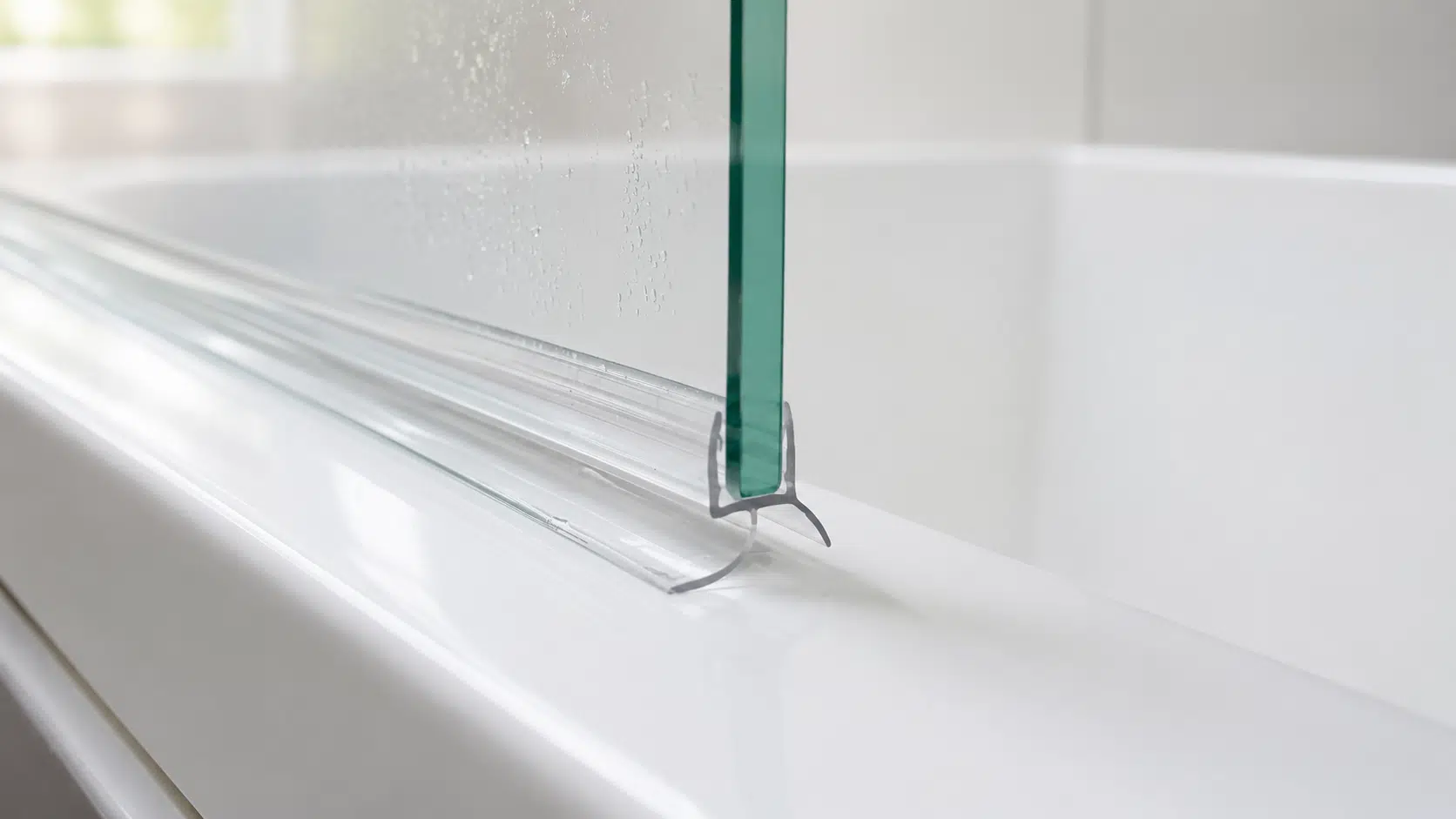
But if the gap under the glass is fairly small, that extra length has nowhere to go. The fin stays bent against the shower tray and gets dragged across it every time the door opens.
A firmer fin can make it worse. The door still opens and closes, but suddenly it takes more effort and makes a sharp scraping sound as it moves.
The support team at SIMBA Seals UK says they have come across this with customers who started hearing scraping soon after fitting a new bottom seal. In some cases, the fin was too long or too firm for the space below the glass. Repeated friction can also start working the seal loose, so it begins slipping down or coming away from the glass.
It is easy to assume there is something wrong with the new seal when that happens. Sometimes it is simply not a good match for the gap.
So when choosing a bottom seal for your shower door, getting it onto the glass is only part of the job. How the fin meets the shower tray matters too.
Check Whether the Fin Is Dragging
There is no need to start adjusting hinges or taking the door apart straight away.
Open it slowly and watch what happens at the bottom.
If it is only brushing the tray lightly, you usually won’t feel much resistance. If it stays folded underneath the glass, drags heavily, or catches at the same point every time, there may simply be too much contact.
You can try one quick check. Gently lift the flexible fin slightly away from the tray, then move the door a short distance. If the scraping becomes much quieter, you have a pretty good clue where the noise is coming from.
Don’t rush to cut the fin shorter, though. Once it is cut, there is no going back, and taking off too much could leave you with a water-control problem instead.
A longer fin can feel like the safer choice, but in practice, a longer fin is not always better.
And if the door still scrapes when the fin is lifted clear of the tray, look elsewhere. Dropped glass, loose hinges or another alignment issue could be responsible. Not every noisy shower door is a seal problem.
When Replacing It, Match the Actual Gap
If the new seal really is causing the noise, the fix usually isn’t complicated.
Measure the glass thickness and take a look at the actual space between the bottom of the glass and the shower tray. The new fin needs to cover that space without being heavily compressed.
Once the seal is fitted, open and close the door a few times. You can usually feel when something isn’t right. If the door suddenly takes more effort to move, the fin stays folded over, or the scraping starts immediately, it is worth checking the fit again.
If the old seal has an unusual shape, don’t rely on product photos alone. Take a photo of its cross-section and where it fits on the door, then note the glass thickness and the gap underneath. That gives you much more to work with than simply looking for something that seems close enough.
A scraping shower door is hardly a major household emergency.
Still, when it makes the same noise every morning and the bedroom is only a few feet away, it gets annoying fast.
Sometimes there is no need to replace the door or start adjusting all the hardware. The problem is just a bottom seal that is too long, too firm, and dragging where it shouldn’t.
If the seal was causing it, a better fit can make a surprising difference.
For the person still asleep on the other side of the wall, that’s probably enough.