
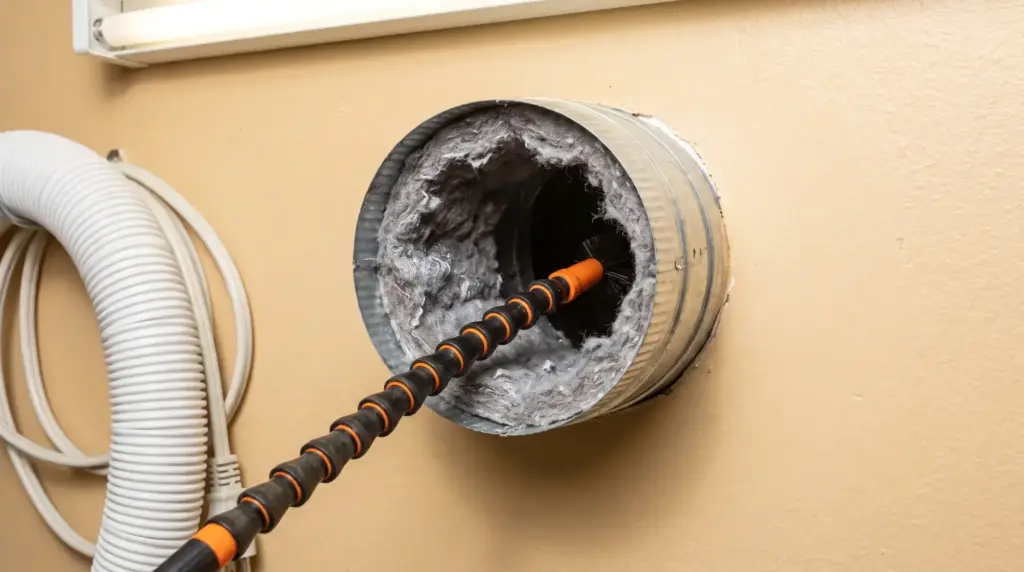
Your dryer is the one appliance in the house that turns lint into a slow-building fire hazard, and most people never think about it until the tumbling stops or the air smells hot. Here’s the short answer before anything else: once a year for an average household, twice a year if you run five or more loads a week, and more often if you have a large family, pets, or a long duct run. The rest of this guide explains how to know which camp you’re in and what to actually do about it.
Most of us learned dryer safety the hard way, usually after a repair tech pulls a fist-sized wad of lint out of the exhaust and gives you a look. The good news is that vent maintenance is one of the few home chores that’s cheap, quick, and genuinely reduces a real risk. You don’t need a service truck to keep the basics under control. You do need to know where the trouble builds up and how to check for it without tearing your laundry room apart.
The Real Reason Dryer Vents Matter
Lint is flammable, and it collects in the exact place where heat and airflow meet. The exhaust duct is designed to carry moisture and heat outside, but every load leaves a little lint behind, and that lint sticks to the walls of the duct. Over a year or two, the layer thickens. Airflow drops. Heat builds up. Eventually you have a duct full of kindling attached to a heat source. The National Fire Protection Association tracks home fires caused by dryers and recommends that lint screens be cleaned before or after every load, and that ducts be cleaned regularly. That’s not a scare tactic. It’s the baseline recommendation from the group that studies this stuff for a living.
There’s a second problem, less dramatic but annoying: restricted airflow makes your dryer work harder. Loads take longer. Damp clothes come out warm but not dry. Your electric bill ticks up a little each month, and you blame the appliance when the truth is the exhaust is choked. I’ve seen people replace a perfectly good dryer when the only thing wrong was ten feet of clogged flex duct behind it.
Signs You’re Overdue for a Cleaning
You don’t need to guess. These signals show up long before anything goes wrong:
- Clothes take more than one cycle to dry, or feel damp at the end
- The top of the dryer is noticeably hot during a normal load
- You smell a faint burnt or musty odor in the laundry room
- The exterior vent flap barely moves when the dryer runs
- You find lint around the outside vent cap
- It’s been more than a year since the last cleaning
Any single one of these on its own isn’t a crisis. Two or more together means you should get on it this weekend. The airflow test is my favorite because it costs nothing: turn the dryer on, walk outside, and watch the vent flap. If it’s flapping hard and pushing air, you’re fine. If it barely lifts or stays still, that duct is blocked somewhere between the back of the dryer and the wall.
How Often Is Often Enough?
Household size and laundry volume drive the schedule more than anything else. Here’s my rule of thumb, and I’d rather you over-clean than under-clean:
Household | Suggested Frequency |
|---|---|
1 to 2 people, 2 to 3 loads per week | Every 12 months |
3 to 4 people, 4 to 6 loads per week | Every 6 to 9 months |
5+ people, 7+ loads per week | Every 4 to 6 months |
Any household with pets or a duct run over 15 feet | Every 6 months |
Long duct runs are the sneaky factor. A dryer vented straight out the back wall might stay clean for years. The same dryer pushed through 20 feet of pipe with two elbows will clog in half that time because lint settles at every turn. If your laundry room is in the middle of the house and the duct snakes up to the roof, treat six months as your default.
Energy use is worth mentioning here, because the Department of Energy’s ENERGY STAR program notes that dryers are among the more energy-hungry appliances in a typical home, and restricted venting makes every cycle run longer. A clean duct is one of the handful of things that genuinely cuts run time without buying anything new.
How to Clean It Yourself
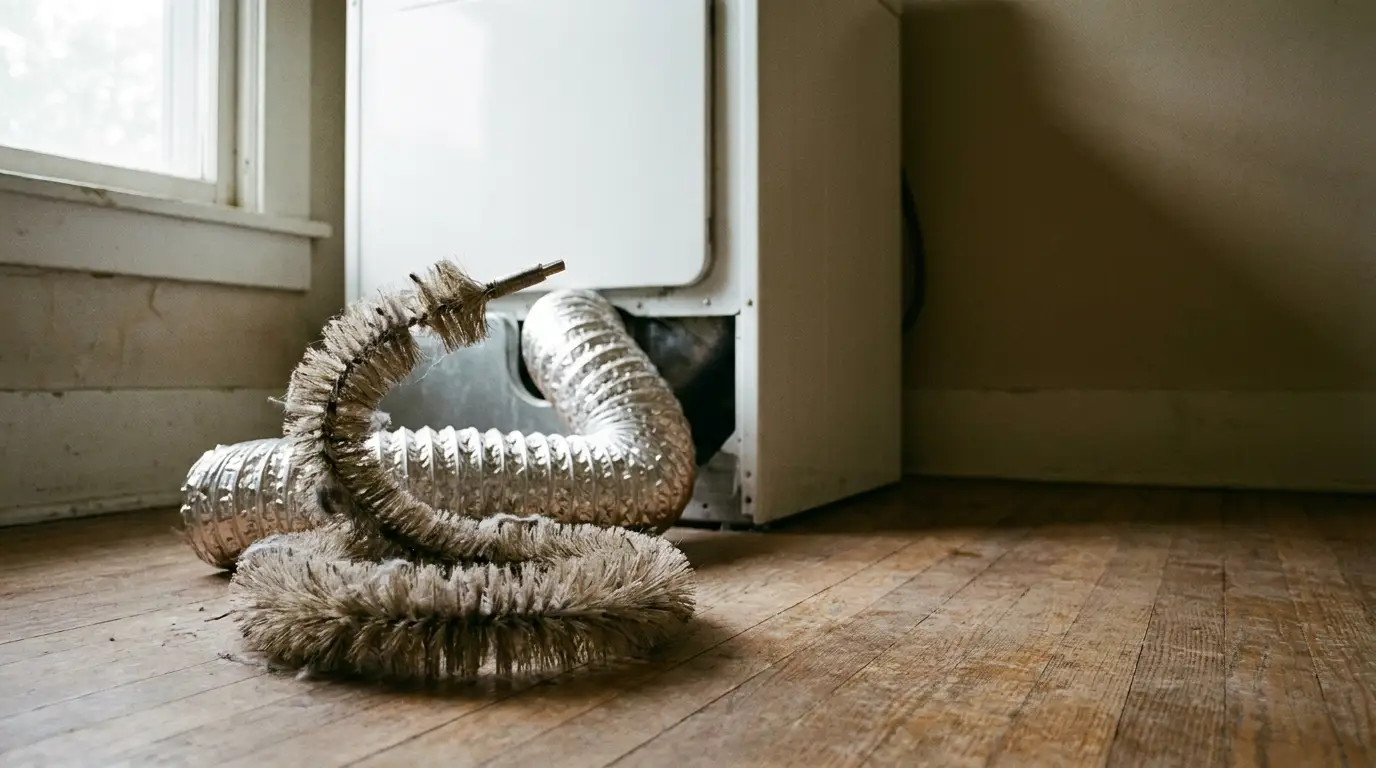
Everyday upkeep takes about 30 seconds. Deep cleaning takes an hour and one cheap tool. Here’s the routine I’d hand to any homeowner:
- Unplug the dryer and pull it far enough from the wall to reach the back.
- Clear the lint trap after every load, and wash the screen with soapy water every few weeks, since fabric softener leaves a film that blocks airflow even when the screen looks clean.
- Disconnect the duct from the back of the dryer. Vacuum out what you can reach.
- Buy a dryer vent cleaning brush kit, which is a flexible rod you feed through the duct while spinning it. Run it through from both ends.
- Vacuum the exterior vent cap and check that the flap opens freely.
- Reconnect everything, run a cycle, and confirm strong airflow outside.
The one thing I’d tell you not to do is ignore the middle of a long duct. People clean the back of the dryer, feel accomplished, and never touch the 15 feet they can’t see. That hidden section is where the serious buildup lives. If your duct is rigid metal and runs through a wall or up through an attic, a professional cleaning is worth the money, especially if you’ve never had it done in the house’s history. That’s usually the point where homeowners search for dryer vent cleaning and let someone with the right equipment handle the parts they can’t reach. The same logic applies to the flexible foil duct. If it’s crushed, torn, or sagging, replace it rather than clean it. Rigid or semi-rigid metal is the safer material long term.
Things That Cause Problems Faster
A few choices around the house shorten the time between cleanings:
- Letting the lint trap fill up past a light film
- Using foil or plastic flex duct that sags and traps lint in the dips
- Pushing the dryer flush against the wall and kinking the duct
- Venting into the attic, crawlspace, or garage instead of outside
- Running loads back to back without letting the dryer cool
The Insurance Information Institute’s home safety resources flag dryer vent neglect as a recurring cause of residential losses, which is a polite way of saying insurers see this pattern often enough to document it. If you’re renting, tell your landlord in writing when you notice airflow problems. Don’t quietly live with it, because you’ll be the one dealing with the smoke if it ever ignites.
Set the Reminder and Forget It
Pick a date you’ll actually remember, like the same weekend you swap out smoke detector batteries, and put it on your phone. Write the last cleaning date on a piece of tape on the side of the dryer. If you can’t remember the last time the duct was touched, that’s your answer: do it now. It’s an hour of your Saturday, and it protects the appliance, your energy bill, and the room where your family sleeps. When was the last time you actually looked behind the dryer?