Picking an exterior paint color is a different challenge than picking one for inside your home. The stakes are higher and the considerations are different. Here’s how to approach it.
Exterior paint color choices are permanent in the sense that living with a mistake is expensive. You see the color every time you come home, your neighbors see it, and potential buyers will judge the home based on curb appeal before they ever walk inside. Getting it right matters more than most interior decisions.
The challenge is that colors behave differently on a large exterior surface under natural light than they look on a chip or on a computer screen. Factors like sun exposure, the surrounding landscape, neighboring homes, and the architectural style of the house all play into whether a color succeeds or fails in practice.
Starting With Architecture
Different architectural styles have historically been associated with certain color palettes, and those associations often reflect why those colors actually worked well on those structures. A Victorian home has lots of ornate trim detail that benefits from contrasting colors that define that detail. A Mid-Century Modern home has clean horizontal lines that typically look best with restrained palettes. Understanding the style of your home gives you a logical starting point. Experienced exterior painting Waco TX companies can help translate this architectural understanding into specific color recommendations.
This doesn’t mean you’re locked into historical colors. It means the proportions, materials, and lines of the architecture give you signals about what kinds of colors are likely to read well versus what will fight with the structure. Working with your architecture rather than against it is the foundation of good exterior color selection.
Fixed Elements You Have to Work With
Your roof, brick or stone accents, driveway, and foundation are all fixed colors that you’re working around. The roof in particular dominates the visual impression of the exterior and has strong undertones that your paint choices need to complement rather than clash with. A gray-brown roof with purple undertones will make certain greens and blues look muddy. A warm brown roof harmonizes more easily with creamy whites, tans, and warm grays.
The same logic applies to any brick or stone on the facade. These natural materials have complex undertones that can be surprisingly hard to match. Taking a sample photo of your current exterior and testing paint samples against it is much more reliable than trying to reason through the relationships from memory.
The Three-Color System for Exteriors
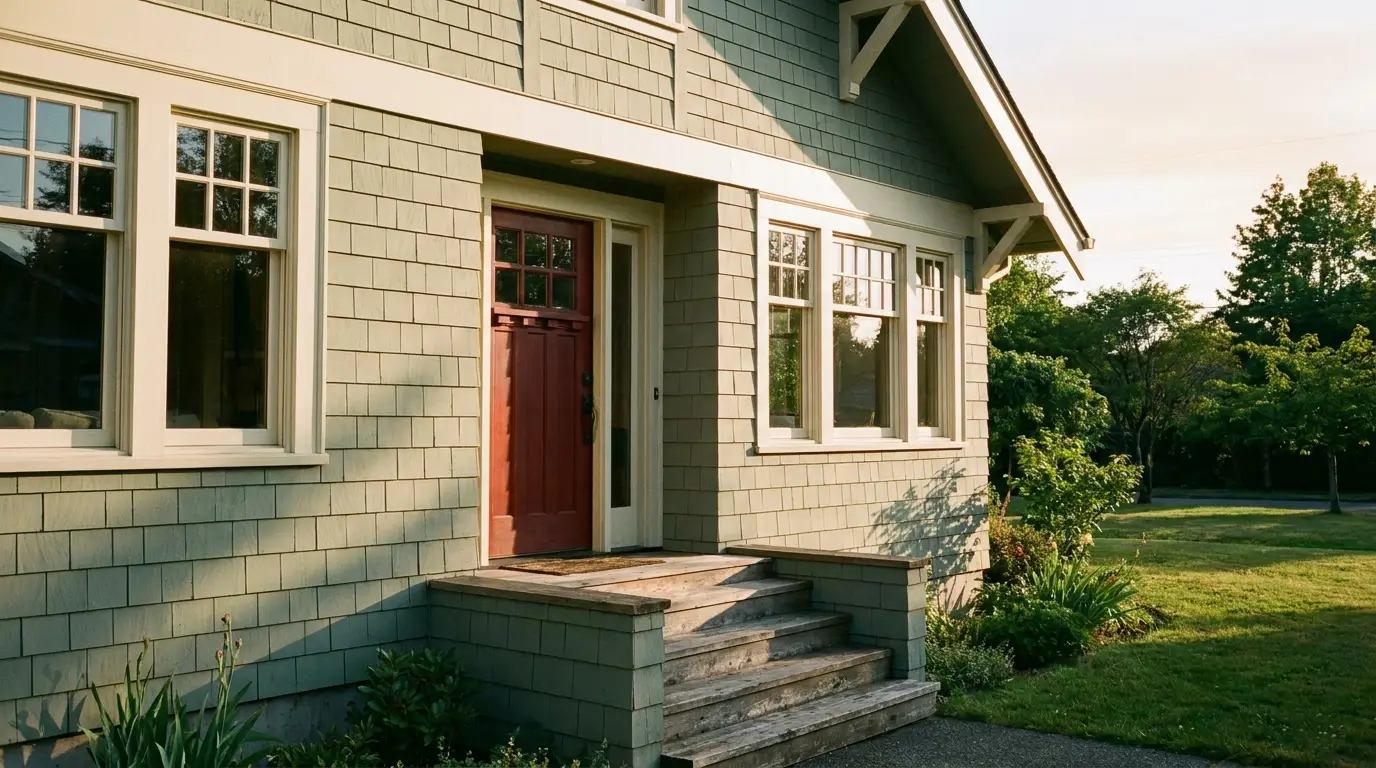
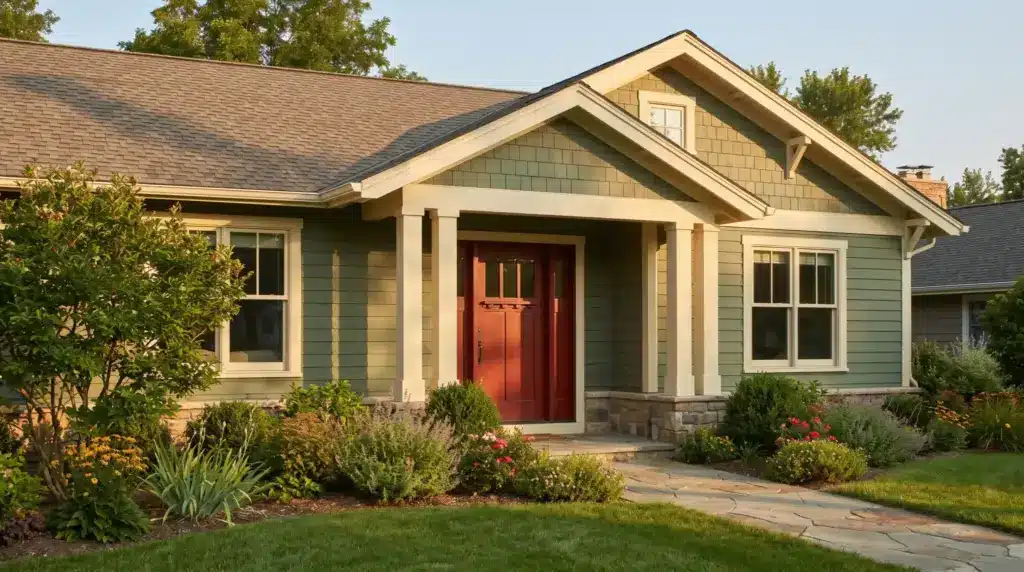
A well-balanced exterior palette typically works with three colors: the body color (the main field color on the largest surfaces), the trim color (which defines the edges, frames windows and doors, and provides structure), and the accent color (used on front doors, shutters, or other detail elements). These three elements should work together as a cohesive palette rather than each being selected independently.
The contrast between body and trim creates definition. High contrast between a dark body and bright white trim is crisp and traditional. A body and trim in the same color family at different values is softer and more contemporary. The accent color is where you can introduce more personality without risk since it covers a small surface area and is relatively easy to repaint.
The Role of Light and Orientation
Homes that face south or west get intense direct sun for large portions of the day. Colors on these exposures tend to look brighter and warmer. The same color on a north-facing wall will look significantly cooler and darker. If your home has very different exposures on different sides, testing samples on each side gives you a much more realistic preview.
Colors that look beautiful in the afternoon light of summer can look completely different on an overcast winter day. The most successful exterior colors tend to be ones that read consistently across different lighting conditions rather than being spectacular in one light and dull in others.
Neighborhood Context
Your home exists in a streetscape, and the colors around you are part of the visual context whether you want them to be or not. A bright saturated color that would be distinctive in a neighborhood of varied, interesting homes can feel aggressive on a street where everything else is quiet and neutral. A very light color on a street with lots of warm earth tones can look jarring rather than refreshing.
This doesn’t mean you need to match your neighbors, but it does mean taking stock of the surrounding palette before committing to something that will either fit well into that context or deliberately stand apart from it. If you want to stand out, it helps to do so intentionally with colors that are actually more interesting than those around you, not just different.
Testing Before Committing
Paint samples on the actual exterior surface, in a patch at least twelve inches square, are the only reliable way to evaluate a color before you commit. Looking at a two-inch chip in a paint store or a swatch on a screen doesn’t give you any meaningful information about how that color will look on a large surface in actual outdoor light. Buy a quart of your top candidates and apply them to the actual siding.
Live with the samples for a few days and look at them at different times of day and in different weather conditions. What you see over those few days is a much better predictor of your long-term satisfaction than any color decision made from a chip or a screen.
Wrapping Up
Exterior paint color selection is a process that rewards patience and testing. Starting with your architecture, working with your fixed elements, and testing samples on the actual surface before committing eliminates most of the risk of an expensive mistake. The goal is a color palette that looks intentional, complements the structure, and holds up well across all the different lighting conditions the exterior will experience year-round.
Frequently Asked Questions
How long does exterior paint last?
Quality exterior paint on properly prepared surfaces should last eight to twelve years in most climates, though sun exposure, humidity, and surface type all affect longevity. Surfaces that get intense direct sun will see paint fade and chalk faster. Wood surfaces that absorb and release moisture through seasonal cycles will cause paint to crack and peel faster than more stable substrates. Proper prep before painting and using paint rated for exterior use in your climate zone are the main factors in maximizing longevity.
Do I need to tell my HOA before changing my exterior paint color?
If you have an HOA, almost certainly yes. Most HOAs require approval before exterior color changes, and many specify that colors must be selected from an approved palette. Painting without approval can result in fines and a requirement to repaint at your own expense. Check your HOA documents and get written approval before any work starts if this applies to you.