
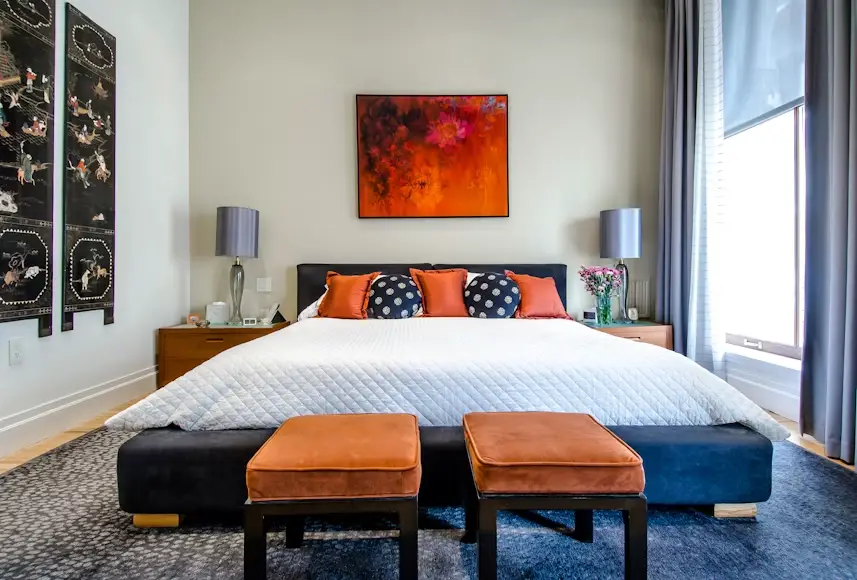
Would you like your bedroom to help you sleep instead of working against you?
Bedrooms are mostly storage rooms with beds stuffed in a corner. Clothes draped over chairs. A phone charger blinking behind piles of books. Mattresses nobody has thought about in nine years.
And then people wonder why they lie awake at 11pm feeling wired.
Here’s the thing…
The bedroom does most of the heavy lifting. The surface you sleep on, what you breathe all night, and what you stare at before your eyes flutter shut all contribute to whether you get quality sleep or six hours of thrashing.
The good news?
Almost all of the fixes here are swaps, not makeovers. And the swaps that help a room feel more tranquil are nearly always the greenest swaps of all.
What You’ll Walk Away With:
- Why the bedroom sets the tone for your rest
- The biggest swap in the room
- Low-tox materials worth switching to
- Light, air and temperature fixes
- How to keep a calm bedroom calm
Why the Bedroom Sets the Tone
Sleep is not a nice-to-have. It’s maintenance for the body.
But the stats aren’t very good. About a third of US adults sleep less than seven hours per night, and only about half say they feel rested when they wake up in the morning. Close to 13% of adults now report using some form of sleep medication on most days or every day.
That’s a lot of people treating a bedroom problem with a pill.
Restorative sleep is deep uninterrupted sleep – when your body heals tissue and your brain catalogs the day. It’s also delicate. A too-hot room, an unnoticed chemical odor you grew accustomed to months ago, or your phone screen at midnight will destroy it.
The platform where you sleep 1/3 of your life matters most. Many in pursuit of healing sleep begin with switching out aging memory foam for breathable, naturally sourced sleep surfaces like Essentia organic mattresses, because temperature regulation and non-toxic materials directly impact how restfully you sleep overnight.
Start With the Biggest Thing in the Room
Nothing else in your bedroom costs more, nor contains so much junk.
It’s also the largest waste stream. Every year Americans dispose of about 18 million mattresses, and only about 19% get recycled. The remaining mattresses occupy landfill space for decades because they are bulky, non-compactable, and contain mixed synthetics.
So this swap works twice:
- Natural latex, wool or organic cotton fill allows your mattress to breathe better than closed-cell foam, so you won’t overheat in the middle of the night.
- Products made from simple, separable materials can be recycled or composted instead of ending up in a hole for 100 years.
- A longer lifespan means one good bed instead of three cheap ones.
Don’t want to buy a new mattress? Upgrade the surface laying on top of it. A wool topper or organic cotton protector will alter your sleeping experience for a tiny fraction of the cost.
Swap Your Bedding for Natural Fibres
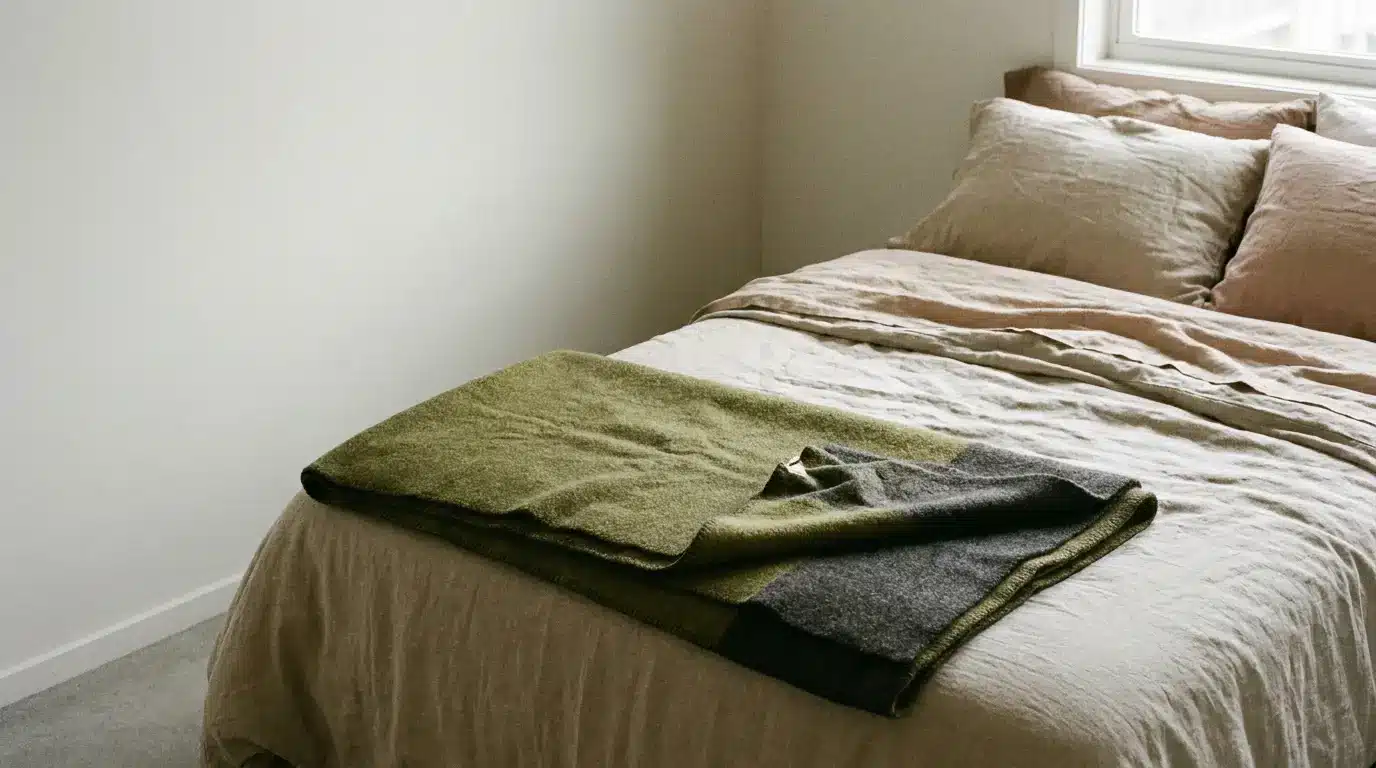
Polyester sheets are inexpensive for good reason. They retain heat, absorb moisture, and leach plastic fibres into the water with every washing.
Natural fibres do the opposite. They wick heat and sweat away from the skin. This regulates body temperature – and regulating body temperature is one of the primary causes of restful sleep.
Worth switching to:
- Organic cotton percale for anyone who sleeps hot
- Linen, which softens with every wash and lasts for years
- Wool blankets instead of synthetic fleece
- Buckwheat or natural latex pillows in place of memory foam
Buy less sets, buy better sets. Two quality sets will outclass five rough sets, AND they will still be on your bed in 5 years.
Clear the Air You Breathe All Night
Here’s something most people never consider…
You breathe the same enclosed volume of air seven or eight hours. With the door closed. Everything in that room is breathing you.
Indoor air can even be worse than outdoor air. VOC concentrations are up to ten times higher inside than outside and are emitted by paint, varnish, glue, air fresheners, cleaning sprays and pressed-wood furniture.
Easy swaps that clean up bedroom air:
- Zero-VOC or low-VOC paint on the walls
- Solid or reclaimed wood instead of particleboard held together with glue
- Beeswax or soy candles rather than paraffin
- No plug-in fragrance — open a window instead
Leaving your window cracked for 10 minutes before bedtime trumps anything you can buy. It’s free and it reduces both the temperature & stuffy air instantly.
Fix the Light, Then Fix the Noise
Light signals to the body when it is time. Mess that up and none of the following will really matter.
Swap angry overhead bulbs for warm dimmable LEDs in lamps at eye level or below. Warm light at night tells your body it’s time to wind down. Cold white light is for noon.
Then block what can’t be controlled:
- Heavy natural-fibre curtains instead of plastic blackout panels
- Cover or remove every standby light, charger and clock face
- Move the phone charger out of the room completely
Noise is the second half of the equation. Carpet, a tapestry or fabric curtains deaden a hard, reverberant room much better than an air purifier humming away all night. Hard surfaces reflect sound. Empty walls send it flying right back.
Strip It Back and Keep It That Way
A calm bedroom is mostly an empty one.
Mess triggers your brain to stay scanning. Each pile represents an incomplete task in your line of vision when you’re trying to relax.
Take out anything that isn’t sleep:
- The laundry chair
- Work bags and paperwork
- The TV
- Anything that glows
Then dumb it down. A plant, a lamp, a book. Plants warm up a space and make it feel inviting without taking over – snake plants and pothos love neglect and low light.
Then preserve it. Launder sheets once a week, air out the mattress when you change the sheets, vacuum under the bed and flip your mattress every few months. A green bedroom can only remain serene if the items inside of it are maintained.
Putting It All Together
Individually none of these swaps are dramatic. They dramatically change the vibe of a room once you step foot in it.
To quickly recap:
- Start with the mattress, or the layer on top of it
- Switch bedding over to natural fibres
- Cut the chemicals and open a window
- Warm light, dark room, soft surfaces
- Take out everything that isn’t sleep
You don’t need to swap everything over the weekend. Try one swap and incorporate it into your routine for a few weeks. Then move on to the next. Restorative sleep is made up of little decisions that are kinda dull — and what’s generally better for the planet is also generally better for the person sleeping in that bedroom.