Why does sleep feel impossible as soon as the plane leaves the runway? Between cramped seating and an unsupported neck, even tired passengers can spend hours searching for a comfortable position.
A restful flight does not require expensive upgrades or a bag full of accessories. Small choices made before boarding and a simple in-flight routine can create a calmer sleep environment.
This blog covers practical seat adjustments, light and noise control, safer sleep habits and quick relaxation tips.
Read on to find out how sleeping on a plane can feel less awkward and far more manageable.
Why is Sleeping on a Plane So Difficult?
It is hard to sleep on an airplane because the cabin does not give the body what it needs to relax. The seats are tight and you cannot move enough to keep your neck, back and legs comfortable.
Engine noise, announcements, light reading, screens and conversation keep the mind awake. Dry cabin air could make you thirsty and temperature changes could make you too hot or cold.
Timing creates another problem. A flight may depart when the body is naturally awake or cross several time zones, disrupting its internal clock.
Limited legroom and unfamiliar surroundings can also make it harder to find a comfortable position for sleep.
Things to Do Before Boarding The Plane
A little preparation before boarding can reduce common sleep disruptions and help passengers create a calmer, more comfortable setting once the aircraft leaves the ground.
- Select a Suitable Seat: A window seat provides head support and reduces interruptions. Seats near the wings may feel steadier during mild turbulence.
- Choose a Light Meal: A smaller meal can prevent hunger without causing the bloating or discomfort often linked to heavier food.
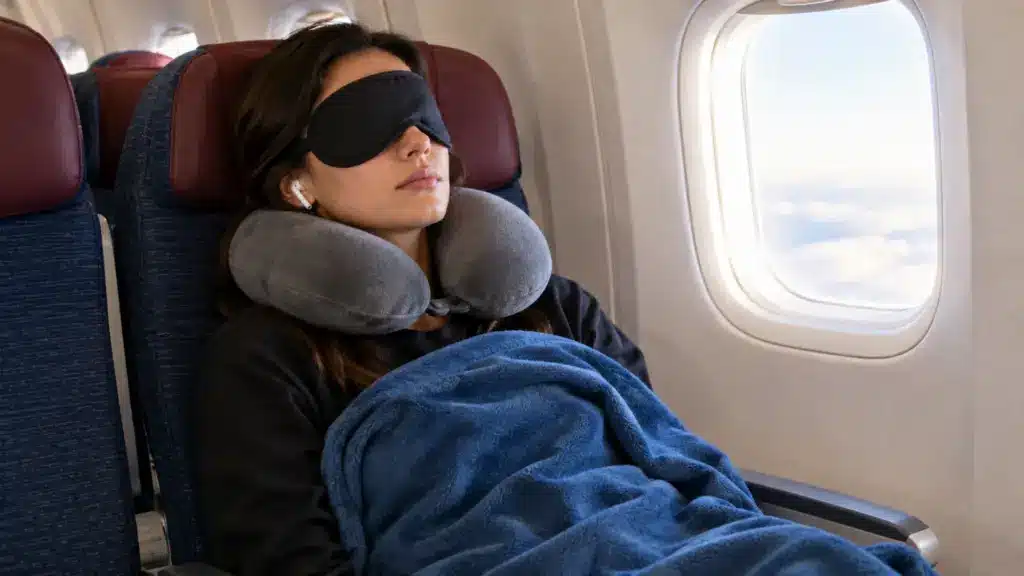
- Pack Basic Sleep Items: An eye mask, supportive pillow, earplugs, headphones and a warm layer can make the cabin feel more comfortable.
- Prepare Entertainment Beforehand: Download calming music, white noise or a familiar podcast before departure.
- Test Accessories at Home: Trying the pillow and headphones before flying can prevent discomfort or technical problems after takeoff.
Quick Tips for Sleeping on a Plane
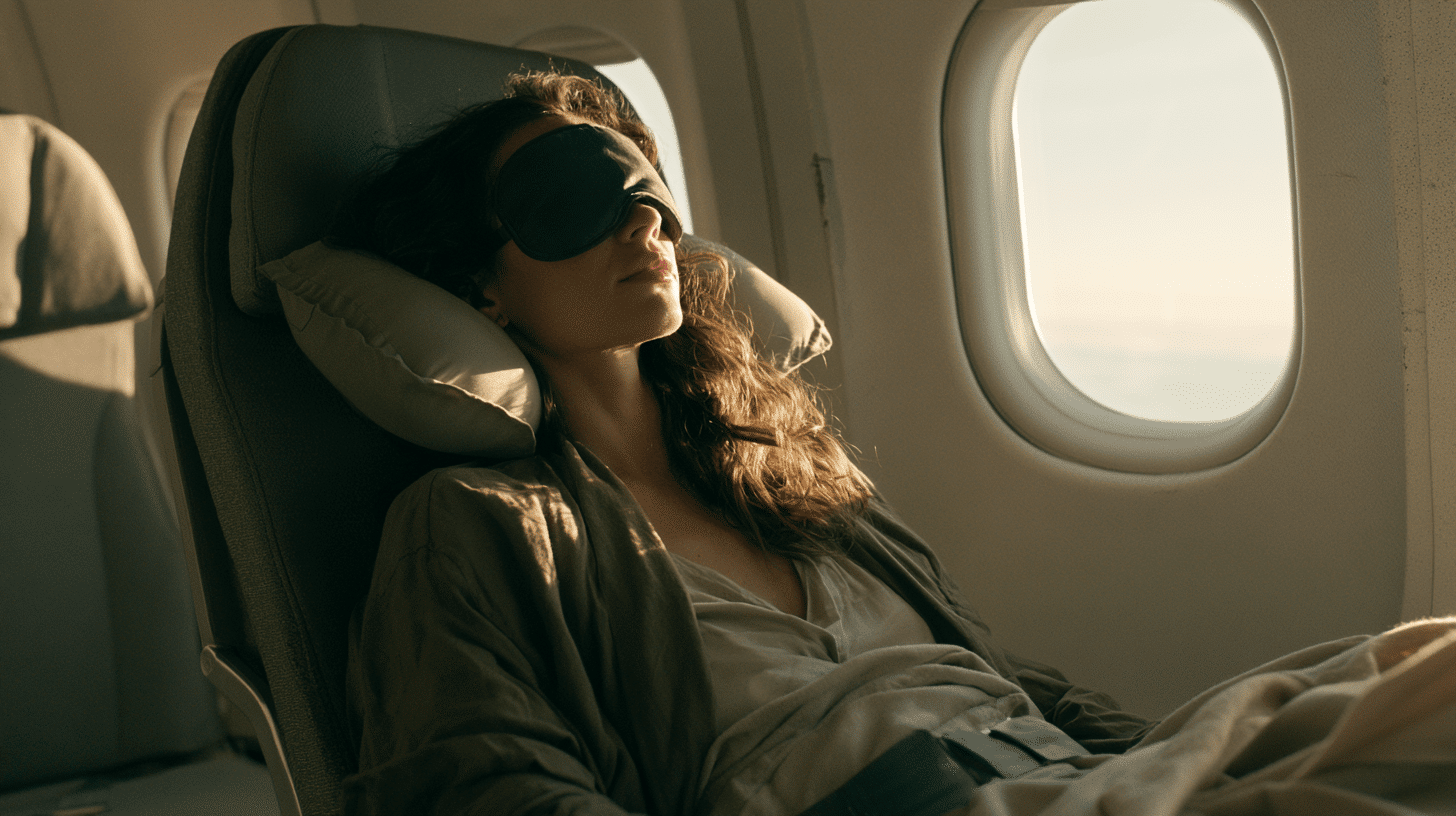
The most useful plane sleep tips are simple enough to repeat on every flight. Each one addresses a common cabin problem without a complicated setup.
1. Choose a Window Seat
A window seat gives the head a firm surface for support and reduces interruptions when different passengers leave the row.
A folded sweater or inferior pillow between your head and the cabin wall can soften pressure and limit vibration.
Seats near the wings may feel steadier, while seats close to restrooms and galleys often bring more foot traffic, light, conversation, and service activity throughout the flight during long rest periods.
2. Position The Travel Pillow Properly
A travel pillow should support the neck and stop the head from falling into an awkward position.
Passengers whose heads tilt forward may find greater comfort by placing the thickest section beneath the chin instead of behind the neck. Pillow shape, firmness and fit can change the result.
Testing several positions at home helps you identify the most supportive arrangement before a long flight begins, with far less guesswork.
3. Create a Personal Sleep Bubble
An eye mask, earplugs and noise-canceling headphones can turn a busy cabin into a calmer private space.
The mask reduces glare from windows, reading lights and nearby screens, while headphones soften engine noise, announcements, and conversation.
White noise, gentle music or a familiar podcast can cover sudden sounds. Keeping these items within easy reach avoids searching through cabin baggage when it is time to rest after the cabin lights dim.
4. Wear Comfortable Layers
The flight’s temperature can change from warm to arctic during the journey. Wearing loose-fitting clothes and layers allows you to change according to your needs without getting out of the seat or opening the overhead luggage bin.
A warm sweater, hoodie, comfortable socks and breathable fabric can be useful without taking up much space.
Tight waistbands, soaked materials, heavy-footed accessories and restrictive shoes may create pressure or irritation after several hours of sitting still and make restful sleep harder.
5. Prepare The Seat Before Resting
A tidy seat area makes it easier to settle without repeated movement. Loose belongings should be stored safely, while an eye mask, headphones and water can remain within reach.
The seat belt should be fastened correctly before rest begins. A slight recline may ease lower-back pressure when permitted.
Passengers should check behind the seat before reclining to avoid disturbing another traveler’s meal, laptop or limited space during the quiet period.
6. Keep Food and Drinks Light
A large meal can result in bloating, heartburn or digestive discomfort during the flight. Smaller meals or snacks are usually better before bed.
Adequate hydration levels may help avoid the problem without having to visit the bathroom often. Caffeine affects the sleep while alcohol might affect sleep quality despite early fatigue.
Choosing familiar foods and drinks also lowers the chance of an unexpected reaction while the aircraft is airborne after takeoff.
7. Step Away from The Screen
Another episode or round of scrolling can keep the mind active after the cabin lights dim. Ending screen use early and moving to quiet audio creates a smoother transition into rest.
Lowering device brightness beforehand can also reduce surrounding glare. Passengers can set an alarm for meals or landing, place the phone securely, and stop checking the time.
This removes one distraction from an already stimulating cabin environment before resting.
8. Try a 60-Second Body Reset
A brief relaxation routine can release tension caused by boarding, takeoff, and limited space.
Passengers can lower their shoulders, loosen the jaw, rest both feet comfortably and take slow breaths. Making each exhale slightly longer than the inhale gives the mind a steady task.
Attention can then move through the body, relaxing the hands, arms, face and legs while cabin sounds fade into the background as the body settles down.
9. Set an Audio Sleep Timer
A sleep timer prevents music, podcasts or white noise from playing throughout the entire flight.
Passengers can choose familiar audio, lower the volume to a comfortable level and set playback to stop after 30 or 60 minutes.
This removes the need to handle the phone after becoming drowsy. Downloading the audio beforehand also prevents buffering, messages, or unreliable onboard Wi-Fi from interrupting the routine once the cabin becomes quiet.
10. Secure Valuables Before Resting
Worrying about a passport, wallet, or phone can keep the mind alert. Before resting, a passenger can place important items inside a zipped personal bag positioned securely beneath the seat or against the body.
Nothing valuable should remain loose on the tray table or inside an open seat pocket.
A simple security check before closing the eyes can reduce unnecessary worry and prevent searching after waking during the final part of the flight.
11. Manage Discomfort from Dry Cabin Air
Dry cabin air can make the lips, eyes, nose and throat feel uneasy during rest. Small comfort measures can prevent this irritation from interrupting sleep.
A passenger can apply plain lip balm, remove contact lenses when appropriate and keep water nearby before attempting sleep. Avoid powerful fragrances and unknown skincare products in a shared cabin.
Addressing inferior sources of irritation immediately may prevent repeated waking without adding a complex personal care routine to the flight or disturbing nearby passengers.
12. Stop Forcing Sleep
Trying to force sleep can make a passenger more aware of noise, discomfort and passing time .
If you are unable to sleep, you can close the eyes, keep the body supported and listen to something calm without checking the clock. Tranquil rest may still make the journey feel less demanding.
Treating sleep as a welcome result kinda than a requirement can reduce frustration and help the body settle naturally again.
What Travelers Say About Sleeping on a Plane
Travelers on Reddit often mention familiar audio, window seats and simple sleep accessories. These comments reflect personal experiences, so results may differ from passenger to passenger.
“I listen to something very old and familiar to help me relax.” — Reddit
Familiar entertainment may feel less stimulating than new content, making it easier for the mind to settle.
“Window seat for ultimate head rest and fewest interruptions.” — Reddit
This traveler valued the window seat for physical support and fewer disruptions during rest.
“Ear plugs, eye mask, neck pillow on backwards.” — Reddit
This simple setup combines noise control, light blocking, and chin support without taking over the seat area.
Things that Make In-Flight Sleep Harder
Avoiding a few common mistakes can make in-flight rest safer, calmer, and more comfortable while reducing unnecessary interruptions for the passenger and cabin crew members.
1. Eating a Heavy Meal: Large meals may cause digestive discomfort and make restful sleep harder.
2. Using Alcohol to Feel Drowsy: Alcohol can disrupt sleep quality and leave a passenger feeling dehydrated or unsettled.
3. Trying an Unfamiliar Sleep Product: Do not test new pillows, masks, supplements or other sleep products for the first time onboard.
4. Blocking Movement: Keep bags, shoes, blankets and other belongings clear of aisles and nearby passenger space.
5. Copying Unsafe Social-Media Positions: Never fasten a seat belt around the ankles. The Federal Aviation Administration recommends keeping it buckled because turbulence can occur unexpectedly.
Conclusion
Sleeping on a plane becomes easier when the seat, body support, cabin distractions and wind-down routine are arranged before tiredness sets in.
A compact sleep kit, lighter food choices and correct seat-belt use can make the journey calmer and safer.
The answer to how to sleep on a plane is not one clever trick, but a comfortable setup supported by realistic expectations.
Passengers can test these steps during the next flight and keep the methods that suit their natural sleep style. Which in-flight sleep tip has worked best? Share an opinion or personal experience in the comments.
Frequently Asked Questions
What is The Middle-Seat Trick on a Plane?
Two companions book the aisle and window seats, hoping nobody selects the middle. If another passenger arrives, any proposed seat swap remains voluntary.
Which Part of a Plane Usually Feels The Least Turbulence?
Seats near the wings often feel less movement because they are closer to the aircraft’s center of lift, though turbulence remains unpredictable.
Should a Passenger Set an Alarm Before Landing?
Yes. Setting an alarm 30 to 45 minutes before landing allows time to wake, use the restroom, organize belongings and prepare for arrival.