

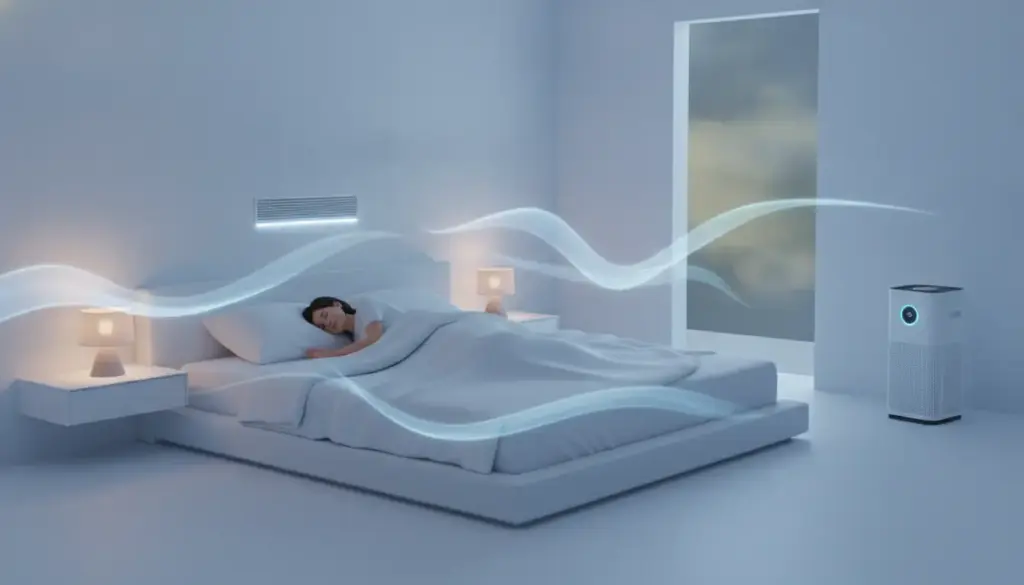
Most sleep advice stops at the mattress, the pillow and the light. The air in the room barely comes up, which is strange, because a closed bedroom is the one environment a person occupies for eight uninterrupted hours with the door shut. Whatever the air is doing, it is doing it a third of your life.
Does Carbon Dioxide Really Build Up Overnight?
It does, and the change is larger than people expect. Outdoor air sits around 400 to 420 parts per million. A single sleeper in a closed room with modest ventilation can push levels past 1,500 ppm by morning; two people in a tightly sealed room can go higher still. Research on sleep quality in bedrooms has repeatedly found that lower overnight carbon dioxide correlates with better reported sleep and better next-day alertness. The fix is often as simple as leaving the door ajar, but in a tightly built home it is a ventilation question.
Professional indoor air quality services usually start with measurement rather than assumptions, because the variable that is actually out of range is rarely the one the homeowner suspects.
What Humidity Range Should a Bedroom Hold?
Between 30 and 50 percent relative humidity. Below that range, nasal passages dry out, static builds, and people wake with a sore throat they blame on a cold. Above it, dust mite populations climb sharply and the room starts to feel warmer than the thermostat says. In the Northeast the same house can swing from 15 percent in February to 65 percent in July, which is why one-season fixes rarely hold.
The Three Variables Worth Controlling
Temperature gets all the attention, but it is only one of four. The others move independently, and a thermostat cannot see any of them.
- Humidity, held between 30 and 50 percent year round rather than seasonally.
- Fresh air exchange, so overnight carbon dioxide does not climb unchecked.
- Filtration, using a filter rated for particulates rather than the cheapest one that fits.
- Air movement, gentle and consistent, so the room does not stratify while the system is off.
Is a Better Filter Enough on Its Own?
Rarely. A higher-rated filter captures more particulates, but pushing dense media through a system designed for minimal resistance can starve the blower and reduce airflow to the point where the room gets less air overall. Filter selection has to match what the equipment can handle – a detail that separates a considered upgrade from an expensive mistake. Companies that do this properly, Synergy3 among them, check static pressure before recommending a filter rather than after.
The same logic applies to humidifiers and ventilators bolted onto an existing system. Capacity that the ductwork cannot carry is capacity nobody gets, which is why Synergy3 and contractors working the same way measure the existing system before quoting any add-on.
Where to Start if the Room Feels Wrong
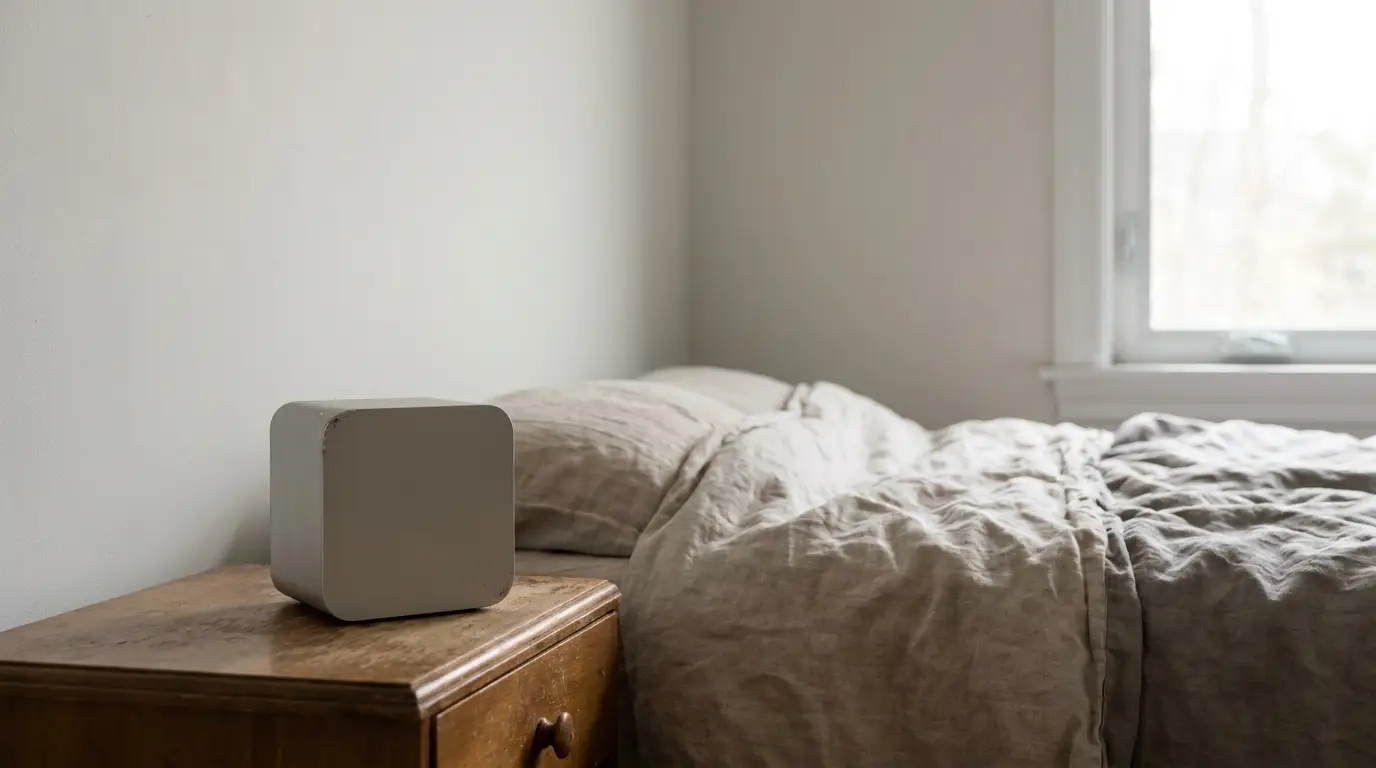
Measure first. A basic monitor tracking temperature, humidity and carbon dioxide costs less than a decent pillow and will tell you within three nights which variable is actually out of range. If humidity is the culprit, whole-home humidification or dehumidification tied into the existing system is usually more effective than a portable unit that treats one corner of one room. If carbon dioxide is climbing, the conversation is about ventilation. If it is dust and allergens, filtration and duct condition are the place to look.
A bedroom that holds steady humidity, exchanges air quietly and filters what comes through does more for sleep quality than most of the products marketed for it. It is also invisible, which is probably why it gets skipped.