If your down comforter is due for a wash, you do not need to take it to a dry cleaner. You can wash a down comforter at home with a regular washing machine.
The key is picking the right soap, the right cycle, and giving it enough time to dry all the way through.
Most people skip washing because they worry about ruining the fill. But the process is pretty simple once you know the steps.
Below, you will find everything you need to wash, dry, and fluff your comforter without damaging it.
What Makes Down Comforters Tricky to Wash
Down fill is not like synthetic bedding. Each cluster traps air to keep you warm and that structure is easy to damage with the wrong soap or machine.
Regular detergent strips the natural oils that keep clusters fluffy. Bleach breaks feathers apart. Fabric softener coats them and kills loft.
A top-loader with a center agitator can twist the shell and push all the fill into one corner.
Before you start, read the care label, check for tears or thin spots where feathers poke through and spot-treat any visible stains with mild detergent for 15 to 20 minutes.
How to Wash Down Bedding in a Machine
A machine-safe comforter needs enough room to move through the water. Mild detergent, careful loading and the correct washer settings can protect the filling during cleaning.
1. Gather the Right Supplies

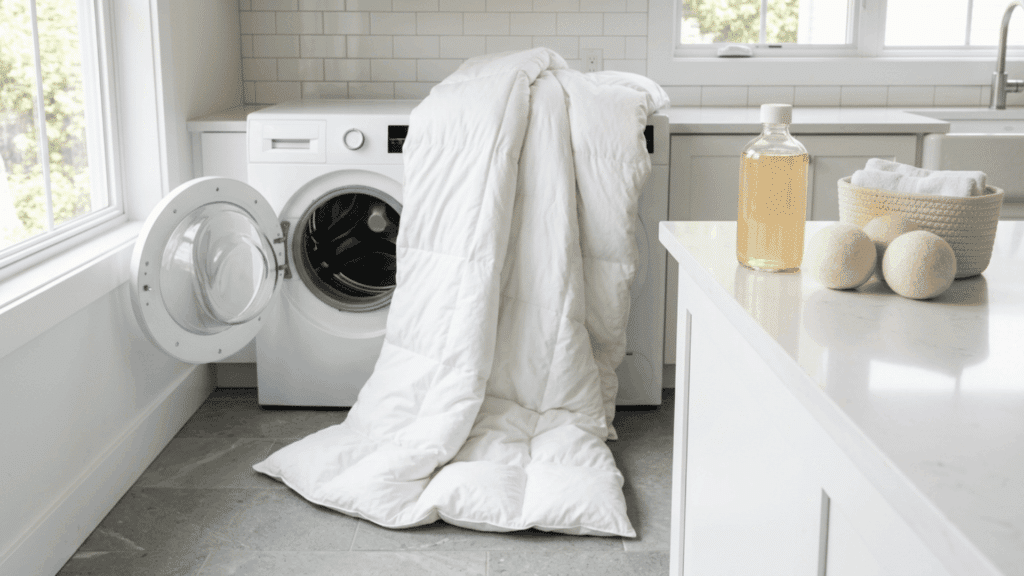
Prepare mild liquid detergent, a care-label-approved stain treatment, and two or three wool dryer balls.
Choose a detergent made for down or a mild formula that contains no fabric softener. Check the package for the correct dose because formulas and washers differ.
Leave out chlorine bleach, scent beads, softener, and dryer sheets, since they can damage the filling or leave feathers coated and flat.
2. Inspect and Treat Stains
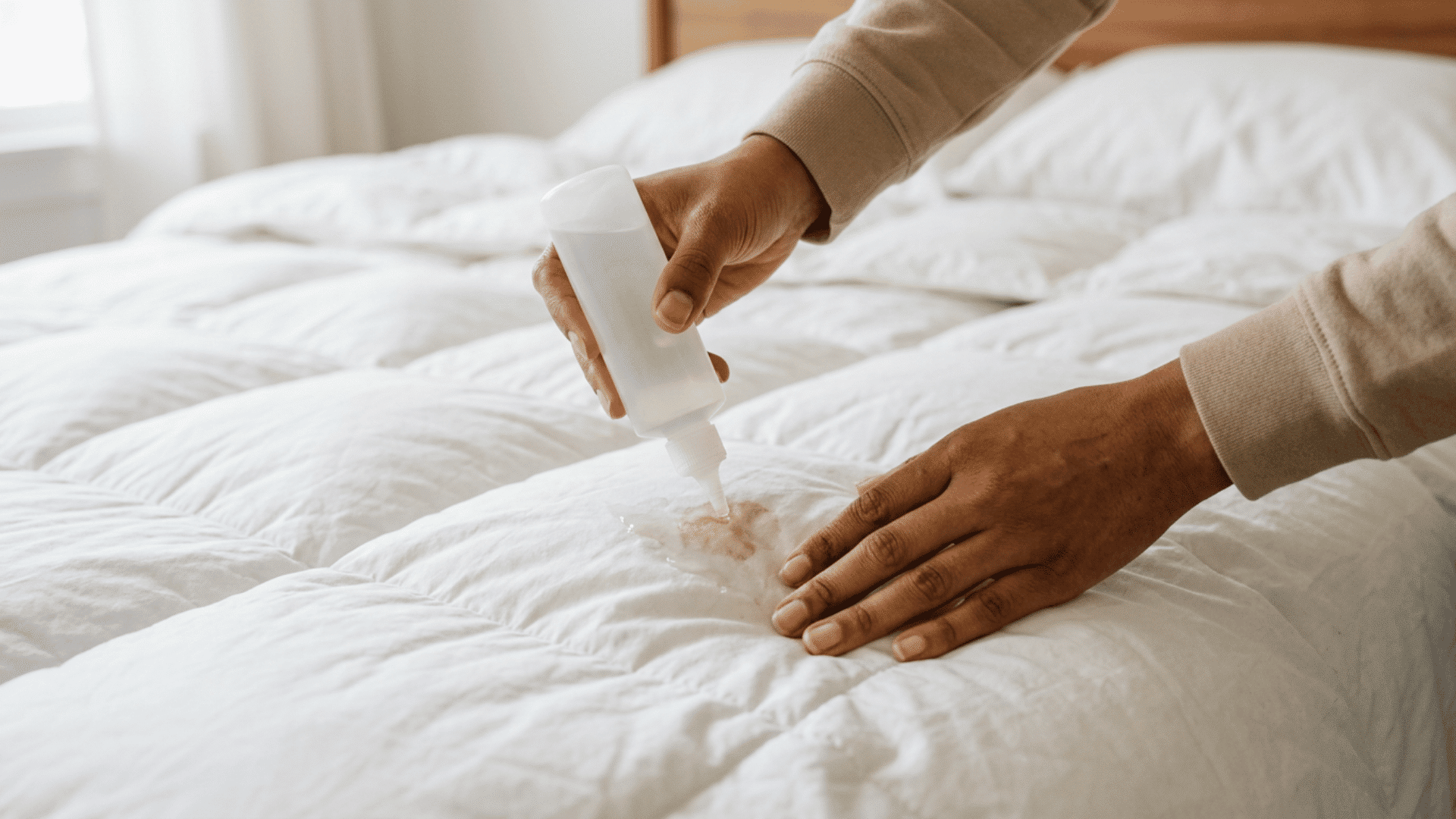
Lay the comforter flat on a clean bed or floor and check the outer fabric carefully.
Look around seams, corners, piping, and stitched boxes for loose threads, small tears, or escaping feathers. Before treating a stain, shift the filling away from that spot when possible.
Apply a small amount of approved treatment, wait for the label’s stated time, then blot or rub lightly without harsh scrubbing.
3. Check the Washer Size

Put the dry comforter in the empty washer before adding detergent. It should sit loosely below a top-loader’s balance ring or behind a front-loader’s gasket.
A front-loading model is usually suitable, while a roomy top loader without a tall center agitator may also work.
If the item fills most of the drum or cannot tumble freely, take it to a laundromat.
4. Add Detergent and Load Evenly
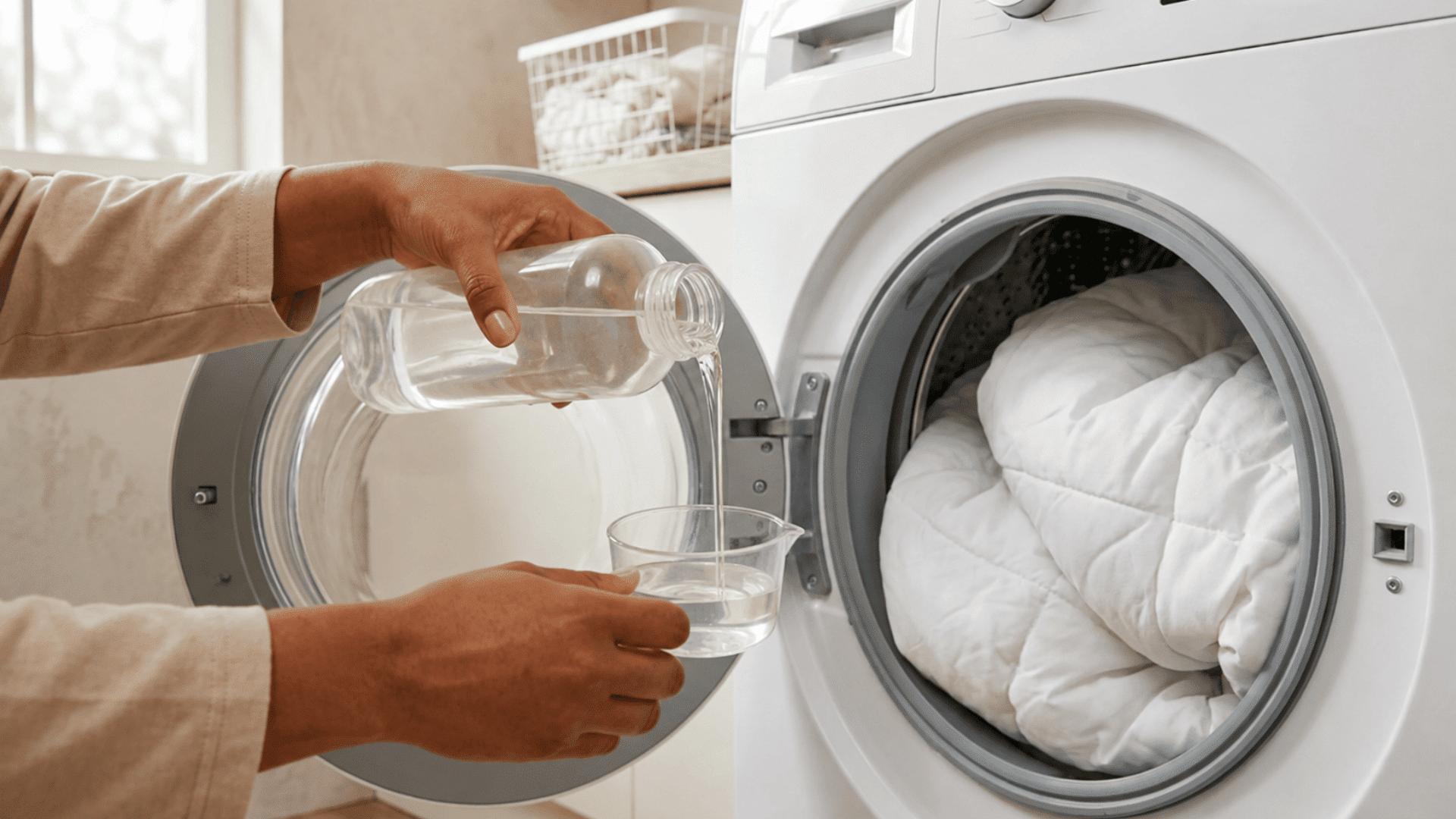
Pour only the detergent amount listed for a bulky, lightly soiled load.
Excess soap can remain inside the filling, leaving stiff clumps and forcing extra rinses. Place the comforter loosely around the drum without tight folds, knots, or packed sections.
Wash it by itself rather than adding sheets, towels, or clothes. This keeps the load balanced and lets water reach every filled box.
5. Pick the Water and Cycle Settings

Follow the care label when choosing water temperature and cycle. Cold or warm water is common for washable down, but the maker’s directions come first.
Select a gentle or bedding cycle and choose a low or medium spin if the machine offers it. Run an extra rinse after washing.
If foam remains or the fabric feels slick, rinse again with no added detergent.
6. Lift the Wet Comforter Safely
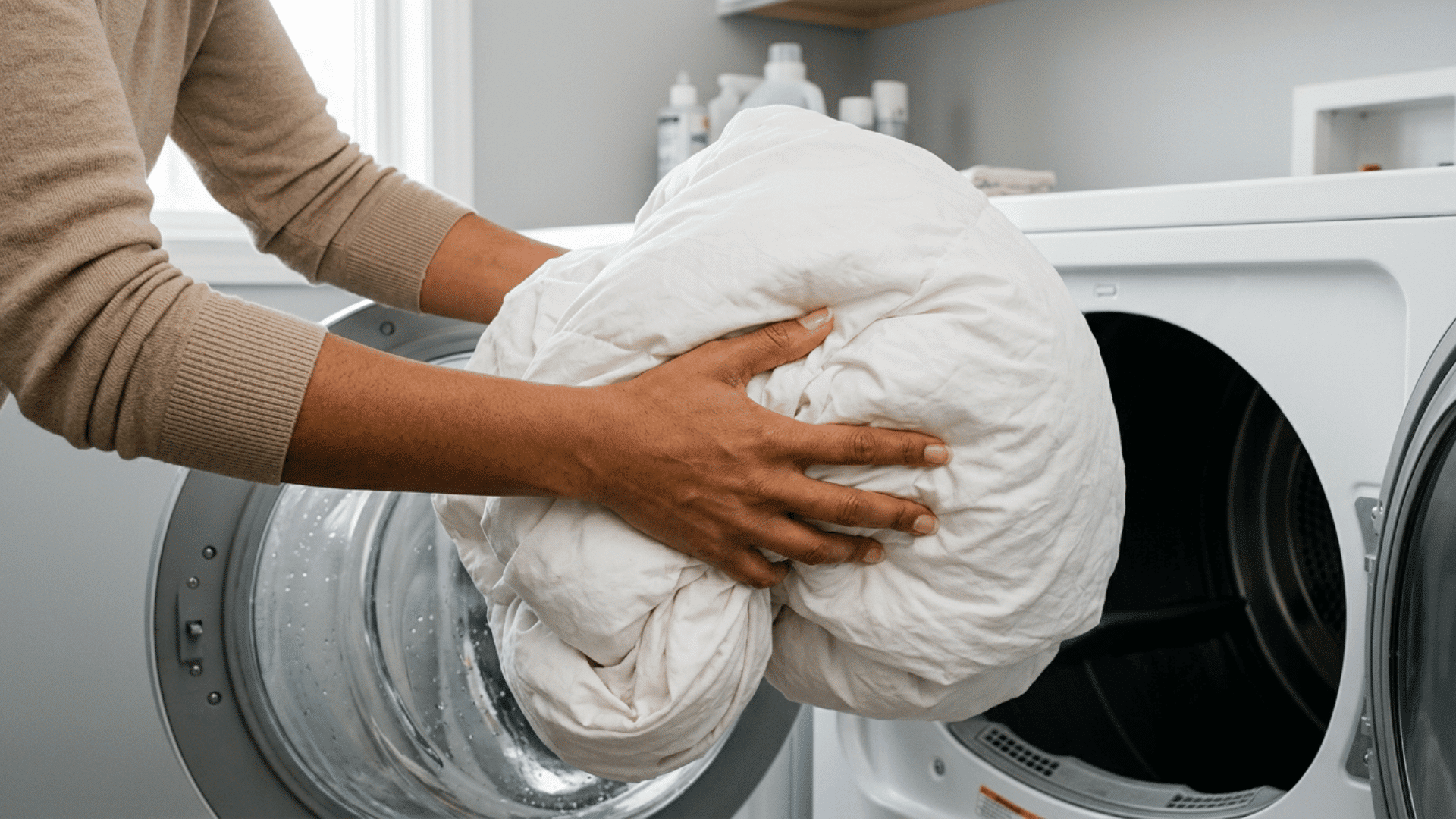
Wet down carries far more weight than dry filling, so lift the comforter with both arms under the full bundle.
Do not drag it out by one corner or edge, since wet seams can stretch or tear.
Move it straight to a roomy dryer or clean drying rack. Avoid twisting or wringing. Start drying promptly so the feathers do not stay bunched and damp.
How to Dry a Down Comforter Without Clumping
Set your dryer to low heat or air-fluff and add three to four tennis balls or wool dryer balls to break apart wet clumps.
Every 30 to 45 minutes, pull the comforter out, shake it, flip it, and separate any damp spots by hand.
A full cycle takes two to four hours. Press into the thickest areas and feel for cool patches before stopping.
The fill must be bone-dry to prevent mold. If you do not have a dryer, lay it flat outdoors on a breezy day and flip every hour.
Indoor air drying near a fan takes at least 24 hours.
How Often Should You Wash It?
Once or twice a year is enough for most people. If you use a duvet cover, and you really should, once a year is usually fine.
The cover catches body oils, sweat, and dust before they reach the down. Wash more often if you deal with seasonal allergies, sleep with pets, or live somewhere humid.
Between washes, air the comforter out every few weeks. Hang it over a railing or chair near an open window for a couple of hours.
That alone can keep it fresh for months.
Why Down Comforters Turn Yellow and How to Stop it
Yellow stains on down comforters come from body oils and sweat soaking through the shell over time. The buildup bonds to the fabric and gets worse the longer you wait.
- Use a duvet cover. It blocks oils and sweat from reaching the shell, which is the single most effective way to prevent yellowing.
- Wash on schedule. Cleaning once or twice a year stops oil buildup before it has time to discolor the fabric.
- Pre-soak existing stains. Add OxiClean to warm water, let the comforter sit for 30 minutes, then wash on the gentle cycle.
- Skip chlorine bleach. It damages feather fibers and can actually make yellow discoloration worse instead of removing it.
How to Fix Clumped or Musty Down Fill
If the damage is already done, these fixes can help before you replace the whole thing.
For clumped fill
Re-wash on the gentle cycle and dry on low heat with extra dryer balls. Pause often to pull apart clusters by hand. Most clumping reverses with a few extra drying rounds.
For a musty or mildew smell
Add a quarter cup of white vinegar to the rinse cycle and dry completely. If the odor stays after two full washes, professional cleaning or replacement is likely needed.
For lost loft
Run a full wash-and-dry cycle with dryer balls. That alone can bring back surprising bounce. If it still feels flat afterward, the fill is probably worn out from age.
Common Mistakes That Ruin Down Comforters
Most of these seem minor, but they add up fast:
- Using a top-loader with a center agitator, which can twist the shell and shift all the fill
- Picking regular detergent, bleach, or fabric softener instead of a mild, down-safe soap
- Washing on a hot water cycle, which can damage feathers and shrink the shell fabric
- Skipping the extra rinse, leaving soap residue that clumps the fill and causes odor over time
- Drying on high heat, which scorches down clusters and can warp the outer fabric
- Pulling the comforter out before the inside is completely dry, even if the surface feels fine
- Storing it while still slightly damp, which creates the perfect conditions for mold and mildew
- Packing it in a vacuum-seal bag, which crushes down clusters permanently; use a cotton bag instead
Wrapping Up
Washing a down comforter at home can save you $30 to $65 compared to a single dry cleaning trip.
The process comes down to three things: a front-loader, a mild soap made for down, and enough low-heat drying time for the fill to dry all the way through.
Pair that with a duvet cover, and you only need to do this once a year. The first time feels a little nerve-wracking, but the results speak for themselves.
If you have a trick that worked for your own comforter or a question about getting started, drop it in the comments below.
Frequently Asked Questions
Can Small Shell Tears Be Repaired?
Yes. Close small tears with fine stitching or a fabric repair patch before cleaning. Larger damage may require a bedding repair service.
Are Goose and Duck Fill Cleaned Differently?
Both fillings generally follow the same care process, but the sewn-in label takes priority because shell fabrics and construction methods can differ.
Does Fill Power Change the Cleaning Method?
Fill power does not set the washing method. Higher-loft bedding still needs label-approved soap, enough drum space, low heat, and full drying.