
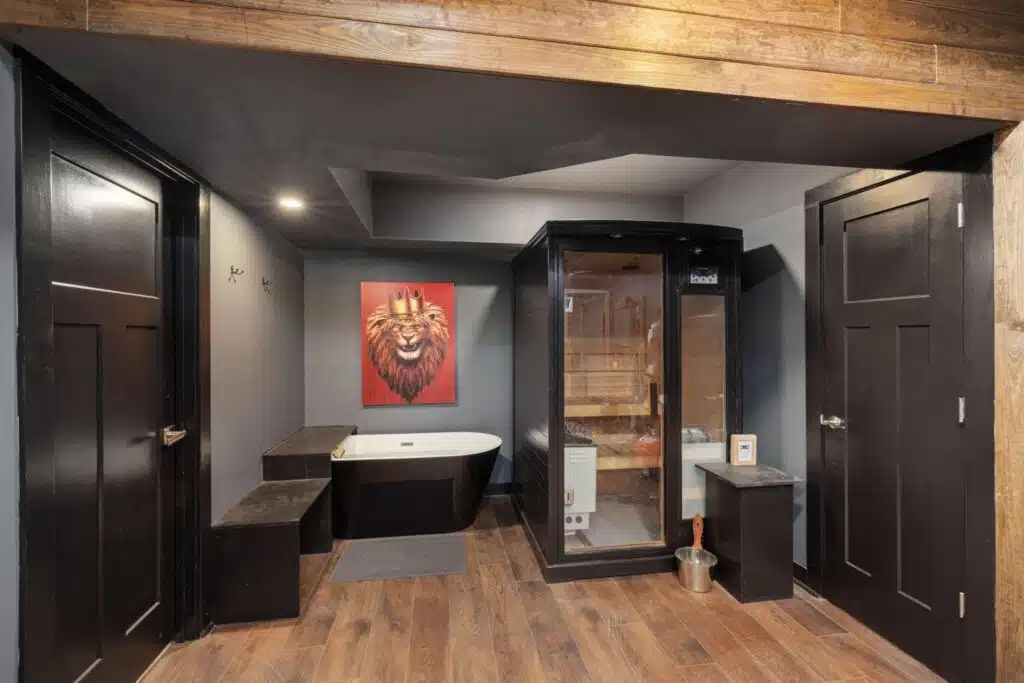
Wellness amenities are no longer the reserve of spas and resorts; they have now become part of the modern home. Developers, architects, and builders are prioritizing features that support physical health, mental well-being, stress reduction, and recovery.
Almost every new development today features dedicated fitness rooms, outdoor wellness spaces, meditation areas, natural lighting, air-quality improvements, and recovery-focused amenities, especially in luxury homes.
Wellness-focused communities and residential developments are now among the fastest-growing segments of the global wellness economy. In fact, homeowners are even retrofitting existing properties with wellness-focused upgrades designed to improve everyday quality of life.
Home saunas, cold plunges, red-light therapy systems, dedicated recovery spaces, meditation rooms, air purification systems, and home fitness studios have become far more accessible than they were even a decade ago. In other words, the home is evolving from a place where people live into a place that helps them live well.
How The Home Is Becoming a Wellness Hub
One of the biggest shifts in residential design is that wellness is no longer being treated as an occasional luxury activity. There’s a general mindset shift and acceptance that personal wellness should be part of daily living.
Instead of traveling elsewhere to exercise, recover, relax, or recharge, people increasingly want those experiences integrated into the places where they spend the most time. As a result, homes are being designed around wellness in ways that would have been unusual only a decade ago.
Several trends are driving this transformation.
- Dedicated wellness spaces: extra rooms converted into home gyms, yoga studios, meditation spaces, and recovery rooms designed to support daily routines.
- Biophilic design: Natural materials, indoor plants, improved daylighting, outdoor views, and nature-inspired design elements are incorporated into residential projects.
- Sleep-focused design: Lighting, noise control, air quality, temperature management built into home design, especially in bedroom environments to support rest and recovery.
- Recovery and restoration spaces: Cold plunges, massage chairs, stretching areas, red-light therapy systems, and other recovery-focused amenities are finding their way into residential environments.
Perhaps most importantly, homeowners are becoming more intentional about creating spaces that encourage healthy behavior. A well-designed home can make exercise more convenient, relaxation more accessible, and recovery more consistent.
This shift helps explain why wellness amenities that were once associated primarily with resorts, spas, and health clubs are increasingly being integrated into residential design.
Among these trends, home saunas have emerged as one of the most popular and widely adopted forms of home wellness. Saunas combine relaxation, recovery, ritual, and convenience in a single feature, making them uniquely suited to the modern wellness-focused home.
Biophilic Design Continues to Gain Momentum
One of the strongest influences on modern home design is biophilic design.
The concept is simple: humans tend to feel better when they are connected to nature.
This can take many forms:
- Natural wood materials
- Large windows and natural light
- Indoor plants
- Organic textures
- Natural ventilation
- Water features
- Views of outdoor spaces
What makes biophilic design particularly effective is that it improves a space without feeling overly intentional. A room filled with natural materials often feels calmer and more inviting, even when people can’t immediately identify why.
This trend helps explain the growing popularity of cedar saunas, thermowood structures, outdoor wellness spaces, and natural-material interiors. They satisfy both aesthetic and wellness goals simultaneously.
Pro Tip: If you’re creating a wellness-focused room, start with natural materials before adding technology. The atmosphere of a space often has a greater impact than the gadgets inside it.
Recovery Spaces Are Replacing Traditional Luxury Rooms
For years, luxury homes emphasized entertainment.
Home theaters, game rooms, bars, and oversized media spaces were among the most coveted features.
Today, many homeowners are allocating square footage differently.
Instead of designing spaces primarily for consumption, they are creating spaces dedicated to restoration.
This includes:
- Home saunas
- Cold plunge areas
- Meditation rooms
- Recovery lounges
- Stretching and mobility spaces
- Outdoor wellness retreats
The trend reflects a growing understanding that rest and recovery are not luxuries—they’re necessities.
This change is particularly noticeable among professionals who spend much of their day in front of screens. For them, a wellness space offers something increasingly difficult to find elsewhere: intentional disconnection.
Saunas: The Flagship of Home Wellness
Among all the wellness amenities finding their way into modern homes, saunas occupy a unique position.
A sauna can support multiple lifestyle goals simultaneously. It can function as a recovery space after exercise, a place for relaxation and mindfulness, a social environment for family and friends, or simply a daily ritual that encourages people to step away from screens and distractions for a while.
That versatility helps explain why so many homeowners choose a sauna as the foundation of a dedicated wellness space.
More importantly, saunas are not like other wellness trends that come and go. Long before “wellness rooms” became popular, cultures throughout Scandinavia and other parts of the world had already integrated saunas into everyday life as places for relaxation, connection, and restoration. Modern homeowners are increasingly embracing that same philosophy.
Easy to Install, Affordable to Run
Historically, one of the biggest barriers to sauna ownership was accessibility. Traditional saunas required custom construction, specialized design knowledge, significant installation work, and a substantial financial commitment. For many homeowners, the idea of building a sauna felt more like a major renovation project than a practical home improvement.
That has changed dramatically over the past decade. Modern sauna kits and pre-engineered sauna systems have made ownership significantly more accessible, allowing homeowners to enjoy a premium sauna experience without the complexity traditionally associated with custom builds. Many models arrive with pre-cut components, detailed installation guidance, and heater systems specifically matched to the sauna’s size and intended use.
Companies such as Select Saunas have helped accelerate this shift by offering a broad range of indoor, outdoor, traditional, infrared, and hybrid sauna solutions designed for different spaces and budgets.
Whether you want a compact infrared sauna for a home gym, a traditional indoor sauna for daily use, or a barrel sauna as the centerpiece of a backyard wellness retreat, there are now options available that would have been difficult, or prohibitively expensive, to access just a few years ago.
As a result, sauna ownership is no longer limited to luxury homes or dedicated wellness facilities. It has become a realistic option for homeowners who simply want to create a healthier, more restorative living environment.
The Backyard Is Becoming the New Wellness Retreat
While indoor wellness spaces continue to grow in popularity, one of the most significant design trends is happening outdoors.
Homeowners are increasingly reimagining their backyards as environments dedicated to relaxation, recovery, and overall well-being rather than entertainment alone.
This represents a notable evolution in outdoor living design. A decade ago, many outdoor projects centered around patios, grills, televisions, and dining spaces. Today’s homeowners are often looking for something different: spaces that help them disconnect from daily pressures and reconnect with healthier routines.
As a result, modern backyard wellness retreats frequently incorporate:
- Outdoor saunas
- Cold-plunge systems
- Outdoor showers
- Fire features
- Meditation and reflection areas
- Natural landscaping
- Covered relaxation zones
These elements work together to create an environment that feels separate from the pace of everyday life without requiring homeowners to leave their property.
The trend also reflects a broader shift in how people define luxury. Increasingly, luxury is less about excess and more about access—to quiet, recovery, privacy, nature, and time to recharge.
Not surprisingly, outdoor saunas have become one of the defining features of this movement. They provide a focal point around which homeowners can build a complete wellness experience, transforming an ordinary backyard into a space designed to support long-term health, relaxation, and quality of life.
Final Thoughts: The Future of Home Design Is Human-Centered
Many design trends come and go. Open floor plans, color palettes, decorative styles, and architectural fashions often rise and fall with changing tastes. Wellness appears different because it addresses something far more fundamental: how people actually experience their everyday lives.
Increasingly, homeowners want spaces that help them sleep better, recover more effectively, reduce stress, spend more time outdoors, and maintain healthier routines. These aren’t temporary preferences driven by social media or design magazines. They’re enduring human needs.
This is why wellness-oriented design is beginning to influence everything from architecture and landscaping to lighting, materials, air quality, and room layouts.
The most forward-thinking homes are being designed around human performance, comfort, and well-being.
In many ways, the homes of the future will likely function more like personalized wellness environments than traditional living spaces.