Waking up with a pounding headache can ruin your entire day before it even starts. If you experience morning headaches regularly, a sleep apnea headache might be the hidden culprit behind your pain.
I’ve spent time researching this connection to help you understand what’s really happening. Most people don’t realize that their nighttime breathing problems cause their morning head pain.
Many suffer for years without knowing the real source of their discomfort. The right information can help you take control of your health and mornings.
Understanding headaches is your first step toward finally getting the relief you deserve. Let me break it down for you.
This information is for educational purposes only and should not replace professional medical advice. Always consult your doctor for diagnosis and treatment of sleep apnea headaches.
What is Sleep Apnea?
Sleep apnea is when you stop breathing for short periods while you sleep. There are two main types you should know about. Obstructive sleep apnea happens when your throat muscles relax too much and physically block your airway.
Central sleep apnea occurs when your brain doesn’t send the right signals to your breathing muscles. A third, rarer form called complex sleep apnea syndrome combines features of both. Many people have this condition without even knowing it. It can affect anyone, regardless of age or fitness level.
Your breathing pauses can last from a few seconds to over a minute. In severe cases, these interruptions can happen more than 30 times per hour throughout the night.
Sleep apnea headache is formally recognized as its own headache category in the International Classification of Headache Disorders (ICHD), which distinguishes it from tension headaches and migraines.
Getting diagnosed early matters because sleep apnea morning headaches are just one sign of a condition with serious downstream health consequences if left untreated.
Stress and trauma can also play a role in development; the PTSD and sleep apnea connection is one that often gets overlooked in everyday clinical conversations.
The Connection Between Sleep Apnea and Headaches
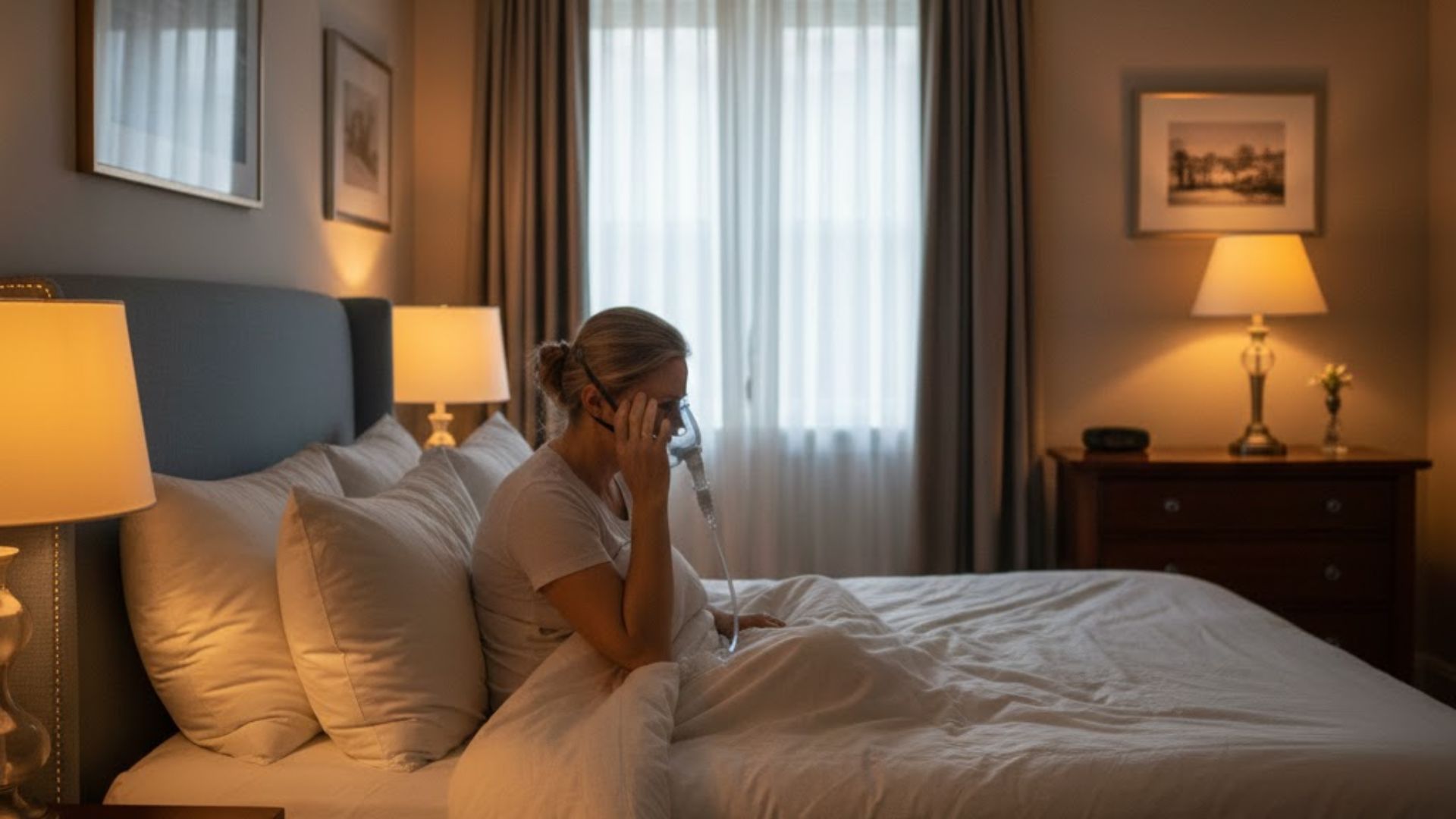
Sleep apnea and headaches are more connected than you might think. I’ve researched the main reasons why this sleep disorder triggers those painful morning headaches, including studies from the National Institutes of Health. Let’s break down the key factors that link these two conditions:
1. Hypoxia (Low Oxygen Levels)
When you have sleep apnea, your brain doesn’t get enough oxygen during the night. Your blood vessels in the brain widen to get more oxygen through.
This widening of blood vessels is called vasodilation, and it’s what causes your headache pain. I’ve found that these oxygen drops happen repeatedly throughout the night. The more severe your sleep apnea is, the worse these headaches become.
2. Sleep Disruptions
Your sleep gets interrupted constantly when you have sleep apnea episodes throughout the night. I’ve learned that fragmented sleep is a major trigger for tension headaches in many people.
A 2023 study in Sleep Medicine Reviews found that morning headache occurred in approximately 33% of OSA patients studied across multiple clinics.
Critically, the risk was not solely tied to oxygen drop severity; total sleep time reduction and unrefreshing sleep were independent predictors, suggesting that sleep architecture disruption plays a significant role beyond just oxygen levels alone.
People dealing with this kind of fragmented, non-restorative sleep often report that they sleep through their alarms despite feeling like they barely rested, a problem that overlaps heavily with poor sleep quality and disrupted sleep cycles.
3. Increased Carbon Dioxide Levels
Carbon dioxide builds up in your bloodstream when you stop breathing during sleep apnea. I’ve researched how high CO2 levels can directly trigger pain responses in your brain. Your body treats this buildup as a dangerous situation that needs immediate attention.
The excess carbon dioxide makes your blood more acidic, which irritates brain tissues. This chemical imbalance is another reason you wake up with headaches.
4. Inflammation and Stress
Sleep deprivation from apnea causes your body to release more cortisol, the main stress hormone. I’ve found that elevated cortisol levels contribute significantly to headache development and intensity.
From a behavioral science standpoint, this creates a compounding cycle: disrupted sleep raises cortisol, elevated cortisol increases pain sensitivity, and heightened pain sensitivity makes it harder to sleep well the next night.
I often explain this to clients as a stress loop that medication alone won’t break, because you’re treating the output of the cycle, not the input.
5. Teeth Grinding (Bruxism)
Many people with sleep apnea grind their teeth during the night without knowing it. I’ve analyzed how this teeth grinding, called bruxism, creates serious tension in your jaw muscles.
The constant clenching puts enormous pressure on your jaw, temples, and surrounding areas. This muscle tension radiates outward and often turns into a full headache by morning. Treating sleep apnea often helps reduce teeth grinding, too.
Signs Your Headaches Are From Sleep Apnea
A useful way to think about this: sleep apnea headaches follow a pattern. They are predictable in their timing, their feel, and their location. If your headaches don’t fit this pattern consistently, another cause is worth investigating with your doctor.
- Morning timing: These headaches typically occur right when you wake up and usually fade within a few hours.
- Dull, pressing pain: The pain feels like pressure or a tight band around your head rather than sharp or throbbing.
- Both sides of the head: Sleep apnea headaches usually affect both sides of your head rather than just one.
- Frequency: They happen regularly, often several times per week or even every morning if your apnea is severe.
- Different from migraines: Unlike migraines, these headaches don’t come with nausea, light sensitivity, or visual disturbances.
Recognizing these specific symptoms is the first step toward getting proper treatment. If you notice these patterns in your morning headaches, it’s time to talk to your doctor.
How to Tell Sleep Apnea Headaches Apart from Other Types
| Headache Type | Timing | Location | Feel | Other Symptoms |
|---|---|---|---|---|
| Sleep Apnea | On waking, resolves within 4 hours | Both sides of the head | Dull, pressing | Snoring, dry mouth, fatigue |
| Migraine | Anytime; can last 4–72 hours | Usually one side | Throbbing, pulsating | Nausea, light/sound sensitivity, aura |
| Tension Headache | Anytime | Both sides, forehead/neck | Tight band pressure | Stress, posture, and muscle tension |
Recognizing these specific symptoms is the first step toward getting proper treatment. If you notice these patterns in your morning headaches, it’s time to talk to your doctor.
When to See a Doctor Immediately
Most sleep apnea headaches are uncomfortable but not dangerous on their own. However, certain headache warning signs require prompt medical evaluation because they can indicate something more serious than sleep apnea:
- A headache that is the worst of your life or came on suddenly like a “thunderclap.”
- Headaches accompanied by vision changes, weakness, dizziness, or slurred speech
- Headaches that are worsening over days or weeks without improvement
- Headaches that wake you from sleep (as opposed to occurring when you wake up)
- Morning headaches alongside fever, stiff neck, or confusion
If any of these apply, seek immediate medical care. These symptoms can indicate neurological conditions unrelated to sleep apnea that need urgent attention.
Nighttime breathing difficulties can also overlap with other conditions; understanding nocturnal breathing risks more broadly can help you recognize when symptoms cross the line from manageable to urgent.
How to Manage and Prevent Sleep Apnea Headaches

I’ve outlined effective treatments, management strategies, and preventive measures that can help you find relief. Let’s understand the key approaches to managing sleep apnea headaches:
1. Effective Treatment for Sleep Apnea
Treating your sleep apnea is the most important step to eliminate morning headaches for good. A study in PubMed Central found that after PAP therapy, the prevalence of morning headaches in OSA patients dropped from 53.4% to 16.4%, and severity scores declined significantly. That’s a meaningful reduction for most people who commit to treatment.
The right treatment options include:
- CPAP Therapy: Continuous positive airway pressure (CPAP) is considered the gold-standard treatment for moderate to severe obstructive sleep apnea. The machine delivers steady air pressure to keep your airway open all night.
- Dental Appliances: Custom oral devices reposition your jaw and tongue to keep your airway open during sleep. These are often a preferred first option for mild to moderate OSA, especially for patients who struggle with CPAP mask tolerance.
- Surgery Options: Procedures like uvulopalatopharyngoplasty or jaw repositioning surgery can permanently remove airway obstructions. Surgery is typically considered only after other treatments have been tried and found insufficient.
Once you start effective sleep apnea treatment, you’ll likely notice your morning headaches improve within weeks. Consistency with your treatment plan is key to long-term headache relief.
One thing I emphasize to clients: if your headaches don’t improve after several consistent weeks on CPAP, tell your doctor. Some people have a coexisting sleep disorder, such as insomnia, alongside their apnea, and both need to be addressed before headaches fully resolve.
2. Headache Management Strategies
While treating sleep apnea addresses the root cause, you can take steps to manage headache pain immediately. Try these relief strategies:
- Medication: Over-the-counter pain relievers like ibuprofen or acetaminophen can help reduce morning headache pain effectively.
- Sleep Hygiene: Maintain a regular sleep schedule, use a supportive pillow, and create a cool, dark sleep environment.
- Hydration: Drink plenty of water throughout the day and have a glass before bedtime to prevent dehydration headaches.
Combining good sleep habits with pain management gives you the best chance of reducing headache severity. These strategies work alongside your sleep apnea treatment for better overall results.
3. Preventive Measures
Making certain lifestyle changes can reduce sleep apnea severity and prevent headaches from happening in the first place. Consider these preventive steps:
- Weight Management: Losing even 10% of your body weight can significantly reduce sleep apnea severity and airway pressure.
- Positional Therapy: Sleeping on your side instead of your back keeps your airway more open throughout the night.
- Avoiding Alcohol and Sedatives: These substances relax throat muscles too much, making airway blockages worse during sleep.
These preventive measures work best when combined with proper sleep apnea treatment from your doctor. Small lifestyle changes can make a big difference in reducing both apnea events and morning headaches.
It’s also worth considering how sleep apnea affects household dynamics. Partners of people with untreated apnea frequently report their own disrupted sleep from snoring, a situation that some couples address through separate sleeping arrangements as a stopgap while treatment is pursued.
That’s a Wrap
Sleep apnea headache doesn’t have to control your mornings anymore. I’ve provided you with the information you need to take action on your health. The good news is that effective treatments exist that can help you feel better.
You deserve to wake up feeling refreshed instead of in pain every single day. Talk to your doctor if you suspect sleep apnea is affecting your quality of life. Getting a proper diagnosis could change everything for you moving forward.
Treatment options work incredibly well for most people who commit to using them. Take action today because your health matters too much to ignore.
Share your experience with sleep apnea headaches in the comments below.