

Impact of AI on Student Psychology: A Deeper Look
The advent of Artificial Intelligence (AI) is transforming classrooms far beyond just bolstering grades. Sure, it brings undeniable convenience – finishing math problems faster, learning language nuances smoother, or even deciphering the hardest physics equation effortlessly. But let’s pause here to consider something. The omnipresence of these smart tools brings new subtle challenges alongside the clear-cut academic boons. It’s time we turned our focus toward their psychological impacts – for better, and sometimes for worse.
Consider the different textures of the student’s mental canvas – added layers of relief from dwindling homework pressure, yes, but also potential strokes of anxiety stemming from over-dependence on technology, or even the creeping fear of skill stagnation. Unveiling the less-discussed psychological footprint of AI in education, we’ll explore the nuances of popular learning aids, weigh the upsides against the downsides, and reveal ways for students to maximize benefits whilst maintaining cognitive integrity. Stay tuned as we traverse this under-charted territory.
Misconceptions About the True Impact of AI in Education
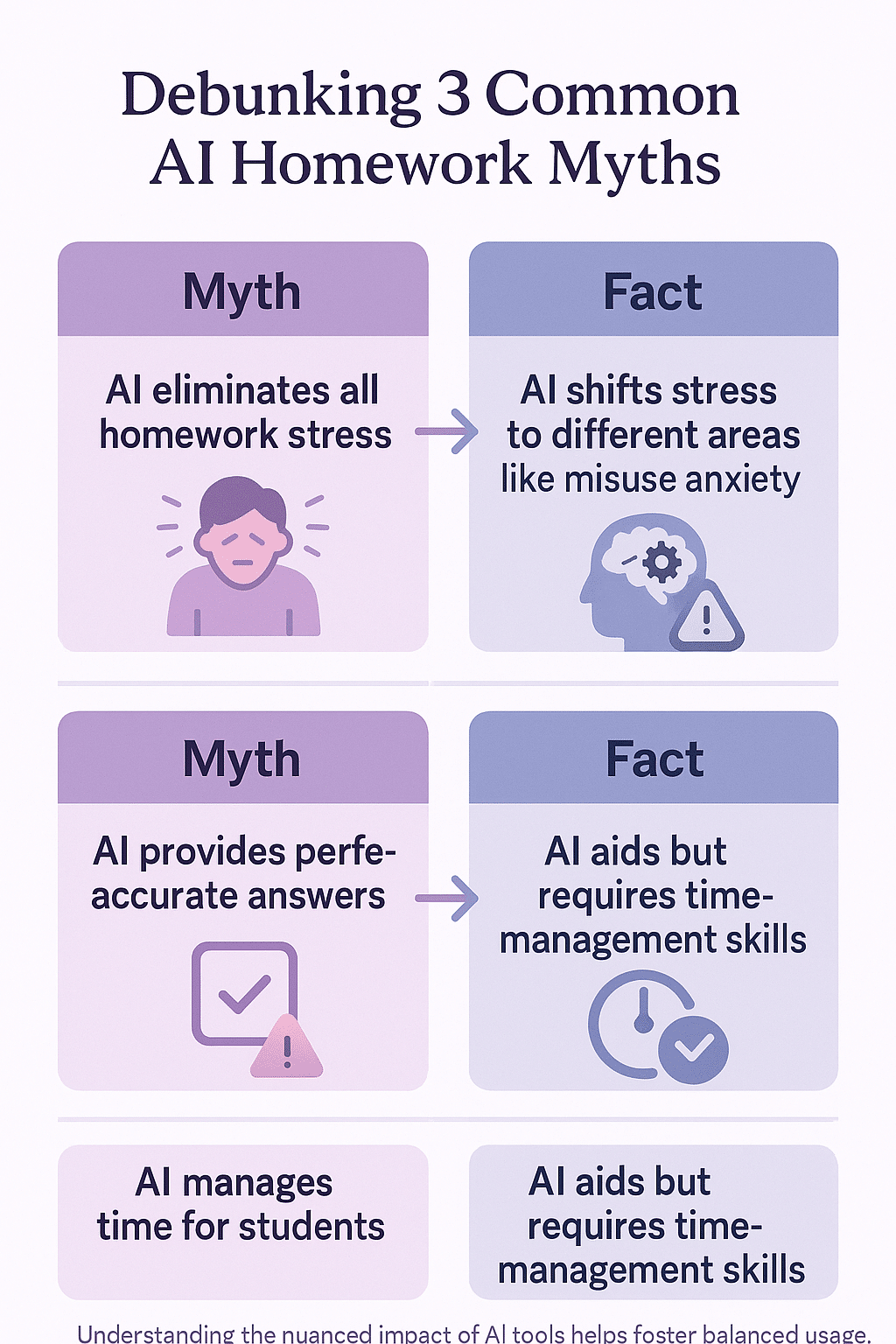
Often, we fall prey to common misconceptions regarding the realm of AI in education which cloud our judgment and understanding. Time to break those down.
One such myth is that AI eliminates all homework pressure. While it’s true that an AI tool can make homework tasks more manageable, it doesn’t erase stress completely. Stress can instead shift to other areas, like the apprehension of getting caught using it or the pressure to keep up with its speed.
Another common belief is that AI encourages student laziness. The involvement of AI doesn’t inherently breed laziness; rather, it can foster a dependency. That’s not entirely negative though! Nurturing this dependency into a symbiotic relationship can empower diligent learners, making these tools their allies in independent learning.
Lastly, it’s often thought AI is just a tool for cheating. Such a narrow view disregards the high potential of AI for genuine learning assistance. With the right ethical guidance, AI can become a trusted comrade in a student’s academic journey.
Remember, the truth about AI is complex and multi-layered, much like the students it aims to support. Unpacking these myths is just the start; embracing the reality of AI in education requires continuous learning, openness, and a keen sense of balance.
Unseen Risks: When AI Steals Learning Struggles
Let’s Spotlight an interesting paradox: as AI tools shoulder more of our mental load, they unwittingly rob us of opportunities for ‘productive struggle’. Now, what is this about? And why is it crucial to learning and building resilience?
Contrary to conventional wisdom, productive struggle isn’t about pulling your hair out over a textbook at midnight. It’s an awkward shuffle towards understanding, a tough tug-of-war with a complex problem, a cherished victory when the light bulb finally flickers on. In shorthand, it’s stretching your mental muscles, flexing your wit, and building resilience when facing academic hurdles.
An over-reliance on AI, however, can coax students into a practice known as ‘cognitive offloading’. That’s when we outsource our brain work to AI, reducing the cognitive burden to the bare minimum. Sounds hassle-free? Well, this unending convenience comes with a hidden bill of its own. Picture this: When your brain constantly passes the buck to AI, it misses out on opportunities to learn, evolve, and grow stronger. Over time, the mind may start struggling with problem-solving and lose some of its academic grit, simply because it hasn’t had enough practice dealing with challenges head-on.
So, while we revel in the unparalleled ease these new-age tools offer, let’s not lose sight of the trade-off. Knowing when to lean on AI and when to wrestle with problems ourselves is a skill that can hone resilience, spark creativity and build intellectual independence. It’s high time we approached AI as a partner in learning, not a shortcut to success.
Popular AI Homework Tools Support and Independence Balance
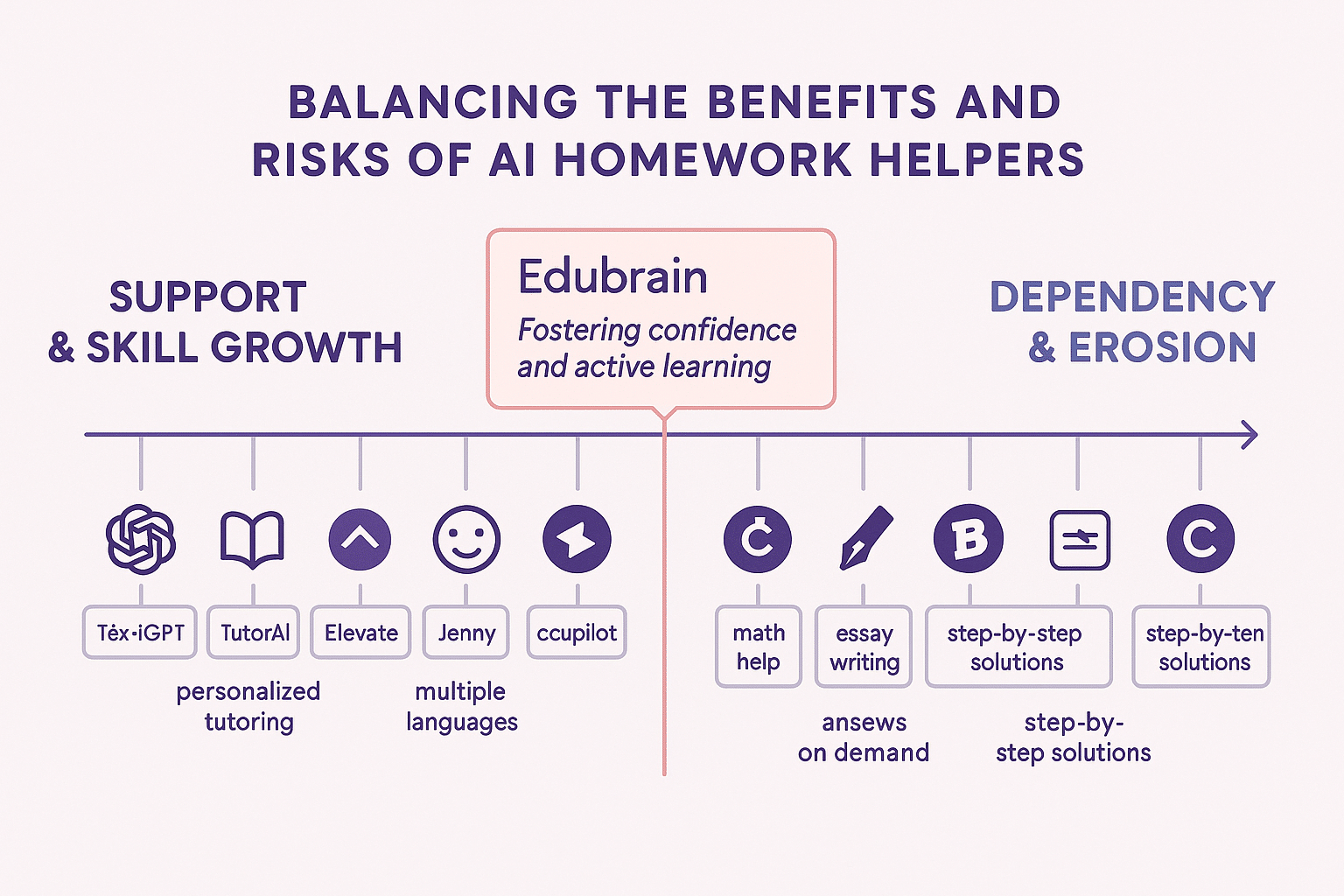
Have you ever wondered how different AI-powered homework assistants could be affecting your students’ mental health? Unpacking the pros and cons of popular tools is an intriguing ride. Let’s dive into the top ten and scrutinize them through our mental health lens.
- ChatGPT jumps into the ring first, acting as a versatile AI partner for brainstorming sessions and concept explanations. Although it can lessen the terrifying ‘blank page’ syndrome, its aid could have the unanticipated consequence of encouraging surface-level understanding.
- In second place is Edubrain’s math solver. This unique assistant simplifies those cryptic math equations into digestible chunks, shedding light on the method behind the math madness. By alleviating math anxiety and creating an atmosphere of achievement, students find the ability to comprehend concepts independently. What stands out about Edubrain’s math solver is that it seeks to develop learners’ confidence, making it a remarkable force in promoting wholesome mental well-being.
- PhotoMath claims the bronze, letting users solve math problems with a quick click of a smartphone camera. While the immediate solution relieves stress, it might leave students skipping important steps in the learning journey.
- Wolfram Alpha, a computational powerhouse, is a treasure trove for enthusiastic knowledge seekers. Although it might seem daunting for those already under pressure, it could open doorways to deeper learning for the intellectually adventurous.
- Socratic by Google plays its part by breaking down complex academic concepts into simpler statements. While it reduces students’ confusion, they need to actively engage with the app to reap the full benefits.
- Quizlet, known for its flashcards and study tools, assists students in cutting down rote memorization stress. However, the potential pitfall lies in the risk of surface-level retention.
- Grammarly lends a helping hand in writing tasks by incorporating AI algorithms. Although it nurtures writing confidence, overdependence on its electronic grammar checker can stifle the cultivation of independent proofreading skills.
- Perplexity AI, a conversational search engine, provides swift answers to homework questions, lowering research-related frustration. However, its speed and ease might challenge students’ critical evaluation of sources.
- Chegg Study makes quick work of textbook solution finding and expert Q&A sessions, easing homework stress. One needs to be mindful though, as it can lead to potential over-reliance and prying open the backdoor to academic dishonesty.
- Finally, Khan Academy’s AI-powered tutoring system, Khanmigo, offers personalized learning that can decrease frustration and anxiety. Yet, it still requires good old student initiative to truly shine.
This exploration underscores a careful balancing act: The true value of these AI tools goes hand in hand with proactively cultivating the students’ independent learning abilities, keeping their mental well-being at the forefront.
Edubrain Approach to Education Support
Truly beneficial educational tools, such as Edubrain, walk a fine line. They need to support students, yes, but they should also foster a sense of autonomy. By breaking down complex problems into manageable chunks, Edubrain reduces fear and frustration. It’s like having a calm, patient tutor who guides students step by step, transforming cryptic equations into pure comprehensible language.
Compare this with tools that simply reel off solutions, leaving students passive and a bit detached. They might get quick answers but at the expense of deep, active learning. They benefit momentarily, but the long-term impact wanes.
However, Edubrain does not serve answers on a silver platter. It’s geared towards striking a balance – providing scaffolding support for learning while reducing anxiety linked with homework struggles, effectively empowering students. Here’s the beauty of this approach: students still experience an element of productive struggle, but with the safety net of a guiding hand, reducing the risk of cognitive overload.
In this liaison of digital tutor and learner, what truly thrives is an empowered learner, developing academic resilience steadily, but not without challenges and not without victory.
Guide for Students through the AI Terrain: Parent and Educator Actions
When it comes to AI tools, responsible usage is the key to protect students’ mental health. Let’s look at a straightforward checklist for parents and educators:
- Open the AI conversation. Discuss its role and purpose honestly with students.
- Position AI as an aid. Show how it complements learning, rather than replacing it.
- Keep an eye on screen time. Monitoring usage discourages excessive reliance.
- Nurture critical thinking. Encourage skepticism towards AI-generated content.
- Promote understanding, not short cuts. Show that grasping concepts beats quick answers.
- Instill a growth mindset. Reiterate that learning, like technology, is a path of continual evolution.
By following these clear steps, we can ensure AI assists rather than dominates, cultivating confident, resilient learners.
Reframe AI in Education: A Vision for a Well-Balanced Future
With the rising reliance on technology in education, the role of AI is bound to evolve. Yet, for a sustainable future, it’s paramount that upcoming integrations of AI tools hinge not merely on efficiency, but also on student well-being. This demands a pivot towards personalized learning, adopting a tailored approach that respects individual pace and abilities.
Maintaining a steady dialogue amongst developers, educators, and mental health experts is crucial. Together, they can shape AI tools that adjust the level of challenge in sync with a learner’s expanding skill set, fostering a learning environment where skills develop organically.
It’s the key to unlocking a future where technology aids education without imposing undue stress—an era where learning becomes less about a race against time, and more about fulfilling one’s unique potential. A commitment to mindful AI integration in education could see us paving the path towards a balanced blend of digital efficiency and holistic mental well-being. Let’s join hands to shape this reality.
Main Insights on Student Mental Health and AI Tools
Navigating the complexity of AI’s impact on mental health requires a balanced strategy. Choosing tools that underscore comprehension rather than swift solutions is a critical part. Open and frequent communication about the role and application of AI in learning is equally important. Not to forget the significance of practicing responsible AI use and putting a strong emphasis on all-encompassing student growth. It’s all about wielding technology with thought, not as an automatic response.
Shape an Education Future with AI and Mindfulness
As we look toward the future, the presence of AI in educational tools is undeniable. Yet, how it’s incorporated is vital, with the emphasis on safeguarding student mental health. We collectively hold the steering wheel, navigating technological advances while prioritizing our students’ well-being. Our shared responsibility is to sculpt an educational future that embraces beneficial tech without compromising mental health. Let’s seize this opportunity with clear-sighted, ethical choices.