For years, modern interiors leaned heavily toward clean lines, open windows, and minimal window dressings. Blinds and shutters took centre stage, often replacing traditional curtains in the name of simplicity. But lately, something has shifted. Curtains are quietly reclaiming their place in contemporary homes as thoughtful design elements that balance comfort, style, and practicality.
This renewed interest reflects a broader change in how people want their homes to feel. Today’s interiors aren’t just about looking good on a screen. They’re about creating spaces that feel good to live in. And curtains, it turns out, play a bigger role in that than many people realised.
A Shift Towards Comfort and Soft Living
One of the clearest reasons behind the return of curtains is the growing emphasis on comfort. Interior design has moved away from stark minimalism toward what many now call “soft living” – spaces that prioritise warmth, texture, and a sense of ease.
As British designer Ilse Crawford puts it, “The ultimate luxury is being able to relax and enjoy your home.” Curtains contribute directly to that idea. They soften hard architectural lines, reduce visual harshness, and make a room feel more inviting.
Bare windows can feel cold, even in well-designed spaces. Curtains add depth and movement, helping a room feel complete rather than staged. This is especially important in open-plan homes, where soft furnishings help define and ground different areas.
Texture Is Back at the Forefront
Modern interiors are no longer just about appearance. They’re also about how a space feels. Texture has become a key design feature, and curtains offer one of the easiest ways to introduce it.
Whether it’s linen for a relaxed, airy look or velvet for a richer finish, curtains bring a tactile quality that blinds simply can’t replicate. This shift aligns with broader design trends seen across contemporary interiors, where layered textures create visual interest without making rooms feel cluttered.
Adding curtains for living rooms and bedrooms is a subtle but effective way to break up flat surfaces. Walls, floors, and furniture can sometimes feel too uniform, while fabric introduces softness and variation without overwhelming the space.
Light Control Without Compromise
Natural light remains a priority in modern homes, but so does control over it. Curtains offer flexibility that other window treatments often struggle to match.
Sheer curtains allow daylight to filter through gently, reducing glare while still keeping rooms bright. Heavier drapes can block out light entirely when needed, making them ideal for bedrooms, nurseries, or media rooms.
This adaptability is one reason many homeowners are revisiting fabric window treatments. Instead of choosing between full exposure and complete privacy, curtains provide a practical middle ground.
Modern collections now include everything from understated neutrals to textured fabrics designed to complement layered interiors. That variety makes it easier to find styles that suit both contemporary and classic homes.
Improved Acoustics and Practical Benefits
The return of curtains isn’t purely about aesthetics. There are practical reasons behind their resurgence too, especially in homes with hard flooring, high ceilings, or open-plan layouts.
Soft furnishings absorb sound, and curtains can help reduce echo while improving the overall acoustics of a room. This has become more relevant as more people work from home or spend longer periods indoors.
Curtains can also help with insulation. Thicker fabrics retain heat during winter and reduce excessive sunlight in summer, helping rooms feel more comfortable throughout the year. For many households, that added insulation can also support better energy efficiency.
A Response to Over-Minimalism
Minimalism hasn’t disappeared, but it has evolved. The ultra-sparse aesthetic that dominated the 2010s is gradually giving way to interiors that still feel uncluttered while appearing warmer and more lived-in.
Designers are increasingly embracing a more balanced approach. Curtains support this shift by adding softness and texture without creating visual chaos.
As architect John Pawson once noted, “Minimalism is not about subtraction alone. It’s about the right amount of something.” Curtains fit naturally into that philosophy. They don’t overpower a room; they refine it.
Personalisation and Expression
Another reason for the resurgence of curtains is the growing desire for more personalised interiors. Homes are becoming more reflective of individual taste rather than strict adherence to trends.
Curtains offer an easy way to introduce character. Fabric, colour, and pattern choices can all be tailored to suit different styles, whether modern, traditional, or somewhere in between.
Unlike permanent fixtures, curtains are also relatively easy to update. That flexibility appeals to homeowners who want to refresh a space without committing to major renovations.
The Influence of Hospitality Design
Part of the curtain comeback can also be traced to the hospitality industry. Hotels have long understood the importance of soft furnishings in creating comfortable, welcoming spaces.
From layered drapery to blackout curtains, hotel interiors are designed to feel both functional and indulgent. As people spend more time at home, many are bringing those same expectations into their own living spaces.
Interior designer Kelly Wearstler has spoken about this crossover, noting that residential interiors are increasingly influenced by the comfort and atmosphere associated with hospitality design. Curtains naturally contribute to that feeling.
Sustainability and Longevity
Sustainability is another factor shaping modern interiors. Rather than constantly replacing décor, many homeowners are investing in pieces designed to last.
Curtains, particularly those made from durable, high-quality fabrics, often have a long lifespan. They can also reduce the need for layering multiple window treatments, simplifying interior design choices.
Natural materials like cotton and linen remain especially popular, reflecting the wider move toward environmentally conscious interiors. When chosen carefully, curtains can support both style and sustainability goals.
Framing the View
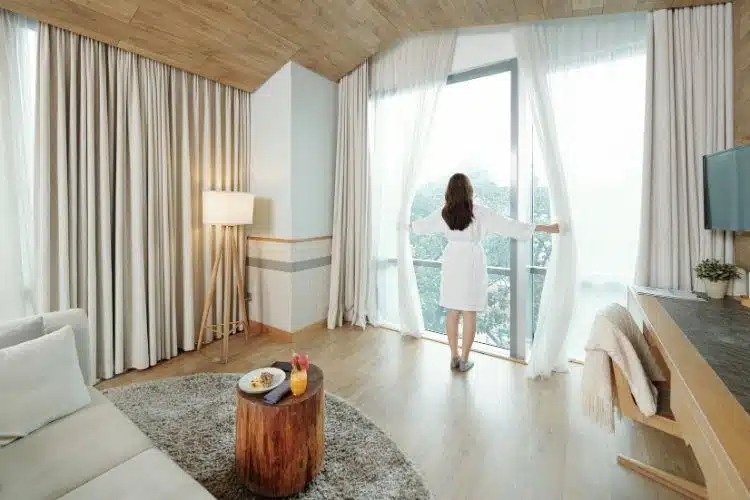
Curtains don’t just cover windows; they frame them. That subtle difference has changed how designers approach window treatments in modern interiors.
Instead of hiding windows, curtains are now used to draw attention to natural light, outdoor views, and architectural details. Extending curtain rails beyond the frame can even make windows appear larger and ceilings feel higher, helping spaces look more open without structural changes.
Conclusion
The return of curtains isn’t about nostalgia. It’s about creating balance in modern interiors. As homes become more focused on comfort, flexibility, and personality, curtains provide a practical way to support those needs.
They soften spaces, improve insulation, frame natural light, and add texture without overwhelming a room. In many ways, their comeback reflects a wider shift in interior design priorities – one that values livability just as much as appearance.
Curtains were never purely decorative. They’ve always been functional, adaptable, and quietly impactful. Modern interiors are simply rediscovering their value.
References
Crawford, I. (2014). A Frame for Life: The Designs of Studioilse. Rizzoli.
Pawson, J. (1996). Minimum. Phaidon Press.
Wearstler, K. (n.d.). Interviews and design commentary. Various publications.
Journal of Building Acoustics. (n.d.). Studies on textile impact on room acoustics.
Architectural Digest. (n.d.). Interior design trend reports.
Dezeen. (n.d.). Contemporary interior design features.