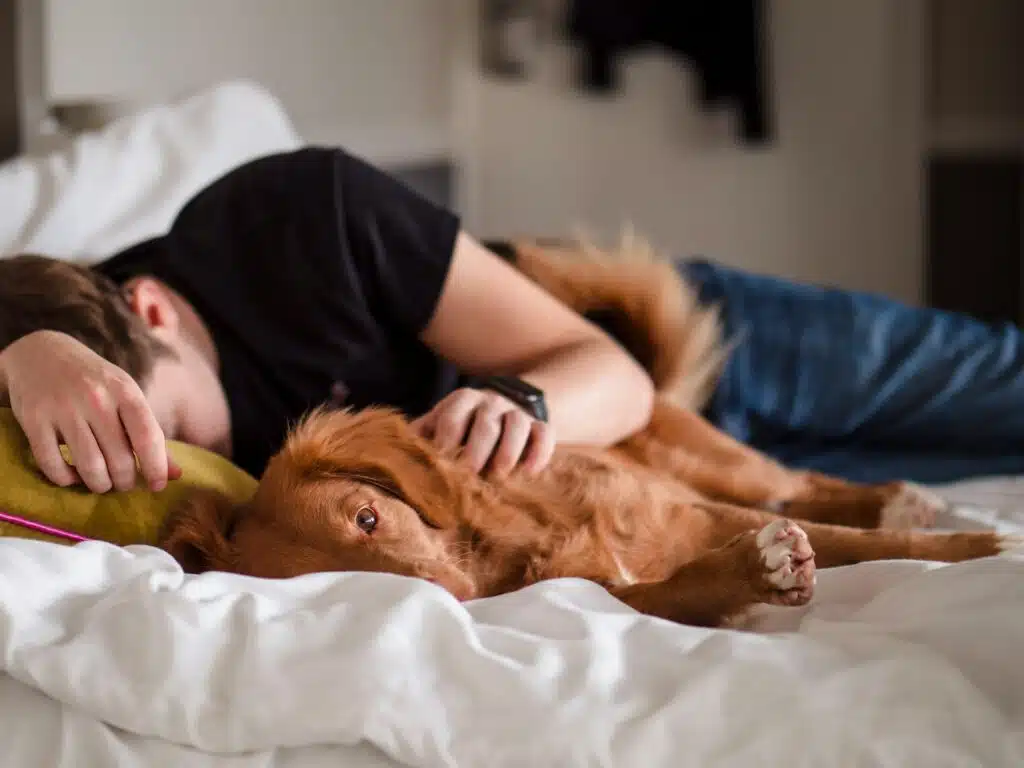
If you’ve ever fallen asleep to the sound of a dog breathing in your bed, or woke up to find a dog sleeping at your feet, you probably already have a gut feeling about this one. But what does the science actually say? Does sleeping with (or even sleeping in) a dog actually improve your sleep, or is this just the product of all the devoted dog owners out there dreaming of better sleep?
The answer to this question is, as with most things in sleep science, is: it depends. But the good news is that there’s even more to the story than you might imagine.
The Research: What Studies Have Actually Found
The most cited research on the topic comes from the Mayo Clinic. The study tracked 40 healthy adults and their dogs for seven nights using activity monitors to determine their sleep efficiency. Those with dogs in their bedroom showed a sleep efficiency of 83% – within the healthy range. Surprisingly, having a dog in the bedroom was not associated with sleep disruption.
The position of the dog in the bedroom did make a difference. Humans who shared their bedroom with only one dog exhibited good sleep efficiency. However, if the dog slept on the floor in the bedroom rather than on the bed beside their human partner, they exhibited better sleep.
In an earlier survey of 150 Mayo Clinic patients, 41% of pet owners who slept with their pets reported that they slept better, while only 20% of pet owners said they experienced disrupted sleep while sleeping with their pets.
However, another study of over 1,500 North American adults indicates that sleeping with pets is associated with slightly poorer sleep quality. This was true for dog owners who had two or more dogs sleeping with them. Thus, while there are benefits to sleeping with a dog, there may be downsides to sleeping with more than one dog.
The Hormone Connection: Cortisol, Oxytocin, and Why It Works
Beyond the sleep efficiency numbers is the biological explanation for why dogs seem to help people wind down at night. Proximity to a bonded animal reduces cortisol (stress) levels and increases oxytocin, the bonding hormone. For people who live alone or experience anxiety at night, pets can be genuinely therapeutic.
Cortisol is the hormone that makes people feel stressed out and awake. Oxytocin creates a feeling of calm and connection to others. Having a companion lying next to you in sleep can trigger the release of these hormones to promote sleep.
Because pets emit a form of unconditional love that increases oxytocin and reduces cortisol, both hormones promote feelings of calm and relaxation in both adults and children. For those who have trouble sleeping due to thinking about all the tasks for the next day, this chemical reaction could potentially make a difference in feeling drowsy and ready to sleep.
Dogs and Anxiety: A Natural Sleep Aid
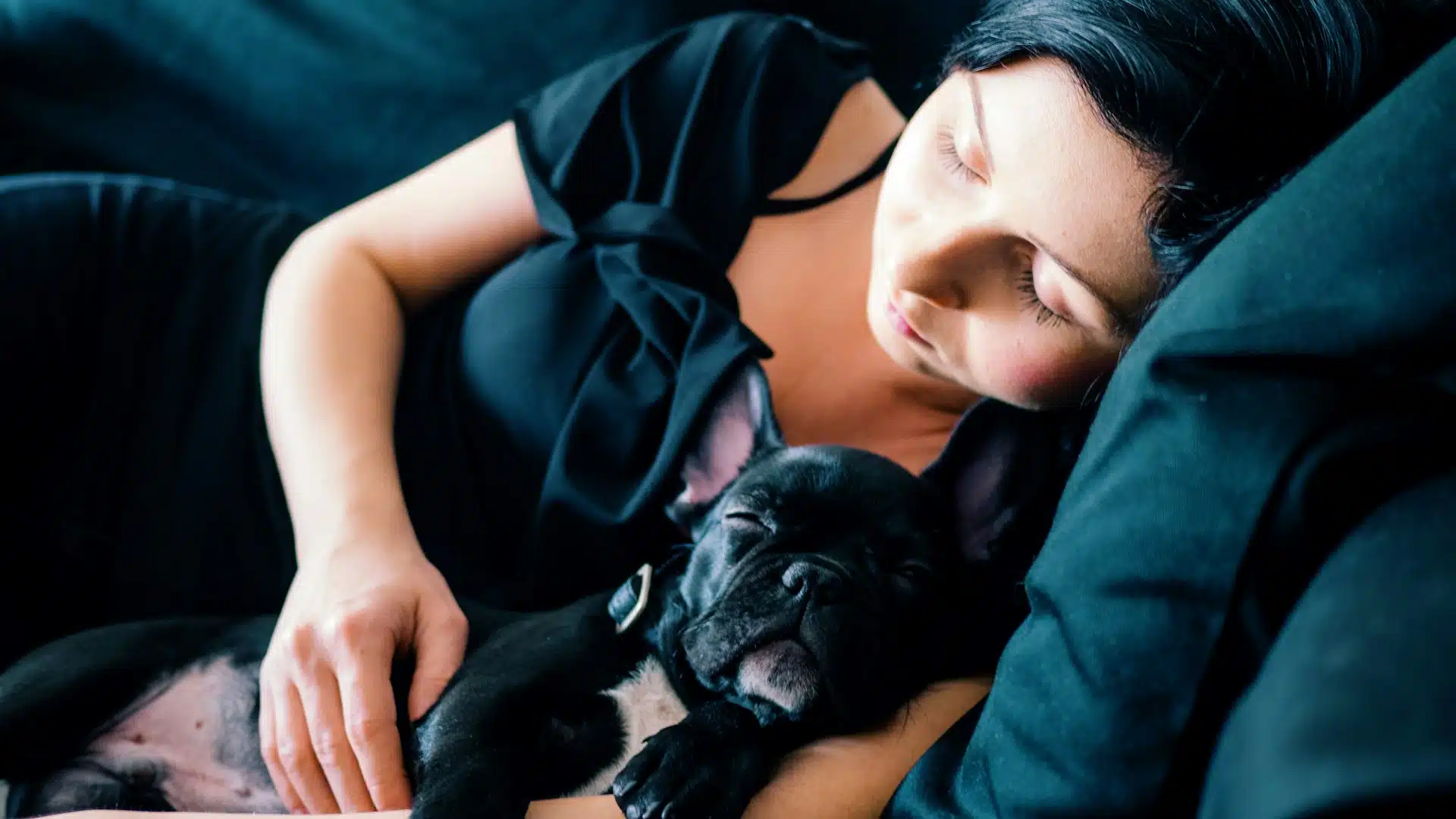
Sleep and anxiety are tightly linked. Worry and rumination are among the most common reasons people struggle to fall or stay asleep, and this is where dogs may offer their most underappreciated benefit.
Dogs and cats who are more closely bonded with their humans get additional health benefits, including increases in oxytocin and dopamine, the feel-good hormones. Dopamine plays a role in mood regulation and motivation — and a calm, satisfied mood at bedtime is a strong predictor of sleep quality.
The effect appears to extend to more serious anxiety conditions as well. In a study of veterans with PTSD service dogs, 57% stated that their dog helped ease their nightmare problems. That’s a striking figure, and it suggests that the benefits of canine companionship go well beyond comfort — they may actively interrupt anxiety-driven sleep disruption.
Routine Is the Hidden Ingredient
Of the smaller to medium-sized breeds with a focus on companionship, one of the best breeds to consider is the Pomsky. The Pomsky is a crossbreed between a Pomeranian and a Husky, both of which are breeds that are popularly owned as companions by their owners. Despite the energy of a Husky, Pomskies are bred to be companions to their humans, and exhibit the intelligence and playfulness of a Pomeranian. Additionally, the ideal Pomsky is not excessively vocal, indicating its suitability as a sleep-friendly dog breed. Unlike Huskies, Pomskies require less space to live within and thrive in apartments or smaller homes. Additionally, they are accustomed to sleeping with their owners and adhering to the schedule of the household.
Other breeds that are often recommended for those seeking sleep-friendly dogs include Cavalier King Charles Spaniels, Basset Hounds, and Shih Tzus.
Companion dogs share an environment, routine, and diet with their humans. As a result of domestication, companion dogs are members of the household. That shared rhythm is a two-way street — your dog’s schedule becomes your schedule, and that predictability is genuinely good for sleep.
Does Breed Matter? Choosing a Sleep-Friendly Dog
If you’re considering adding a dog to your home with sleep quality in mind, breed and temperament are worth thinking about. Not all dogs make equally restful bedfellows.
Generally speaking, the traits that make for a good “sleep companion” include: a calm and affectionate temperament, manageable size, low nighttime restlessness, and a disposition that allows them to settle quietly once the lights go out.
Smaller to medium companion-focused breeds tend to do well in this role. One increasingly popular option worth knowing about is the Pomsky — a Pomeranian-Husky cross that has grown rapidly in popularity for exactly these qualities. Bred with the purpose of companionship in mind, the Pomsky thrives in close partnership with its humans. Its intelligence, biddability, and playful antics make it a charming and adaptable family dog. Importantly for sleep purposes, the ideal Pomsky is not excessively vocal — a key quality when you’re hoping for an undisturbed night. Unlike full-sized Huskies, Pomskies don’t require as much space and can fit well into apartments or smaller homes, provided they get daily walks and playtime. They tend to adjust to their family’s rhythm, making them a natural fit for people who want a bonded companion without the sprawl of a large breed.
Other sleep-friendly options often cited include Cavalier King Charles Spaniels, Basset Hounds, and Shih Tzus — all known for their low-key evening energy and fondness for curling up close to their owners.
When Dogs Don’t Help Your Sleep
Honesty is important here, as dogs are far from a universal cure for insomnia – they can make things worse in some situations:
Allergies: If you’re sensitive to pet dander, no amount of oxytocin will outweigh a night of congestion and disrupted breathing. Keep dogs out of the bedroom entirely if this applies to you.
Multiple pets: The research consistently shows that one calm dog is very different from two or three. Every additional animal multiplies the chances of movement, noise, and disturbance.
Dogs on the bed: As the Mayo Clinic data showed, dogs on the bed slightly reduce sleep efficiency compared to dogs on the floor. If you want the companionship without the sleep cost, a dedicated dog bed beside yours is the sweet spot.
Restless or anxious dogs: A dog that paces, whines, or rearranges itself repeatedly will disrupt your sleep cycles. Breed selection and early training make a big difference here.
Sleep disorders: If you struggle with insomnia or sleep apnea, for example, you should discuss adding an animal to your bed with your physician prior to doing so.
The Verdict
So, do dogs actually help you sleep better? For most people, especially those living alone or prone to nighttime anxiety, the answer leans toward yes — provided the setup is right. One calm, well-trained dog in the bedroom, ideally on their own bed rather than yours, appears to offer genuine sleep benefits through a combination of reduced cortisol, increased oxytocin, and the simple comfort of trusted company.
The evidence isn’t perfect and probably won’t work for everyone. But the science does support what dog owners have been saying for years about the restful feeling of sleeping together.