
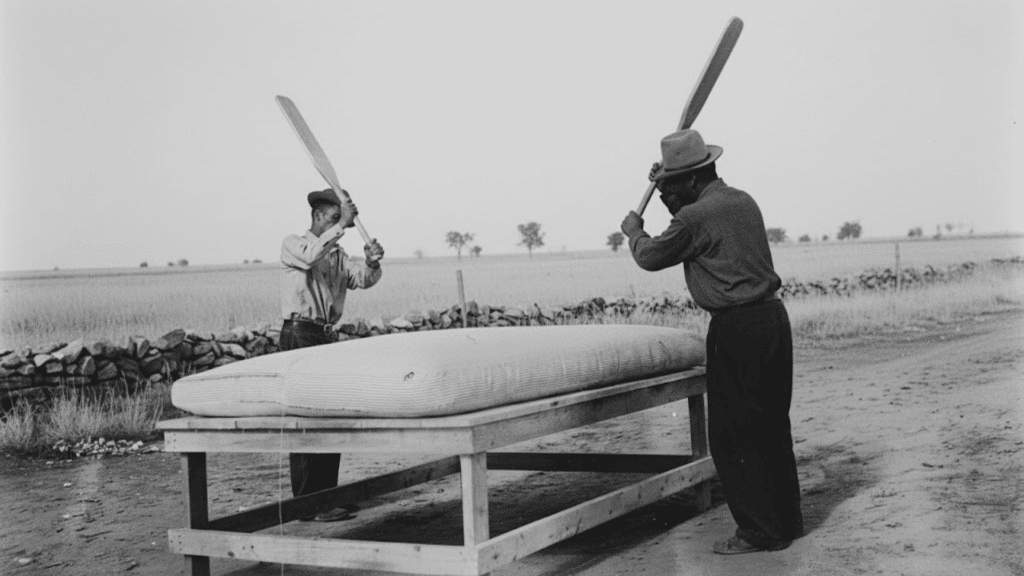
I’ve always found it interesting how something as simple as a bed has such a long story behind it. You use your mattress every day, but it took many years of ideas and changes to get it to the version you have now.
If you’ve ever wondered, “When were mattresses invented and who invented beds?”, this guide will help you understand the full picture.
I’ll walk you through the first soft sleeping spots, the early pads made by different cultures, and the big steps that shaped modern designs.
By the end, you’ll see how every stage in this history helped create the comfort you rely on each night.
How Early Humans Slept Before Mattresses
Long before structured pads existed, early families relied on natural materials and simple setups to make rest a little softer and cleaner.
1. Ground Nests Made From Plants and Hides
Early humans slept on natural materials they gathered from the environment. They layered leaves, grass, and soft plants to form a gentle base. Ash kept pests away, and animal skins added warmth.
Archaeologists found structured plant bedding more than 70,000 years old in South Africa. These early nests showed planning and care, not random piles. They offered a more comfortable and cleaner place to rest than bare ground.
2. Raised Sleeping Platforms and Simple Pits
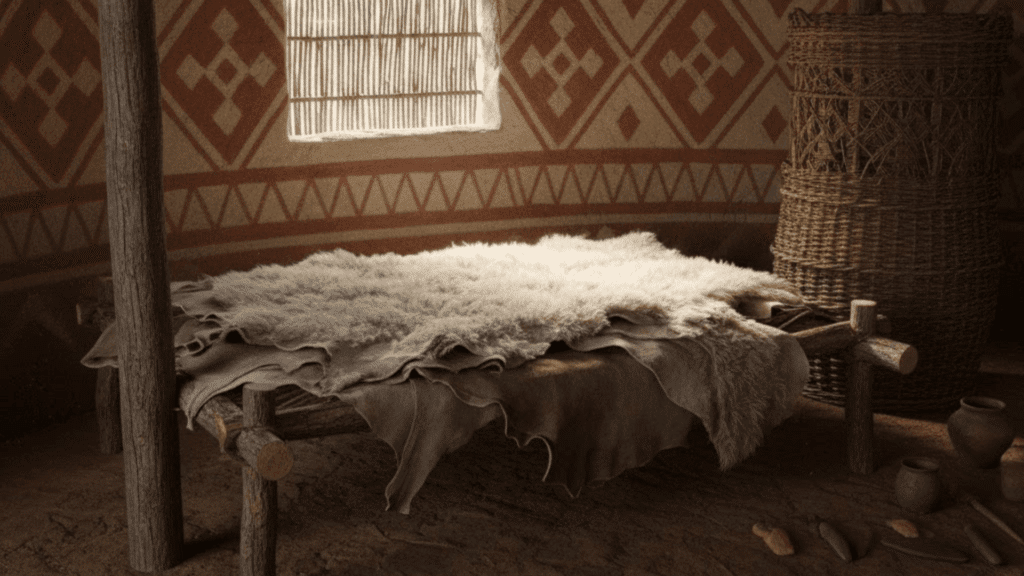
Over time, people learned to lift their sleeping spots off the ground. Raised platforms helped control insects, stayed cleaner, and held warmth better. Simple pits lined with plants or hides also provided support and protection.
This shift from loose materials to stable spots marked the first major step in sleep comfort. It also showed the move from temporary nests to sleeping areas used again and again.
The First Sleeping Surfaces That Resemble Mattresses
As sleep needs changed, different cultures began shaping softer and more structured pads that moved closer to the idea of a true mattress.
Early Stuffed Pads in Ancient Civilizations: Ancient families in Egypt, Mesopotamia, and the Indus region used mats made from reeds, palm leaves, and soft fibers. Homes with more resources used pads filled with wool or feathers, and some pads rested on simple raised frames to stay cleaner. These early designs offered better support and showed the first signs of planned sleep comfort.
Greek and Roman Mattress Materials: Greek and Roman homes used wool, straw, horsehair, and sometimes feathers to create padded surfaces. Wealthier families enjoyed thicker, softer pads, while others used basic straw. Many of these pads were placed on couches used for resting, eating, and sleeping, showing how comfort blended into daily routines.
When were Mattresses Invented?
Earliest Mattresses (Circa 77,000 years ago)
- The oldest known mattress was discovered in South Africa’s Sibudu Cave.
- It dates back roughly 77,000 years.
- Made from layers of grasses and plant materials, sometimes with herbs to repel insects.
- This is considered humanity’s first true “mattress.”
Historians trace the first mattresses to stuffed pads with shape and purpose. Egypt used palm fiber and wool, Greece and Rome used straw and feathers, and parts of Asia used cotton and layered textiles. Each region relied on local plants and climate needs.
Key points from early designs:
- Early pads had clear structure and support.
- Materials changed by region and climate.
- The goal stayed the same: comfort and cleaner rest.
In the medieval and Renaissance periods, most families used straw pallets made from cloth sacks filled with hay or dried plants.
These flattened quickly and needed refilling often. Homes with more resources used featherbeds, layered fabrics, and carved wooden frames. Beds became valued pieces that added warmth, comfort, and privacy to a room.
Key Breakthroughs That Shaped Modern Mattresses
As sleep needs changed, each period introduced new materials and designs that pushed mattresses closer to the versions you use today.
18th Century: Cotton, Wool, and Fabric Covers
By the 1700s, mattresses used more consistent stuffing like cotton and wool.
Fabric covers, called ticks, helped each mattress keep its shape and could be cleaned or opened for restuffing. This made mattresses sturdier, cleaner, and more practical for many homes.
1800s: The Arrival of Spring Mattresses
Steel coils first appeared in furniture, then moved into mattresses. Springs added firm support and gentle bounce while helping the mattress keep its shape longer.
This shift led to innerspring designs and boxed frames that made beds easier to set up and maintain.
1900s: Latex, Foam, and Body-Shaping Comfort
Latex rubber mattresses gained popularity for their flexibility and long life.
Foam materials followed, and memory foam later offered body-shaping comfort that eased pressure points. These updates changed the way families thought about support and overall rest.
Waterbeds, Airbeds, and New Experiments
Waterbeds began in medical settings and offered soft support that reduced pressure on the body. They later became a major home trend.
Airbeds and other new designs gave families more control over firmness and allowed them to try fresh comfort styles.
Who Invented Beds and How They Evolved Over Time

The earliest beds were simple layers of plants or hides. Some were placed on raised clay or wooden platforms.
These raised surfaces kept families warm, reduced pests, and protected them from damp ground. The idea wasn’t about luxury. It was about safety and comfort.
Advancements in Egypt, Greece, Rome, and Asia
Egypt created raised wooden frames with carved legs. These brought comfort and status into the home.
Greece used the kline for resting and dining. Rome used couches for similar purposes and added padded surfaces.
In Asia, platform beds became common, as well as floor-style bedding that could be rolled up during the day. These designs focused on cooling, airflow, and space-saving.
The Evolution of Bed Frames in the Middle Ages and Beyond
Europe saw the growth of four-poster and canopy beds. These tall frames helped block cold drafts and gave families privacy in shared rooms. Heavy fabric around the posts added warmth during long winters.
In other regions, rope beds and the charpai became common. Rope beds used woven cords for support, while the charpai offered strong airflow in warm climates. Both styles were light, easy to move, and simple to repair.
As industries expanded, metal frames became more common. They were steady, resisted pests, and needed less care than wood, shaping the base of many bed frames used today.
Modern Mattress Technology in the 21st Century
To help you see the main changes in modern sleep design, here’s a simple table that breaks down the four key areas.
| Category | Main Points |
|---|---|
| Hybrid Mattresses and Zoned Support | • Mix of springs, foam, latex, or gel • Zones support the head, shoulders, back, and hips • Helps reduce pressure and keep the body aligned |
| Bed-in-a-Box and Direct-to-Consumer Options | • Foam compression for compact shipping • Lower transport costs and easier home delivery • Simple trials and online buying |
| Smart Mattresses and Sleep Tracking | • Adjustable firmness that reacts to movement • Sensors that record sleep patterns • Tools that help control bed temperature |
| Eco-Focused Mattress Materials | • Use of natural latex, organic cotton, bamboo, and plant-based foams • Cleaner production steps • Certifications that show material details |
These points set the base for the way modern designs shape your comfort each night.
How These Designs Improved Sleep
- Stronger structure supports the spine and reduces pressure points.
- Modern layers help prevent body aches after long rest.
- Raised frames and better materials keep beds cleaner.
- Many covers can be removed, washed, or replaced to boost hygiene.
Brief Timeline of Mattress History
To help you see how sleep surfaces changed over time, here’s a simple timeline that highlights the major steps in mattress development.
| Period | Key Developments |
|---|---|
| Prehistoric to Ancient Period | More than 70,000 years ago: plant-based bedding Around 3,400 BCE: structured Egyptian beds with mats and padding |
| Medieval to Early Modern Era | Straw pallets and wool blankets 1700s–1800s: cotton ticks and improved upholstery |
| Industrial Revolution to Today | 1800s: steel coil designs 1900s: latex, foam, waterbeds 2000s: hybrids, boxed mattresses, smart options |
This timeline shows how each era added new ideas, setting the path for the modern designs you see today.
Summing Up
As you’ve seen, the story behind your mattress is long and full of small steps that shaped the comfort you enjoy today.
Learning when mattresses were invented gives you a clearer view of how early pads, new materials, and steady improvements led to the beds we use now.
I hope this guide helped you understand how each change contributed to better sleep, cleaner surfaces, and stronger support. It’s interesting to see how your own bed connects to ideas that started many years ago.
If you want more simple guides like this, feel free to look through my other posts. You might find something useful for your home or your next project.