

I know how frustrating it is when you’re dealing with a ruptured eardrum and just want to get a good night’s sleep. The pain, the pressure, and the worry about making things worse can keep you tossing and turning all night.
The most common question I hear is: What side should I sleep on with a ruptured eardrum? I’ve put together this guide to answer that question and help you find the most comfortable sleeping position that won’t interfere with your healing.
I’ll cover the best sleeping positions for a ruptured eardrum, why your sleep position matters so much, and practical tips to help you rest better while your ear heals. If you have one or both ears affected, I’ve got simple, doctor-recommended advice that works.
What Side Should You Sleep On With a Ruptured Eardrum?
If only one eardrum is hurt, the best choice is to sleep on your back or on the side that is not injured. This keeps weight and pressure off the sore ear, which can help reduce pain while sleeping.
If sleeping on your side feels better, make sure the hurt ear stays facing up. That means it should not be pressed into the pillow.
Keeping it up helps prevent excess pressure and allows any fluid to drain rather than get trapped inside the ear. Try not to sleep on the injured ear. Many people say this makes the pain worse and causes throbbing during the night.
If both eardrums are ruptured, sleeping on your back is the safest option. Use one or two pillows to slightly raise your head. This can help reduce pressure and make sleep more comfortable.
5 Essential Tips: How to Sleep with a Ruptured Eardrum

Knowing which side to sleep on is step one, but actually getting a good night’s rest is a whole other challenge. If you are tossing and turning, here are five simple tips I’ve learned to make sleeping much easier.
1. Elevate Your Head
Have you ever noticed that your ear starts to throb the moment you lie flat? That is because lying flat allows more blood to rush to your head, thereby increasing pressure in your ears.
To fix this, try propping yourself up. Use two thick pillows or a wedge pillow to keep your head higher than your heart.
This lets gravity do the work, helping fluid drain down rather than build up and cause pain. It’s almost like sleeping in a recliner chair, but much cozier!
2. Pick the Right Pillow
If you are sleeping on your side (your good side, of course!), your pillow matters a lot. You want something that supports your neck so you don’t have to constantly wiggle around to get comfortable.
A lot of people recommend memory foam pillows or special ones like the “Pillow Cube.” These are great because they are firm enough to keep your head steady but soft enough to be comfy.
A good pillow stops you from accidentally rolling over onto your sore ear in the middle of the night.
3. Keep the Ear Dry
When you have a ruptured eardrum, fluid may leak from your ear. It sounds a little gross, but it is actually your body’s way of healing and clearing things out.
However, you don’t want to sleep on a damp pillowcase, as it invites germs.
Try using a pillowcase made of “moisture-wicking” fabric (the kind that pulls sweat away) or simply place a clean, soft towel over your pillow each night. This keeps everything dry and clean, which helps prevent infection.
4. Managing Pain Before Bed
Don’t wait until you are already tucked in and hurting to think about pain relief. Once the lights are out and the house is quiet, the pain can feel much louder.
A smart move is to take your pain medicine (like Tylenol or Ibuprofen) about 30 minutes before bedtime. This gives the medicine time to kick in, so you are already feeling relief by the time your head hits the pillow.
5. The “Don’t” List
Finally, there are a few big “no-nos” you need to remember to keep your ear safe:
- No Cotton Swabs: Never stick a Q-tip or anything else inside your ear to clean it, especially right before bed. You could poke the hole and make it much worse.
- No Water: Be super careful not to get water in your ear during your nightly shower.
- No Pressure: Even if your bad ear feels itchy, resist the urge to press it into the pillow.
Shared Community Stories About Raptured Eardrum
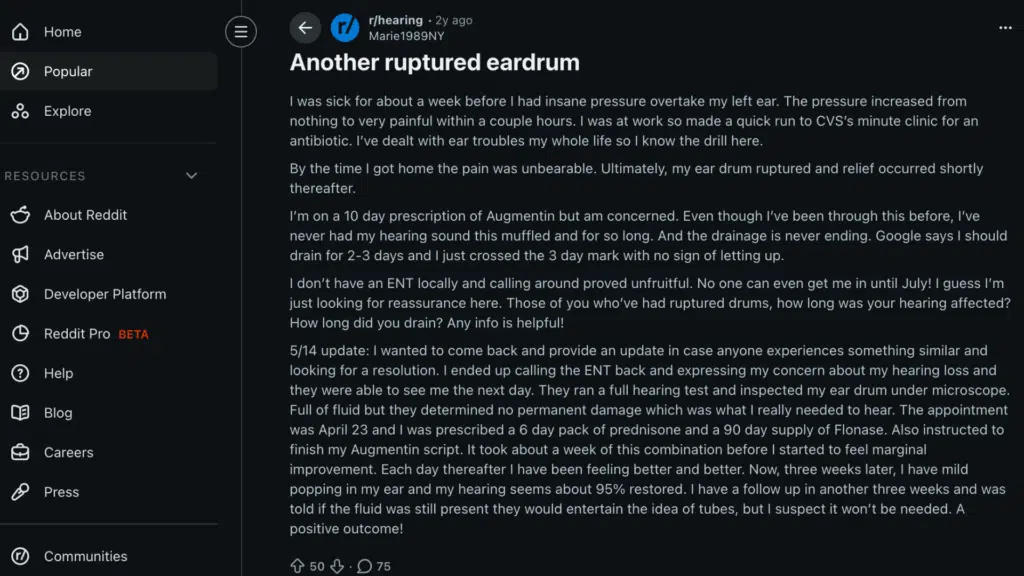
A Reddit user shared their experience with a ruptured eardrum. They had been sick for a week when pressure in their ear built up and eventually led to the rupture.
Despite being prescribed antibiotics, the drainage and muffled hearing continued past the expected 2-3 days. They were concerned but couldn’t get an appointment with an ENT right away.
After a follow-up test, they found there was no permanent damage, and their hearing gradually improved with continued treatment.
In my opinion, knowing how to sleep with a ruptured eardrum is key to recovery. Sleeping with the injured ear facing up helps reduce pressure, promotes fluid drainage, and allows ear drops to work more effectively, easing pain and speeding healing.
How to Manage Pain Before Bed
Sometimes, just finding the right sleeping position isn’t enough to stop the throbbing. To help you drift off faster, here is a quick breakdown of how to calm the pain before your head even hits the pillow:
| Pain Relief Tip | How to Do It | Safety Check |
| Medicine Timing | Take Tylenol or Ibuprofen about 30 minutes before you plan to sleep. | This gives the medicine time to kick in before you lie down, so you aren’t waiting for relief in bed. |
| Warm Compress | Hold a warm cloth against the outside of your ear for 10–15 minutes. | Never put the compress inside your ear! Make sure it is warm, not scalding hot. |
| Gentle Massage | Wash your hands and very softly rub the area around your ear (like your jaw or neck). | Helps relax tension. Be super gentle and do not massage the ear itself. |
Sticking to a simple routine like this can make a huge difference in how well you rest.
Just remember, if the pain is severe and these tricks aren’t helping, it’s best to call your doctor rather than trying to tough it out.
Warning Signs Your Sleeping Position is Wrong
Even if you think you’re sleeping correctly, your body will tell you if something’s off. Here are signs that your sleeping position needs adjustment:
- Increased throbbing pain: If you wake up with more pain than when you went to bed, you might have rolled onto the affected ear during the night. The extra support keeps you in place all night long.
- More fluid drainage in the morning: This could mean the injured ear was pressed down, trapping fluid rather than allowing it to drain. When fluid gets trapped, it creates a perfect environment for bacteria to grow.
- Difficulty falling asleep despite being tired: Your body is telling you the position is uncomfortable. You might find yourself tossing and turning for 30 minutes or more before finally drifting off.
- Waking up frequently during the night: Constant position changes mean you’re not comfortable. If you’re waking up every hour or two throughout the night, your sleeping position isn’t supporting proper healing.
- Feeling pressure or fullness that gets worse: This suggests fluid isn’t draining properly from your ear. The sensation might feel like your ear is plugged or underwater. When you sleep in the wrong position, gravity works against you instead of helping fluid drain out.
If you notice any of these signs, try adjusting your pillow height, using a pillow barrier to prevent rolling over, or sleeping more upright for a few nights.
Small changes can make a big difference in your comfort and healing speed.
Final Reminder
Dealing with a busted eardrum is a waiting game, and honestly, the nights are usually the hardest part.
So, if you are still wondering what side you should sleep on with a ruptured eardrum, the best rule is to simply keep the injured ear facing up towards the ceiling whenever you can.
Don’t be afraid to stack up extra pillows to keep the swelling down, either. It might feel awkward to change your sleeping habits for a few weeks, but protecting your ear now means a faster recovery and getting your hearing back to normal sooner.
Have you found a specific pillow or trick that helps you sleep through the ear pain? Drop a comment below and let me know what’s working for you!