

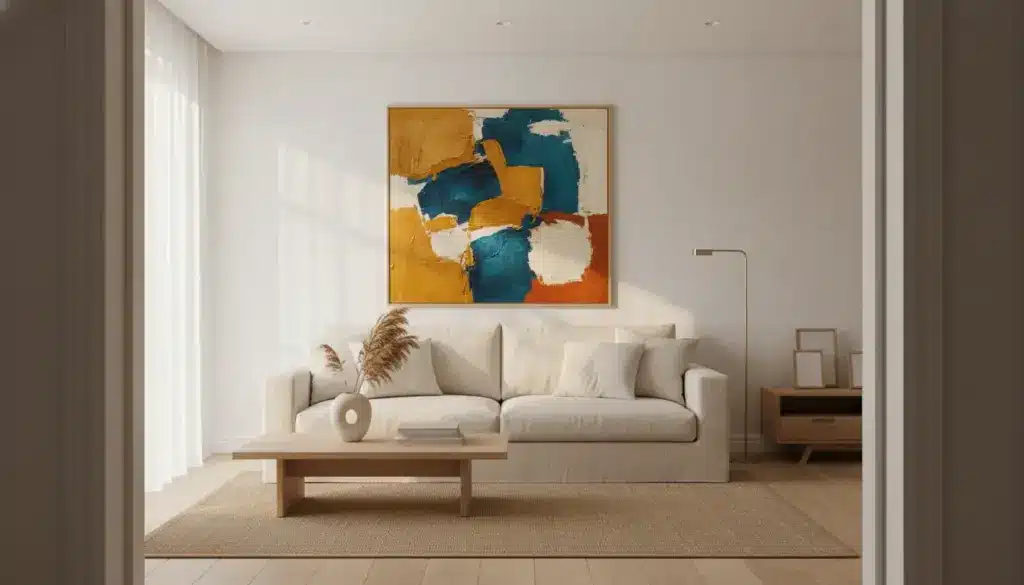
A home can be well furnished, clean, and even architecturally attractive, yet still feel incomplete. Often, the missing ingredient is not another chair, lamp, or side table. It is the visual layer that makes rooms feel inhabited, considered, and emotionally specific. Wall art does that work with unusual efficiency because it changes not only what you see, but also how a room is read. It can soften hard edges, create rhythm, and signal what matters to the people who live there.
That is especially true in homes that feel impersonal. Many interiors today are assembled quickly, with pieces chosen for convenience, price, or broad appeal. The result is often functional but generic, a place that photographs well enough yet does not reveal much about the household. Bare walls amplify that problem. They leave too much visual silence, and silence in design can quickly read as uncertainty.
Thoughtful wall art helps bridge the gap between a finished room and a lived-in one. It gives scale to empty stretches of drywall, creates focal points where none exist, and introduces mood without a renovation budget. More important, it allows homeowners to communicate taste in a way that is flexible and deeply personal. The strongest rooms rarely depend on art as an afterthought. They use it as a final layer that makes everything else in the room feel intentional.
Start by Diagnosing Why the Room Feels Incomplete
Before buying a single frame, it helps to identify what the room is lacking. Some spaces feel unfinished because the walls are blank and the eye has nowhere to land. Others feel impersonal because the decor relies too heavily on neutral, widely available pieces that could belong to almost anyone. In some homes, the issue is scale, with furniture sitting low and disconnected beneath large expanses of empty wall. In others, the problem is emotional rather than visual, because nothing in the room reflects memory, curiosity, humor, or conviction.
A practical way to assess the room is to stand in the doorway and ask where attention goes first. If the answer is nowhere, the space likely needs a focal point. If the eye jumps from object to object without settling, the room may need art that introduces hierarchy and calm. If the room feels flat, the missing ingredient may be contrast, color, or texture. This kind of diagnosis prevents homeowners from buying art only because it matches the sofa, which often produces a polite but forgettable result.
The best wall art choices respond to a room’s specific weakness. A narrow hallway may need a sequence of smaller works that create movement. A living room with substantial furniture may need one commanding piece that anchors the wall and steadies the composition. A bedroom that feels generic may benefit from quieter, more intimate work that changes the emotional tone rather than the floor plan. When homeowners understand the design problem first, art becomes a solution rather than decoration.
Use Statement Pieces to Establish Identity Early
One of the fastest ways to make a home feel more personal is to introduce a statement piece. This does not necessarily mean something loud or expensive. It means a work with enough presence to set the tone for the room and tell visitors that someone made a deliberate choice. A large abstract canvas, a black and white photograph with architectural force, or a richly colored landscape can all serve that purpose. What matters is conviction, not volume.
For homeowners defining their personal taste, the process often starts with looking before deciding. Surveying different subjects, palettes, and materials can reveal whether a room needs something bold, restrained, modern, or atmospheric. iCanvas, a Chicago-based wall art company and online marketplace, brings together work from independent artists, licensed estates, and cultural institutions across a wide range of styles. Exploring its collection of artwork for interior spaces can help homeowners compare visual directions and identify pieces that feel connected to both the room and their individual preferences. That broader perspective makes it easier to choose art that adds character, cohesion, and a stronger sense of identity rather than simply filling an empty wall.
The key is to choose work that says something about your preferences, not simply what is currently fashionable. Homes gain character when art reflects a genuine attraction to a subject, palette, or point of view. That might be moody portraiture, graphic typography, botanical studies, or minimalist abstraction. A statement piece tells the room what kind of story it is going to tell. Once that story is established, the rest of the design decisions become easier.
Build Around Color, But Do Not Reduce Art to Color Matching
Many homeowners approach wall art by asking what matches the rug, curtains, or throw pillows. That instinct is understandable, but it can be too narrow. Art does not need to duplicate the room’s palette in order to belong there. In fact, rooms often feel more sophisticated when art introduces tension or surprise through color. A restrained interior may come alive with one painting that carries rust, ink blue, or ochre into an otherwise muted scheme.
A better approach is to think in terms of color relationship rather than direct repetition. Art can echo a small accent already present in the room and magnify it with confidence. It can also balance a dominant tone by bringing in a complementary hue that sharpens the whole composition. For example, a room built around warm woods and creams may benefit from art with cool greens or blues, while a gray-heavy interior might need earthier shades to feel grounded. The point is to create conversation across the room rather than visual sameness.
Texture also matters when color is doing heavy lifting. A flat print in a saturated shade will behave differently from a layered canvas or a piece behind reflective acrylic glass. Those material differences affect how light moves across the surface and how color is perceived throughout the day. In rooms that feel impersonal, this subtle complexity is often what is missing. Art can reintroduce depth and atmosphere, making the entire space feel more composed and less generic.
Create a Sense of History With Groupings and Galleries
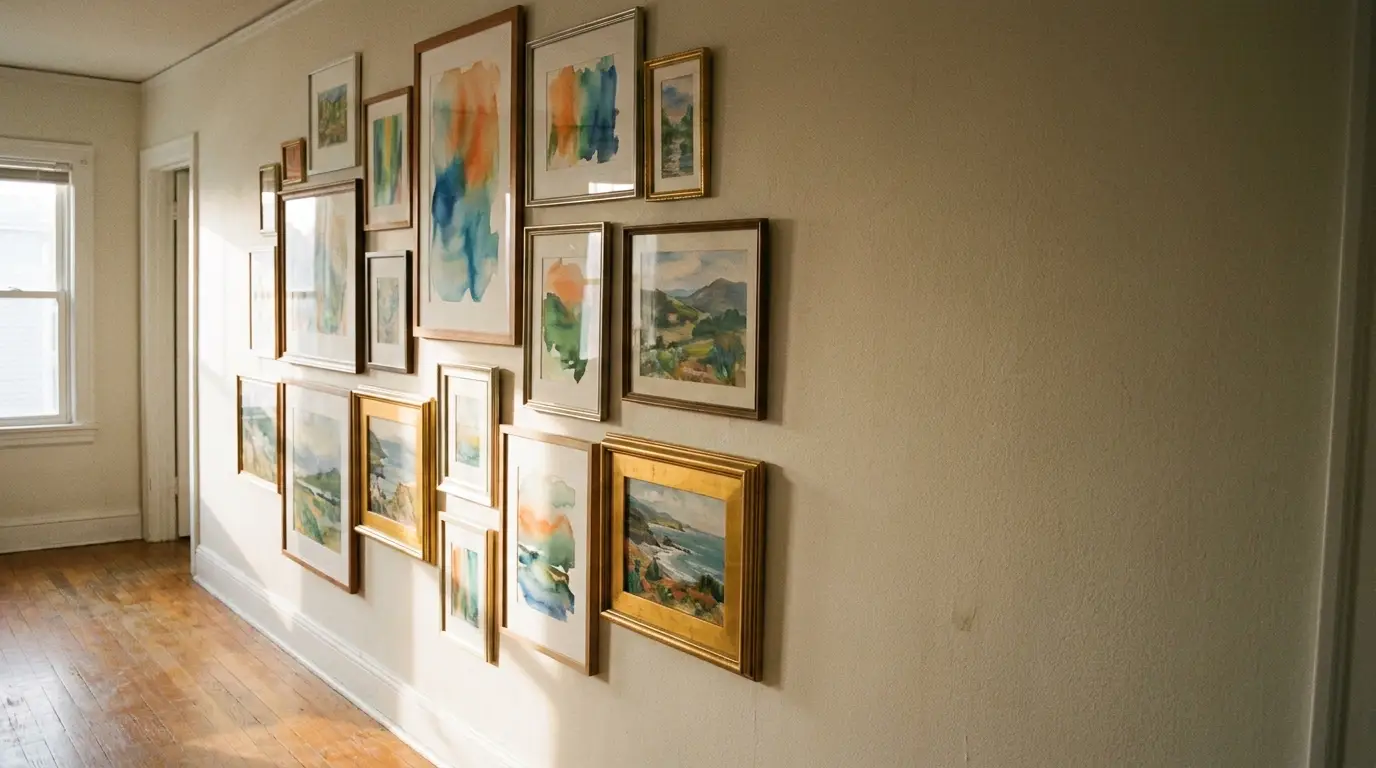
A gallery wall remains one of the most effective tools for making a home feel lived in, especially when the issue is impersonality rather than emptiness alone. Collections imply time, curiosity, and accumulation. They suggest that the homeowner has edited, compared, and chosen, which gives even a relatively new home a feeling of continuity. A well-made grouping can make a plain hallway, staircase, or dining nook feel layered and intelligent. It turns circulation space into a place with narrative value.
The mistake is to think of a gallery wall as random. The strongest arrangements have an internal logic, even when they mix media, subjects, and frame styles. Some are unified by color. Others are connected by theme, such as travel photography, figurative sketches, or vintage-inspired botanicals. Still others rely on consistent spacing and proportion to hold disparate images together. That structure is what keeps a gallery from slipping into visual noise.
Gallery arrangements are also useful because they can grow over time. A single large piece requires commitment all at once, while a grouped wall can evolve room by room and year by year. Homeowners can begin with a few works and add to them as their taste sharpens. This gradual approach often produces more authentic interiors because it resists the showroom effect. Homes feel personal when they reveal accumulation, not instant completion.
Match the Art Format to the Architecture of the Room
Not every wall wants the same kind of art. A large horizontal piece may be ideal above a sectional sofa but feel weak on a narrow vertical wall near a doorway. A pair of stacked works may make more sense beside built-in shelving than one oversized image. Homes start to feel finished when the scale and shape of the art respond to the architecture rather than fighting it. This is where many interiors miss the mark, because homeowners choose art in isolation instead of seeing it as part of the room’s structure.
Ceiling height matters. So do sight lines, natural light, and the weight of nearby furniture. In a room with tall ceilings, art that is too small will appear hesitant and disconnected. In a compact room, an enormous dark piece can overpower the space unless it is balanced by lighter surfaces and open floor area. Long corridors benefit from sequences that pull the eye forward, while intimate rooms often respond better to fewer, stronger gestures. The architecture gives clues if you know to look for them.
Material choice should also align with the environment. Canvas often lends softness and warmth, which suits living rooms and bedrooms. Fine art paper under glass can add crispness and detail, especially in studies, dining areas, or transitional spaces. Wood and metal can feel more tactile and grounded, while acrylic surfaces add sheen and contemporary sharpness. When format and material support the architecture, the room reads as intentional from every angle.
Let Art Reflect How You Actually Live
A personal home is not built from ideals alone. It reflects daily habits, emotional priorities, and the kinds of experiences people want to have in their rooms. Wall art can reinforce that reality. In a kitchen or breakfast area, lively prints can make routine meals feel less mechanical. In a home office, photography or abstract work can introduce focus without stiffness. In a bedroom, softer imagery can turn a functional space into a retreat. The right art does not simply fill walls. It supports the way the room is used.
This is one reason generic decorating often falls short. It treats every room as though it should project the same polished neutrality. Real homes need different moods in different places. A family room can absorb more wit and color than a formal sitting room. A guest bedroom may benefit from art that feels welcoming but not overly specific. An entryway should introduce the home’s tone quickly, whether that tone is collected, modern, relaxed, or dramatic. Matching art to lived experience gives rooms credibility.
Homeowners should also think about what they want to remember or signal. Art can point to cities they love, landscapes that calm them, or visual traditions they admire. It can express intellectual interests, family heritage, or an appetite for experimentation. These choices matter because homes feel impersonal when they contain no evidence of preference. Art is one of the clearest ways to show preference without overexplaining it.
Use Wall Art to Correct Visual Imbalance
Wall art does more than beautify. It solves compositional problems that make rooms feel awkward or unresolved. A room with heavy furniture at floor level often needs visual weight higher up. A corner with an isolated chair may need a vertical piece to make it feel like a destination rather than leftover space. A wide blank wall can make a room feel underfurnished even when the seating is adequate. Art helps distribute attention and rebalance the room.
This balancing function is especially valuable in open-plan homes, where one area can visually bleed into another. Art helps define zones without constructing physical barriers. A bold piece over a dining console can establish the dining area as its own environment. A quieter arrangement near a reading chair can create a secondary moment within a larger room. In this way, wall art becomes a planning tool as much as a decorative one. It tells the eye where one experience ends and another begins.
Even awkward architectural elements can be helped by art. A strange niche, an oversized landing, or a long wall interrupted by doors can become more coherent when treated deliberately. The goal is not to disguise every imperfection but to give the eye a reason to accept the room’s layout. Art introduces order, emphasis, and rhythm. Those qualities make a home feel resolved, which is often the real difference between unfinished and finished.
Finish the Room With Restraint, Editing, and Placement Discipline
One reason homes can still feel unsettled after art is installed is poor placement. Pieces hung too high disconnect from furniture and from human scale. Works that are too small for their wall read as timid. Collections that ignore spacing create friction rather than cohesion. Placement is not a minor detail. It determines whether the art feels integrated into the room or simply attached to it.
Restraint matters just as much as selection. When homeowners realize how much art can improve a room, the next temptation is to overfill every wall. But completion is not the same as saturation. Some walls should remain quiet so that stronger moments can register. A room with art on every vertical surface can feel restless, especially if each piece competes for attention. Editing gives art its authority. It allows the home to feel considered rather than consumed by ornament.
The final test is whether the room feels more like itself after the art is added. Good wall art should not seem interchangeable with anything else. It should sharpen the room’s identity, improve its balance, and make the surrounding furniture look more intentional. When that happens, the home no longer feels unfinished or impersonal. It feels inhabited by judgment, memory, and taste. That is ultimately what people mean when they say a room is complete.