

If you’re searching for a treatment for blocked nose at night, you already know how frustrating it feels when you can’t breathe properly while trying to sleep.
I’ve seen how something as simple as nasal congestion can turn a full night’s rest into constant waking, mouth breathing, and morning fatigue.
You might notice it gets worse the moment you lie down, even if you felt fine during the day. That’s not random, and there are clear reasons behind it.
Here, I’ll help you understand why it happens, what real people are doing to manage it, and which natural and practical fixes can actually help you breathe better and sleep comfortably.
The Reason Your Nose Gets Blocked at Night
Your nose often feels more blocked at night, which is why a stuffy nose at night can feel worse when you lie down. Blood flow shifts toward your head, which can make nasal tissues swell and narrow the airways. Many people who wake up stuffy are already dealing with this shift overnight, even when daytime breathing felt fine.
Mucus also stops draining as easily, so it starts collecting in the sinuses and makes breathing feel heavier.
Your bedroom environment compounds the problem: dry air from heating or air conditioning systems irritates nasal passages, and allergens like dust mites in bedding accumulate the longer you’re exposed to them throughout the night. Structural issues like deviated septum issues or nasal polyps can make nighttime blockage feel even worse
There is also the nasal cycle, a normal process where airflow shifts between nostrils every few hours, which can make one side feel fully blocked.
One mechanism that many guides overlook is the role of cortisol. During the evening, cortisol levels drop naturally as part of your circadian rhythm. Since cortisol has anti-inflammatory properties, this hormonal shift can increase nasal inflammation and make congestion noticeably worse by the time you’re trying to fall asleep.
A 2015 review published in the Journal of Allergy and Clinical Immunology confirmed that circadian variation in immune activity contributes to worsened upper airway inflammation at night.
Community Discussions on Nasal Blockage at Night
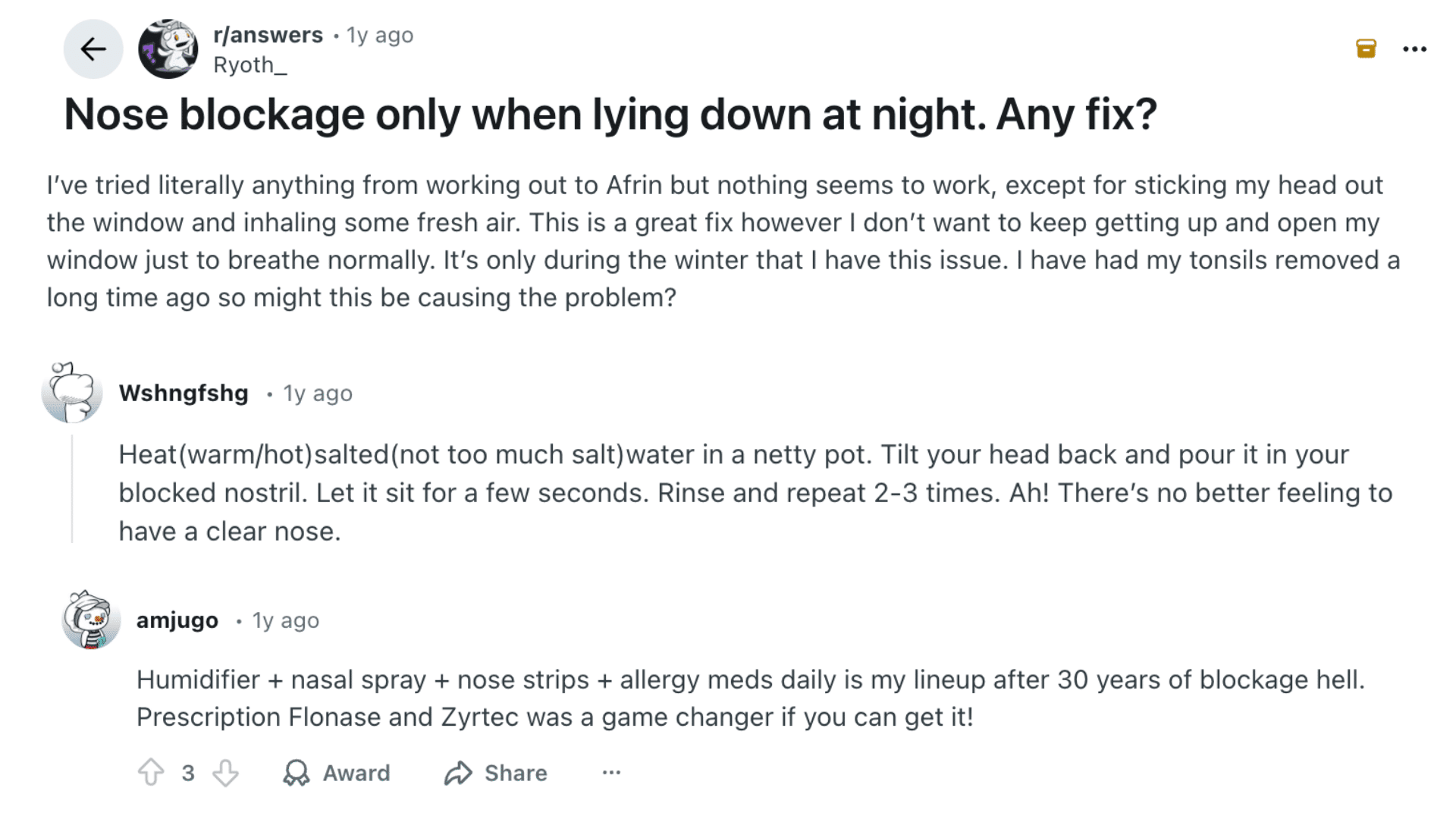
In a Reddit discussion, Ryoth_ described a common pattern where the nose feels clear during the day but becomes blocked when lying down at night.
Some users report that one nostril is completely blocked while the other remains open, or that congestion alternates between nostrils throughout the night.
One user said, “Humidifier + nasal spray + nose strips + allergy meds daily is my lineup after 30 years of blockage hell. Prescription Flonase and Zyrtec were a game-changer if you can get them!
In an attempt to find relief, many have tried various methods, such as using humidifiers, mentholated rubs, nasal strips, saline sprays, or massaging their sinuses before bed.
A few users share that long-term issues persisted even after surgery or nasal sprays, while others found that avoiding dry air and using humidifiers helped ease their symptoms.
Seasonal factors, such as winter, and allergens in bedding were also noted as contributors to worsening nighttime congestion. Simple home remedies sometimes offer temporary relief, but many continue to search for a lasting solution.
Effective Treatment for a Blocked Nose at Night
Here are simple and natural ways you can try right away. Most of these are easy to follow and don’t require anything complicated. For a broader look at sleeping when congested, the cause often determines which remedies work fastest.
Quick-Reference: Which Remedy Works For Which Cause?
This quick table helps match common causes of nighttime nasal blockage with simple remedies you can try first.
| Cause of Blockage | Best First-Line Remedies |
|---|---|
| Dry indoor air | Humidifier, saline nasal spray |
| Allergens in bedding | Allergen-proof covers, HEPA air purifier, hot-wash bedding |
| Cold or viral infection | Steam inhalation, saline rinse, head elevation |
| Mild anatomical obstruction | Nasal strips, side-sleeping position, head elevation |
| Post-nasal drip/reflux | Avoid heavy meals before bed, and head elevation |
Use this as a simple guide to identify the cause and try the most effective solution quickly.
1. Use Steam Inhalation Before Bed

Steam inhalation helps loosen thick mucus and clears nasal passages, making it easier to breathe at night. Warm moisture reduces dryness and irritation inside the nose.
To try this, boil water, pour it into a bowl, and inhale the steam for 5 to 10 minutes with a towel over your head. This method works best before sleep as it opens up airways quickly. Adding a drop of eucalyptus oil can further support clearer breathing and provide a soothing effect.
One practical note I give clients: if leaning over a bowl of hot water feels uncomfortable or unsafe, simply run a hot shower, close the bathroom door, and sit in the steam for 5 to 10 minutes before bed. The effect is similar, and the risk of accidental burns is removed entirely.
2. Heighten Your Head While Sleeping

Keeping the head slightly elevated during sleep can reduce nasal blockage. When lying flat, mucus tends to accumulate and worsen congestion. Using an extra pillow helps improve drainage and keeps airways more open throughout the night.
This simple adjustment supports better airflow and reduces the heavy feeling often experienced with a blocked nose. A comfortable sleeping angle can make a noticeable difference in breathing quality and overall sleep comfort.
If side sleeping is your default, try lying so that the more congested nostril faces upward. Gravity assists in draining that side passively during sleep without any additional products or effort.
3. Stay Hydrated Throughout The Day

Good hydration is one of the most underrated tools for managing nighttime nasal congestion. When you’re well-hydrated, mucus stays thin and drains more easily, which directly reduces the heavy, blocked sensation that builds up by bedtime.
Drinking warm water, herbal teas, or light soups throughout the day can help support smoother breathing. Consistent fluid intake also keeps nasal tissues moist and less irritated. This simple habit can improve nighttime comfort and reduce the chances of waking up with a blocked nose.
Worth noting: alcohol and caffeine both increase fluid loss. If you have a drink in the evening or a late-afternoon coffee, compensate with extra water. This is a small detail that gets overlooked but meaningfully affects how congested you feel by bedtime
4. Use A Saline Nasal Spray

A saline nasal spray is a gentle and effective way to clear nasal passages before sleep. It helps moisturize dry nasal tissues and flush out dust, allergens, and excess mucus. Regular use can reduce irritation and keep the nasal lining healthy.
Since it contains no medication, it is safe for daily use without side effects. Using it before bedtime can help maintain clearer airways and support uninterrupted sleep.
For a more thorough flush, a saline nasal rinse or neti pot can clear deeper mucus and allergens that a spray alone may miss. If you use one, always use sterile or distilled water and clean the device after each use to avoid introducing bacteria into the nasal passages.
5. Try A Humidifier In Your Room
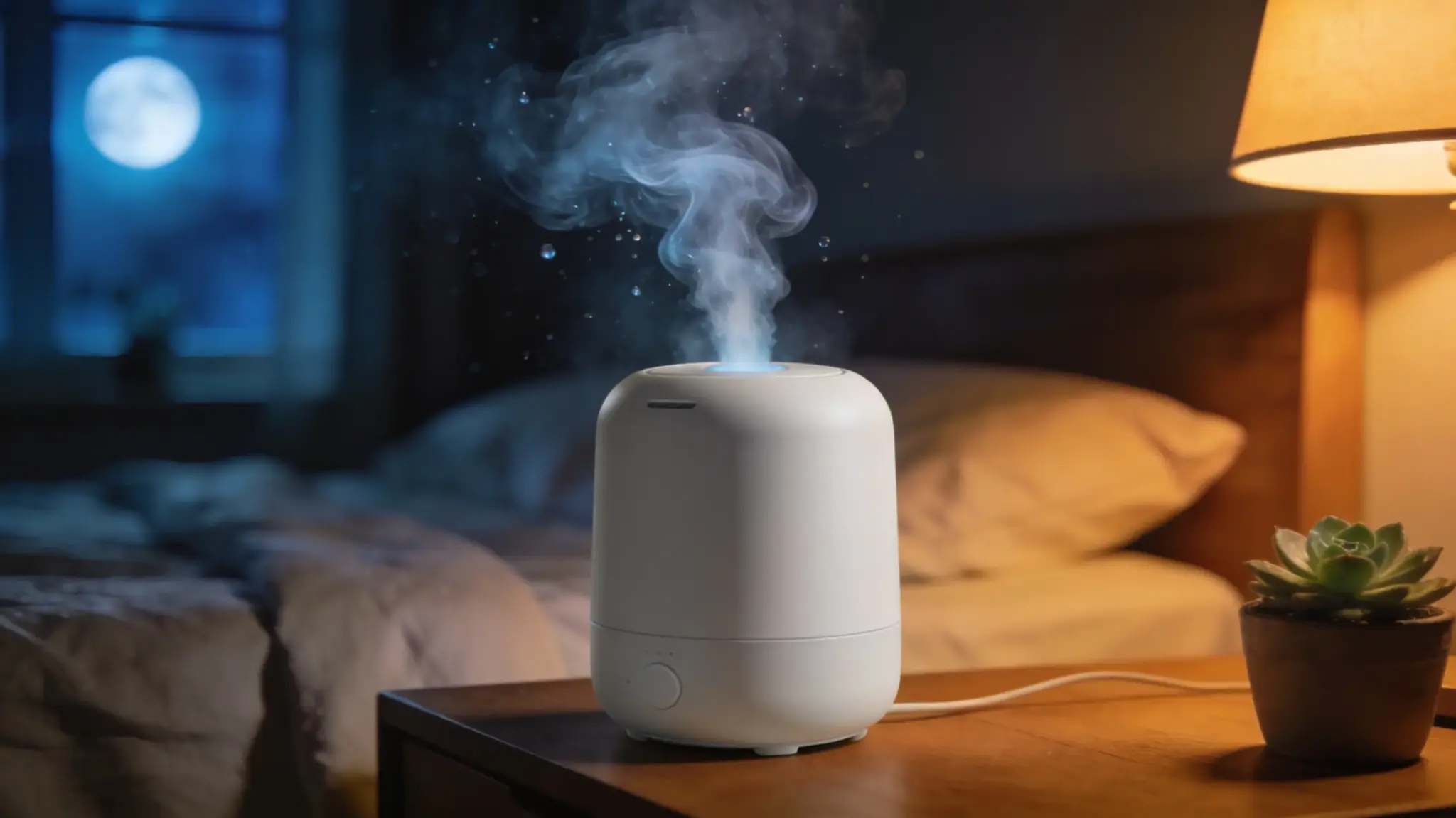
Dry indoor air can irritate nasal passages and worsen congestion at night. A humidifier adds moisture, helping keep the nasal lining comfortable and less inflamed. Maintaining indoor humidity between 40% and 60% supports easier breathing.
Below this range, dryness increases irritation, while higher levels may encourage dust mites and mold. Using a simple hygrometer helps track this accurately.
Keeping balanced humidity in the bedroom can reduce discomfort, improve airflow, and support more comfortable sleep, especially during winter or in air-conditioned environments.
6. Apply Warm Compress

A warm compress can help relieve sinus pressure and reduce nasal blockage. The warmth improves blood flow in the sinus area and helps loosen trapped mucus.
To use this method, soak a clean towel in warm water, wring it out, and place it over the nose and forehead for a few minutes. This simple technique provides a calming effect and can support easier breathing, especially before going to bed.
7. Use Essential Oils

Essential oils like eucalyptus and peppermint can help support clearer breathing due to their refreshing properties. Their strong aroma may help open up nasal passages and reduce the feeling of congestion.
A few drops can be added to steam inhalation or used in a diffuser in the room. These oils also create a calming environment that supports relaxation before sleep. Proper use can make nighttime breathing feel more comfortable.
Acid reflux is a less obvious but common driver of nighttime nasal symptoms. When stomach acid creeps up during sleep, it can irritate the throat and trigger post-nasal drip, which adds to the blocked feeling. If you frequently wake with a sore throat alongside congestion, reflux may be worth discussing with a doctor.
Essential oils should not be applied inside the nose; use a diffuser or steam. Menthol products ease sensation, not actual nasal blockage.
8. Avoid Heavy Meals Before Bed

Eating heavy meals late at night can contribute to nasal congestion. Spicy or oily foods may trigger inflammation or increase mucus production, making breathing more difficult.
It is better to eat at least two to three hours before bedtime to allow proper digestion. Building a consistent bedtime routine for sleep that includes eating early is one of the simplest structural changes you can make.
Lighter meals can reduce discomfort and support better airflow during sleep. This small adjustment in routine can improve overall nighttime breathing.
9. Keep Your Room Dust-Free

Dust, allergens, and pet hair can worsen nasal congestion, especially at night. Keeping the bedroom clean helps reduce these triggers and supports clearer breathing. Regularly washing bedsheets, vacuuming, and minimizing dust buildup can make a noticeable difference.
Clean surroundings reduce irritation in the nasal passages and help maintain better air quality. A well-maintained room environment plays an important role in managing nighttime congestion.
Wash bedding in hot water (at least 60°C / 140°F) weekly to kill dust mites effectively. Allergen-proof covers for pillows and mattresses add a second layer of protection and are particularly worth investing in if you suspect dust mite allergy is contributing to your nightly congestion.
10. Use A Nasal Strip

Nasal strips are a simple solution that can help improve airflow through the nose. They work by gently lifting the sides of the nose, opening up the nasal passages physically. This allows more air to pass through and reduces the feeling of blockage.
Nasal strips are easy to use and provide quick relief, especially for mild to moderate congestion. They can be applied before sleep to support reduce blockage throughout the night.
11. Try Gentle Breathing Exercises

Gentle breathing exercises can help relax the body and slightly ease nasal congestion. Slow, controlled breathing supports better airflow and reduces tension that may worsen the blocked feeling.
Simple techniques like inhaling slowly through the nose and exhaling through the mouth can be practiced before sleep. These exercises also promote relaxation, which can improve sleep quality while managing mild nasal blockage naturally.
Is It Dangerous To Sleep With A Blocked Nose?
Sleeping with a blocked nose is usually not dangerous, but it can still affect how well you rest and recover overnight.
- Poor sleep: It can disturb deep sleep, leaving you feeling tired, low on energy, and less focused the next day.
- Mouth breathing: Breathing through your mouth can dry your throat, cause discomfort, and increase the chances of irritation or infections.
- Snoring: Blocked airways can lead to snoring, which may interrupt sleep patterns and reduce overall sleep quality for longer periods.
From a sleep health perspective, the more consequential concern is when nasal obstruction is severe enough to trigger or worsen obstructive sleep apnea (OSA). When the nose is blocked, the mouth opens as a backup airway, increasing the chance of the soft palate collapsing during deep sleep.
Research published in CHEST (2004) found that nasal obstruction independently increases the risk and severity of obstructive sleep apnea, with mouth breathing during sleep significantly reducing upper airway stability.
Those who have mild sleep-disordered breathing, improving nasal patency through a combination of saline rinses, allergen control, and appropriate positioning, often have reduced snoring frequency before any other intervention is needed.
In people already predisposed to OSA, consistent nighttime nasal congestion can make episodes more frequent and longer. If you snore loudly, wake with headaches, or feel unrested despite sleeping long hours, it is worth discussing with a doctor whether a sleep study is appropriate.
If symptoms continue frequently or come with pain, fever, or long-lasting congestion, it is important to seek medical advice.
When to See a Doctor
While occasional nasal congestion can be managed at home, some symptoms require medical attention. If your blocked nose lasts for more than two weeks despite trying different remedies, it may indicate an underlying issue.
You should also consult a doctor if you notice severe facial pain, persistent one-sided blockage, or unusual symptoms that do not improve. These signs may point to conditions like sinusitis, nasal polyps, or a deviated septum.
A proper evaluation can help identify the exact cause and guide you toward the right treatment. Early diagnosis prevents the condition from getting worse and helps you return to normal breathing and restful sleep more quickly.
Final Thoughts
Now you have a clear idea of why nighttime congestion happens and how to manage it effectively. I’ve seen how small changes, like adjusting your sleeping setup or using simple home remedies, can make a real difference in how you breathe and sleep.
You don’t need to rely on one solution alone. Trying a combination of natural methods, better habits, and the right environment can help you find what works best for your body.
If your symptoms continue, it’s important to take them seriously and seek proper guidance. Your sleep quality matters more than you think.
Try a few of these methods tonight and see what works for you, and feel free to share your experience or tips with others.