
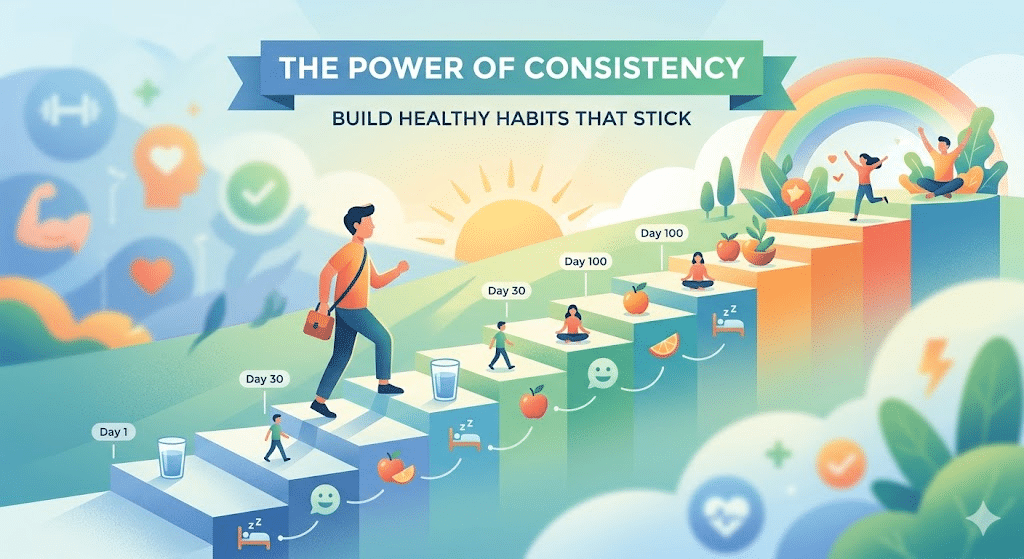
Many of us have felt that sudden burst of energy on a Sunday night, promising ourselves that Monday morning will be the start of a fresh chapter. You buy the expensive gym membership, stock the fridge with kale, and set five alarms for 5:00 AM. For three days, you are unstoppable. But by Thursday, you’re tired. By Saturday, the kale is wilting, and the gym sneakers are back in the closet.
This is the relatable struggle of nearly everyone who has ever tried to improve their life. We often fall into a cycle where motivation leads to excitement, but excitement eventually runs into the reality of a busy life. When that happens, inconsistency kicks in, and we eventually quit.
The core idea we often miss is that consistency matters far more than intensity. Doing something small every day is much more powerful than doing something big once a month. This article will dive into the science of habits, the power of showing up, and how you can turn small actions into a life-changing transformation.
What Are Healthy Habits?
At its simplest level, a habit is a behavior that has been repeated enough times to become automatic. You don’t have to motivate yourself to brush your teeth in the morning; you just do it. That is the power of a habit. Healthy habits are those automatic behaviors that improve your physical, mental, or emotional well-being over the long term.
Common Examples of Healthy Habits Include:
- Physical Activity: Taking a short walk after dinner or doing 10 minutes of stretching.
- Nutrition: Drinking a glass of water before every meal or choosing a piece of fruit over a sugary snack.
- Sleep Hygiene: Turning off screens 30 minutes before bed to improve sleep quality.
- Mental Wellness: Spending five minutes journaling or practicing deep breathing.
It is important to understand the difference between habits and goals. A goal is a destination, like losing 20 pounds. A habit is the system you use to get there, like walking daily. Goals are about the results; habits are about the process. Because habits are the foundation of your daily life, they are the only way to achieve long-term change that actually sticks.
What Does Consistency Really Mean?
Consistency is often misunderstood as perfection. People think that if they miss a single day of their new routine, they have failed and should just give up. In reality, consistency simply means repeated action over time. It is about the direction you are heading, not the perfect execution of every single step.
Consistency is the decision to do the small actions daily rather than relying on big, rare bursts of effort. Think of it this way: if you work out for two hours once every two weeks, you will likely just end up sore and discouraged. However, if you walk for 10 minutes every single day, you are building a compounding effect. Over a year, those 10 minutes add up to over 60 hours of exercise. This steady accumulation is how real change happens. Consistency is the bridge between wanting a result and actually seeing it in the mirror.
Bryan Henry, President of Peter MD, explains, “Consistency in health isn’t about perfect routines, it’s about showing up often enough for progress to compound. Small, repeatable actions drive the results people actually keep.”
Science Behind Habit Formation
To understand consistency, we have to look at how our brains work. According to researchers at MIT, habits are formed through a neurological pattern called the ‘Habit Loop.’
The Habit Loop consists of three steps:
- The Cue: A trigger that tells your brain to go into automatic mode (e.g., your alarm goes off).
- The Routine: The behavior itself (e.g., putting on your running shoes).
- The Reward: Something your brain likes that helps it remember the loop in the future (e.g., the “runner’s high” or a post-workout smoothie).
When you are consistent, you are essentially carving neural pathways in your brain. Each time you repeat a behavior, the connection between the neurons involved becomes stronger. Eventually, the prefrontal cortex, the part of the brain responsible for decision-making, stops being involved. The basal ganglia take over, and the behavior becomes automatic.
While common myths suggest it takes exactly 21 days to form a habit, a study published in the European Journal of Social Psychology found that it actually takes anywhere from 18 to 254 days, depending on the person and the complexity of the habit. Consistency is the only way to keep the brain engaged long enough for this transition to happen.
Why Consistency Beats Motivation
Many of us have felt that sudden burst of energy on a Sunday night, promising ourselves that Monday morning will be the start of a fresh chapter. This cycle of starting with high intensity and slowly fading away is something almost everyone can relate to. We often get trapped in a loop where big, unsustainable changes lead to burnout.
The truth is that consistency matters far more than intensity. Doing something small every day is much more powerful than doing something big once a month because small actions eventually become automatic habits.
A habit is simply a behavior that your brain has learned to perform with very little conscious thought. Whether it is a balanced diet or a regular sleep routine, these actions become the foundation of who you are. It is important to distinguish between habits and goals. A goal is a finish line you reach once, but a habit is the recurring process that keeps you moving for life. Because habits are part of your daily system, they allow for permanent change rather than temporary results that disappear as soon as your motivation fades.
The reason consistency works better than motivation is that motivation is like a fair-weather friend. It is there when you are excited, but it disappears the moment you feel tired or stressed. If you only work out or eat healthy when you feel like it, your progress will be as unstable as your emotions.
By relying on a fixed schedule, like 7:00 AM is for walking, you remove the need to make a difficult choice every morning. This saves your brainpower and makes the healthy path the path of least resistance.
Dr. Amanda Baes, Owner of Healing Hands Chiropractic, explains, “The long-term impact of staying consistent is a total lifestyle transformation. Every time you follow through on a small habit, you are keeping a promise to yourself and building self-trust. This creates a sense of control that reduces stress and helps you feel more confident.
Over months and years, these tiny daily wins compound into massive results. The key is to start so small that it feels too easy to fail, stay consistent even on the hard days, and trust that the process will eventually change your life.
Benefits of Consistency in Building Healthy Habits
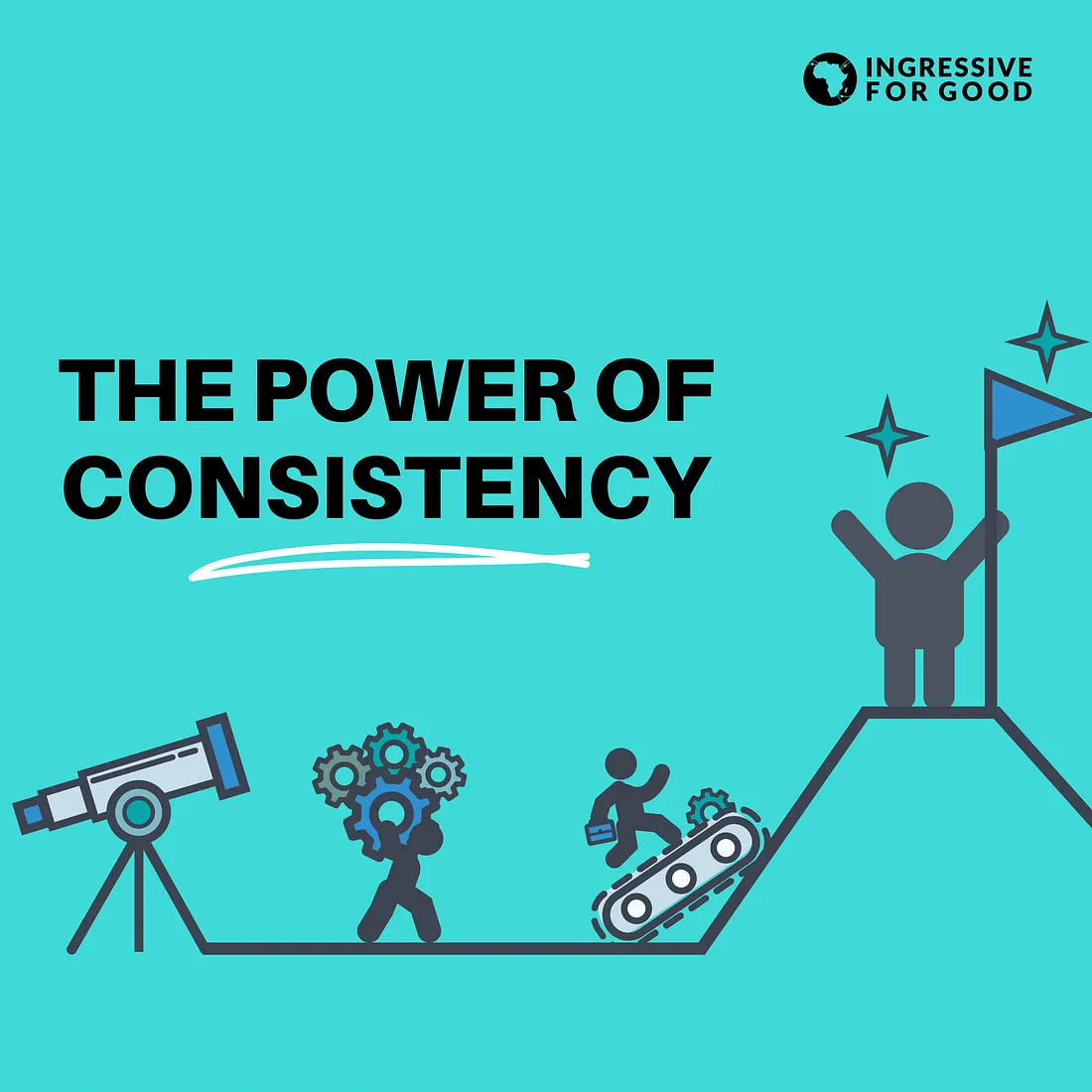
The rewards of showing up every day go far beyond just getting fit. Consistency changes your relationship with yourself.
Long-Term Results
The most obvious benefit is sustainable progress. When you don’t quit, you allow the interest on your efforts to compound. Small improvements that seem invisible today become massive transformations over a year or two.
Improved Physical Health
Consistent habits lead to better energy levels, a stronger immune system, and improved cardiovascular health. According to the CDC, consistent physical activity reduces the risk of chronic diseases like type 2 diabetes and certain cancers. It’s not the marathon you ran once that saves your heart; it’s the walks you took every morning for five years.
Better Mental Health
Inconsistency often leads to a sense of chaos and guilt. On the other hand, having a routine provides a sense of control and predictability. This has been shown to reduce symptoms of anxiety and stress, as the brain feels safer when it knows what to expect from the day.
Increased Self-Discipline and Confidence
Every time you follow through on a habit, you are keeping a promise to yourself. This builds self-trust. People with high self-trust have a more positive self-image and higher confidence because they know they can rely on themselves to do what they say they will do.
Sharon Amos, Director at Air Ambulance 1, reinforces this: “Discipline isn’t built in perfect conditions; it’s built when you follow through on the days you don’t feel like it. Those small decisions shape long-term confidence.”
Common Barriers to Consistency
If consistency is so great, why is it so hard? Recognizing the barriers is the first step to overcoming them.
- Lack of Time: Most people believe they need an hour to start a habit. When life gets busy, the hour disappears, and the habit stops.
- Unrealistic Expectations: We try to change everything at once. This leads to burnout within weeks.
- All-or-Nothing Mindset: The belief that if you can’t do a habit perfectly, it’s not worth doing at all. This is the biggest killer of consistency.
- Lack of Immediate Results: We live in a world of instant gratification. When we don’t see a change in the mirror after three days, we assume the system isn’t working.
Conrad Wang, the Managing Director of EnableU, shares, “Most people quit in the middle when effort doesn’t match results yet. Consistency comes from sticking to the system, not chasing quick outcomes.”
Practical Strategies to Build Consistency
This is the core of how you actually change your life. You don’t need more willpower; you need a better strategy.
Start Small and Simple (The 2-Minute Rule)
If you want to start a gym habit, don’t start with a 60-minute workout. Start by putting on your gym shoes and driving to the gym. If you stay for 5 minutes and leave, that’s a win. You are mastering the art of showing up. Once the behavior is a ritual, you can increase the intensity.
Use Habit Stacking
Attach your new habit to an existing one. This is a strategy popularized by authors like James Clear.
- Example: “After I pour my morning coffee, I will meditate for one minute.”
- Example: “After I brush my teeth, I will do two pushups.” The old habit acts as an anchor for the new one.
Design Your Environment
Don’t rely on willpower to avoid bad habits or start good ones. If you want to drink more water, put a bottle on your desk. If you want to stop eating chips, don’t buy them. Make the good habits easy and the bad habits difficult.
Track Your Progress
There is a profound psychological benefit to crossing off a day on a calendar. Using a habit tracker provides visual proof of your consistency. It becomes a game of don’t break the chain.
Dr. Cengizhan Ekizceli, Plastic Surgeon at Estherian Clinic, explains, “Consistency is what drives real, visible results over time. When patients track small daily habits, they shift focus from instant change to steady progress, which leads to more sustainable outcomes.”
Real-Life Examples of Consistency in Action
Example 1: The ‘Non-Runner’ Consider a man who had never run a mile in his life. Instead of aiming for a marathon, he decided to walk for 15 minutes every morning before work. He didn’t miss a day for six months. Eventually, the walk turned into a jog, and the jog turned into a run. Two years later, he finished his first half-marathon. He didn’t start with a race; he started with a consistent 15-minute walk.
Example 2: The Corporate Executive. A high-level executive felt constantly burned out. She began a habit of ‘Five Minutes of Silence’ before checking her emails in the morning. Even during travel and busy quarters, she kept that five-minute window. This tiny, consistent habit lowered her cortisol levels and improved her decision-making across the entire company.
How Long Does It Really Take?
There is no magic number of days. The complexity of the habit matters. Drinking a glass of water is easier for the brain to automate than doing a complex hour-long workout. Instead of counting days until it’s easy, focus on making it a part of your identity. You know the habit is formed when it feels weirder not to do it than to do it.
Conclusion
Consistency is the quiet, unglamorous key to a healthy life. It isn’t about the one day you worked out for three hours; it’s about the 300 days you showed up for twenty minutes.
If you want to build a new life, start small. So small that it feels too easy to fail. Stay consistent, accept that some days will be imperfect, and trust the process. You are what you repeatedly do. By choosing consistency today, you are building a healthier, more confident version of yourself for tomorrow.