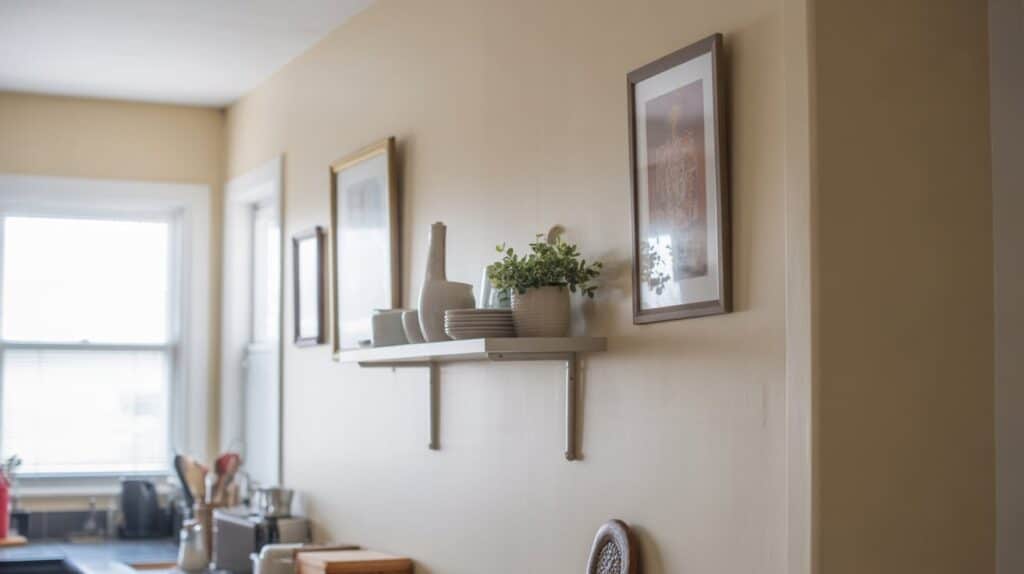
Kitchen walls can be tricky. I have seen many kitchens where the space feels empty, yet adding decor somehow makes it look crowded.
That confusion is common when dealing with kitchen wall decor ideas, especially when function matters as much as looks.
You cook, clean, and move through this space every day, so wall choices affect more than style. Size, placement, and use all play a role in what actually works.
I put this guide together to help you make clear choices that fit real kitchens, not just photos. By the time you reach the end, you will know how to use kitchen wall decor ideas in a way that feels balanced and practical.
How to Choose The Right Kitchen Wall Decor?
Your kitchen walls need more than good looks. Kitchen wall ideas go beyond art; they should fit into your cooking routine. You should think about size, daily use, and cleaning needs when choosing the best wall decor.
- Measure the wall first: Check height and width before choosing decor. This helps avoid pieces that feel too small or overpower the space when you consider all the elegant kitchen wall decor ideas.
- Look at how the wall is used: Walls near sinks and stoves deal with heat, steam, and splashes, so easy-clean items work best there.
- Match decor to cabinet scale: Large cabinets pair better with bigger wall pieces, while compact kitchens need simpler wall choices.
- Decide function or display first: Some walls work better with shelves or hooks, while others should stay purely visual.
- Limit the number of items: Fewer pieces create balance and keep the kitchen from feeling busy or cluttered.
Statement And Art-Based Wall Ideas
These ideas help you fill kitchen walls using artwork that feels balanced and intentional. Each option works best when you want interest without filling every inch or adding items that need frequent cleaning.
1. Oversized Single Art Piece
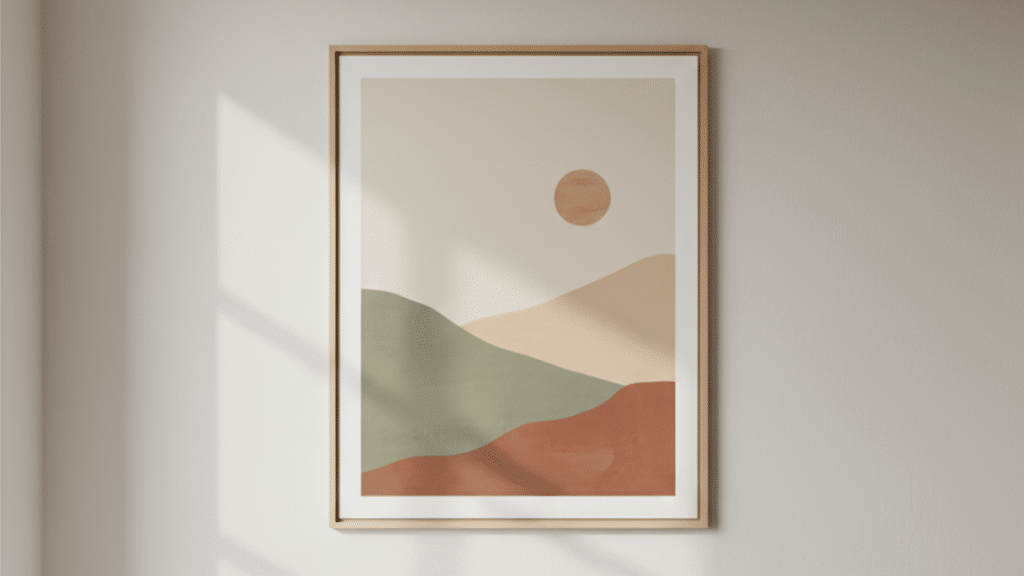
A large art piece works best on wide, empty kitchen walls that feel bare or unfinished. You should choose one strong image or print instead of grouping several smaller ones. This keeps the wall calm and easier to style.
Large art pairs well with long countertops or dining nooks. Keep the frame simple so the artwork stays the focus. Hang it at eye level and leave space around it. This approach prevents clutter while still giving the wall a clear purpose.
2. Framed Recipe Prints
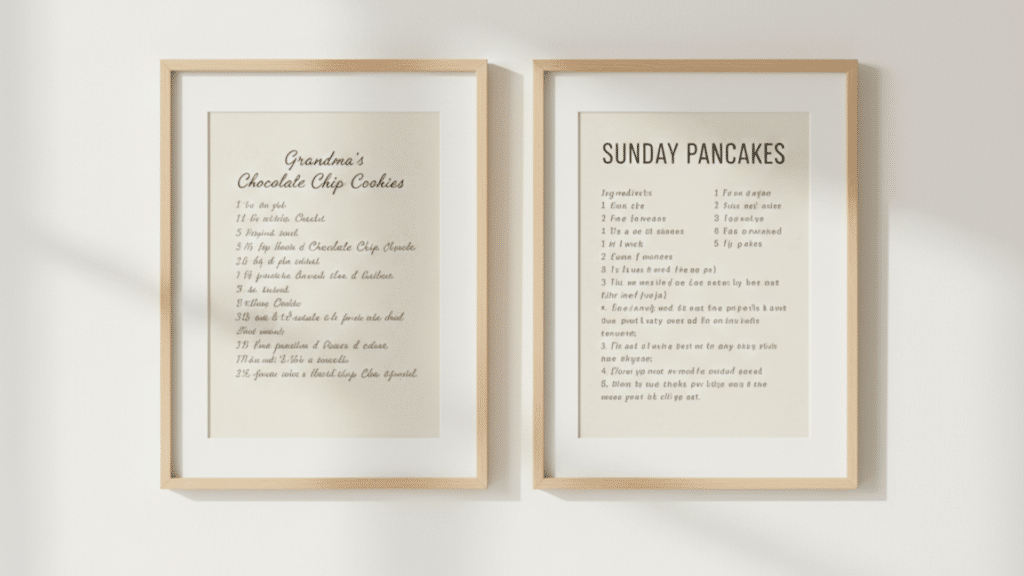
Framed recipe prints add meaning while staying useful in daily life. You can display family recipes, handwritten cards, or printed favorites.
Use matching frames to keep the look clean and organized. This idea works well near breakfast areas or open wall space near prep zones. Choose prints with light backgrounds so grease marks are less noticeable.
Keep the number limited to avoid crowding. This type of decor adds warmth without taking attention away from the rest of the kitchen.
3. Vintage Food Posters
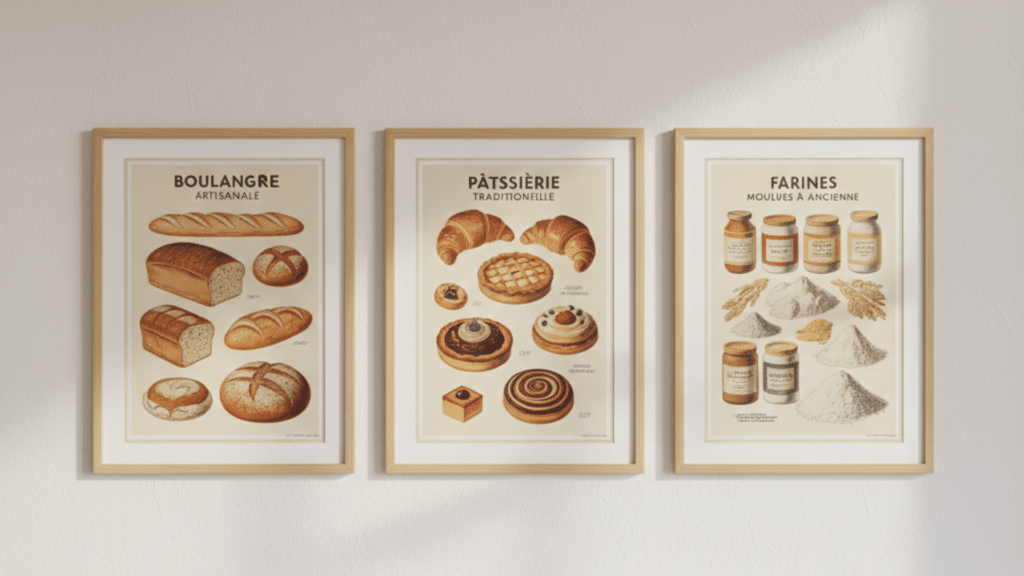
Food posters bring color and personality without filling shelves or counters. They work well in kitchens with plain walls or simple cabinets. You should stick to one theme, such as fruits, baking, or markets, to keep things consistent.
Frame styles should match in size and tone for a tidy look. These posters work best on walls away from heavy heat. They add interest while staying flat and easy to clean, which makes them practical for busy kitchens.
4. Black And White Photo Series
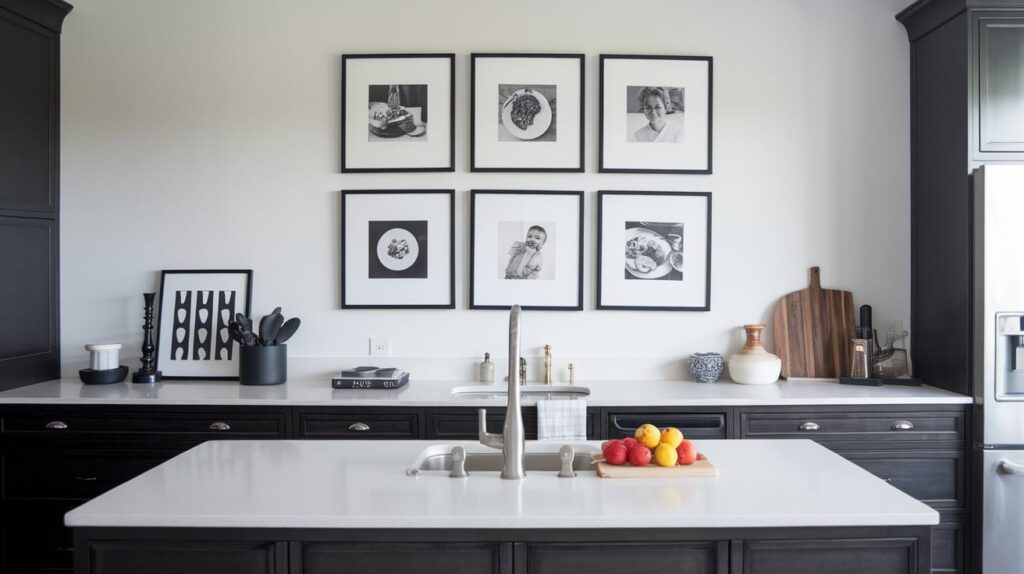
A photo series using black and white images keeps walls calm and easy to style. This works well in kitchens with mixed finishes or bold counters. You can use food photos, family moments, or simple still images.
Keep all frames the same size for a neat layout. Hang them in a straight line or soft grid. This setup helps guide the eye without pulling focus from cabinets or appliances. It fits both small and large kitchens without feeling heavy.
5. Canvas Art With Food Themes
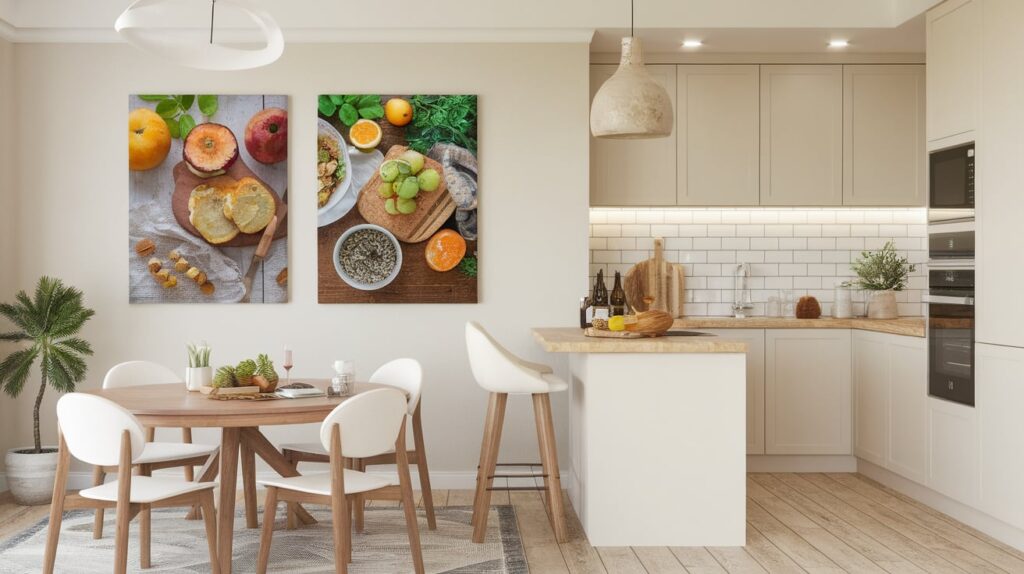
Canvas art with food subjects softens kitchens that feel sharp or boxy. The fabric texture reduces glare and works well with open layouts. Choose simple images like fruit, bread, or herbs rather than busy scenes.
One or two pieces are usually enough. Canvas works best on walls away from water or direct heat. This option fills space gently and does not require heavy frames, which helps keep the wall light and easy to manage.
6. Abstract Art For Modern Kitchens
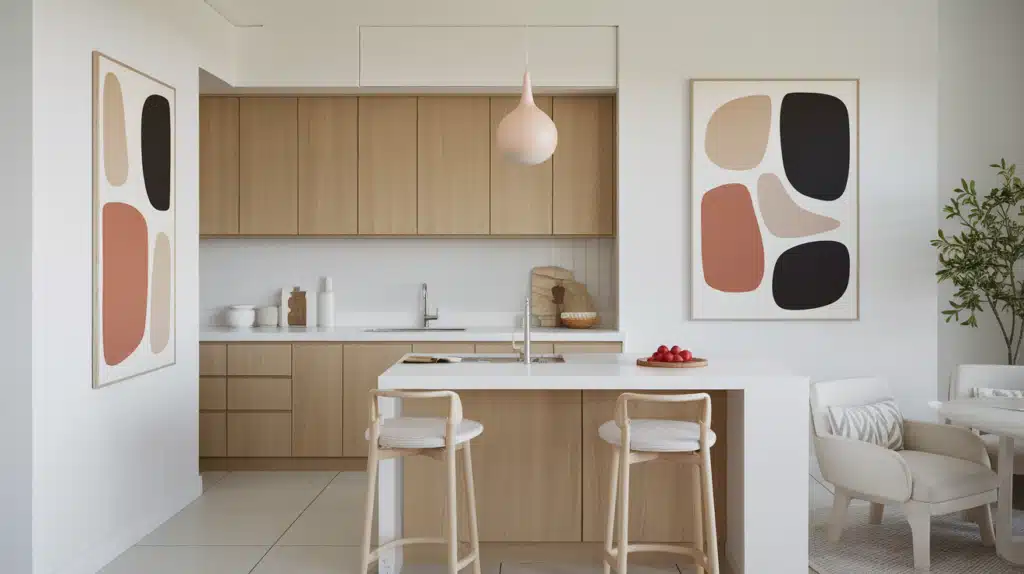
Abstract art fits modern kitchens that rely on clean lines and simple finishes. You can use color blocks, soft shapes, or minimal patterns. This helps bring color into the room without adding themed decor.
Keep the palette limited so it works with cabinets and counters. Large abstract pieces work better than small ones. Hang them where they can be seen from multiple angles. This choice keeps the kitchen looking current without adding extra items.
7. Typography Art With Short Phrases
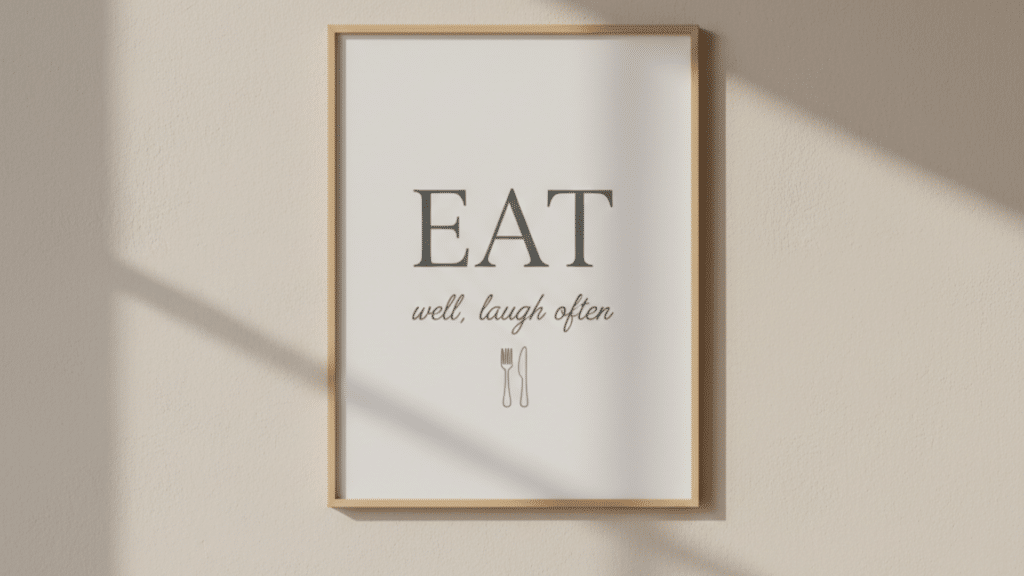
Typography art works best when the message is brief and easy to read. Short words or simple food-related terms feel less distracting. Choose neutral colors so the text does not overpower the space.
This style works well near eating areas or coffee corners. Avoid using several text pieces on one wall. One print is enough to keep the wall balanced. This option adds interest while staying clear and easy on the eyes.
8. Wall Clock As Art
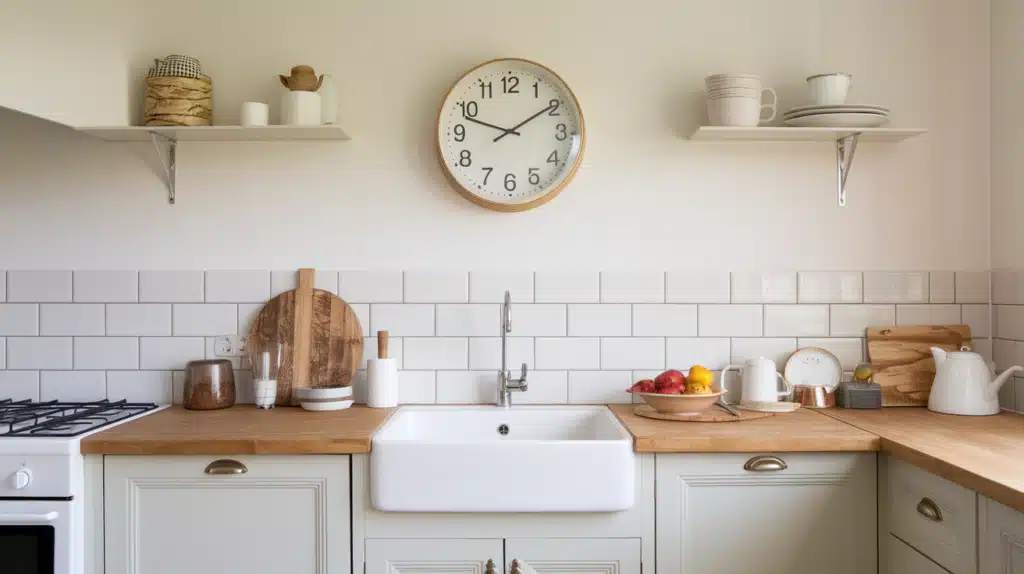
A wall clock can act as decor while staying useful during cooking. Choose a design with a clear face and simple shape. This works well above sinks, between cabinets, or near breakfast areas.
Avoid clocks with loud patterns or heavy frames. The goal is function first, with style as a bonus. A clock helps fill wall space without needing extra care. It keeps the kitchen practical while still looking finished.
Functional Wall Decor That Doubles As Storage
These wall ideas help you use vertical space better by adding storage that still looks neat, useful, and easy to maintain.
9. Floating Shelves With Styled Essentials
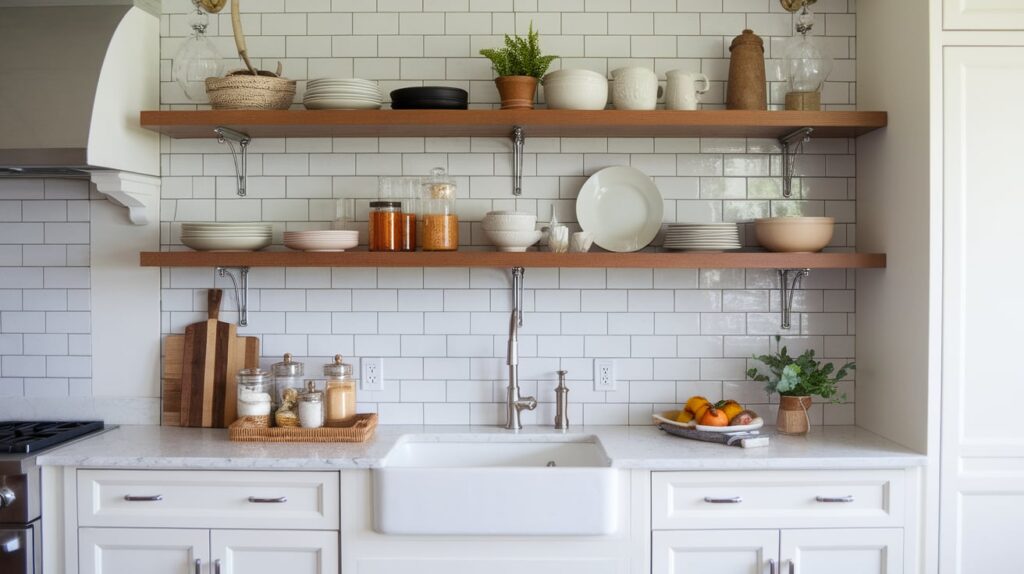
Floating shelves give you storage without heavy cabinets closing in the space. You can place everyday items like plates, bowls, or jars where they are easy to reach. Keep the shelf depth shallow so it does not stick out too far.
Group items by type or color to avoid a messy look. Leave some open space between objects so the shelf feels light. This option works best on walls away from direct heat or splashes. It helps free counter space while keeping your most-used items visible and organized.
10. Rail System With Hooks
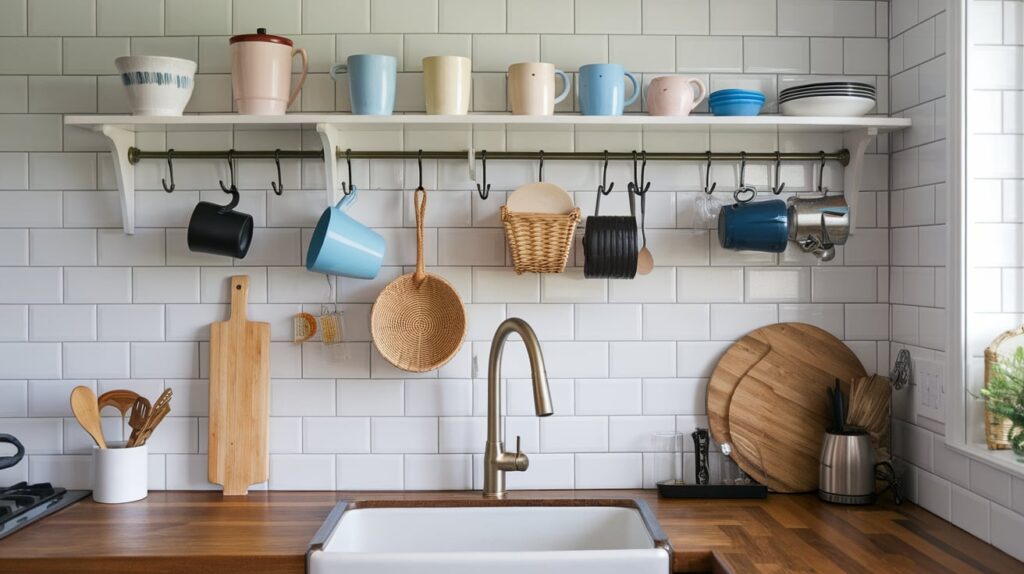
A rail system adds flexible storage that can change with your needs. You can hang mugs, cooking tools, or small baskets along the wall. This setup works well near prep areas where you need quick access. Use matching hooks to keep things consistent.
Avoid hanging too many items in one spot, since that can look crowded. Rails are useful in small kitchens where drawers fill up fast. They turn empty wall space into something practical without adding bulk or blocking movement.
11. Pegboard Kitchen Wall
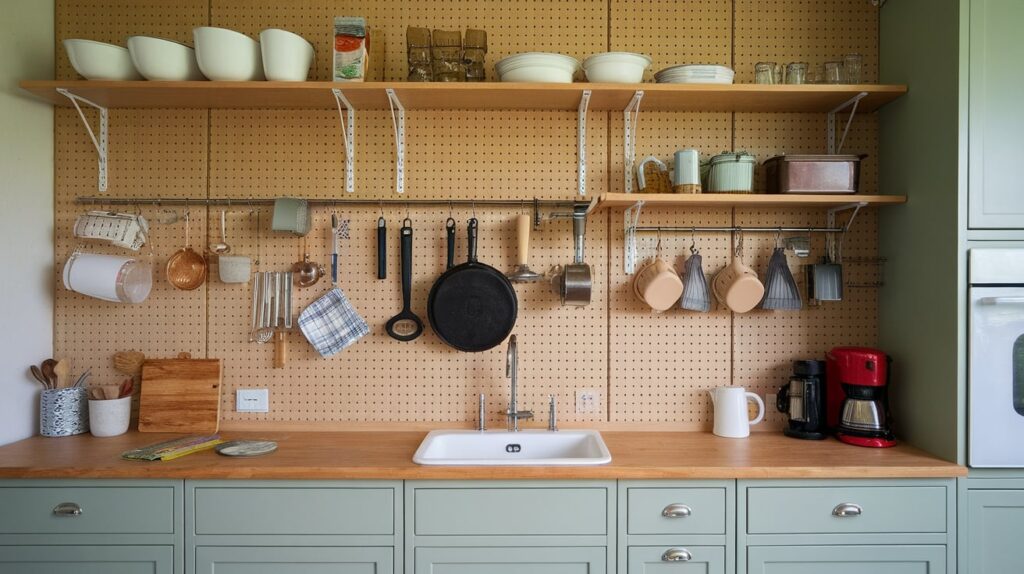
A pegboard wall gives you full control over how storage works. You can move hooks, shelves, and holders anytime your needs change. This makes it helpful for kitchens that do many tasks every day.
Use it to hang tools, small pans, or containers. Stick to one pegboard color so the wall feels calm. Keep heavier items lower for safety. This idea works best on a blank wall that feels unused. It adds structure while letting you adjust the layout whenever needed.
12. Hanging Cutting Board Display
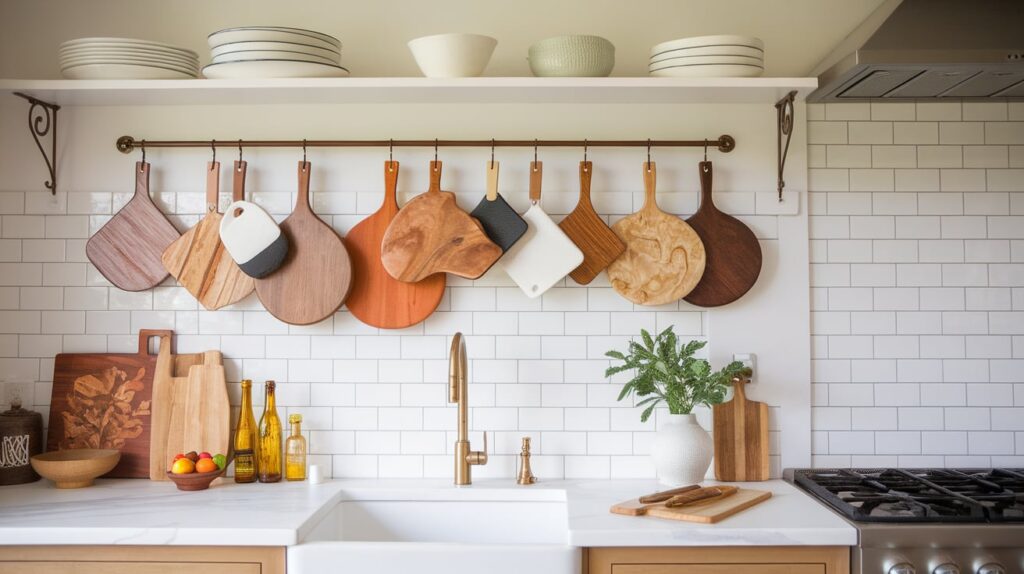
Cutting boards can double as wall storage when displayed neatly. Choose boards in similar shapes or wood tones for a clean look. Hang them on hooks or pegs so they stay easy to grab. This works well near prep zones where boards get used often.
Avoid placing them too close to the stove to reduce grease buildup. This setup keeps cabinets less crowded and makes daily cooking smoother. It also adds warmth without adding extra objects just for looks.
13. Wall-Mounted Spice Rack
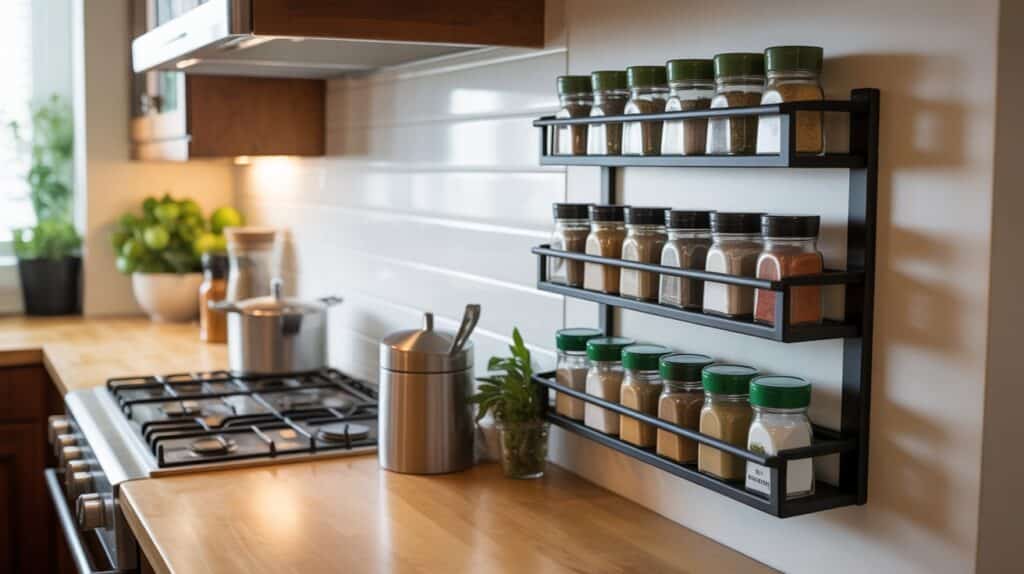
A wall-mounted spice rack clears counter space and keeps seasonings easy to see. Place it near the stove but not directly beside open flames. Choose a rack that holds jars securely so nothing tips over.
Clear or matching containers help keep the wall organized. Limit the rack to spices you use often. This prevents the display from feeling busy. It works well in small kitchens where drawer space runs out quickly and every inch matters.
14. Slim Plate Rack
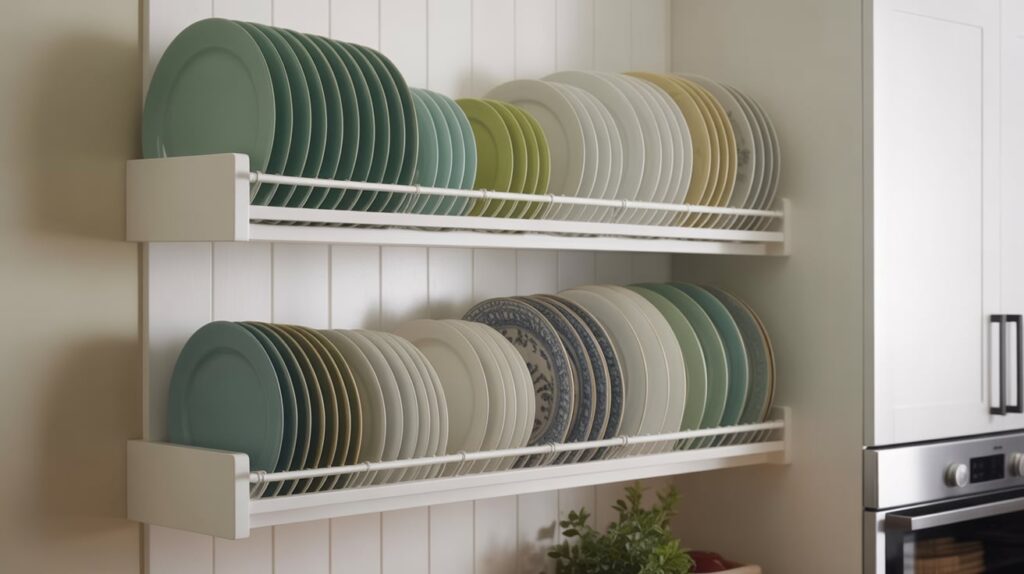
A slim plate rack offers storage while adding texture to plain walls. It works best for plates used daily rather than special pieces. Keep the rack narrow so it does not stick out too far.
Arrange plates by size for a tidy look. This option fits well near dining areas or open walls beside cabinets. It keeps items visible and easy to grab. At the same time, it reduces the need to stack plates inside crowded cupboards.
15. Cookbook Display Ledge
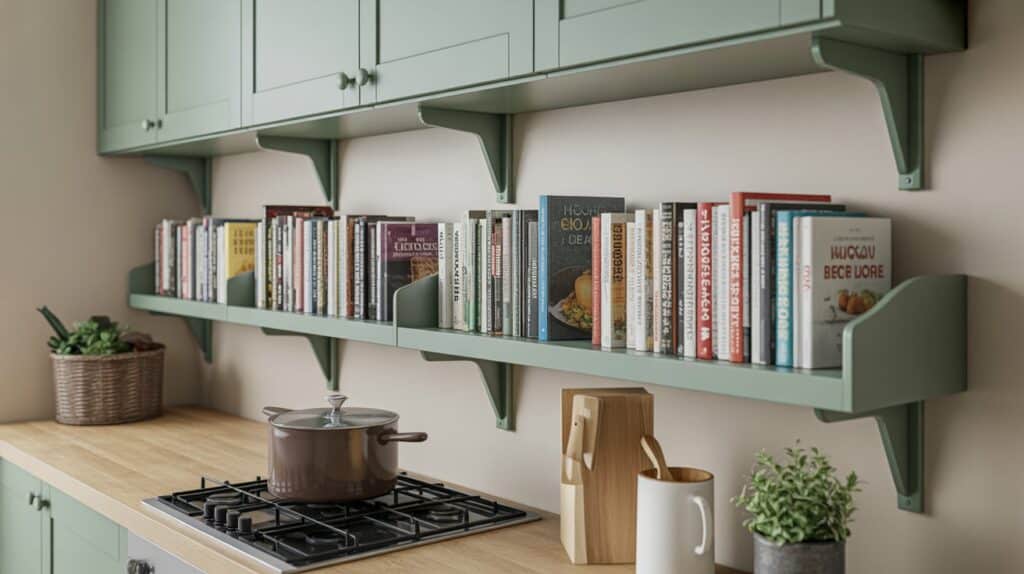
A cookbook ledge lets you store books without filling shelves or drawers. You can rotate books based on what you cook most. Keep the ledge shallow so pages stay upright and secure. This works well on walls near prep counters where recipes get used.
Choose a ledge color that matches the cabinets for a calm look. Limit the number of books on display. This keeps the wall from feeling heavy while still adding color and daily function.
Decorative Displays With Depth And Texture
These wall ideas add visual layers using shape and material, helping your kitchen walls feel finished without filling them with bulky items.
16. Decorative Plate Wall
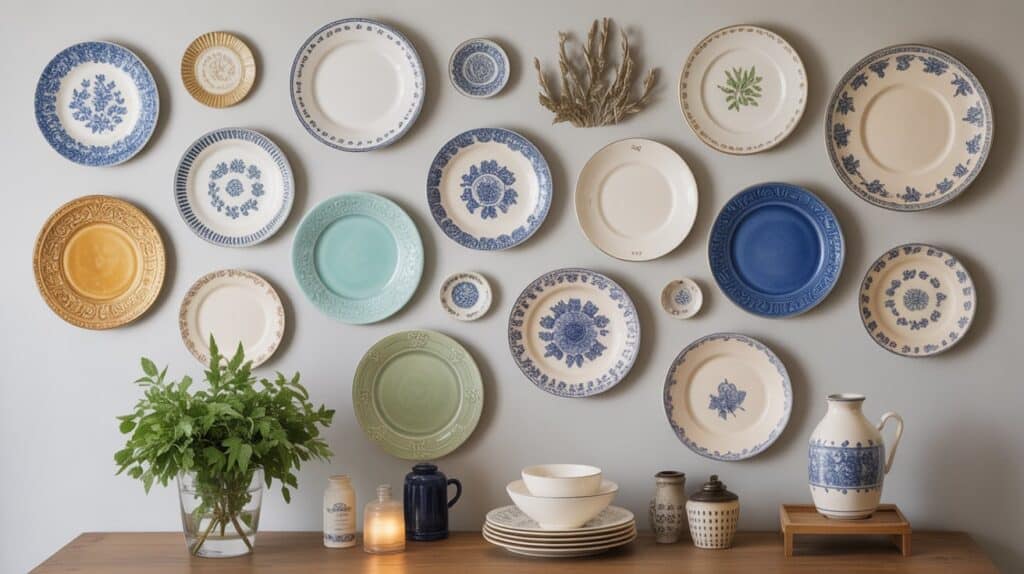
A plate wall lets you fill empty space using items that feel familiar and easy to style. You should choose plates in related colors or finishes so the display feels organized. Mixing plate sizes helps keep the wall from looking flat.
Arrange the layout on the floor before hanging anything. This helps you spot spacing issues early. Place plates away from heavy heat or steam so they stay clean longer. This idea works well on wide walls where framed art feels too formal or heavy.
17. Woven Basket Wall
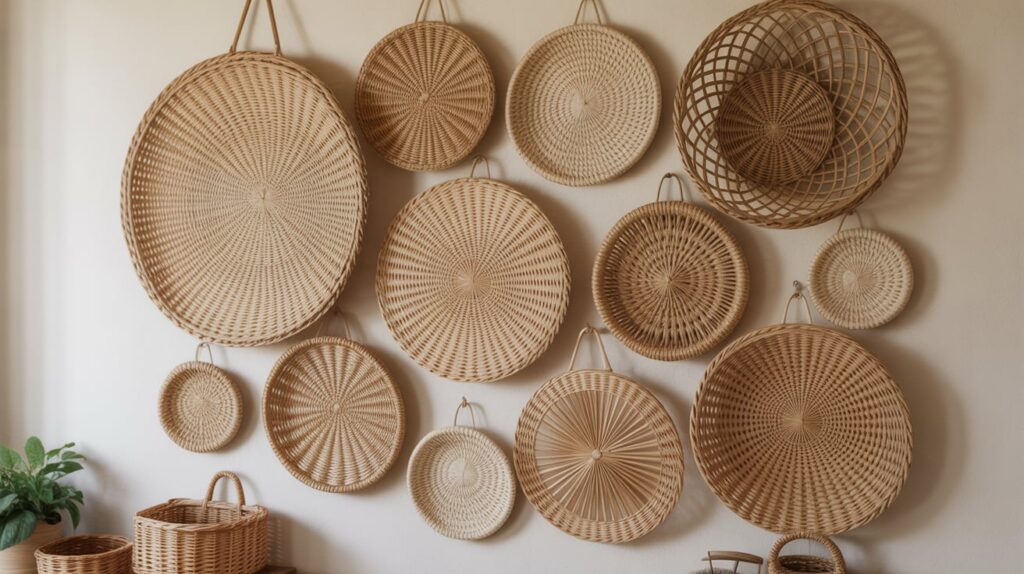
A basket wall adds softness and visual depth using natural shapes. Choose baskets in different sizes, but keep the color range narrow. This helps the wall look calm instead of busy.
Hang baskets with even spacing so each piece has room to stand out. This setup works well in kitchens with plain cabinets or solid wall colors.
Keep baskets lightweight and easy to remove for cleaning. This approach fills blank walls without adding items that feel stiff or overly styled.
18. Wall-Mounted Trays
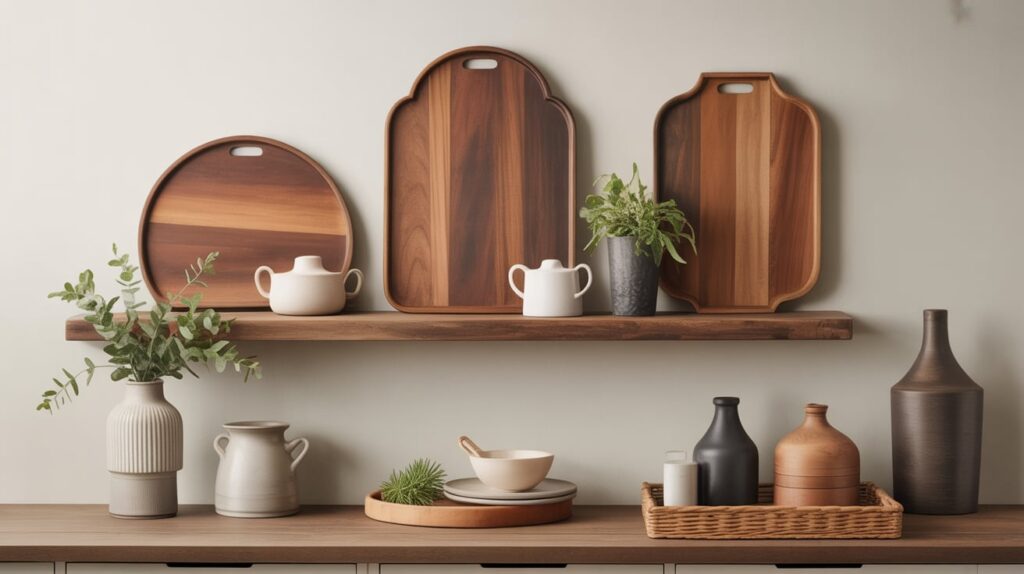
Wall-mounted trays give you large shapes without filling shelves or counters. Using a set of three helps keep the display balanced and easy to follow. Choose trays with shallow depth so they sit close to the wall.
Keep finishes similar to avoid visual clutter. This idea works well in dining nooks or long counters. Trays are easy to wipe clean and do not need daily care. They help cover large wall areas without adding small, scattered pieces.
19. Shallow Shadow Boxes
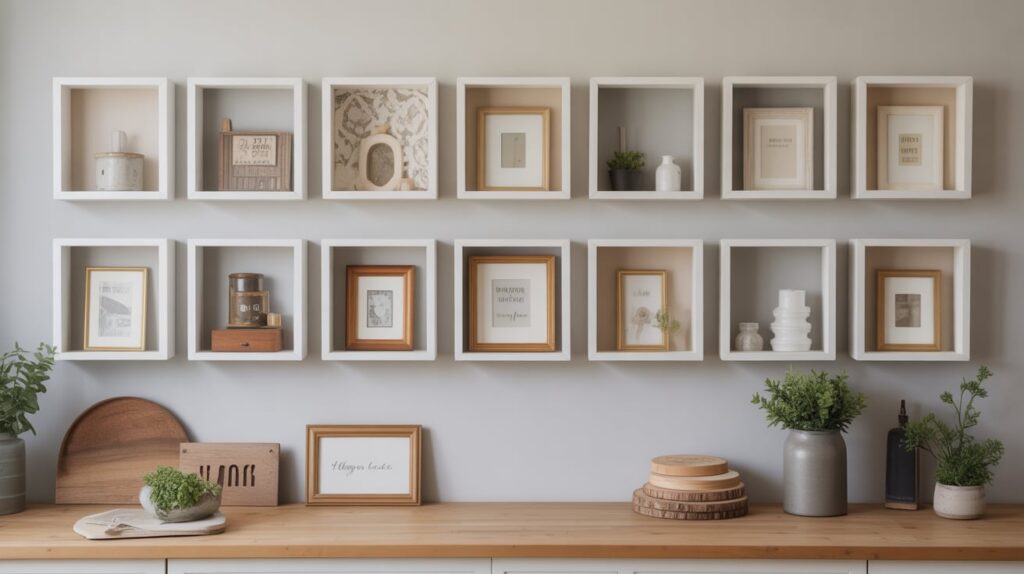
Shadow boxes let you display small items while keeping everything contained. Use shallow boxes so they do not stick out too far. This works well for small keepsakes, framed objects, or simple items you want visible.
Keep the background color neutral so the contents stand out clearly. Hang boxes in a straight row or simple grid. This keeps the wall from feeling busy. Shadow boxes work best on walls away from cooking zones to limit grease and dust buildup.
20. Metal Wall Panels
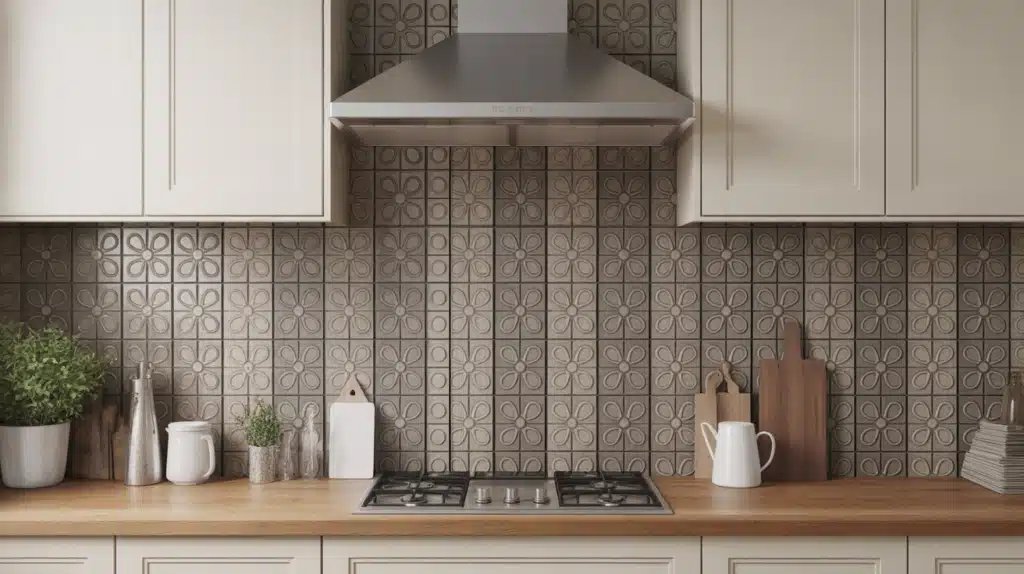
Metal panels bring contrast to kitchens with light cabinets or plain walls. Choose simple patterns with clean lines so the wall stays balanced. Panels should be thin and securely mounted to sit flush.
This option works well as a small accent area instead of covering the entire wall. Metal surfaces are easy to wipe clean, which helps in busy kitchens. Keep nearby decor simple so the panel remains the focus without overwhelming the space.
21. Wood Slat Accent Section
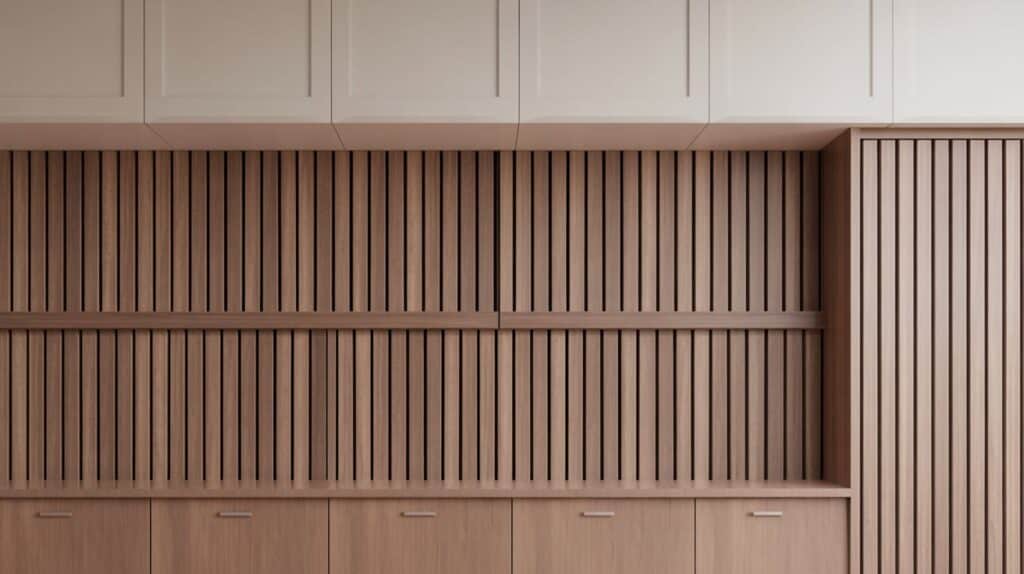
Wood slats add subtle depth using narrow vertical or horizontal lines. This works best on one section of the wall instead of the whole kitchen. Choose a wood tone that matches or lightly contrasts with cabinets.
Keep slats evenly spaced for a clean look. This option adds interest without adding objects that collect dust. It fits well behind dining areas or open walls. Wood slats help break up flat surfaces while keeping the kitchen easy to maintain.
Greenery And Natural Elements
These wall ideas soften hard kitchen surfaces by adding plant life, helping the space feel calmer while still staying practical and easy to manage.
22. Wall-Mounted Planters
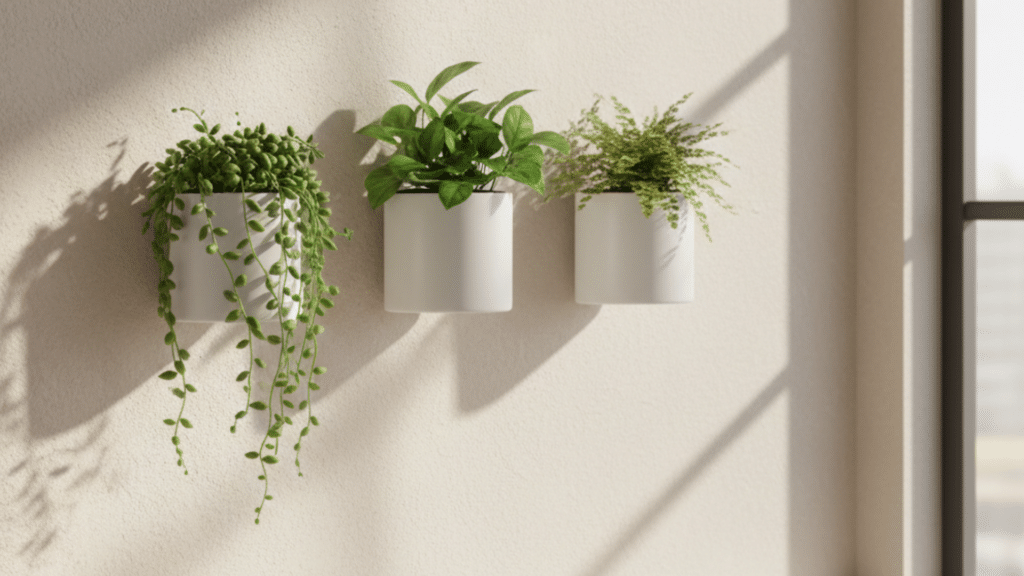
Wall-mounted planters keep plants off counters and free up work space. They work well on blank walls that get steady light during the day. Choose lightweight planters that sit close to the wall so they do not stick out too far.
Use plants that do not shed leaves often, which helps keep cleanup simple. Space planters evenly so the wall feels balanced. This option adds life to the kitchen without taking up drawers or shelves. It works best away from direct heat and heavy splashes.
23. Hanging Herb Garden
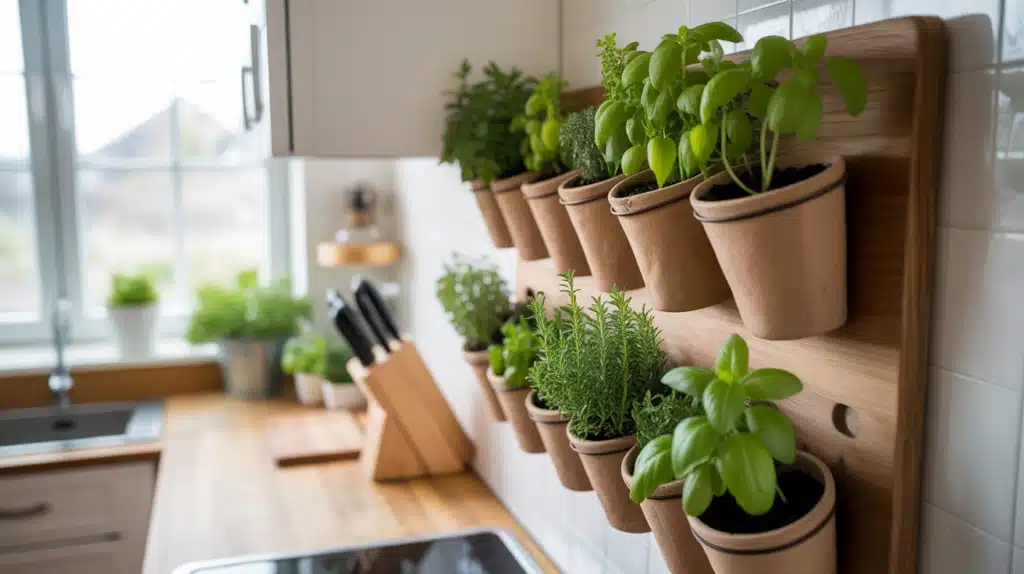
A hanging herb garden adds purpose while still working as wall decor. You can place it near prep areas so herbs stay easy to reach while cooking. Use small containers with good drainage to avoid a mess.
Keep the layout simple with one row or column to avoid clutter. This idea works best in kitchens with good light near windows. Choose herbs you actually use so the wall stays useful. It adds interest while supporting daily cooking habits.
24. Dried Herb Or Floral Bundles
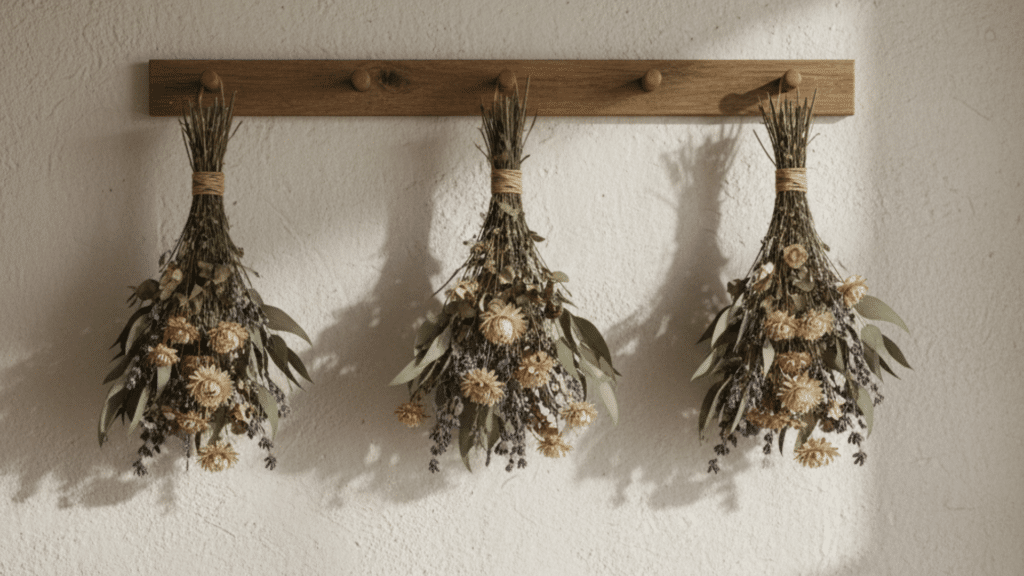
Dried bundles offer a low-effort way to add texture without daily care. They work well on walls that do not get much light. Choose bundles with similar tones so the display stays calm.
Hang them on simple hooks or pegs with even spacing. This setup works best away from moisture to help items last longer. Dried bundles add visual interest without adding weight or needing water. They fit well in kitchens where live plants are hard to maintain.
25. Small Wall Trellis With Vines
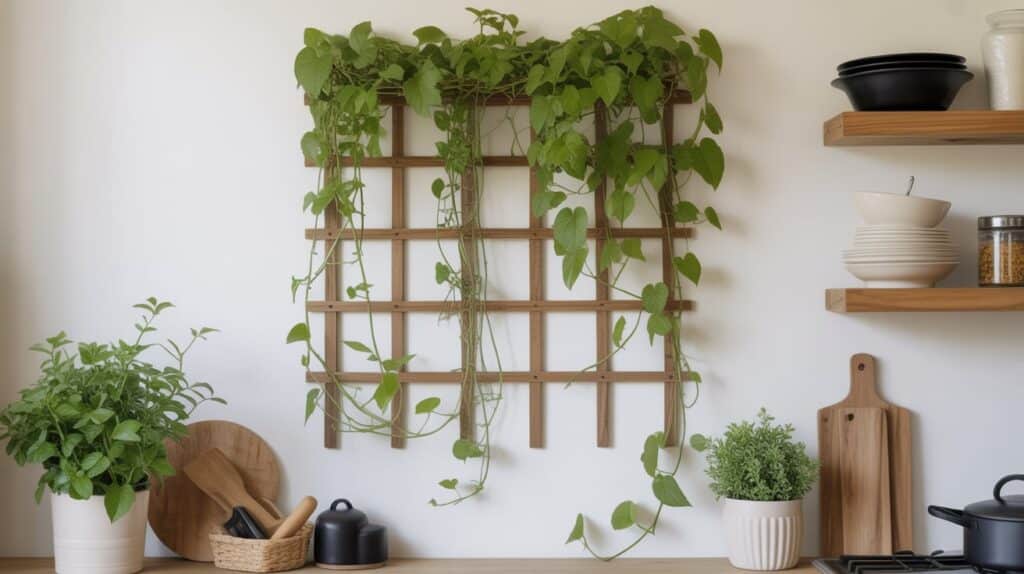
A small wall trellis supports climbing plants while keeping the wall structured. This works best in kitchens with bright, indirect light. Choose a compact trellis so it does not take over the wall.
Train vines along the frame to keep growth controlled. Place it away from cooking zones to limit heat exposure. This idea adds movement and shape without filling shelves. It helps soften flat walls while still keeping the kitchen organized and open.
Budget-Friendly And DIY Wall Ideas
These wall ideas help you decorate on a small budget while keeping the kitchen neat, clear, and thoughtfully put together.
26. Printable Art In Matching Frames
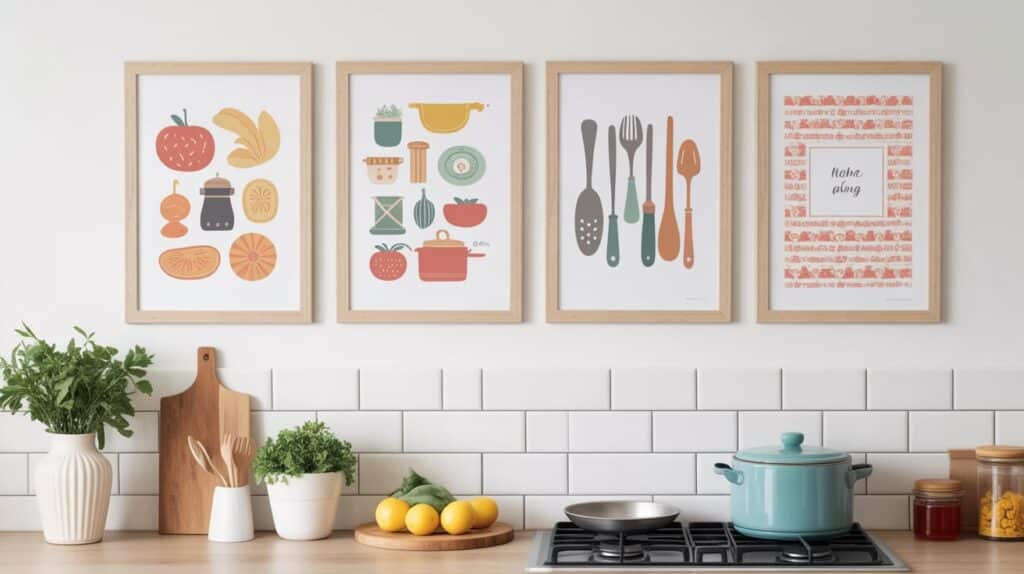
Printable art lets you update kitchen walls without spending much money. You can download designs, print them at home, and place them in simple frames.
Using the same frame style keeps the wall orderly, even if the art changes. This idea works well for seasonal updates or quick refreshes.
Choose food, kitchen tools, or simple patterns. Keep colors limited so the wall stays calm. Hang prints in a straight row or small grid. This setup gives flexibility while keeping the space easy to adjust later.
27. Thrifted Frame Gallery
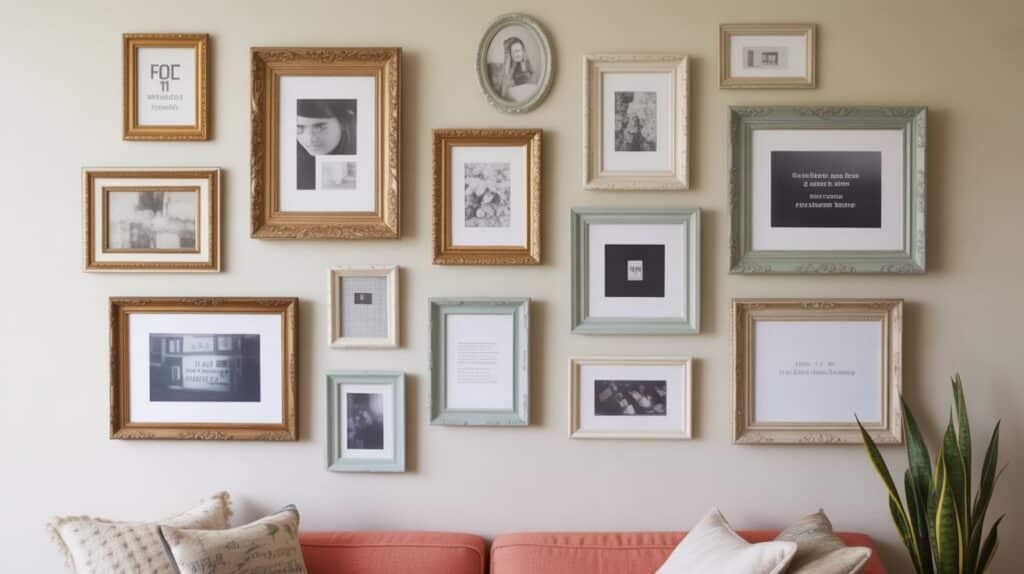
A thrifted frame gallery gives character without a high cost. Look for frames in different shapes, but paint them one color so they work together. This helps the wall feel planned, not random.
You can fill frames with photos, prints, or plain paper until you find artwork you like. Lay out the frames on the floor first to plan spacing. This works well on large blank walls. It adds interest while letting you change the contents over time without redoing the setup.
28. Painted Wood Signs
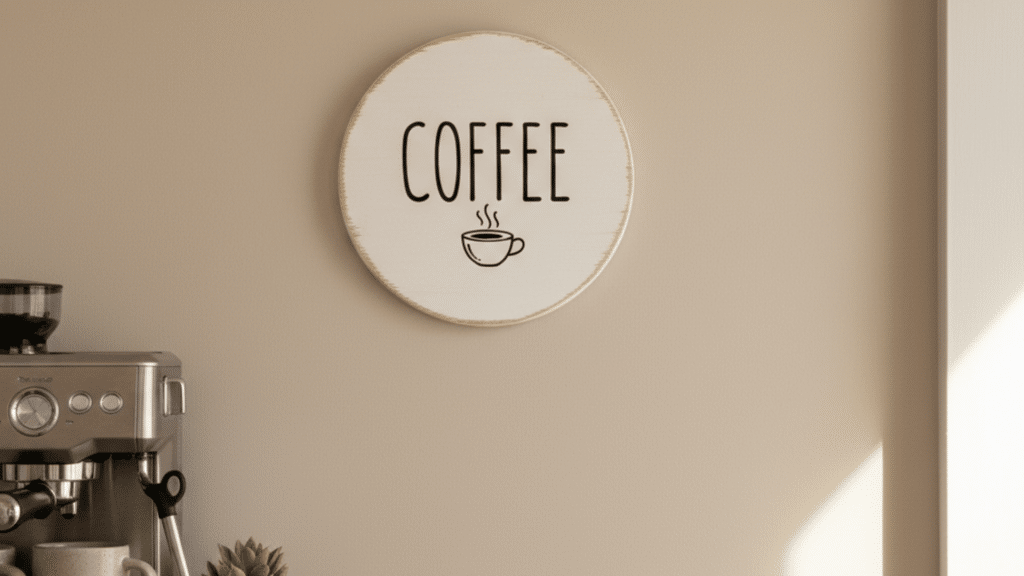
Painted wood signs work best when the design stays simple. Use short words, numbers, or basic shapes instead of long phrases. Cut wood into clean shapes like rectangles or circles. Choose paint colors that match cabinets or counters.
Keep the sign small so it does not overpower the wall. This idea fits well near eating areas or coffee corners. Avoid using too many signs in one space. One well-placed piece keeps the wall balanced and easy on the eyes.
29. Chalkboard Or Menu Board
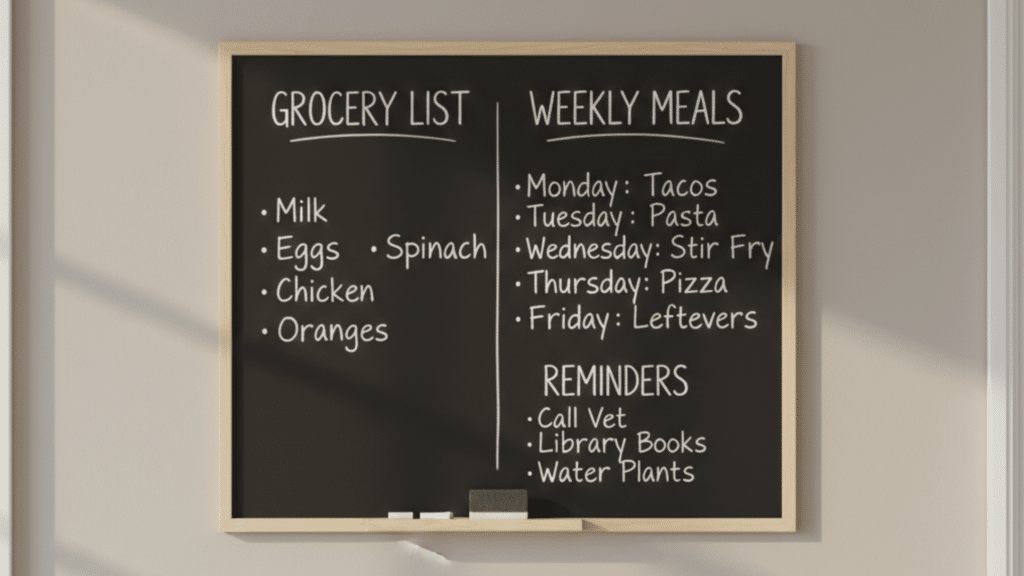
A chalkboard or menu board adds function while filling empty wall space. It works well near breakfast areas or family planning zones. Use it for grocery lists, meals, or reminders. Choose a board with a thin frame so it stays light.
Keep writing neatly and limit it so it does not look busy. Mount it at eye level for easy use. This option adds purpose without extra decor pieces. It also changes easily without removing or replacing anything on the wall.
30. Wall Decals In Small Doses
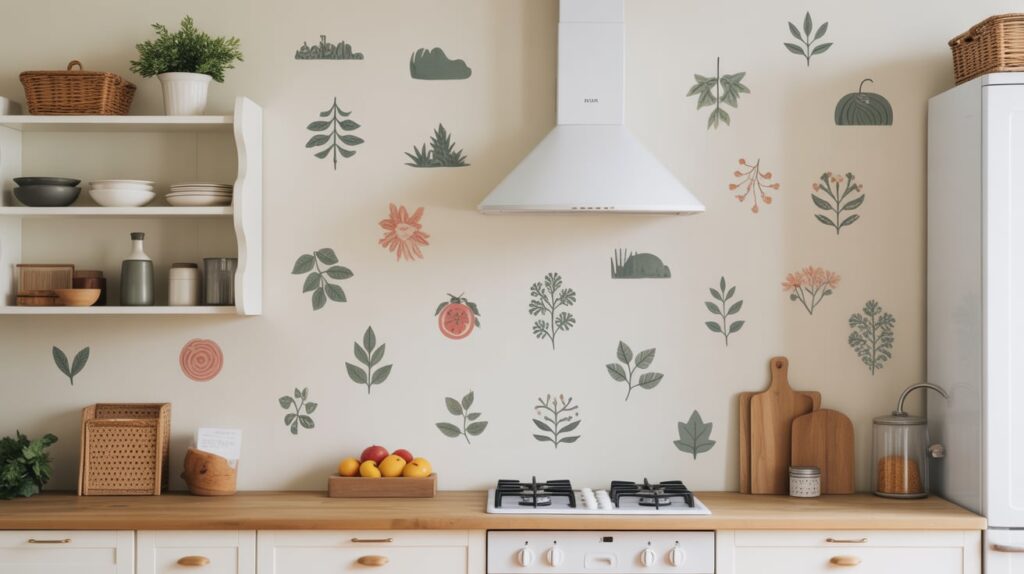
Wall decals work best when used sparingly. Choose small shapes or simple patterns instead of full wall designs. Place them above cabinets, near shelves, or in narrow spaces. This helps avoid visual overload.
Decals are useful in rentals since they remove easily. Stick to one color or theme to keep things clear. Avoid placing decals near heat or steam. When used lightly, they fill gaps on walls without becoming the main focus of the kitchen.
Renter-Safe Kitchen Wall Decor
These wall ideas let you decorate your kitchen without drilling holes or causing damage, making them safe for rental spaces and easy to remove later.
31. Adhesive Hooks With Decor
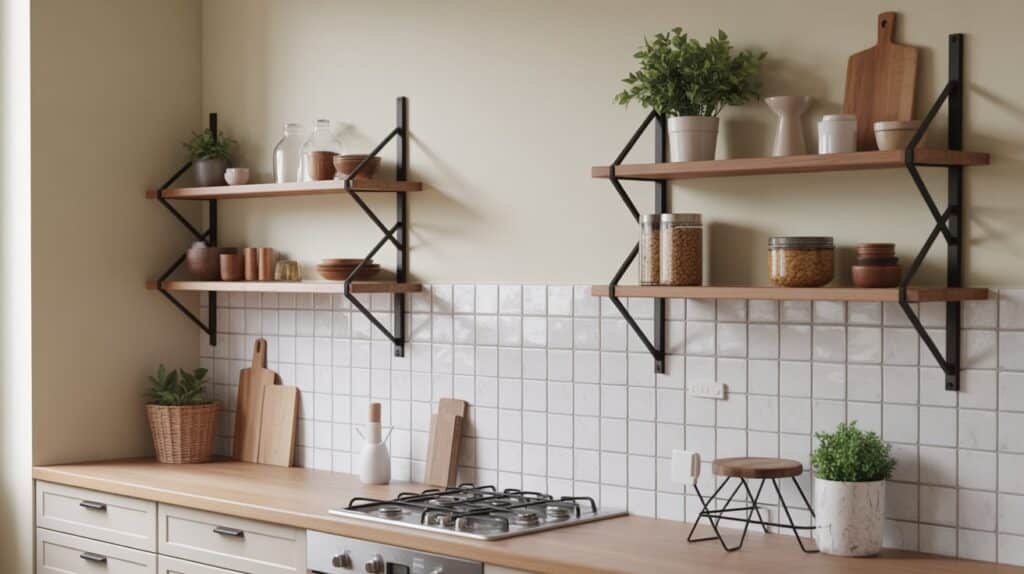
Adhesive hooks let you hang small items without nails or screws. Use them for lightweight art, keys, or kitchen tools. Always check the weight limit before hanging anything. Clean the wall surface well so the hook sticks properly.
Space hooks evenly to keep the wall balanced. This option works well in small kitchens where storage is limited. Avoid hanging items near heat or moisture, which can weaken the adhesive. When removed carefully, hooks leave walls clean and ready for the next setup.
32. Leaning Wall Shelves
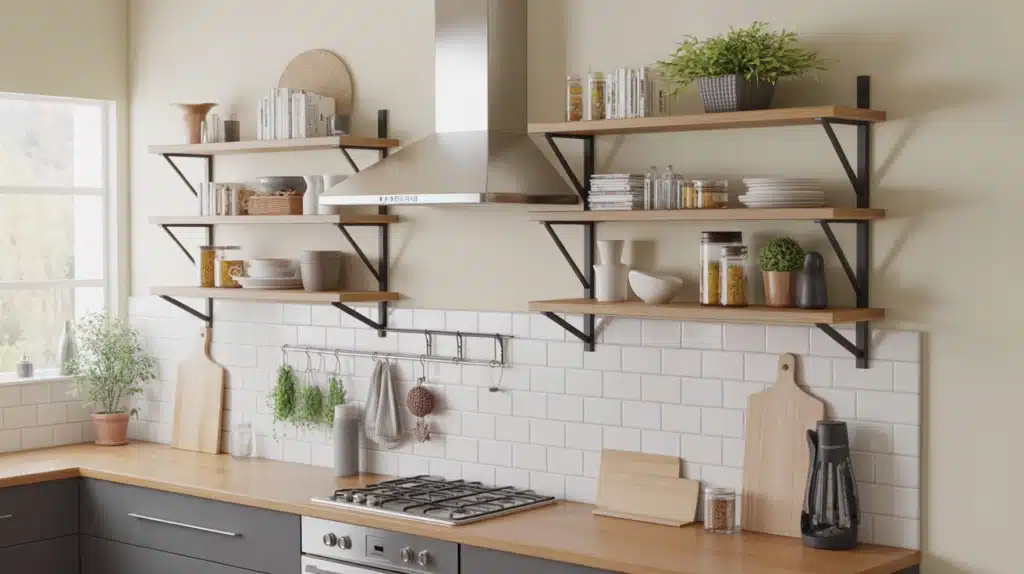
Leaning wall shelves rest against the wall instead of attaching to it. They work well on backsplash walls or empty sections near counters. Choose a shelf with a narrow depth so it does not block movement.
Place heavier items on lower levels to keep the shelf stable. This option adds storage without marks or holes. It works best in kitchens with enough floor space. Leaning shelves let you change layouts easily while keeping the wall untouched.
33. Fabric Wall Hangings
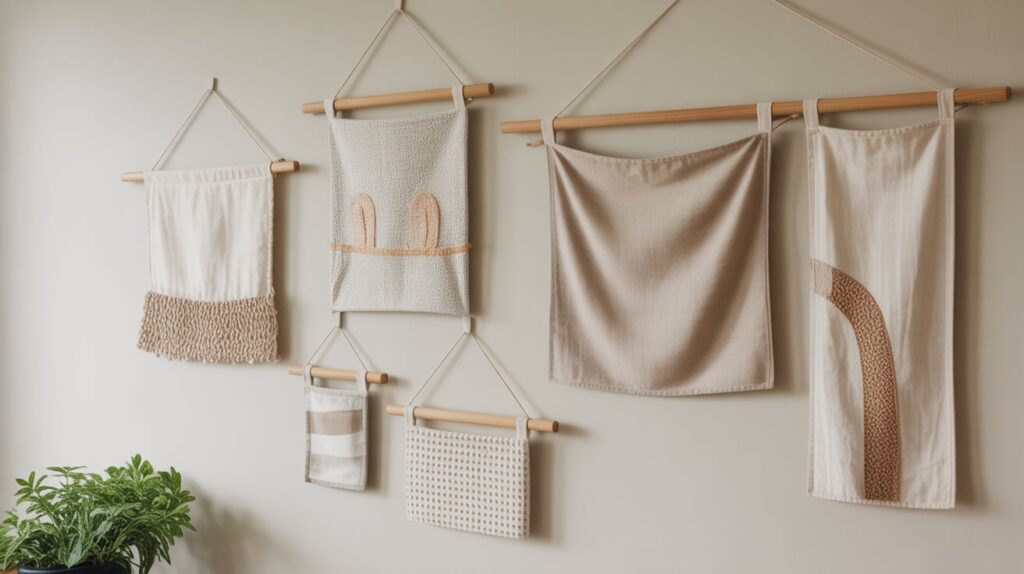
Fabric wall hangings add softness without adding weight. They can be hung using removable hooks or rods. Choose simple designs and light materials so they stay easy to manage. This idea works well on walls away from cooking zones.
Fabric pieces are easy to take down for cleaning or swapping. Keep the size moderate so the wall does not feel heavy. This option adds interest while staying flexible for renters who want change without damage.
34. Magnetic Wall Accessories
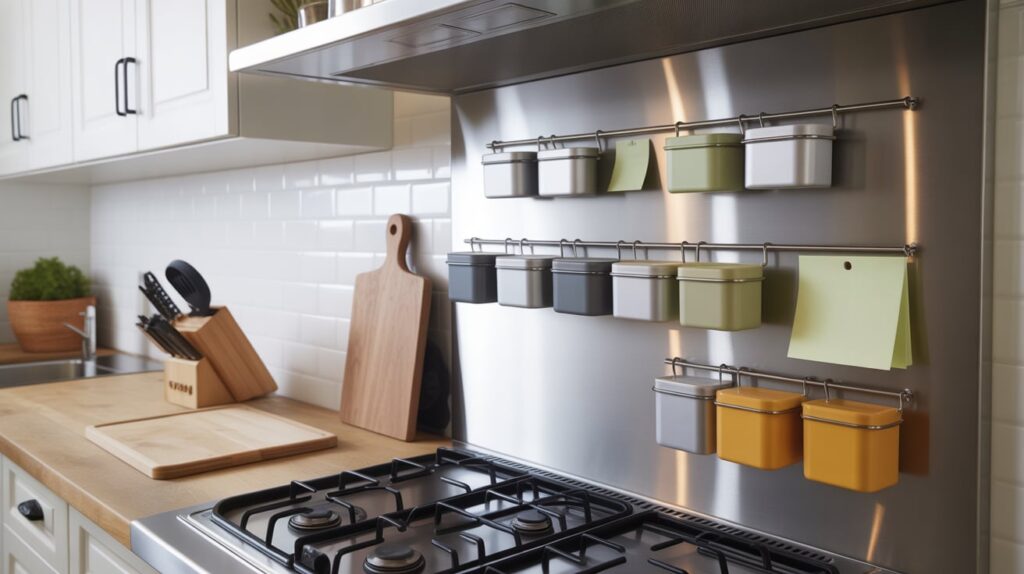
Magnetic wall accessories work well on metal backsplashes or appliances. You can use them to hold small containers, notes, or tools. This option requires no adhesive or drilling.
Keep items lightweight so they stay secure. Arrange accessories in straight lines to avoid a cluttered look. This works best near prep areas where quick access helps. Magnetic storage adds function while keeping walls clear and easy to reset whenever needed.
Accent And Feature Wall Ideas
These ideas work best when one kitchen wall feels plain and unfinished, helping you create focus without filling the entire space.
35. Wallpaper Accent Wall
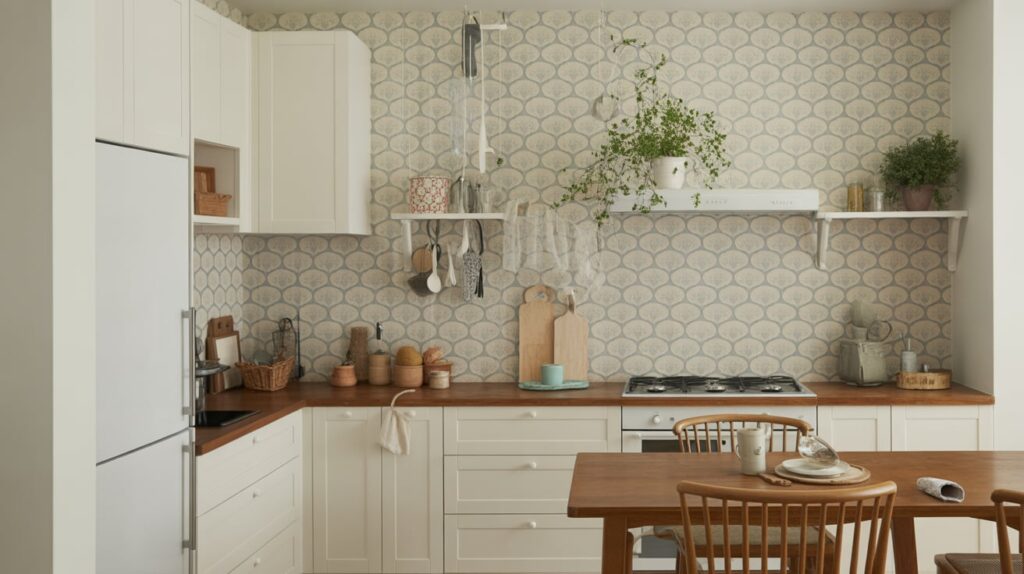
A wallpaper accent wall helps define one area without changing the whole kitchen. Choose wipeable or vinyl finishes so cleaning stays simple. This works well behind dining nooks or open walls away from cooking zones.
Stick to simple patterns or soft repeats to keep the wall easy on the eyes. Before installing, test a small section to see how light affects the pattern. Limit wallpaper to one wall only. This keeps the kitchen balanced and prevents the space from feeling closed in.
36. Painted Color Block Wall
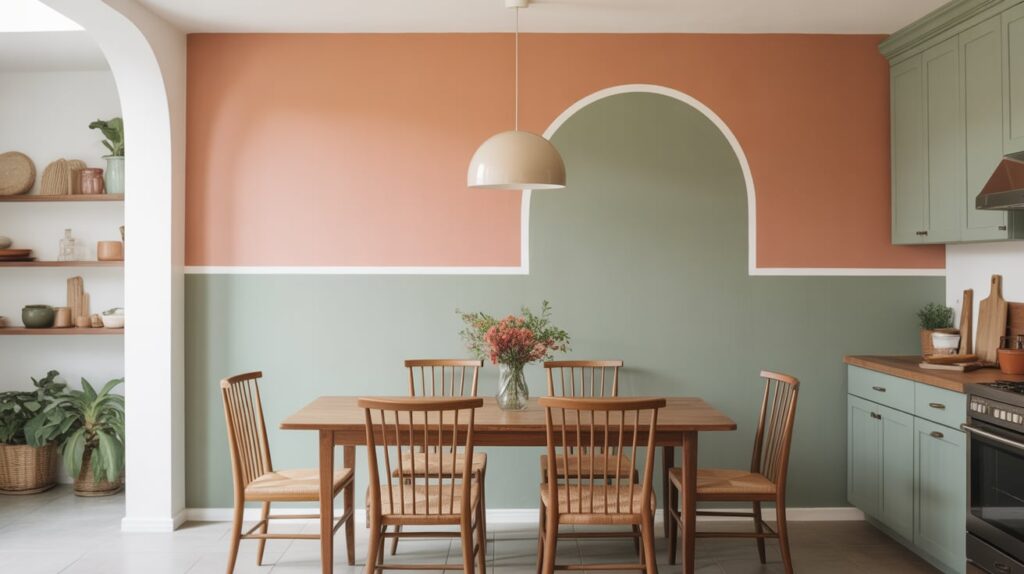
A color block wall uses paint to shape the space without adding objects. This works well behind dining tables, breakfast corners, or open wall sections. Choose one paint color that contrasts gently with cabinets.
Keep edges clean and straight for a tidy look. A color block can run halfway up the wall or stay within a framed section. This approach helps define zones without shelves or frames. It stays easy to clean and works well in both small and large kitchens.
37. Tile Accent Section
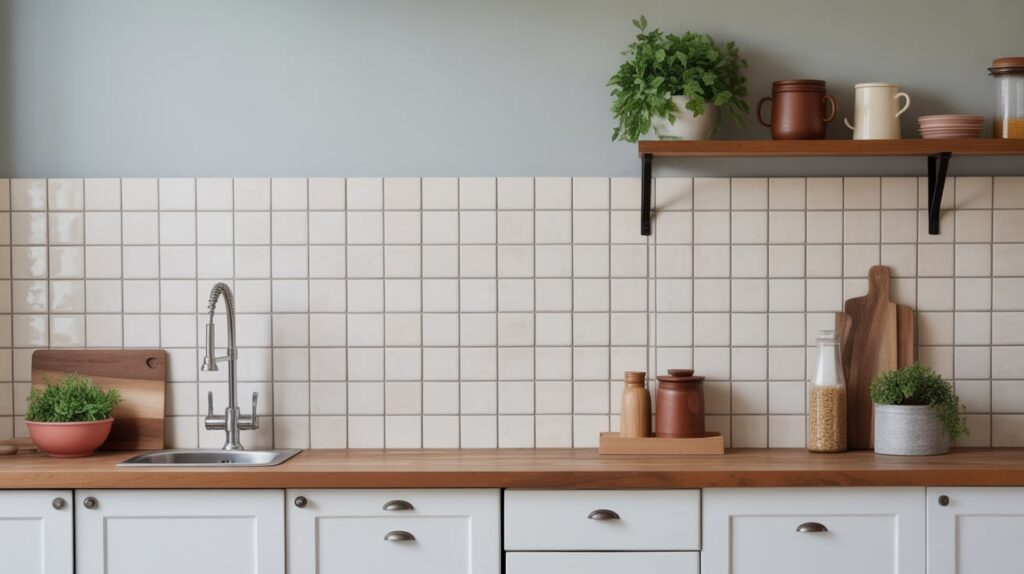
A tile accent section brings focus to one kitchen zone without covering every wall. This works best behind sinks, coffee stations, or open prep areas. Choose simple tile shapes so the wall stays calm.
Keep grout lines clean and even to avoid a busy look. Limit the tile area to one section so the rest of the kitchen stays open. Tile surfaces handle splashes well, which makes them useful in work zones while still filling empty wall space.
38. Brick Or Faux Brick Panels
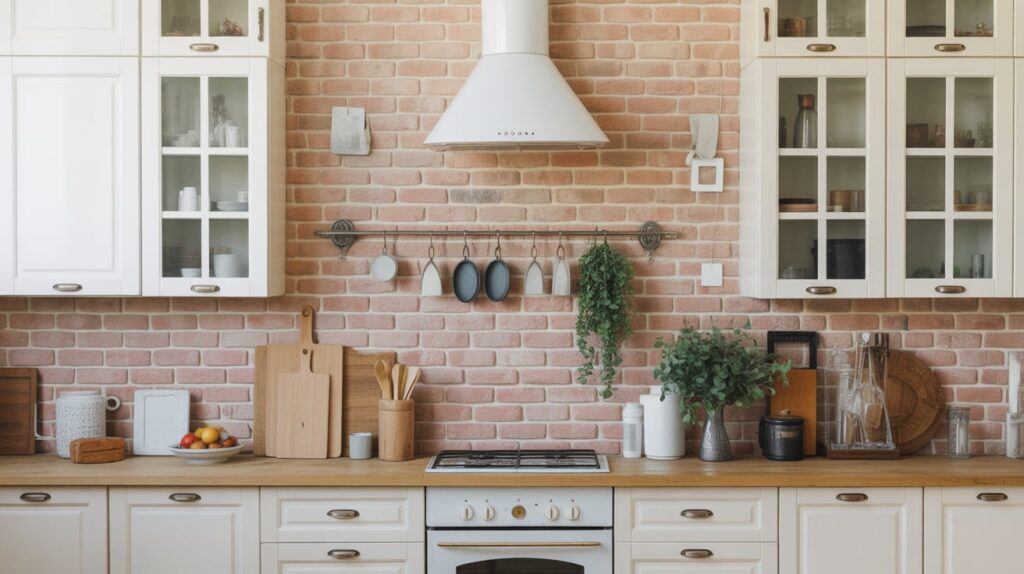
Brick or faux brick panels help fill blank walls without a full renovation. Panels work best on one wall where cabinets do not already crowd the space. Choose light or neutral tones so the kitchen does not feel heavy.
Keep the surrounding decor minimal so the wall stands out clearly. Faux panels install faster and weigh less than real brick. This option works well in kitchens that need visual structure without major changes or a long installation time.
Finishing Touch Ideas
These small wall ideas help complete the kitchen by filling gaps, improving balance, and keeping the space useful without adding clutter.
39. Decorative Wall Hooks
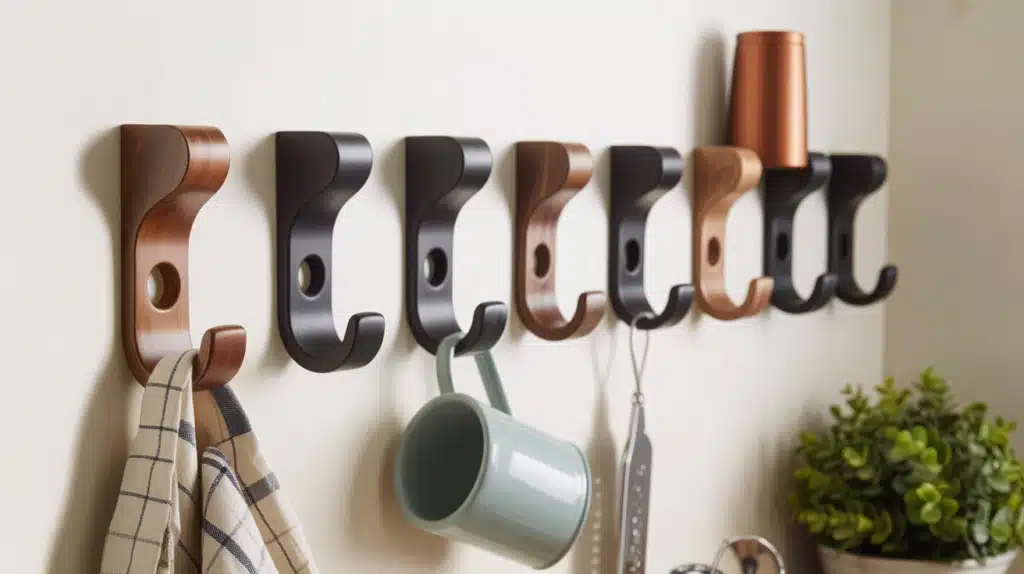
Decorative wall hooks add function while taking up very little space. They work well near entry points, prep zones, or coffee areas.
You can use them for towels, mugs, or lightweight tools. Choose hooks with simple shapes so they do not draw too much attention.
Keep spacing even to avoid a messy look. Limit the number of hooks on one wall so the area stays clean and open. This idea helps you use empty wall spots while keeping daily items easy to reach and neatly stored.
40. Mini Wall Shelves For Corners
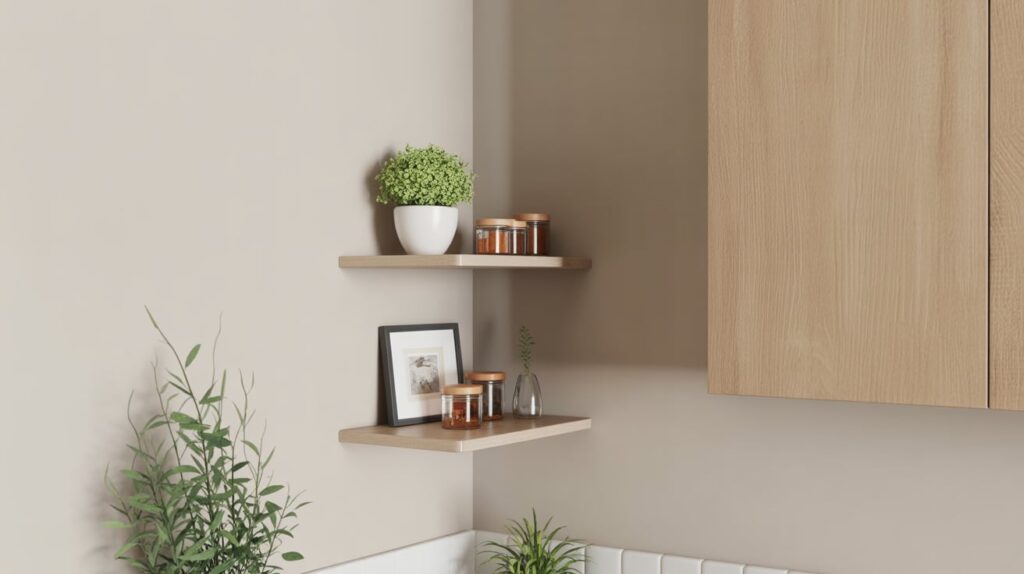
Corners often get ignored, but small shelves can make them useful. Mini shelves fit well in tight spots where full shelves would feel bulky. You can use them for small jars, plants, or a single framed item.
Keep the shelf depth shallow so it does not block movement. Use one or two shelves only to avoid crowding the corner. Match the shelf color to nearby cabinets or walls for a smooth look. This option helps use wasted space without changing the overall layout.
41. Mirror To Reflect Light
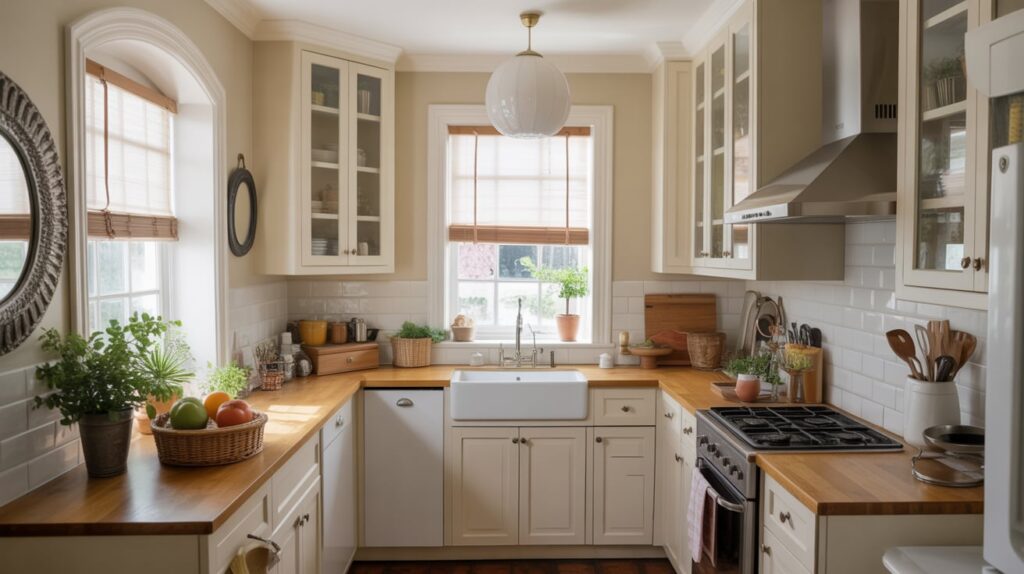
A mirror can help brighten kitchens that feel dark or closed in. It works best on walls across from windows or light sources. Choose a simple frame so the mirror does not overpower the space. Keep the size moderate, especially in small kitchens.
Avoid placing mirrors too close to the stove or sink. This idea helps bounce light around the room and makes the kitchen feel more open. It fills wall space without adding items that need frequent cleaning or upkeep.
42. Seasonal Swap Wall Area
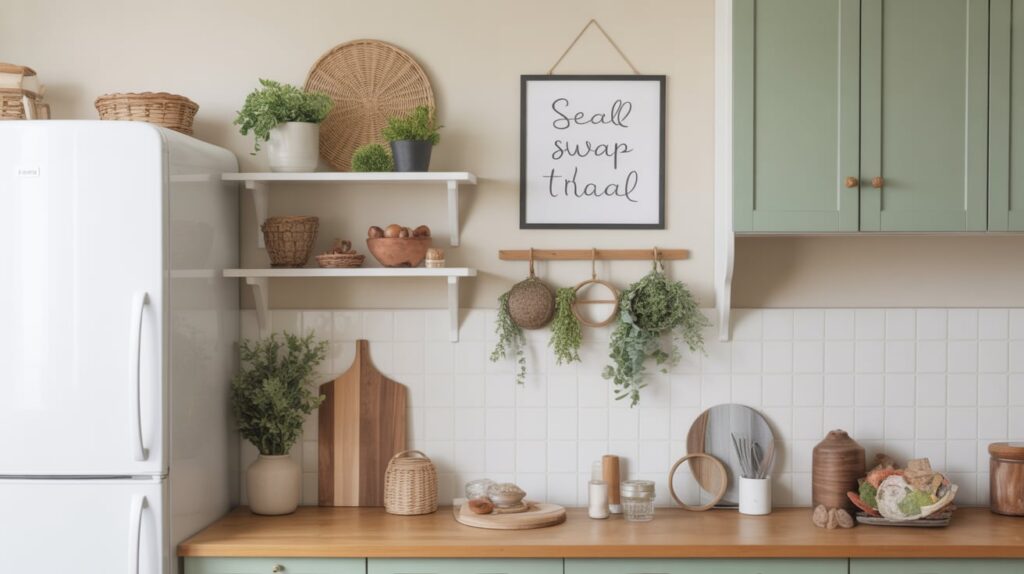
A seasonal swap wall gives you flexibility without redoing the whole kitchen. Choose one small wall or section where decor can change through the year. You might switch art, small shelves, or hanging items based on the time of year.
Keep the base setup the same so changes stay quick and simple. Limit swaps to a few pieces so the wall stays calm. This approach keeps the kitchen feeling fresh while avoiding constant rearranging or new installations.
43. Framed Functional Charts
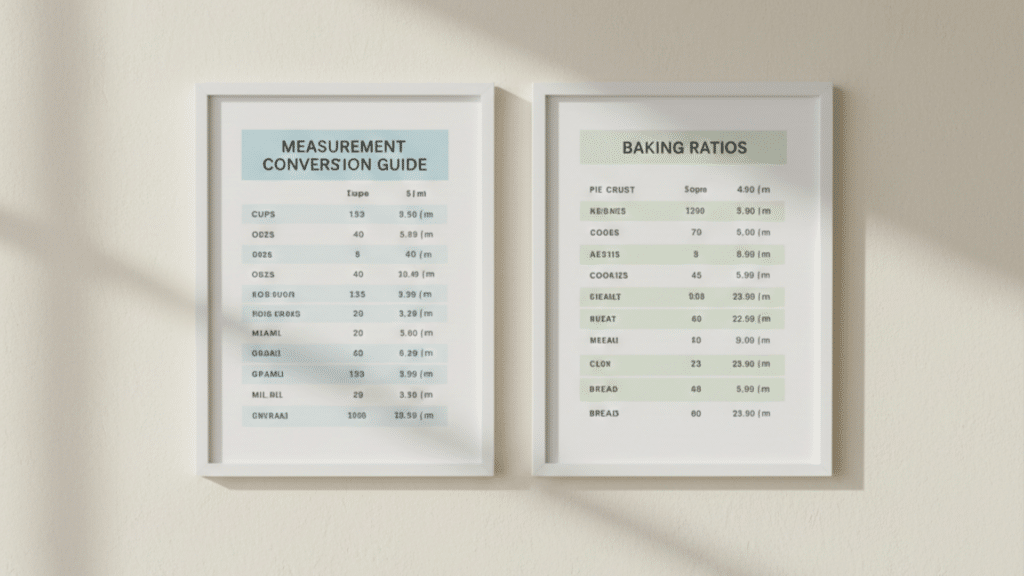
Framed charts add purpose while filling small wall gaps. You can use measurement guides, baking ratios, or simple cooking conversions. Keep the design clean with clear text and light backgrounds.
Use matching frames so the wall stays organized. This works well near prep areas where quick reference helps. Hang the chart at eye level so it stays easy to read. Limit it to one or two frames to avoid clutter. This idea adds value to the wall without turning it into decoration only.
44. Narrow Wall Ledge For Small Objects
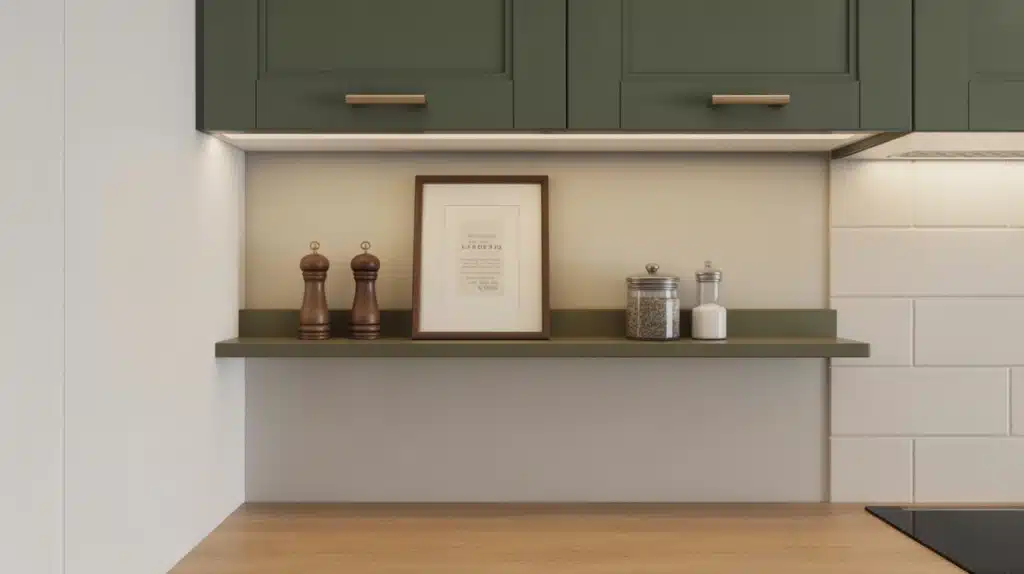
A narrow ledge gives you space to place a few items without taking over the wall. It works well for salt cellars, small jars, or one framed print. Keep the ledge shallow so items stay close to the wall.
Choose a color that blends with the cabinets or paint. Avoid stacking too many objects on the ledge. One or two items look cleaner and more planned. This option helps finish empty wall sections while keeping surfaces clear and easy to clean.
45. Under-Cabinet Wall Strip With Hooks
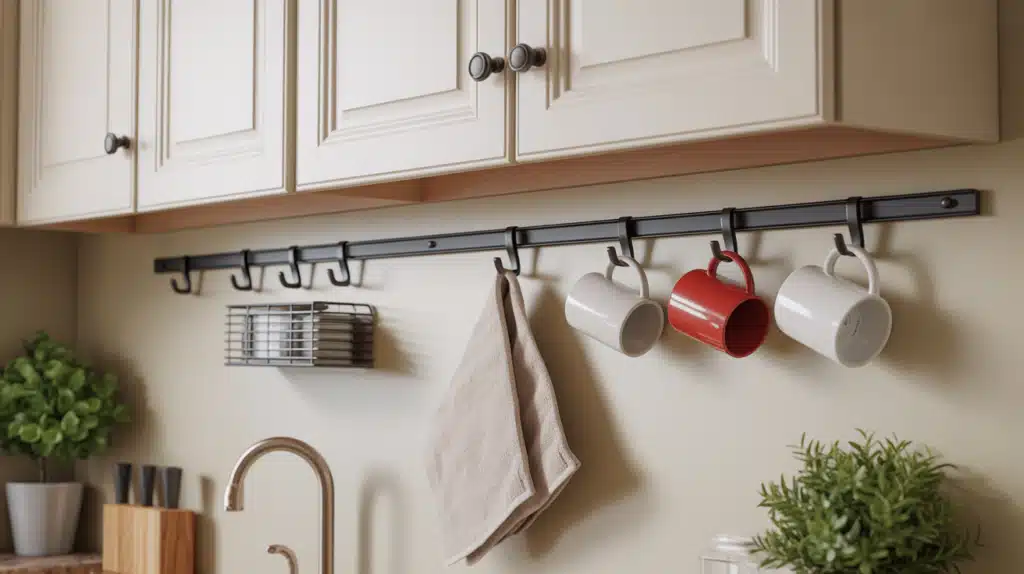
An under-cabinet wall strip uses space that often goes unnoticed. You can mount a slim strip with hooks below cabinets to hang towels, mugs, or small tools. Keep items lightweight so the area stays neat. This works well near sinks or coffee stations.
Choose a strip that matches the cabinet hardware for a clean look. Limit the number of hanging items so the wall does not feel busy. This idea adds function while staying subtle and well-placed.
Common Kitchen Wall Decor Mistakes
Kitchen walls can look crowded or unfinished when choices are rushed. These common mistakes often cause imbalance, poor function, or visual mess over time.
- Overfilling the wall: Adding too many items removes breathing room and makes the kitchen feel busy instead of balanced.
- Hanging decor too high: Art placed far above eye level disconnects it from cabinets and counters, making the walls feel awkward.
- Ignoring heat and moisture: Paper, fabric, or wood placed near stoves and sinks can stain, warp, or wear out quickly.
- Mixing too many styles: Combining many looks on one wall creates confusion and breaks visual flow.
- Using decor without purpose: Items that add no use or meaning often feel random and are the first to look cluttered.
Conclusion
By now, you have seen how kitchen walls can do more than sit empty. The right choices help with storage, balance, and daily use.
I shared ways to pick decor based on wall size, kitchen layout, and how you actually move through the space. Small adjustments often matter more than adding more items.
One strong piece or useful feature can go further than filling every inch. As you plan your next update, focus on what supports how you cook and live.
That mindset makes kitchen wall decor ideas easier to apply and maintain. If you found this helpful, take a look at the other home and kitchen posts to keep building a space that works for you.