
I still remember lying awake on Christmas Eve as a kid, my mind racing with visions of presents and reindeer on the roof. Now, as a parent, I see the same wide-eyed struggle, and honestly, I’m not immune either.
Between the anticipation bubbling over, late-night wrapping sessions, too many cookies, and screens glowing past bedtime, Christmas Eve turns into a sleep disaster for the whole family. The travel exhaustion doesn’t help either.
But I’ve learned that with the right approach, mixing a little science, some festive rituals, and realistic expectations, we can all drift off more peacefully, even on the most magical night of the year.
Why It’s Hard to Fall Asleep on Christmas Eve?
Christmas Eve hits us with a perfect storm of sleep disruptors. The excitement and anticipation spike our cortisol levels, keeping our brains buzzing when they should be winding down.
Our routines go out the window; we’re traveling, eating dinner at odd hours, staying up later than usual, and navigating houseguests.
Then there’s the overstimulation: holiday desserts loaded with sugar, back-to-back Christmas movies, and kids glued to their devices.
Kids struggle with sensory overload and visions of Santa, while we adults battle a different monster: stress from last-minute wrapping, hosting duties, and that mental checklist that won’t quit.
How to Fall Asleep on Christmas Eve?
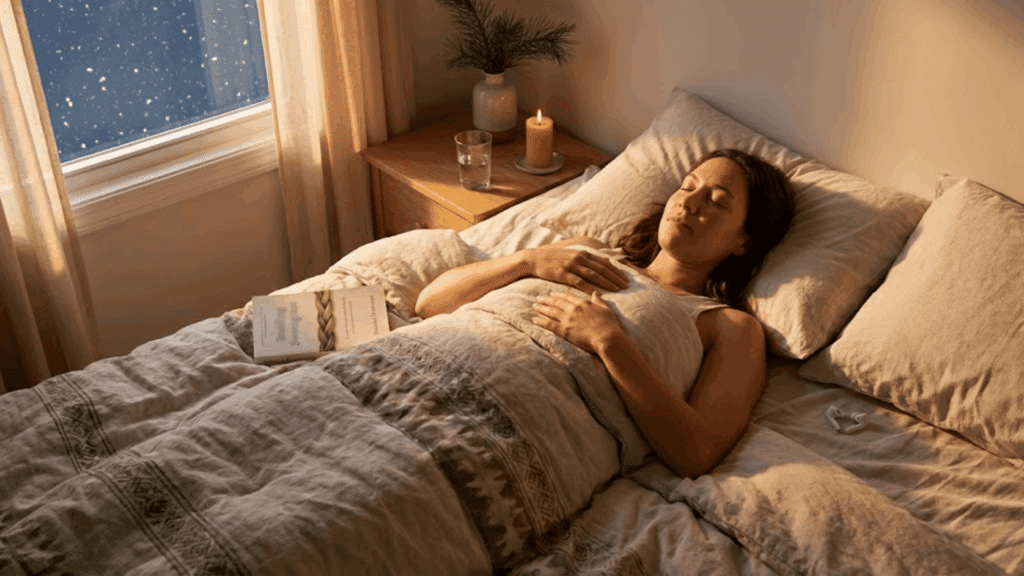
At any age, eight or eighty, falling asleep on Christmas Eve requires intentional wind-down strategies.
These science-backed techniques work for the whole family, helping everyone transition from holiday chaos to restful sleep.
1. Create a Calming Christmas Eve Wind-down Routine
Start your evening wind-down at least an hour before bed. Dim the lights, draw a warm bath, slip into cozy pajamas, and play soft instrumental music. This signals your brain that it’s time to shift gears.
A consistent routine, even on special nights, helps your body recognize sleep cues and naturally produce melatonin.
2. Limit Screens Well Before Bedtime
Move holiday movie marathons to earlier in the evening. The blue light from screens suppresses melatonin production, making it harder to feel sleepy.
Aim to power down devices one to two hours before bed. If kids are gaming or watching videos, set a firm cutoff time and stick to it, even on Christmas Eve.
3. Use Relaxation Techniques to Calm Your Mind
Deep breathing, progressive muscle relaxation, or mindfulness visualization can work wonders. Try a holiday-themed visualization; imagine gentle snowfall outside your window or sitting by a cozy fireplace.
These techniques lower cortisol levels and activate your parasympathetic nervous system, preparing your body for sleep.
4. Keep Your Sleep Environment Cool, Dark, and Cozy
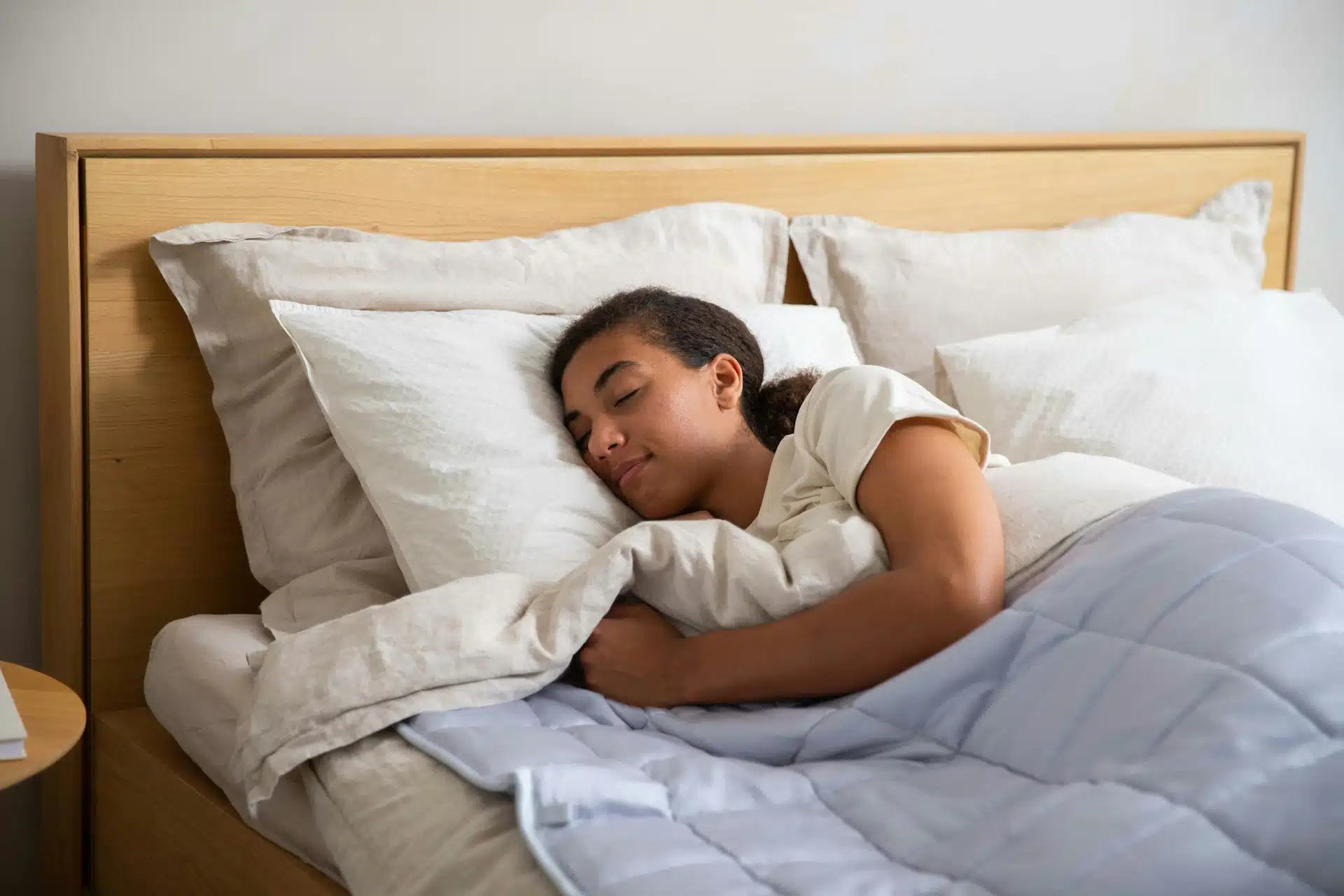
Your bedroom should feel like a winter sanctuary. Keep the temperature around 65-68°F, use blackout curtains, and add comforting touches like a weighted blanket or soft winter bedding.
A few drops of lavender essential oil on your pillow can enhance relaxation and signal your brain that it’s time to rest.
5. Address Racing Thoughts Before Bed
Do a “brain dump” by writing down tomorrow’s to-do list or journaling about your favorite moments from the day. For kids, reading a calming holiday story works beautifully.
Gently remind them that Santa only comes when they’re asleep; it’s playful but effective. A gratitude list helps shift focus from anticipation to contentment.
How to Help Kids Fall Asleep on Christmas Eve?
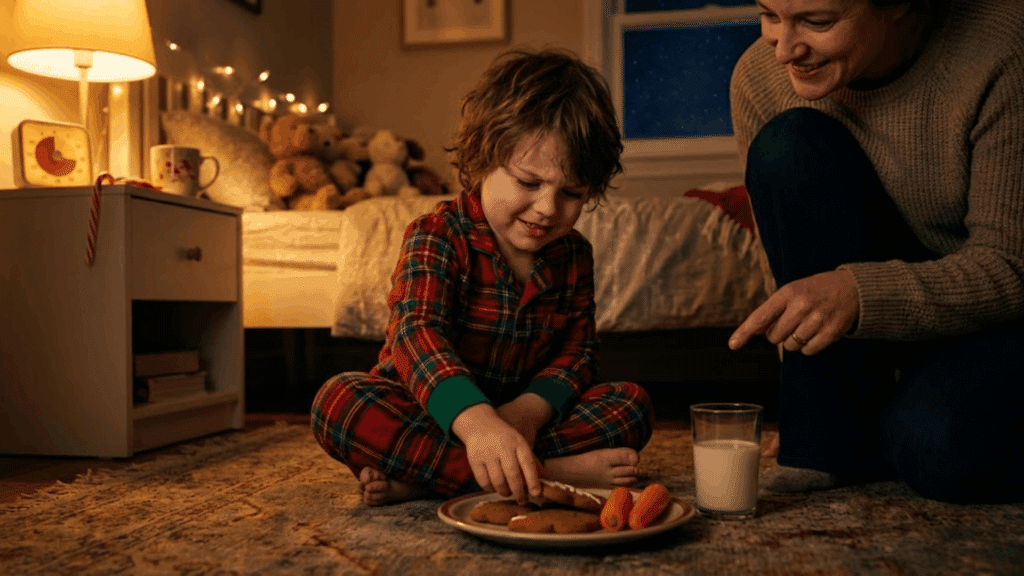
Kids need extra support on Christmas Eve when excitement reaches fever pitch. These child-specific strategies help channel their energy into calmness, creating the conditions for actual sleep.
1. Start Calming Rituals Earlier than Usual
Begin your wind-down routine at least ninety minutes before bedtime. A warm holiday bath with gentle bubbles, a cup of warm milk, and dimmed lighting throughout the house all work together to shift your child’s energy.
The earlier you start, the more time their nervous system has to transition from excitement to drowsiness.
2. Burn off Energy Earlier in the Day
Morning and afternoon are prime times for physical activity. Take a family walk to see neighborhood lights, organize outdoor play, or create active Christmas games indoors.
The goal is to tire them out physically so their bodies crave rest by evening. A well-exercised child is a sleepy child.
3. Set Clear Expectations About Bedtime
Use visual timers or countdown charts to help kids understand when bedtime is approaching. Concrete visuals reduce negotiations and help children mentally prepare.
Make it clear that bedtime is non-negotiable, even on Christmas Eve. Consistency provides security, especially when everything else feels different and exciting.
4. Create a “Santa-Ready” Checklist Before Bed
Building a simple ritual around putting out cookies, milk, and carrots for the reindeer gives kids a sense of closure.
Once everything is “ready,” there’s nothing left to do but sleep. This checklist transforms anxious waiting into purposeful completion, signaling that their job is done.
5. Use Grounding Activities to Calm Excitement
Teach simple breathing exercises like “snow globe breathing”: imagine shaking up a snow globe, then watching the snow slowly settle as they breathe deeply.
Progressive muscle relaxation also works: tense and release each body part, starting with their toes. These techniques give kids tools to manage their own excitement.
Additional Tips for Adults Who Can’t Sleep
Adults face unique sleep challenges on Christmas Eve: stress, unfinished tasks, and the temptation to stay up “just a little longer.”
These targeted strategies help you prioritize rest when your mind won’t stop running.
- Finish Last-Minute Tasks Early in the Day: Complete gift wrapping, cleaning, and cooking by early evening so your brain isn’t processing to-do lists at midnight.
- Skip Alcohol as a Sleep Aid: While it may help you fall asleep faster, alcohol fragments sleep quality and leaves you groggy on Christmas morning.
- Practice Holiday-Themed Visualization: Think of yourself by a warm fireplace, watching flames flicker slowly, or see the gentle snow falling outside. These mental images calm your nervous system.
- Use Subtle Aromatherapy: A lavender spray on your pillow or a diffuser with calming essential oils can signal your body that it’s time to wind down.
- Replace Doom-Scrolling With Nostalgic Reading: Swap your phone for a book of poetry, holiday fiction, or something that brings comfort without overstimulation.
Your body craves consistency, and maintaining familiar bedtime rhythms (even imperfectly) helps you fall asleep faster and wake up refreshed for Christmas morning.
How to Go to Sleep on Christmas Eve: Tips for Travelers & Guests
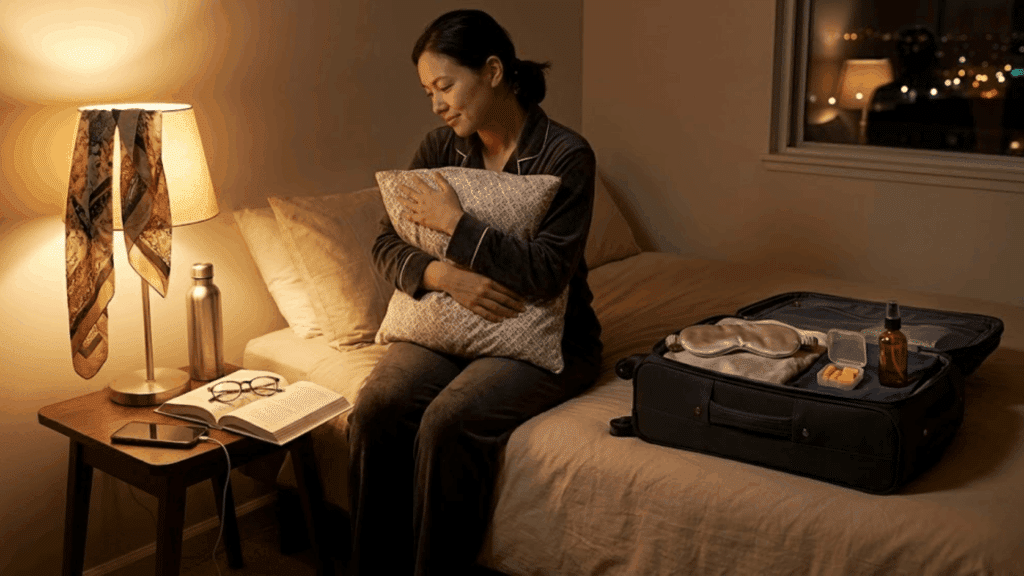
Sleeping in unfamiliar spaces adds another layer of difficulty to an already challenging night.
Staying with family or checking into a hotel both present unique challenges, but these strategies help you recreate the comfort of home.
- Bring Your Own Sleep Kit: Pack an eye mask, earplugs, and even your own pillow if possible. Familiar textures and scents signal safety to your brain, making it easier to relax in a strange bed.
- Manage Jet Lag Gently: If you’ve crossed time zones, expose yourself to natural light during the day and avoid heavy meals close to your new bedtime. Give your body grace as it adjusts.
- Stick to Your Pre-Sleep Routine: Even in someone else’s home, maintain your usual wind-down habits. Take your warm shower, read your book, or do your breathing exercises.
Traveling disrupts more than just your location. It throws off your circadian rhythm and removes the environmental cues your body relies on for sleep.
By bringing familiar items and maintaining your routines, you create a portable sleep sanctuary wherever you land.
Fun But Calming Christmas Eve Activities
The key to a peaceful Christmas Eve is choosing activities that feel festive without ramping up energy levels. These low-key options keep the magic alive while gently steering everyone toward sleep mode.
| Activity | Best Timing | Calming Effect | Bonus Tip |
|---|---|---|---|
| Family Board Games (Quiet, Cooperative) | 1-2 hours before bed | Reduces adrenaline, promotes teamwork | Avoid competitive games |
| Holiday Puzzles & Coloring Books | Anytime evening | Naturally meditative, it occupies restless hands | Let kids choose their designs |
| Low-Volume Christmas Music Playlist | During wind-down | Creates ambiance without demanding attention | Stick to instrumental or acoustic |
| Warm Drinks | Early evening (kids), anytime (adults) | Provides comfort and warmth | Herbal tea or hot cocoa |
Fun Twist: Turn one of these activities into a new family tradition. Maybe it’s the annual Christmas Eve puzzle you work on together every year, or a special hot cocoa recipe that only comes out on this night.
What NOT to Do If You Want to Fall Asleep?
Sometimes knowing what to avoid is just as important as knowing what helps. These common Christmas Eve mistakes sabotage sleep for the whole family, even with the best intentions.
- Avoid High-Sugar Treats Late at Night: Cookies and candy spike blood sugar and energy levels right when you need them to drop.
- Skip Intense Movies or Loud Games: Action-packed holiday films and competitive games trigger adrenaline instead of relaxation.
- Keep Phones Out of Bed: Scrolling in bed delays melatonin production and keeps your brain alert when it should be shutting down.
- Don’t Hype Up Kids Right Before Bed: Saying “Santa is almost here!” amps up excitement instead of calming nerves.
- Watch for Hidden Caffeine: Hot chocolate, chocolate desserts, and some holiday treats contain caffeine that lingers for hours.
These missteps are easy to make when you’re caught up in the festive spirit. But recognizing them helps you course-correct before bedtime turns into a struggle.
Making small tweaks to your evening routine can help you avoid tossing and turning and actually get some rest.
When to Seek Help for Sleep Issues?
One sleepless Christmas Eve is normal, but if sleep troubles are a regular occurrence, it’s time to seek professional help.
Chronic insomnia lasting weeks or months, persistent anxiety that prevents sleep most nights, or symptoms of sleep disorders like sleep apnea or restless leg syndrome all deserve medical attention.
For kids, watch for frequent night terrors, extreme bedtime resistance, or daytime exhaustion despite adequate sleep opportunities. These ongoing patterns signal underlying issues that go beyond holiday excitement.
A doctor or sleep specialist can properly evaluate the situation and create a treatment plan that addresses the root cause.
Wrapping It Up
Learning how to fall asleep on Christmas Eve doesn’t mean eliminating the magic; it means managing it wisely.
I’ve found that the best Christmas mornings start with intentional wind-down routines the night before, not with exhausted kids and frazzled adults running on fumes.
The strategies we’ve covered work because they respect both the excitement of the season and our body’s real need for rest. Start experimenting with these techniques tonight, and you’ll thank yourself tomorrow morning.
What’s your biggest Christmas Eve sleep challenge? Drop a comment below; I’d love to hear what works for your family.