I used to think bedroom comfort was only about the mattress and lighting. Over time, I noticed how much the layout itself affected how rested I felt.
Positive energy placement feng shui bedroom ideas focus on how a room supports your body, not just how it looks.
You may feel tired, restless, or uneasy without knowing why, even after changing decor or colors. Often, the issue comes down to where the bed sits and how the room flows around it.
This topic matters because small layout changes can help your body feel calmer and more supported at night. The sections ahead break things down in a simple, practical way so everything feels clear and manageable.
What Positive Energy Means In Feng Shui
Positive energy in Feng Shui refers to Qi, which means the natural flow of energy in a space. You can think of Qi as how a room feels when you walk into it.
When Qi moves smoothly, your body feels calm and supported. When it gets blocked, the space can feel tense or draining.
Your bedroom plays a big role because it is where your body slows down and recovers. The way furniture is placed can affect how safe, relaxed, and settled you feel.
Poor layout can interrupt rest and make it harder to fully switch off. A supportive layout helps your mind settle, and your body rest more deeply. This foundation matters before you change colors, decor, or accessories.
Begin With The Most Important Bedroom Rule

Before adjusting colors, furniture, or decor, focus on how your bed is placed.
In Feng Shui, the bed is the main anchor of the bedroom. Its position has the strongest effect on how the room feels and how your body responds during rest. If the bed feels exposed, unstable, or poorly positioned, no other change will fully fix that issue.
A well-placed bed helps your body relax because it sends signals of safety and support.
When your body feels secure, it becomes easier to rest, reset, and stay calm. This is why bed placement always comes first. Once the bed is set correctly, every other adjustment works better and feels more natural.
Quick Bedroom Setup Check:
- Your bed should not face the door directly.
- There should be a solid wall behind your head.
- Both sides of the bed should feel open.
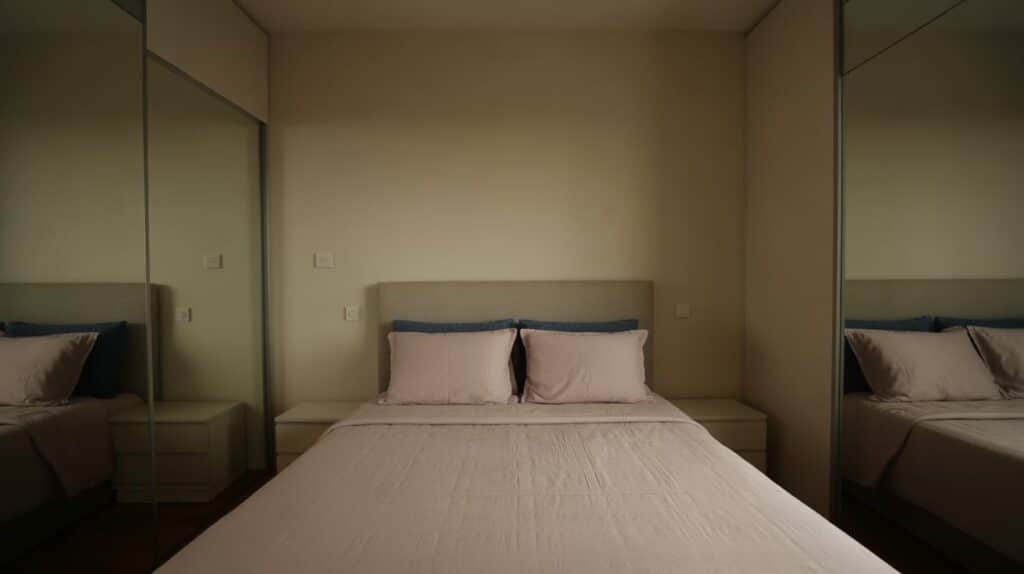
- Mirrors should not face the bed.
- The bed should feel quiet and protected.
Why Bed Placement Matters More Than Anything Else
Bed placement matters because your body spends more time here than anywhere else in the bedroom. While you sleep, your senses stay alert to what feels safe or unsafe around you.
When the bed sits in a strong, protected spot, your body can relax without effort. When it sits in an exposed or awkward spot, tension can build even if you do not notice it right away. This is why Feng Shui treats the bed as the main focus of the room.
Other items, like color, lighting, or decor, play a role, but they cannot correct poor placement. A well-placed bed helps your body settle, improves rest, and creates a steady feeling throughout the room.
Once this is handled, smaller changes become easier and more effective.
The Commanding Position of your Bedroom
The commanding position describes placing your bed where you feel aware of the room while still feeling protected and at ease.
Ideal Bed Placement
In simple terms, ideal bed placement means positioning the bed so you can see the door without being directly in line with it.
When the bed sits diagonally across from the doorway, your body feels more settled because nothing approaches from behind. A clear view of the door helps your nervous system stay calm, even during sleep.
Being slightly offset from the doorway also reduces sudden light, noise, or movement hitting you directly. This setup supports deeper rest because your body does not stay on alert.
The goal is not perfect symmetry, but a position that feels steady and supportive every night.
Why is Facing the Door Avoided
When the bed lines up directly with the doorway, your body can stay tense without you realizing it. In Feng Shui, this is often called the “death position,” but the idea is practical rather than dramatic.
The doorway becomes a direct path for movement, light, and sound, which can interrupt rest. This position may lead to shallow sleep or frequent waking. Shifting the bed slightly breaks that direct line and helps the body relax more fully.
Proper Wall and Headboard Support

Support behind your head helps your body feel steady during rest and reduces background tension that can interfere with sleep quality.
Best Wall For the Bed
The best wall for your bed is a solid, quiet wall that gives your body a sense of backing and support. This type of placement helps your nervous system settle during rest.
Walls that do not connect to bathrooms, kitchens, or heavy foot traffic work best because they reduce noise and vibration.
A solid wall also helps block movement behind your head, which can interrupt sleep. When the bed feels anchored, your body relaxes more easily and stays at rest longer through the night.
Why Windows Behind the Bed Cause Issues
When a bed sits directly in front of a window, your body may struggle to fully relax.
Windows allow light, sound, and temperature changes to enter the space, even when covered. This constant shift can create a subtle sense of exposure during sleep.
Without a solid surface behind your head, your body may stay slightly alert instead of fully resting. Over time, this can lead to lighter sleep or frequent waking.
A solid wall helps block outside movement and creates a more settled sleeping area that supports deeper rest.
Space and Balance on Both Sides of The Bed
Space on both sides of the bed helps your body feel calm and supported during rest. When one side feels blocked or crowded, your mind may stay slightly alert, even while sleeping.
Equal space allows energy to move smoothly around the bed and supports a steady feeling in the room. This setup also makes getting in and out of bed easier, which reduces daily strain.
If you share the bed, open space on both sides supports comfort and fairness. Even in small rooms, leaving some breathing room matters more than fitting extra furniture.
Clear space creates a sense of ease that helps your body settle faster and stay relaxed through the night.
Bedroom Placements that Block Positive Energy
Certain bed placements can quietly interfere with rest by creating tension, noise, or visual pressure that keeps the body from fully settling.
1. Mirrors Facing the Bed

Mirrors facing the bed can keep the mind active when it should slow down. Reflection creates movement and light shifts that the brain may register even during sleep. This can lead to lighter rest or frequent waking.
Your body may feel watched or overstimulated without a clear reason. Mirrors also reflect motion from outside the room, which can interrupt calm.
Turning mirrors away from the bed or covering them at night helps reduce mental activity and supports deeper, more consistent sleep.
2. Bed Under Beams or Sloped Ceilings

Sleeping under beams or sloped ceilings can create a subtle sense of pressure. Even if you do not think about it, your body may respond to the weight overhead. This can lead to tension in the neck, shoulders, or chest.
Sloped ceilings may also cause uneven visual balance, which can affect how relaxed you feel in bed. Over time, this constant pressure can disturb sleep patterns. Moving the bed away or visually balancing the space can reduce this strain.
3. Bed Aligned with Bathroom Door
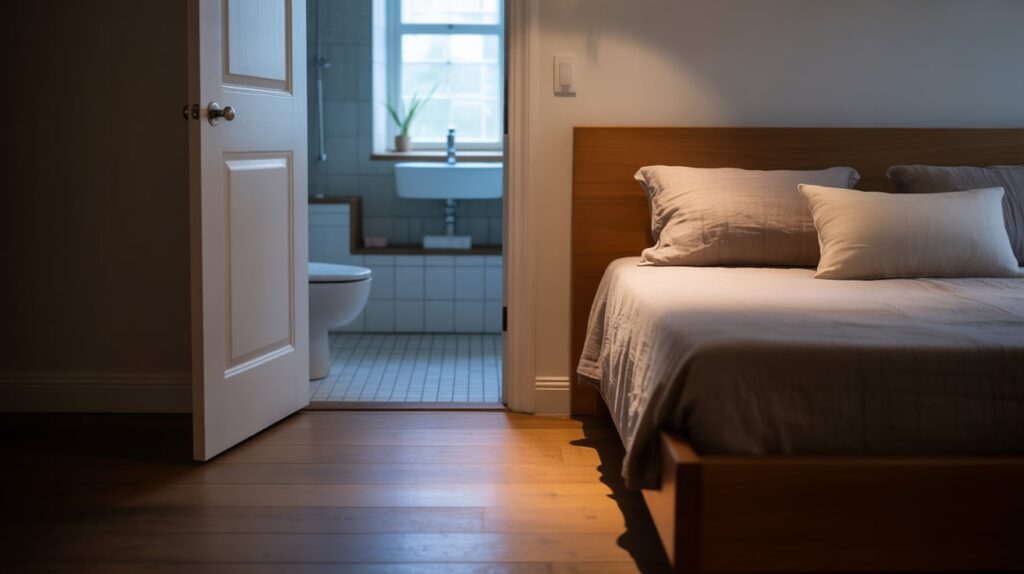
When a bed lines up directly with a bathroom door, sleep can feel unsettled. Bathrooms involve water flow, sound, and frequent movement, which can disrupt calm.
Odors, light changes, and plumbing noise may affect rest, even with the door closed. This alignment can also make the sleeping area feel exposed.
Shifting the bed slightly or keeping the bathroom door closed helps create separation and supports a more settled sleeping space.
Feng Shui Bedroom Tips by Room Situation
- Small bedrooms work best when walking space stays clear, and furniture stays minimal around the bed.
- Bedrooms near bathrooms need visual and physical separation to reduce noise, light, and movement near sleep areas.
- Shared bedrooms feel more settled when both sides of the bed have equal access and similar support.
- Single sleepers benefit from strong backing behind the head to create a sense of support and ease.
- Rooms with odd shapes feel calmer when the bed sits in the most grounded and protected area.
- Low ceilings feel less heavy when furniture stays low, and lighting remains soft and indirect.
- Limited space can still feel supportive when the bed feels protected from doors and busy paths.
Common Feng Shui Bedroom Myths
Many ideas about Feng Shui bedrooms sound strict, but several common beliefs are misunderstood and often taken too literally.
- One wrong bed position will not ruin your sleep or your life
- You do not need a perfect room layout for Feng Shui to work
- Plants are not always bad when chosen and placed with care
- Bed direction is less important than where the bed sits
- Small rooms can still feel calm and supportive
- Feng Shui is not only belief-based, and has practical logic
- You do not need expensive items to improve bedroom energy
Conclusion
Getting your bedroom layout right comes down to a few steady principles. Bed placement, wall support, and clear space all play a role in how rested you feel.
You do not need a perfect room or major changes to see improvement. Small adjustments can help your body relax and stay settled through the night.
I find it helps to focus on what feels steady and quiet first, then adjust details over time. When done with care, positive energy placement feng shui bedroom guidance supports better rest without adding stress.
Have you noticed how your bedroom layout affects your sleep? If this topic helped, take a look at the other blogs for more practical home layout tips you can try next.