

When someone asks, “How tall is a 2-story house?”, the answer should be simple. Instead, most sources bury the numbers under explanations or give vague ranges without context. That’s frustrating when trying to plan a build, compare properties, or understand zoning limits.
Here’s the direct answer: most two-story homes measure between 18 and 25 feet, with the majority falling around 20 to 22 feet. But that range exists for specific reasons.
I’ll break down the exact factors that determine height, ceiling choices, floor structures, and roof design. I’ll also compare two-story houses to single-story homes, explain how traditional homes differ from modern builds, and show why regional construction practices create such variety.
How Tall is a 2 Story House?
A two-story house typically stands between 18 and 25 feet tall. Most two-story homes fall into the 20 to 22 feet range, making this the most common height found in residential neighborhoods.
This range exists because several factors influence the final height, ceiling height per floor, the thickness of floor structures, and especially the roof style.
A home with standard 8-foot ceilings and a simple roof will sit closer to 18 feet, while one with 9 or 10-foot ceilings and a steeper roof pitch can easily reach 24 or 25 feet.
The variation isn’t arbitrary. Different construction methods, regional building preferences, and homeowner choices all play a role in determining where a specific home lands within this range.
What Affects the Height of a Two-Story House?
The height of a two-story home isn’t fixed. Three primary factors determine whether a home sits at 18 feet or pushes toward 25.
- Ceiling Height Per Floor. Standard ceilings measure 8 feet, but 9-foot and 10-foot ceilings are increasingly common. This single choice adds 2 to 4 feet to the overall height. Higher ceilings create spaciousness but directly increase the average two-story house height.
- Floor Structure Thickness. The space between floors, joists, subfloor, and finished flooring typically adds 12 to 18 inches. Though often overlooked, this structural layer contributes meaningfully to the final measurement.
- Roof Style and Pitch. This is the biggest variable. A flat or low-pitch roof adds minimal height, while a steep gable or hip roof can add 8 to 12 feet. Roof design has the most dramatic impact on the standard two-story house height.
These three factors combine differently in every home, which explains why the height of a two-story home varies so widely.
Regional Exceptions in 2 Story Building Heights
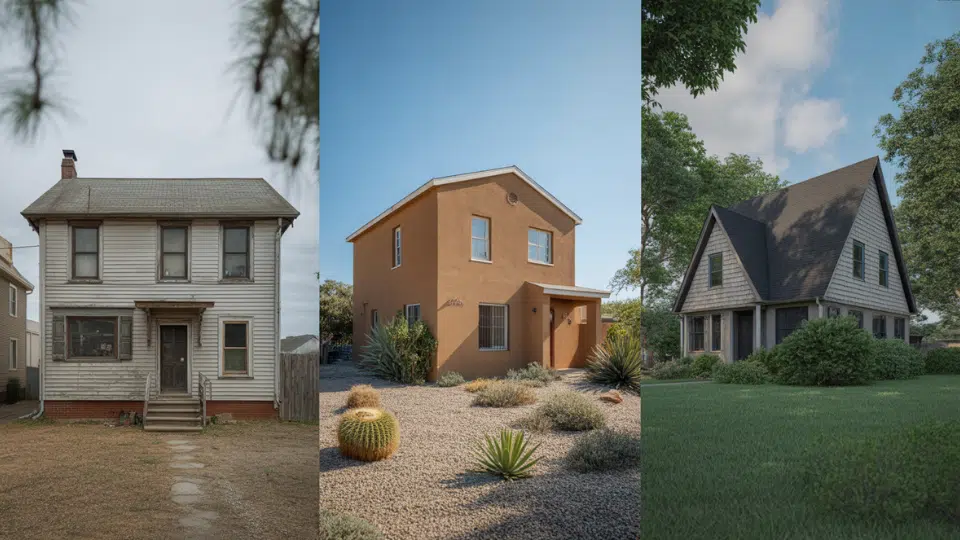
Regional building traditions and construction eras create noticeable height differences between two-story homes, even when they share the same floor count. Climate needs and local preferences shaped how builders approached vertical space over the decades.
Northeast Homes. Traditional two-story homes from the 1970s and 1980s averaged 18 to 20 feet with compact designs for heating efficiency. Modern builds now reach 22 to 24 feet, reflecting updated energy standards and demand for higher ceilings.
Southwest Homes. Desert climates favored lower profiles and flat or low-pitch roofs, keeping older two-story homes at 18 to 21 feet. Contemporary Southwest homes maintain moderate heights but incorporate taller interior spaces with better insulation, pushing toward 20 to 23 feet.
Midwest and Southern Homes. Steep roofs for rain and snow drainage historically added significant height—22 to 25 feet was common. Modern construction maintains these steep pitches but uses engineered trusses, sometimes reducing overall height slightly while keeping dramatic rooflines.
Regional climate demands and evolving construction methods explain why identical floor plans measure differently across the country.
Average Height of a 2 Story House by Home Type
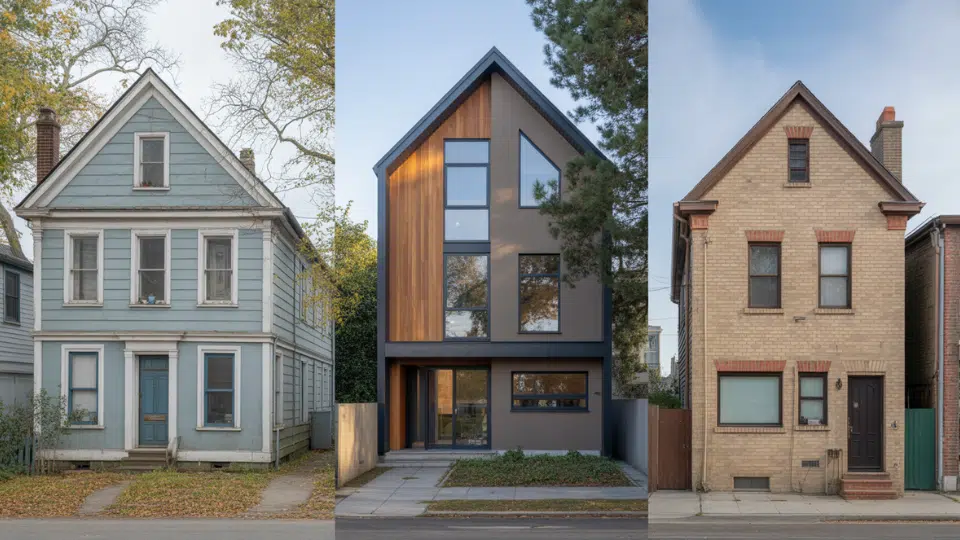
Not all two-story houses share the same height profile. The average height of a 2-story house shifts based on architectural style and building type, even when both floors follow similar construction standards.
Traditional Two Story Homes: 20 to 23 feet. Classic colonials and farmhouses typically feature 9-foot ceilings and moderate roof pitches, landing in the middle of the standard range.
Modern or Contemporary Homes: 22 to 25 feet. These designs often incorporate higher ceilings (10 feet), open floor plans, and dramatic rooflines, pushing toward the upper end of two-story house height.
Townhouses or Duplexes: 18 to 21 feet. Built for efficiency and zoning compliance, these structures usually have 8-foot ceilings and simpler roof designs, keeping overall height more compact. Understanding these distinctions helps narrow expectations when evaluating specific properties.
How Tall is a 2 Story House Compared to a 1 Story House?
A two-story house stands roughly twice as tall as a single-story home. While a typical one-story house measures 10 to 12 feet in height, a two-story structure reaches 18 to 25 feet.
This difference stems from adding an entire second floor, including ceiling height, floor structure, and the additional wall space needed.
The gap isn’t exactly double because both home types share similar roof structures and foundation elements. A single-story home with a steep roof might reach 15 feet, while a two-story home with low ceilings and a flat roof could measure just 18 feet.
Still, the extra floor consistently adds 8 to 12 feet to the overall height, making two-story homes noticeably taller in any neighborhood.
The Bottom Line
Understanding “how tall is a 2 story house” comes down to recognizing that floor count doesn’t equal fixed height. The three primary factors, ceiling height, floor structure thickness, and roof design, push measurements anywhere from 18 to 25 feet.
Two-story homes measure roughly twice the height of single-story structures, but traditional builds differ from modern designs, and regional construction practices create significant variation.
The biggest takeaway: roof style matters more than most realize. A steep pitch can add 10+ feet, while ceiling choices add 2 to 4 feet. These aren’t minor details when dealing with permits or property comparisons.
If I’ve missed something or you’ve encountered a two-story house outside these ranges, drop a comment below.