

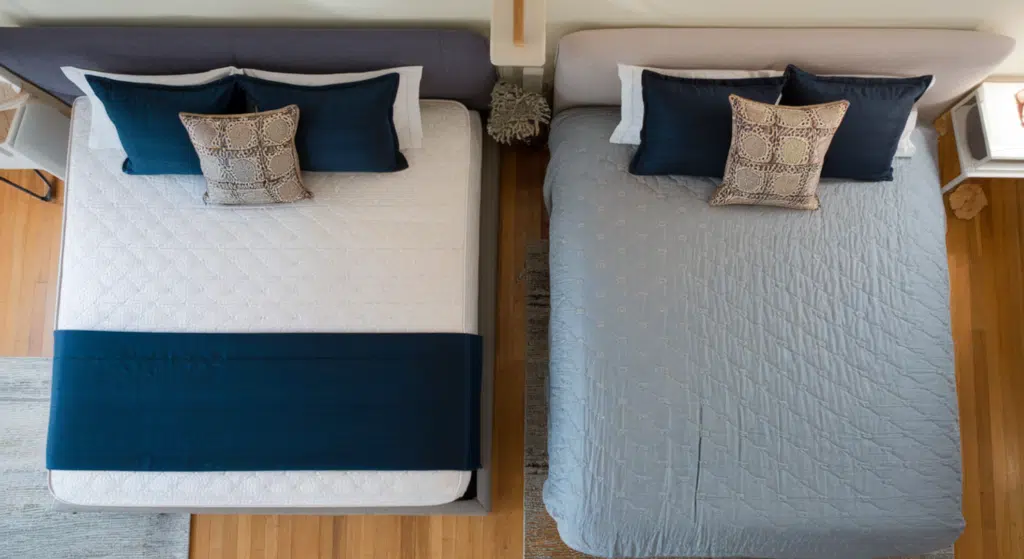
I used to think all big beds felt the same until I tried sleeping sideways on a queen. That’s when I started asking, how much bigger is a king bed than a queen? Turns out, the difference matters more than I thought.
I wanted more room to move, sleep better, and not get elbowed in the face by accident. If you’re asking the same thing, you’re already one step ahead.
Now it’s your turn to figure out what works best for you.
In this blog, you’ll get the exact size difference, how it feels in real life, and what you should think about before choosing. You’ll walk away knowing which one fits your room, your sleep, and your life best.
Before You Buy: What Bed Size Names Don’t Always Tell You
Before you even compare a queen to a king, it helps to understand how bed sizes work in general. Most mattresses follow standard sizing like Twin, Full, Queen, and King, but the truth is, not every brand sticks to the exact same measurements.
Some mattresses might be an inch shorter or longer depending on who makes them. That small difference can actually affect how the bed fits in your room or how it feels when you sleep.
This is why it’s important to know more than just the bed type. You should also think about how much space you have in your bedroom and how you like to sleep.
Do you roll around a lot? Do you sleep with a partner, pets, or kids? All of that matters. Getting the size right the first time can save you stress, money, and poor sleep later. So don’t skip this step.
How Much Bigger is a King Bed than a Queen?
A king bed is about 16 inches wider than a queen bed, but the length stays the same.
With a queen, two people get about 30 inches of personal space each. On a king, that jumps to 38 inches per person, almost like having your own twin bed.
If you often feel cramped or wake up at the edge of the mattress, you’ll notice the change right away.
The king takes up more floor space, so it’s better for larger bedrooms. But when it comes to stretching out and sleeping comfortably without bumping into someone else, the king offers a noticeable upgrade in space and comfort.
King vs. Queen Bed Dimensions
Knowing the numbers is one thing. Understanding how they affect your sleep is another. Both king and queen beds are 80 inches long, so if you’re tall, you’ll have the same legroom on either.
The real change is in the width: the king gives you 76 inches, while the queen gives you 60 inches. That’s a 16-inch gain in width, which can seriously improve how well you sleep, especially if you share your bed.
Here’s a side-by-side look:
| Bed Size | Width (inches) | Length (inches) | Good For |
|---|---|---|---|
| Queen | 60″ | 80″ | Couples with limited space |
| King | 76″ | 80″ | Couples who want more space or sleep with pets/kids |
But here’s something most people don’t consider: bed frame and bedding sizes also change. King-sized sheets, blankets, and even headboards are not just wider—they can be heavier, more expensive, and harder to fit into smaller bedrooms.
Also, moving a king bed is tougher. It usually comes in two box springs (or two Twin XLs) because it won’t fit through narrow doorways in one piece.
And don’t forget regional differences. For example, in the U.K., a “king” is only 60 inches wide, that’s the same as a U.S. queen.
In Europe, bed sizes are measured in centimeters, and names can vary. So always check the actual measurements, not just the label.
These small details matter more than you think when you’re trying to sleep better and live more comfortably.
Will a Queen or King Bed Fit in Your Room?

Before picking a bed size, you’ve got to think about your room, not just the bed. A bed that technically fits isn’t the same as a bed that actually works in your space.
Here are the recommended minimum room sizes:
- Queen Bed: Room should be at least 10×10 feet
- King Bed: Room should be at least 12×12 feet, though more space is better
Why does this matter? Because you’ll need room for more than just the mattress. Here’s a basic layout to help picture it:
- Bed in the center of a wall
- At least 24–30 inches of walking space on each side
- Nightstands on both sides (around 18–24 inches wide each)
- Room for a dresser or other furniture
Now let’s go deeper: doorways and ceiling height. You’ll want to make sure the bed (especially a king or its frame) can actually fit through the doorway. S
ome homes with narrow hallways or sharp corners make this hard. Also, low ceilings can make a tall headboard look bulky or out of place.
And don’t forget furniture spacing. A bed that takes up all the floor space will make your room feel cramped. It’s best to leave 3 feet of open space where you walk the most—like from the bed to the closet or bathroom door.
If you want your room to feel calm and not overcrowded, take measurements ahead of time. A few inches can make a big difference in how your space feels day to day.
Which Bed Size is Right for You?
Choosing between a queen and a king bed comes down to how you sleep, who you sleep with, and how much space you have.
If you sleep alone or with a partner and want to save room, a queen bed is a solid choice. It’s big enough for most people, fits well in medium-sized rooms, and costs less overall.
But if you share your bed with a partner, kids, or pets or just want more space to spread out a king bed can feel like a major upgrade.
Just make sure your bedroom is big enough to fit it comfortably.
Also, think about how you move when you sleep. Do you toss and turn? Do you like space between you and your partner?
Those little things matter. Measuring your room, checking your budget, and thinking about your daily habits will help you pick the size that fits your life best.
Cost and Practical Considerations

Choosing between a king and queen bed isn’t just about size, it affects your budget, too. A queen mattress is usually $200–$500 cheaper than a king. But the difference doesn’t stop there.
Bed frames, box springs, and headboards all cost more in king size. Even bedding like sheets, comforters, and pillows tends to be more expensive and harder to fold or wash.
You’ll also need to think about the room itself. A king bed may call for bigger rugs, more lighting, or extra storage, depending on how the space is used.
Here’s a basic cost breakdown:
| Item | Queen Price Range | King Price Range |
|---|---|---|
| Mattress | $500–$1,500 | $800–$2,000 |
| Bed Frame | $150–$600 | $250–$800 |
| Bedding Set | $60–$150 | $90–$200 |
The larger the bed, the more everything else scales up with it.
Related Bed Sizes Worth Considering
If a standard queen or king doesn’t quite match your needs, there are other sizes that offer a better fit based on your space or sleep habits:
- California King: 72″ x 84″ – longer than a standard king, but slightly narrower; ideal for tall sleepers.
- Olympic Queen: 66″ x 80″ – wider than a queen, not as wide as a king; good for couples wanting more space without upsizing fully.
- Split King: Two Twin XLs side by side – same overall size as a king but allows for separate mattress choices; great for partners with different sleep needs.
- Full XL: 54″ x 80″ – same length as a queen but narrower; works well for solo sleepers who want more legroom.
- Short Queen: 60″ x 75″ – slightly shorter than a queen; often used in RVs or small bedrooms where space is tight.
These lesser-known sizes can offer better comfort or room fit depending on your situation.
Conclusion
I never thought bed size could change how I sleep, until I learned how much bigger is a king bed than a queen.
That extra 16 inches gave me more space, fewer sleep interruptions, and a bed that finally felt right. It wasn’t just about the size—it was about feeling rested and comfortable every night.
Now ask yourself: do you have enough space to stretch out? Do you share your bed or just want more breathing room? Use what you’ve read to choose a bed that fits your life, not just your floor plan.
Quick tip: Always check the space around your bed, not just the size of the bed itself.
Want more simple, clear tips like this? Research the other blogs on the website, you’ll find answers that actually help!