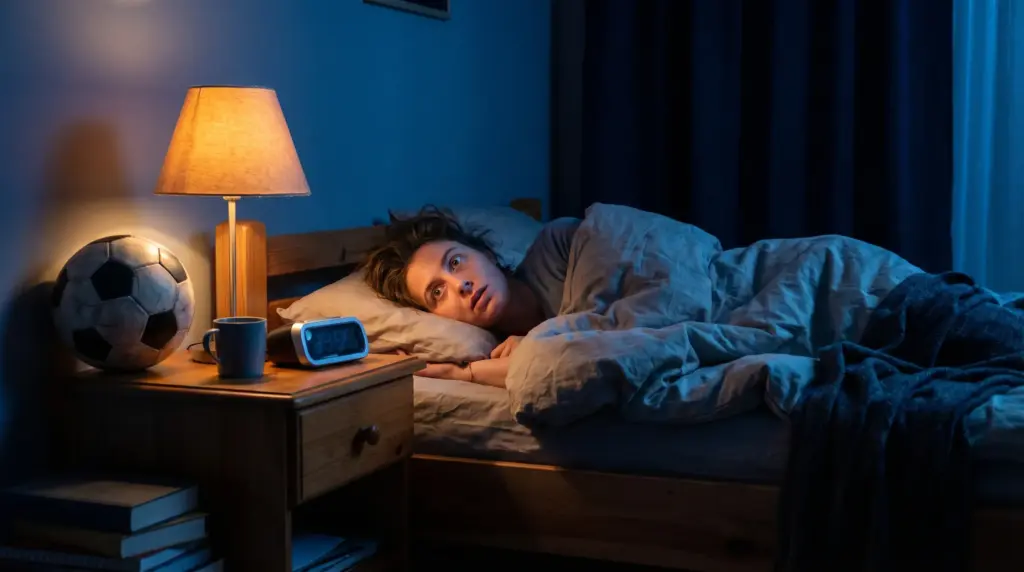
There’s a point in the evening where you know you probably shouldn’t start a match, but you do it anyway.
Kickoff is at 9. You tell yourself you’ll just watch the first half. Maybe check the score after. But then something happens, a goal, a near miss, a dodgy decision, and suddenly you’re fully invested.
For a lot of people, football nights don’t stop at just watching. There’s checking lineups, refreshing stats, texting opinions mid-game, or even deciding to bet on football just to make things a bit more interesting. It doesn’t feel like effort, but it definitely isn’t rest either.
By the time it ends, you’re tired in that heavy, late-night way. But your head is still busy.
It Feels Relaxing Until You Think About It
Mid-match, most people would say they’re relaxed. It’s relaxing enough. You’re just sitting there, watching, not doing much.
But then something happens and you’re suddenly half out of your seat. Or you’re muttering at the screen. Or checking the replay because it didn’t look right the first time. It’s small stuff, but it adds up. You’re not exactly switched off.
Even when nothing big is happening, you’re still following it. Waiting for something to happen. That low-level focus doesn’t really drop while the game’s on. So yeah, it feels like downtime. But it’s not the same as actually winding down.
The Gap Between “Tired” and “Sleepy”
This is the part people notice but don’t always connect.
You finish the match, turn everything off, and go to bed thinking you’ll fall asleep straight away. You feel tired enough. But then you’re lying there, replaying moments. Thinking about that one missed chance. Or scrolling a bit longer than you planned. Or just… not switching off.
That gap between being tired and actually falling asleep is where football nights tend to show up. It’s not dramatic. It’s just enough to push your sleep back without you really noticing it as a problem.
Why Night Matches Stick With You
Football at night hits differently. It just does.
Part of it is practical. Most games land in that evening slot anyway, right when you’re supposed to be slowing things down for the day.
But watching at night just hits differently. The house feels quieter, with a lot less going on, so paying more attention to things is normal and easily done so. You get pulled in with little effort grabbing your attention, there’s no half watching at all.
And when you’re in it like that, your brain doesn’t wind down on cue just because the game ends. It needs time to come back down, and most people don’t give it that.
It’s Not Just About Falling Asleep Faster
Sometimes you do fall asleep straight away after a match. That part isn’t always the problem.
It’s more the next morning. You wake up and nothing feels obviously wrong, but you’re not quite as clear as usual either. Like you slept, just not properly.
It’s hard to pin down. You might wake up a bit earlier than you meant to, or feel like you’ve been half-awake at points during the night. Not enough to fully notice at the time, but enough to feel it after.
One night doesn’t really stand out. But if it’s happening a few times a week, you start to recognise the pattern.
The Second Screen Problem
One thing that quietly makes all of this worse is the second screen stress.
You’re watching the match, but you’re also checking something else. Stats, reactions, messages, maybe a quick scroll during half-time that turns into longer than intended. It keeps your brain ticking over even after the game slows down.
And the annoying part is, it doesn’t feel like you’re doing much. But your brain definitely notices. That extra 10 or 15 minutes of “just checking something” is often what pushes everything later.
You Don’t Need to Cut It out Completely
None of this means football is the problem.
It’s more about how close it sits to your sleep. If a match ends and you go straight to bed, you’re basically asking your brain to switch from high engagement to full shutdown instantly. It doesn’t really work like that.
Even a short gap helps. Walking around a bit, making a drink, doing something that doesn’t involve a screen. Nothing dramatic. Just giving your brain a signal that the day is actually ending.
It’s a Routine Thing More Than a One-Off
One late match won’t ruin your sleep. But routines are where this starts to matter.
If you’ve got matches a few nights a week, it sort of creeps up on you.
You go to bed a bit later here and there, or you sleep fine but not quite as deeply, and it doesn’t feel like a big deal at the time. It’s just normal.
After a while though, that becomes your routine without you really deciding on it. And once it’s your routine, you stop questioning it because it just feels like… how your evenings work now.
The Trade-Off Most People Don’t Think About
Football is part of how people switch off. That’s not changing.
But it sits in that grey area where something feels restful, even though it’s actually quite stimulating.
Once you see it, it’s obvious. The focus, the reactions, the involvement. It’s not passive. You don’t need to give it up. Most people won’t, and don’t need to.
But understanding what it does to your evenings, even in a small way, makes it easier to adjust without overthinking it. And usually, that’s enough.