
Have you ever found yourself tossing and turning at night, wishing for a better way to sleep? If you’ve been struggling with sleep issues, red light for sleep might just be the solution you’ve been looking for.
You might have heard of it before, but what does it really do for your sleep? Well, research shows that red light therapy can help with sleep onset, improve sleep quality, and even boost melatonin production.
In this blog, I’ll walk you through how red light sleep therapy works, its benefits, and practical tips to use it effectively.
What is Red Light Therapy?
Red light therapy involves the use of light wavelengths between 630 and 660 nm, which are within the red and near-infrared spectrum.
This specific range penetrates the skin and tissues, stimulating cellular functions.
When applied before sleep, red light therapy is thought to influence the body’s circadian rhythm by promoting natural melatonin production, the hormone that regulates sleep-wake cycles.
How Does Red Light Affect Sleep?

Red light therapy sleep may improve sleep by shortening sleep onset, increasing REM cycles, and enhancing overall sleep quality and efficiency.
1. Sleep Onset and Duration
Recent studies suggest red light exposure can shorten sleep onset latency (SOL) and improve total sleep time (TST) in both healthy individuals and those with insomnia.
A 2023 study titled “Effects of Red Light on Sleep and Mood in Healthy Subjects and Individuals with Insomnia Disorder” (Front Psychiatry) found that 1 hour of red light exposure before bedtime significantly improved sleep duration and quality. Participants exposed to red light showed shorter SOL and better sleep efficiency compared to those exposed to white or no light.
2. Sleep Architecture
Red light also impacts the distribution of sleep stages, particularly increasing REM sleep cycles.
A 2019 study titled “Effects of Red Light on Sleep Inertia” (Nature and Science of Sleep) revealed that red light increased REM sleep cycles in insomnia patients, leading to more restorative sleep. The longer REM periods helped improve emotional regulation and memory processing during sleep.
3. Polysomnography Results
Polysomnography studies comparing red light with white light and no light exposure have shown significant improvements in sleep efficiency (SE) and decreased microarousal index (MAI).
A 2018 study titled “Red Light at Intensities Above 10 lx Alters Sleep-Wake Behavior” (Light Science Applications) demonstrated that red light exposure led to improved sleep quality, with participants showing better SE and fewer awakenings than those exposed to white light or no light.
Comparing Red Light to Other Light Colors for Sleep
This section examines the effects of red, blue, and white light on sleep patterns and overall restfulness.
| Light Color | Impact on Sleep | Notable Differences |
|---|---|---|
| Red Light | It has the least effect on melatonin and helps with sleep initiation. | It is the least disruptive to the internal clock and supports better sleep. |
| Blue Light | Reduces melatonin, delays falling asleep. | Strongly affects internal rhythm, boosts wakefulness at night. |
| White Light | Lowers melatonin, alters sleep stages. | Interrupts sleep, reduces restorative sleep phases. |
This table shows that red light is less likely to interfere with sleep than blue or white light.
Is Red Light Effective for Sleep Inertia?

Sleep inertia refers to the grogginess and reduced alertness that many people experience upon waking, often lasting for several minutes to an hour.
It can impair cognitive function, mood, and decision-making skills, making it a significant concern for individuals, especially those who need to be alert quickly, such as shift workers or students.
Sleep inertia is typically more intense when waking from a deep sleep stage and can negatively affect overall daily performance and well-being.
Research suggests that red light exposure may help mitigate sleep inertia. A study by Figueiro et al. (2019) found that participants who used red light therapy reported less grogginess and greater alertness upon waking.
Red light helps reset the body’s internal clock and increase energy levels, thus minimizing the sluggishness typically experienced after waking.
Risks and Side Effects of Red Light Therapy
While red light therapy offers many benefits, it’s important to be aware of potential risks and side effects to ensure safe and effective use.
Potential Risks of Red Light Therapy
Red light therapy is generally considered safe, but certain risks exist, particularly with improper use or excessive exposure.
- Eye Strain or Damage: Prolonged exposure to bright red light may cause eye discomfort or strain. Always protect your eyes if using high-intensity devices near your face.
- Skin Irritation: Overuse of red light therapy could lead to mild skin irritation, especially for individuals with sensitive skin. It’s best to follow recommended exposure times.
- Increased Sensitivity to Light: Some individuals may experience heightened sensitivity to light, which can cause discomfort. If this occurs, reduce exposure or consult a healthcare professional.
Potential Side Effects of Red Light Therapy
Although uncommon, side effects may occur, especially if devices are misused or settings are not properly adjusted.
- Headaches: Some individuals may experience headaches after prolonged exposure to red light, particularly if using it for extended periods. Reducing exposure time can help prevent this.
- Mood Changes: In rare cases, red light exposure may lead to temporary mood shifts, especially for people with heightened anxiety or depression. Monitoring emotional responses can help manage this.
- Discomfort or Warmth: Certain red light devices may cause warmth or slight discomfort on the skin during use. Ensure the device is set to a comfortable temperature to avoid this.
- Disrupted Circadian Rhythm: If used improperly, especially in the early morning hours, red light exposure can confuse your body’s natural rhythm and lead to sleep disturbances.
Key Studies on Red Light and Sleep
Evidence suggests that red light therapy can improve sleep quality, duration, and mood, with distinct benefits for insomnia sufferers and shift workers.
Study 1: Insomnia and Red Light
A 2023 study examined insomnia sufferers using red light before bed and found significant improvements in sleep duration, efficiency, and mood.
The research followed 100 participants with insomnia who received 1 hour of red light exposure nightly for two weeks. Results showed improved sleep onset latency (SOL) and better sleep quality, with patients reporting fewer mood disturbances.
The study highlights red light as an effective treatment for improving sleep without side effects associated with pharmaceutical interventions. These findings suggest that red light therapy could be a non-invasive remedy for insomnia management.
Study 2: Red Light and Shift Workers
A 2019 study on night shift workers demonstrated red light exposure improved alertness and sleep patterns, without disrupting melatonin production.
In this research, 50 night shift workers were exposed to red light for 30 minutes before their shifts. Results indicated that participants who used red light showed greater alertness and a smoother transition between sleep and wakefulness.
Furthermore, melatonin levels remained stable, making red light a useful tool for workers dealing with irregular sleep patterns. The study stresses that red light can help restore circadian rhythms in a work environment that typically disrupts sleep.
Study 3: Melatonin and Sleep Quality
Studies have found out how red light affects melatonin production and overall sleep quality. A 2012 study involving athletes showed that red light increased melatonin levels and improved sleep quality.
In this study, athletes were exposed to red light for 30 minutes before bedtime for 2 weeks. Results indicated a significant increase in melatonin production, leading to improved sleep quality and enhanced recovery.
These findings were consistent with those observed in non-athletes, suggesting red light’s potential to regulate melatonin and improve sleep quality across different populations.
Practical Ways to Use Red Light to Improve Sleep
Here are some practical tips for incorporating red light therapy into your sleep routine to enhance sleep quality, reduce sleep onset latency, and improve overall restfulness.
- Use Red Light 30–60 Minutes Before Bed: Consistent use of red light therapy about 30 to 60 minutes before bedtime can help signal your body to prepare for sleep, promoting relaxation and aiding in quicker sleep onset.
- Choose the Right Wavelength: Opt for red light devices that emit wavelengths between 630-660 nm for the best sleep-related benefits. This wavelength range is most effective for stimulating melatonin production without disrupting sleep.
- Maintain Low Light Intensity: Keep the intensity of red light low, aiming for around 10 lux. Too bright a light may interfere with your sleep, so ensure the light is dim and soothing.
- Avoid Blue and White Light: Avoid exposure to blue or white light during the hour before bedtime, as these light types can suppress melatonin and interfere with your circadian rhythm.
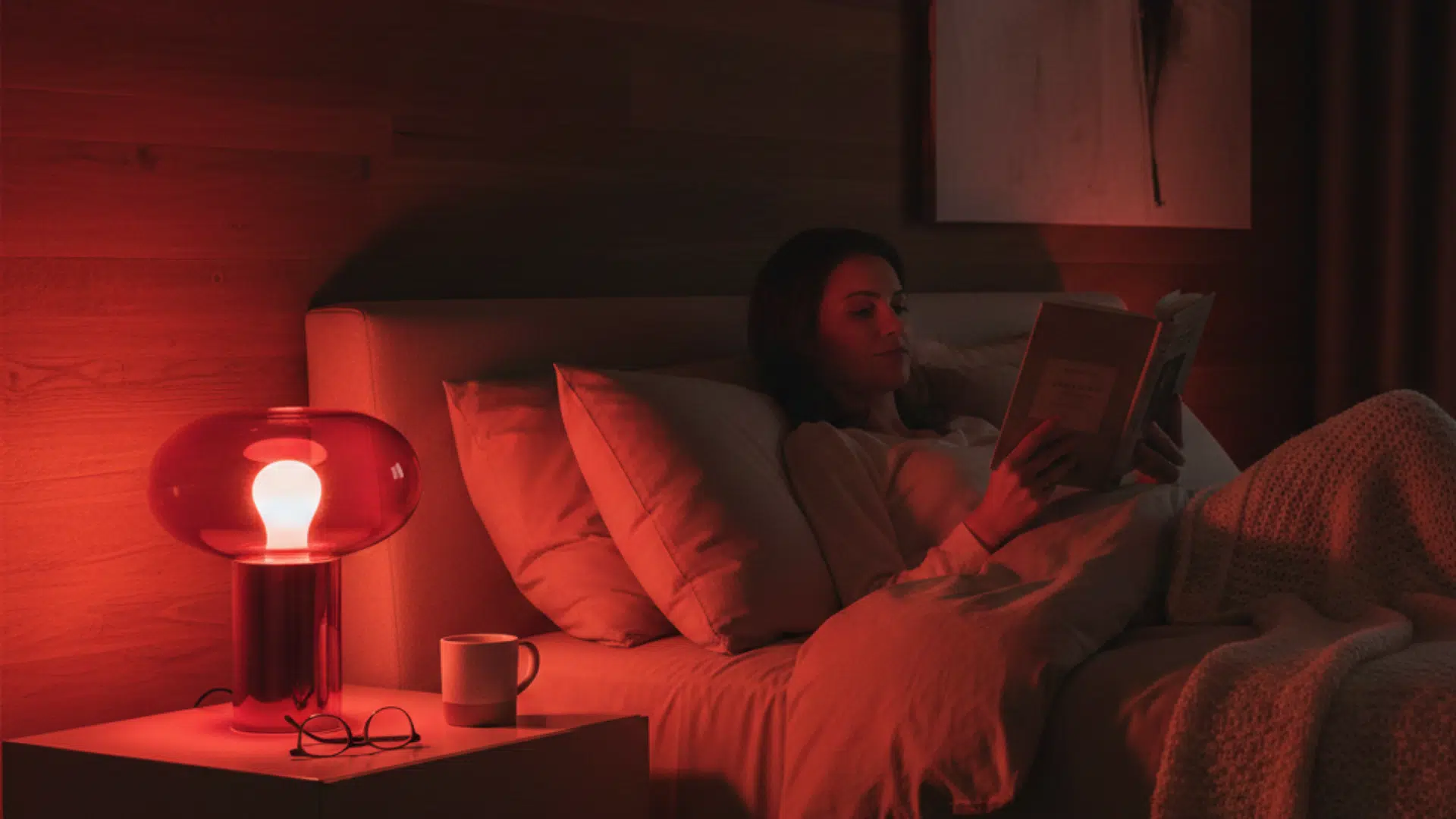
- Incorporate Red Light into Your Sleep Environment: You can use red light bulbs in your bedroom or place a red light lamp near your bed. This creates a calming atmosphere conducive to sleep without disrupting your circadian rhythm.
- Monitor Your Sleep Patterns: Keep track of your sleep patterns to assess how red light therapy is affecting your sleep quality. Use sleep tracking apps or simple logs to evaluate changes over time.
- Use Red Light Regularly: Consistency is key. Use red light therapy every night for the best results, as regular exposure helps reinforce your body’s natural sleep-wake cycle.
Red Light for Sleep Disorders Beyond Insomnia
Red light therapy is being studied as a potential way to help with sleep problems beyond insomnia, especially for people with irregular schedules (such as shift work), where it may improve overall sleep quality.
Early research also suggests it might help with sleep apnea by reducing nighttime awakenings, and with Restless Leg Syndrome (RLS) by easing discomfort and helping the body relax before bed.
Overall, the main idea is that red light may support sleep by helping regulate the circadian rhythm, offering a non-invasive option for people dealing with various sleep challenges.
The Bottom Line
Red light for sleep can be a simple yet effective solution for improving your sleep.
It works by improving melatonin production and aligning your body’s natural sleep-wake cycle, helping you fall asleep faster and enjoy more restful sleep.
Studies have shown that it can also increase sleep quality, reduce sleep onset latency, and improve emotional regulation. If you’ve been struggling with sleep problems, this might be the non-invasive therapy you need to try.
Remember to use it consistently, about 30-60 minutes before bedtime, and track your progress. It’s a gentle, easy way to boost your sleep without side effects.
For more tips on sleep and wellness, feel free to check out my other posts.