
I see many people mix up health and wellness, even though both affect daily life in clear ways. When you understand how they connect, simple choices start to make more sense.
That is why it helps to summarize how the components of health are related to wellness in a clear, practical way.
Health is not only about avoiding illness. It also includes how you think, feel, move, and connect with others. Wellness depends on how these areas support each other each day.
Once you see how the pieces fit together, it becomes easier to build steady habits that support focus, energy, and balance. This post breaks everything down with examples and tools you can actually use.
What Does Health Mean in Simple Terms?
Health means how well your body and mind work together each day. It is not only about avoiding sickness or visiting a doctor when something feels wrong.
Health also includes how strong you feel, how well you think, and how steady your emotions remain during daily life. When you feel rested, focused, and able to handle stress, your health is doing its job.
Health goes beyond illness because a person can feel unwell even without a disease. Poor sleep, stress, weak habits, or lack of movement can still affect how you feel.
That is why health is made up of several connected parts, not just one area. These parts include physical, mental, emotional, social, and other areas that support daily function.
When these components work together, they help support balance, energy, and long-term well-being.
What is Wellness and How is It Different From Health?
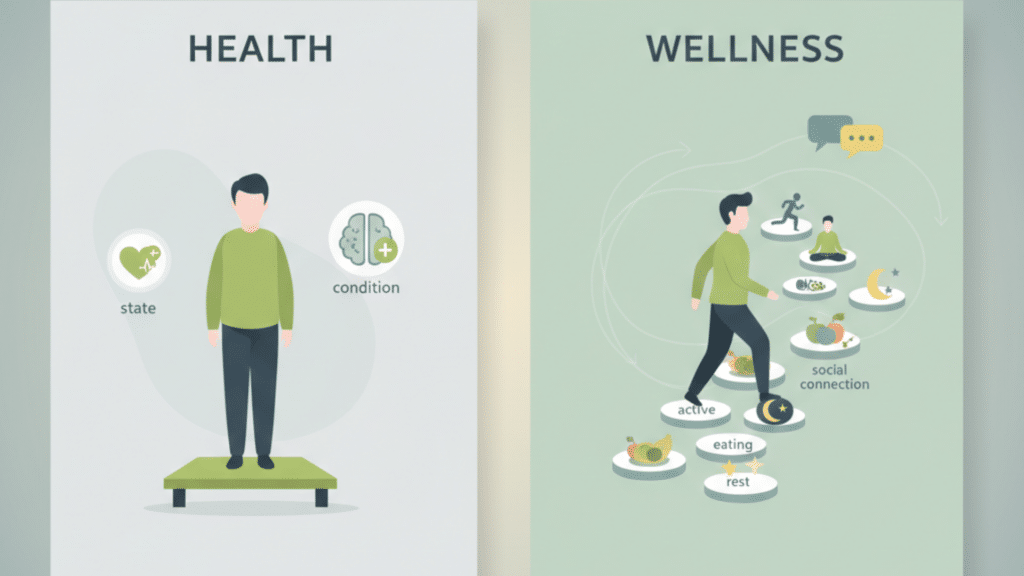
Wellness means the daily choices you make to support how you feel, think, and function.
It focuses on habits and actions that help you stay balanced over time. These actions can include staying active, managing stress, eating regularly, resting well, and keeping positive connections with others.
Wellness is about balance because no single habit works alone. Taking care of one area while ignoring others can still lead to problems.
Small, steady actions across different areas help support daily stability and long-term strength.
Health and wellness are related but not the same. Health is your current condition at a moment in time.
Wellness is the ongoing process that helps shape that condition. In simple terms, health is where you are, and wellness is what you do each day to support it.
The Main Components of Health
These components are core areas taught in health education to explain how different parts of life affect daily health and long-term well-being.
1. Physical Health
Physical health covers how your body functions during daily life. It includes regular movement, restful sleep, steady eating habits, hydration, and basic body care.
When you stay active and rest enough, your body gains strength and stamina for routine tasks. Physical health also helps improve focus, reaction time, and overall alertness.
Without proper sleep or movement, energy drops, and simple tasks feel harder. Caring for your body helps you stay productive at school, work, and home. Strong physical health also helps reduce strain on your mind and emotions during stressful moments.
2. Mental Health
Mental health refers to how your mind processes thoughts, handles pressure, and stays focused. It includes attention, memory, decision-making, and stress response. When mental health is steady, your body reacts more calmly to challenges.
Ongoing stress or racing thoughts can cause headaches, fatigue, or muscle tension. Clear thinking helps your body work more efficiently throughout the day. Mental health also affects sleep quality and motivation.
Taking breaks, organizing tasks, and practicing calm thinking help both your mind and body stay steady.
3. Emotional Health
Emotional health involves understanding feelings and managing reactions in different situations. It includes recognizing emotions, handling frustration, and responding calmly during stress.
When emotions stay steady, your mind stays clearer, and your body feels less tense. Unmanaged emotions can lead to poor sleep, low energy, or physical discomfort.
Emotional control helps reduce mental overload and supports better physical habits. Learning how to express feelings in healthy ways also helps prevent emotional pressure from building over time and affecting daily health.
4. Social Health
Social health focuses on relationships, communication, and connection with others. Positive interactions help lower stress and improve motivation during daily activities.
Support from friends, family, or classmates helps you handle pressure more easily. Clear communication reduces misunderstandings that can cause emotional strain.
Strong social health also encourages healthy habits, such as staying active or managing time better. When social needs are ignored, stress levels often rise and energy drops. Healthy connections help you feel supported, confident, and more capable each day.
5. Spiritual Health
Spiritual health relates to personal values, inner meaning, and a sense of direction in life. It does not focus on religion, but on what guides your choices and actions.
Understanding what matters to you helps improve emotional steadiness and decision-making. Feeling grounded helps reduce confusion and emotional pressure during challenges.
Spiritual health also supports mental calmness by giving structure to daily choices. When values guide actions, stress becomes easier to manage, and emotional reactions stay more controlled.
Wellness Areas that Also Affect Daily Life
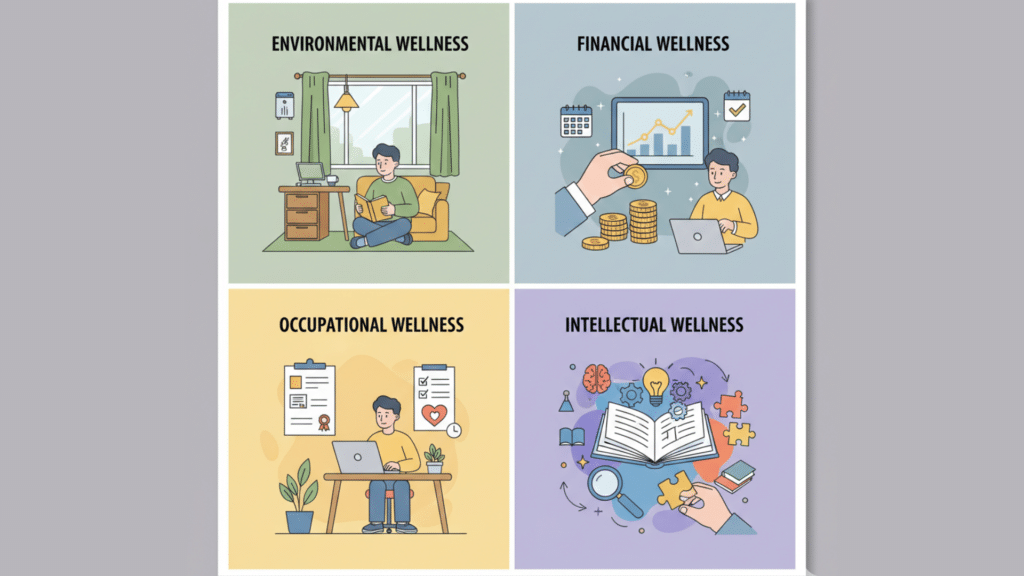
These wellness areas support daily balance and stability, yet many health blogs skip them or explain them only briefly.
Environmental Wellness
Environmental wellness focuses on the spaces around you and how they affect daily life. Clean, safe, and organized areas help reduce mental pressure and physical strain.
Poor lighting, clutter, noise, or unsafe conditions can raise stress levels and lower focus. Your surroundings influence sleep quality, breathing comfort, and movement habits.
A calm space supports better routines and steadier emotions. Simple actions like keeping areas clean, improving airflow, and creating quiet zones can support both physical comfort and mental calm during everyday activities.
Financial Wellness
Financial wellness involves managing money, expenses, and basic resources in a steady way. When finances feel out of control, stress often rises quickly.
Ongoing money worries can affect sleep, focus, and emotional balance. This stress may also lead to physical symptoms like headaches or fatigue. Planning expenses, tracking spending, and setting limits can reduce pressure.
Financial stability helps you feel more secure and supports better decision-making. When money concerns are managed, mental and emotional health often feels steadier throughout the day.
Occupational Wellness
Occupational wellness relates to how you feel about your role at work or school. Feeling useful and supported in daily responsibilities helps improve motivation and focus.
Clear routines and reasonable expectations reduce stress and mental overload. When work feels overwhelming or unclear, emotional strain and fatigue can increase.
Having purpose in daily tasks helps support emotional balance and mental clarity. Occupational wellness also includes time management and rest breaks. A stable routine supports energy levels and helps you stay focused without feeling drained.
Intellectual Wellness
Intellectual wellness involves learning, problem-solving, and mental growth. It supports brain function by keeping your mind active and flexible. Reading, practicing skills, or learning new topics helps improve memory and focus.
Without mental activity, attention may drop, and motivation can fade. Intellectual wellness also helps manage stress by shifting focus toward productive thinking.
Mental stimulation supports confidence and decision-making. Simple activities like puzzles, reading, or skill practice help keep the brain active and support overall daily wellness.
How the Components of Health are Related to Wellness
The components of health are interconnected and do not function independently. When one area is affected, other areas often respond as well.
Wellness depends on how well these parts support each other during daily life. Strong physical habits can help steady emotions. Clear thinking can support better choices.
Positive relationships can reduce pressure and support mental strength. When one area is ignored, stress may rise, and daily tasks can feel harder. Wellness comes from supporting multiple areas at the same time, not focusing on just one.
Paying attention to small habits across different health areas helps support steady energy, focus, and emotional control over time.
Components of Health vs. Components of Fitness
This table shows the clear difference between health and fitness, and how both support daily wellness in different ways.
| Area | Components of Health | Components of Fitness |
|---|---|---|
| Focus | Overall daily well-being | Physical ability and performance |
| Areas Included | Physical, mental, emotional, social, spiritual | Strength, endurance, flexibility, balance |
| Purpose | Supports how you feel and function daily | Supports how your body moves and performs |
| Scope | Covers body, mind, and relationships | Focuses mainly on the body |
| Connection to Wellness | Builds long-term balance and stability | Supports physical energy and stamina |
Fitness supports wellness by improving energy, sleep quality, and focus, which also helps mental and emotional balance.
Components of Physical Fitness Explained Simply
These fitness components focus on how your body moves and performs during daily activities and physical tasks.
- Strength: Helps you lift, carry, push, and support objects during everyday tasks without tiring quickly.
- Endurance: Helps your body stay active for longer periods while reducing early tiredness and breathlessness.
- Flexibility: Supports easy movement by allowing joints and muscles to stretch without pain or stiffness.
- Balance: Helps you stay steady while standing, walking, or changing positions, lowering the risk of falls.
Each fitness component supports physical health, which then helps improve energy, focus, and overall wellness.
Study Tools for Health and Fitness Basics
This section helps students and learners review key ideas using simple, easy-to-remember tools. Flashcards work well for quick study sessions and short reviews.
One set can compare health and wellness, showing how health reflects current condition while wellness reflects daily habits.
Another set can list health components with clear examples, such as physical health supporting energy or social health supporting stress control. Fitness flashcards can explain strength, endurance, flexibility, and balance with simple benefits.
A quick study guide also helps reinforce learning. Health refers to the overall condition. Wellness focuses on daily actions. Fitness relates to physical ability and movement.
Practice review questions help check understanding, such as how sleep affects emotions or how exercise supports mental focus during daily tasks.
Everyday Actions That Support All Health Components
These simple daily actions help support physical, mental, emotional, and social health at the same time.
- Daily movement: Light exercise or walking helps improve energy, focus, and emotional control throughout the day.
- Sleep routines: Regular sleep times support mood, memory, and physical recovery.
- Talking with others: Sharing thoughts with trusted people helps lower stress and build emotional support.
- Stress breaks: Short pauses during the day help calm the mind and reduce physical tension.
- Healthy habits: Balanced meals, hydration, and routine care support steady daily function.
Small, consistent actions across different areas help support overall wellness and daily balance.
Conclusion
By now, you can see that health works best when all its parts support each other. Physical habits affect mood and focus. Thoughts and emotions influence daily energy.
Relationships and values help steady stress. When these areas stay connected, wellness feels more stable and manageable.
I find that small, steady habits matter more than trying to fix one area at a time. You can use simple actions from this post to support balance in daily life.
Taking time to summarize how the components of health are related to wellness helps turn ideas into real habits. If this breakdown helped you, take a moment to check out other blogs here for more clear, practical health topics.