

Shopping for a new bed and feeling confused about if a California King will actually fit your space? California King-size bed dimensions differ from what you might expect, especially when compared to standard mattresses.
This bed isn’t just bigger in every direction; it’s actually longer and narrower than a regular King. Understanding these unique measurements helps you plan your bedroom layout and avoid expensive purchasing mistakes down the road.
I want to break down exactly what makes this mattress size special and who benefits most from it. I’ll show you how to properly measure your room and determine if this bed suits your needs.
Let’s learn everything you need to know before investing in this uniquely shaped sleeping surface.
Getting to Know the California King Bed
A California King-size bed is one of the largest mattress types you can buy for your bedroom. It’s longer and narrower than a standard King bed, making it unique among common mattress sizes.
This mattress size originated in California during the early days of custom bed manufacturing there. It became popular with taller people and those wanting a luxurious sleeping experience in spacious bedrooms.
The California King was specifically created to accommodate taller sleepers who need extra legroom to stretch out comfortably. California King beds also work well in long, narrow bedrooms where a standard King feels too wide for the space.
California King Size Bed Dimensions
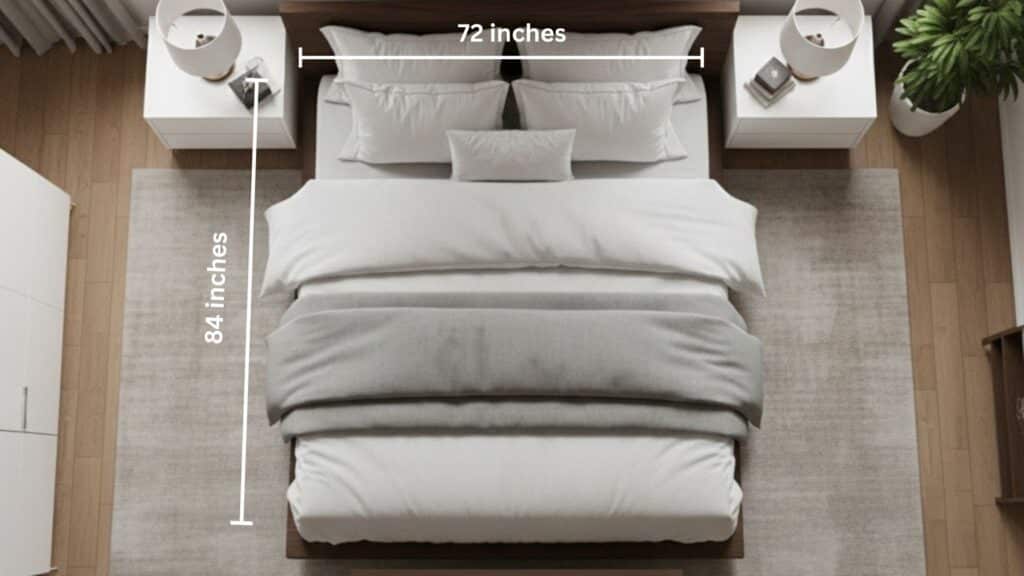
Understanding the exact measurements of a California King bed helps you plan your bedroom space and shop confidently. I’ll give you a complete breakdown of dimensions, depth variations, and bedding requirements you need to know:
1. Standard California King Measurements
A California King mattress measures exactly 72 inches wide and 84 inches long in standard sizing. In metric measurements, that converts to approximately 183 centimeters wide and 213 centimeters long for international shoppers.
This makes it four inches narrower but four inches longer than a standard King bed. The extra length provides plenty of room for taller sleepers to stretch out comfortably.
2. Depth and Height Variations
California King mattresses typically range from 10 to 14 inches thick, depending on the type. Memory foam mattresses tend to be thinner, while hybrid models are usually thicker and more substantial.
Latex mattresses fall somewhere in the middle, offering moderate height with excellent support and durability. The material you choose affects not only comfort but also how high your bed sits.
3. California King Frame and Bedding Dimensions
Your bed frame should measure slightly larger than 72 by 84 inches to properly support the mattress. Most frames add a few extra inches around the edges for stability and proper mattress placement.
For bedding, you’ll need California King sheets specifically, as standard King sheets won’t fit properly. Comforters and duvet covers should also be labeled California King to ensure adequate coverage.
California King vs King: What’s the Difference?
Choosing between a California King and a standard King depends on your height, room size, and personal preferences. I’ll show you a detailed comparison to help you decide which mattress size works best for your needs:
| Comparison Aspect | California King | Standard King |
|---|---|---|
| Width | 72 inches (183 cm) | 76 inches (193 cm) |
| Length | 84 inches (213 cm) | 80 inches (203 cm) |
| Total Surface Area | 6,048 square inches | 6,080 square inches |
| Best For | Taller sleepers need extra legroom | Couples wanting more width for sleeping space |
| Perceived Size | Feels longer and narrower, stretching vertically | Feels wider and shorter, spreading horizontally |
| Room Appearance | Makes the room look longer and more streamlined | Makes the room look wider and more spacious |
| Ideal Room Layout | Long, narrow bedrooms with vertical orientation | Square or wide bedrooms with horizontal orientation |
This comparison highlights the key differences that matter most when selecting your mattress size today. Use your height, bedroom dimensions, and sleeping preferences to guide your final decision between these two options.
Who Should Choose a California King Bed?
A California King bed isn’t the right choice for everyone, but it’s perfect for certain situations. Here’s who benefits most from choosing this longer mattress size for their bedroom:
- Tall sleepers who need extra legroom: If you’re over six feet tall, the extra four inches of length prevents your feet from hanging off.
- Couples wanting more foot space: Partners who feel cramped lengthwise on a standard King benefit from the additional stretch room this provides.
- People with long, narrow bedrooms: The California King’s shape fits better in rooms where a standard King would feel too wide.
- Pet owners needing space at the foot: If your dog or cat sleeps at your feet, the extra length gives everyone comfortable room.
I recommend choosing a California King if any of these situations describe your current sleeping arrangement or bedroom layout. I believe the right mattress size makes a significant difference in your sleep quality and overall bedroom comfort nightly.
Downsides of a California King Size Bed
While a California King offers unique benefits, it also has important drawbacks to consider. I’ll outline the main challenges you might face when choosing this mattress size for your bedroom:
- The four-inch reduction in width means less side-to-side space for couples who spread out while sleeping.
- California King sheets, comforters, and duvet covers are less common and often cost more than their standard-size counterparts.
- Many mattress and bedding retailers carry fewer California King options compared to the more popular standard King sizes.
- The extra length makes California King mattresses more awkward to maneuver through doorways, hallways, and staircases during moves.
- California King mattresses and bedding typically cost more than standard King sizes due to lower production volumes.
These downsides don’t necessarily mean you shouldn’t choose a California King for your needs and preferences. Weigh these challenges against the benefits to make an informed decision that works best for your situation.
Room Requirements and Measuring Guide
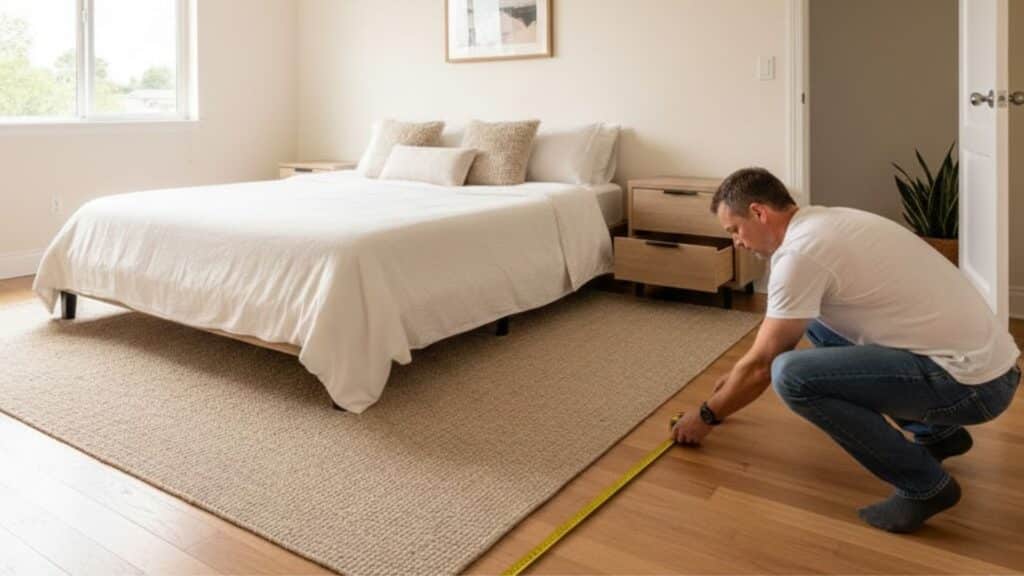
Before buying a California King bed, measure your bedroom carefully to ensure it fits comfortably. Start by measuring the length and width of your room using a tape measure for accuracy.
Leave at least two to three feet of walkway space on each side of the bed. This allows you to move around comfortably and access nightstands, dressers, and closets without feeling cramped or squeezed.
In smaller or long rooms, place the bed against the longest wall to maximize floor space. For rooms with tall bed frames or thick mattresses, check your ceiling height to avoid feeling closed in. Make sure you can open doors and drawers fully without hitting the bed frame or mattress edges.
Bedding and Accessories Sizing for California King Beds
Finding the right bedding and accessories for a California King requires attention to specific sizing requirements. I’ll walk you through what you need to know to avoid common sizing mistakes and compatibility issues:
- California King fitted sheets must measure 72 by 84 inches with deep pockets for thicker mattresses.
- Flat sheets typically measure around 108 by 102 inches to provide adequate coverage and tucking room.
- Comforters and duvets should be at least 104 inches wide by 96 inches long to drape properly over the sides.
- Bed frames need to accommodate the exact 72-by-84-inch footprint with proper center support beams.
- Headboards and footboards must be designed specifically for the California King width to fit correctly without gaps.
Standard King bedding will not fit a California King mattress properly, despite the similar names. Always check labels carefully and verify dimensions before purchasing to avoid costly returns or ill-fitting bedding.
California King Compared to Other Mattress Sizes
Understanding how a California King compares to other mattress sizes helps you make the right choice. Here’s a detailed comparison of California King against Queen, Twin XL, and Full XL mattresses:
| Comparison Aspect | California King | Queen | Twin XL | Full XL |
|---|---|---|---|---|
| Width | 72 inches (183 cm) | 60 inches (152 cm) | 38 inches (97 cm) | 54 inches (137 cm) |
| Length | 84 inches (213 cm) | 80 inches (203 cm) | 80 inches (203 cm) | 80 inches (203 cm) |
| Ideal Room Size | 12 feet × 14 feet or larger | 10 feet × 10 feet minimum | 7 feet × 10 feet minimum | 9 feet × 10 feet minimum |
| Best For | Tall sleepers, couples needing legroom | Couples in smaller bedrooms | Single tall sleepers, dorm rooms | Single sleepers wanting more space |
| Who Benefits Most | Tall couples, pet owners, spacious rooms | Average height couples, standard bedrooms | Tall individuals, college students | Taller single sleepers, guest rooms |
| Space Characteristics | Very spacious for couples or families | Comfortable for two adults sharing | Narrow, suited for one person only | Moderate width, comfortable for one adult |
I hope this comparison shows that California King offers unique advantages in length, but with different width options. I recommend using your personal height, bedroom size, and sleeping arrangements to determine which mattress size best fits your needs.
That’s a Wrap
You’re now equipped with practical knowledge of California King-size bed dimensions for your bedroom planning. Armed with these measurements and room requirements, you can confidently shop without second-guessing your spatial limitations.
Don’t forget that finding sheets and accessories requires extra attention since this size isn’t as universally available.
I suggest creating a simple floor plan sketch with actual measurements before finalizing your mattress purchase decision. Visiting showrooms to physically see and test the size helps confirm if it matches your expectations accurately.
I truly believe proper planning now prevents buyer’s regret and returns later when the delivery truck arrives. Got questions about fitting this bed into an unusual room shape? Drop your floor plan challenges in the comments below!