

Sleep can be tricky. You’re tired, you crawl into bed, and then your brain decides it wants to stay wide awake. If that sounds familiar, I get it.
That’s why people start looking at simple bedtime habits, including what they eat. A light snack or fruit before bed can feel easier than heavy, sugary foods.
Lately, eating pineapple at night has been getting a lot of attention for sleep support. Pineapple has natural compounds that may help your body relax and feel more ready for rest.
In this blog, I’ll walk you through how pineapple before bed may affect sleep, the best time and portion to eat it, other sleep-friendly fruits, and who should be careful.
Why Pineapple Before Bed May Support Better Sleep?
Pineapple is not just sweet and refreshing. It has natural compounds that may help the body relax before bedtime.
One key reason is melatonin, a hormone that helps control the sleep–wake cycle. At night, the body releases more melatonin to signal that it is time to rest.
Some research suggests that eating pineapple can raise melatonin markers, which may help the body feel more ready for sleep when pineapple is eaten in the evening rather than right before bed.
Pineapple also provides helpful nutrients that support nighttime comfort:
- Vitamin C supports overall health while the body rests
- Magnesium helps muscles feel more relaxed
- Potassium supports nerve and muscle function
- Fiber helps prevent late-night hunger
Another standout is bromelain, a natural enzyme in pineapple. Bromelain supports digestion and may reduce mild inflammation.
When digestion feels easier, the body is less likely to feel heavy or uncomfortable at night, which can make it easier to settle into sleep.
How to Eat Pineapple at Night
Eating pineapple at night works best with the right timing and portion. Have it 1–2 hours before bed, and avoid eating it right before lying down.
If the stomach is sensitive, it usually feels better earlier in the evening.
| Portion Size | Why It Works |
|---|---|
| ½ cup fresh pineapple | Light and easy to digest |
| Up to 1 cup (max) | Gives nutrients without too much sugar |
Large portions late at night can cause discomfort, especially for people sensitive to acidic foods.
Best Fruits Before Bed
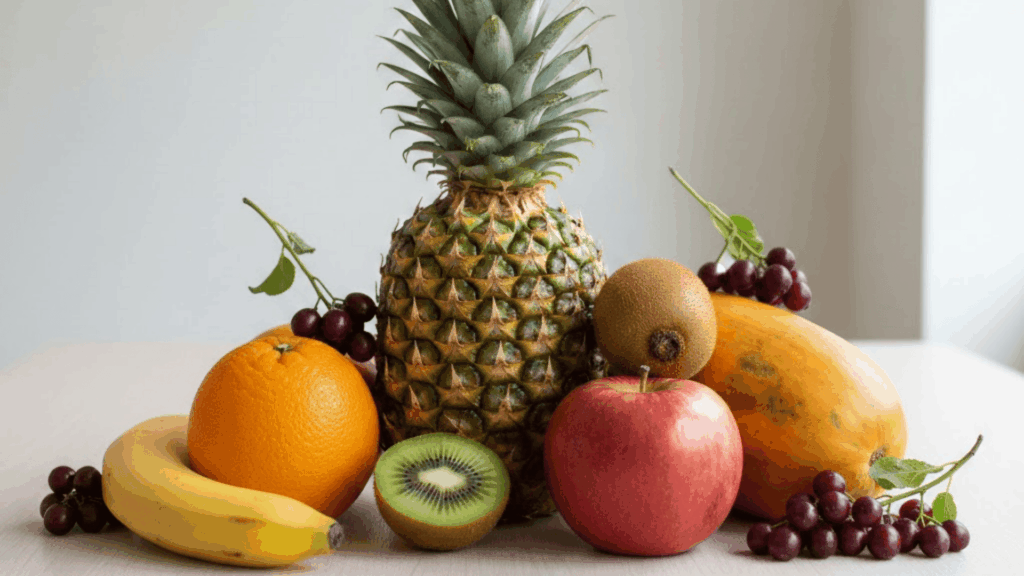
If pineapple before bed isn’t the right fit every night, a few other fruits can also be gentle, tasty options that may support better sleep.
1. Pineapple
Pineapple is a helpful fruit before bed because it contains natural melatonin, which supports the body’s sleep cycle.
It also has bromelain, an enzyme that supports digestion and may reduce nighttime discomfort, making it easier for the body to relax before sleep.
Tip: Eat fresh pineapple 1–2 hours before bed in small portions.
2. Kiwi
Kiwi is often linked with better sleep quality and longer sleep time. It contains serotonin, which helps calm the brain, along with vitamin C and antioxidants. This mix may help the body unwind and support deeper rest during the night.
Tip: Eating one or two kiwis in the evening is usually enough.
3. Tart Cherries
Tart cherries are one of the few natural food sources of melatonin. This makes them a popular choice for nighttime snacks.
They may help improve sleep timing and support staying asleep longer when eaten in moderate amounts.
Tip: Choose fresh or frozen cherries instead of sweetened juice.
4. Banana
Bananas contain magnesium and potassium, which help muscles feel relaxed before sleep.
They also have natural carbohydrates that may support the body’s transition into rest mode, making them a comforting fruit before bed.
Tip: Pair banana slices with a small spoon of nut butter.
5. Berries
Berries like blueberries, strawberries, and raspberries are light and easy to digest.
They contain antioxidants that support overall health and may reduce stress in the body, which can help promote a calmer feeling before sleep.
Tip: Keep portions small to avoid excess sugar late at night.
6. Papaya
Papaya supports digestion and is gentle on the stomach, making it a good fruit before bed.
It contains vitamins and enzymes that may help reduce bloating and discomfort, which can otherwise disturb sleep.
Tip: Eat ripe papaya plain, without added sugar or spice.
7. Apple
Apples provide fiber and natural sugars that help keep blood sugar steady during the night. This may help prevent waking up due to hunger.
Apples are also light and refreshing, making them easy to tolerate in the evening.
Tip: Eat apple slices slowly to avoid overeating.
8. Orange
Oranges offer vitamin C and natural sweetness without being heavy. When eaten earlier in the evening, they can feel refreshing and satisfying without causing discomfort for many people.
However, acidity can affect some individuals.
Tip: Eat oranges at least two hours before bedtime.
Benefits and Possible Downsides of Eating Pineapple at Night
To make this easy to scan, here’s a simple side-by-side view of the pros and cons, plus a quick “what to do” tip for each.
| Topic | Benefits | Possible Downsides | Simple Tip |
|---|---|---|---|
| Relaxation & sleep | May help the body wind down and support the sleep cycle | Not the same for everyone | Try it for a few nights and notice how the body responds |
| Digestion | Can feel lighter than heavy desserts; bromelain may support digestion | Too much can feel heavy late at night | Stick to a small bowl, not a big plate |
| Acidity | — | May cause heartburn or acid reflux in sensitive people | Eat earlier (1–2 hours before bed) and keep portions smaller |
| Mouth comfort | — | Bromelain may cause mild tingling/irritation | Choose ripe pineapple and rinse your mouth with water after eating |
| Blood sugar | Can satisfy sweet cravings in a lighter way | Too much may raise blood sugar for some | Pair with plain yogurt or a few nuts |
When pineapple is eaten in the right amount and at the right time, it can be a helpful bedtime snack, but comfort always comes first.
Who Should Be Careful with Pineapple Before Bed?
Pineapple before bed can work well for many people, but a few groups may need to be more careful to avoid discomfort.
- Frequent acid reflux: Pineapple’s natural acidity may trigger heartburn or reflux at night.
- Very sensitive stomach: Even small amounts may cause stomach discomfort when eaten late.
- Mouth irritation after pineapple: Bromelain can cause tingling or soreness for some people.
- Blood sugar concerns: Pineapple has natural sugar, so portions may need to stay small and balanced.
Noticing how the body responds and adjusting timing or portion size can make a big difference.
Best Time to Eat Pineapple: Morning or Night?
Pineapple can be eaten in the morning or at night, depending on the goal.
- In the morning, it feels refreshing, gives quick energy, and works well in smoothies or breakfast bowls.
- At night, pineapple fits better for sleep support because it may provide melatonin and relaxing nutrients, while also satisfying sweet cravings in a lighter way.
Both times can work, but pineapple before bed is usually a better choice for people focusing on sleep quality.
Wrap Up
Eating better at night doesn’t have to feel complicated. Now you know why pineapple may support sleep, how much to eat, and when to keep it earlier in the evening.
You also saw other fruits that can be good before bed, plus the small downsides to watch for, like acidity or mouth irritation.
If you want to try eating pineapple at night, start with a small serving and pay attention to how your body feels. Your best bedtime snack is the one that helps you rest without discomfort.
If this topic was helpful, check out my other blogs for simple sleep tips, snack ideas, and easy ways to build a calmer nighttime routine.