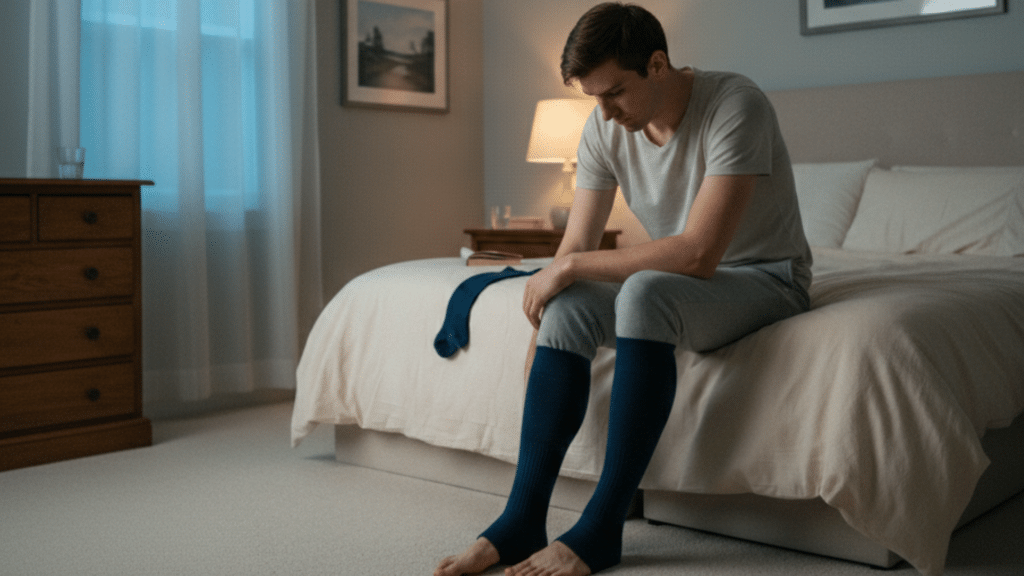
I have heard many people say their legs feel fine all day, then heavy the moment they lie down. If you have ever paused at bedtime wondering should you sleep in compression socks, you are not the only one.
Advice online can feel mixed, and personal stories often conflict with medical guidance. Some people swear by overnight use, while others wake up uncomfortable and confused.
Knowing what actually helps matters, especially when sleep and leg comfort are involved. In this blog, I break down why people try it, what doctors explain, and what real experiences show.
By the end, you will understand when compression helps, when it does not, and can you wear compression socks to bed safely.
Can You Sleep Wear Compression Socks to Bed?
For most people, sleeping in compression socks is not needed. These socks are made to help blood move upward when you are sitting or standing during the day.
When you lie down, gravity no longer pulls blood toward your feet. Because of that, your legs usually do not need extra pressure at night.
Wearing compression socks while sleeping does not add much benefit for everyday swelling, tired legs, or general comfort.
In some cases, a medical provider may suggest short-term nighttime use. This usually applies to specific issues, such as open leg sores, severe fluid buildup, or recovery after certain vein treatments.
Even then, night use is often limited to a short period and closely monitored. For everyday use, daytime wear and simple nighttime habits work better for most people.
Why People Keep Trying to Sleep in Compression Socks Anyway
Even when told nighttime wear is not needed, many people still try it. Discomfort, worry, mixed advice, and online stories often push people to test overnight use on their own.
Fear of Swelling Coming Back Overnight
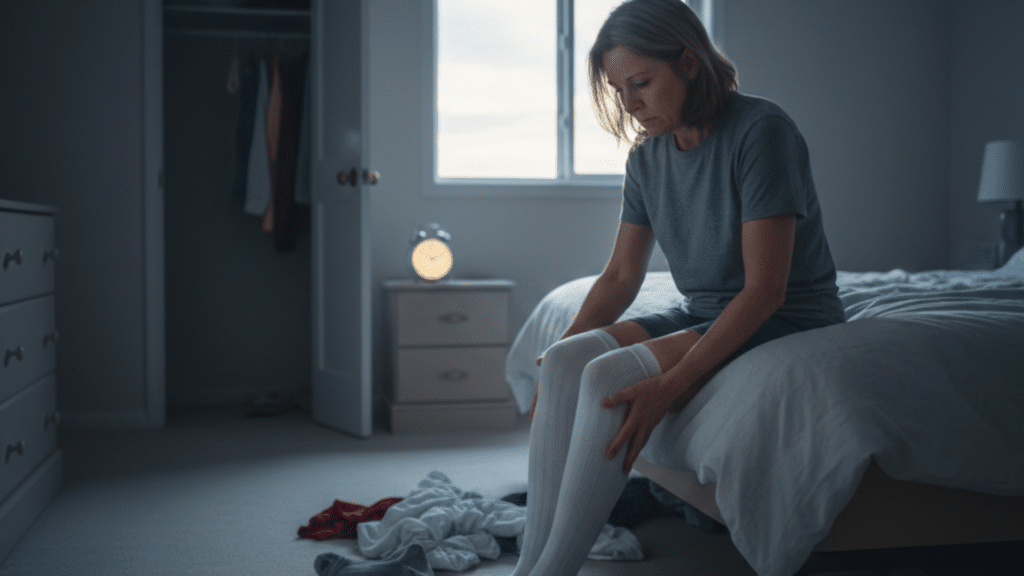
Many people remove compression socks before bed and notice their legs feel heavy or tight right away. This can create worry that swelling will return while they sleep.
Some people have dealt with swelling for months or years, so the idea of undoing daytime progress feels stressful.
Others wake up with puffier ankles in the morning and link that change to not wearing socks at night. This fear leads people to keep socks on, hoping to prevent problems before they start, even without clear guidance.
Post-Workout and “Recovery Sock” Marketing
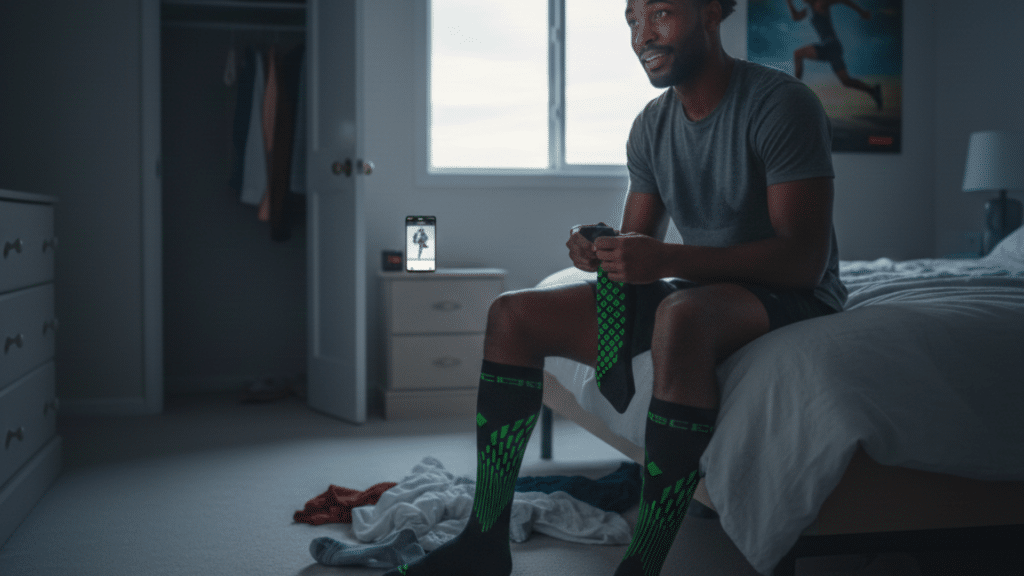
Athletes often hear that compression socks help with recovery. This message can blur the difference between use during movement and use during rest.
Many people assume that if compression helps muscles during exercise, it must help even more during sleep. Sports-focused ads and social posts often reinforce this idea without explaining how circulation actually works.
As a result, people try sleeping in compression socks expecting faster muscle relief, even though most benefits happen while the body is active.
Post-Surgery or Vein Condition Worries

After surgery or vein treatment, people often want to follow every step carefully. Compression socks can feel like a safety layer, even at night.
Instructions may also differ between providers, written materials, or follow-up visits. Some are told to wear socks “as much as possible,” which leaves room for confusion.
To avoid setbacks, people may choose overnight wear on their own. This choice usually comes from caution, not comfort, and often fades once healing feels more stable.
How Compression Socks Work: In Simple Terms
Compression socks apply gentle, controlled pressure to the legs, with the firmest squeeze around the ankle and less support higher up the leg. This design helps guide blood upward instead of allowing it to settle in the lower legs.
During the day, gravity pulls blood downward when you sit or stand for long periods. Compression socks help counter that pull by supporting the veins and encouraging steadier blood flow.
This support matters most when you are upright, because gravity is actively working against circulation. When you walk, stand, or sit, your leg veins must work harder to move blood back toward the heart.
Compression socks assist that process. When you lie down, gravity’s pull is reduced, so blood moves more easily on its own. That is why compression tends to help more during the day than while sleeping.
What Doctors and Medical Sources Actually Agree On
Information summarized by the National Institutes of Health (NIH) explains that overnight use of compression therapy is not meant for routine comfort or general swelling.
NIH-reviewed research shows that nighttime compression is typically reserved for specific medical needs, most often related to wound care or post-procedure support.
Examples include open leg sores linked to vein conditions and short-term recovery following certain vein treatments. In these cases, compression may help protect healing tissue or control fluid buildup for a limited period.
The NIH also notes that this type of use is usually planned and monitored by a medical professional. It is not intended to be ongoing or self-directed.
For most people without these conditions, NIH-supported guidance aligns with daytime use rather than overnight wear.
What People Who Tried Sleeping in Compression Socks Commonly Report
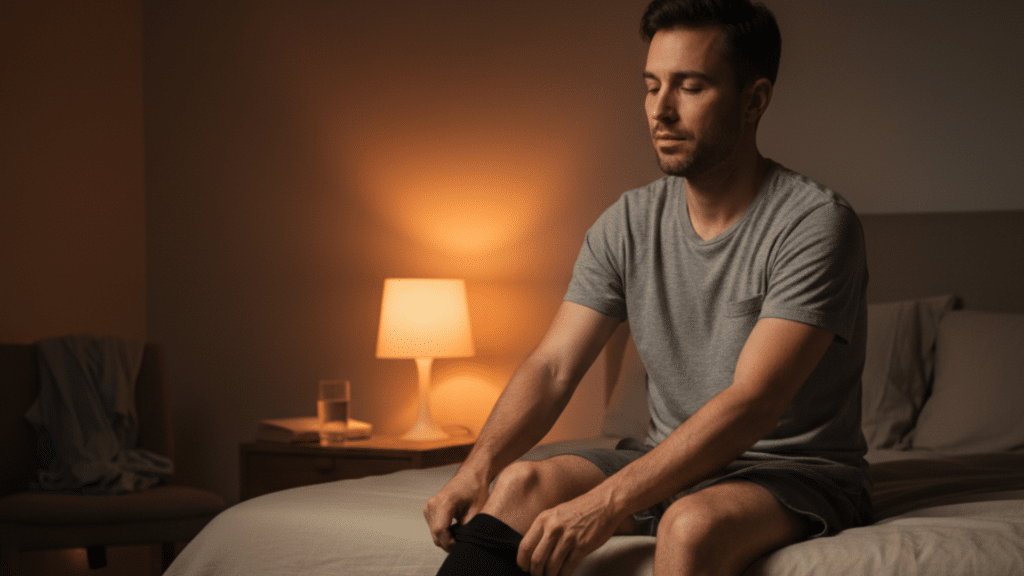
Across forums and discussion spaces, many people share similar stories after testing compression socks overnight. These patterns repeat often, even though comfort levels and reasons for trying vary.
Many of these stories start with the same thought: can I sleep in compression socks without causing problems?
Short-Term Comfort, Long-Term Discomfort
Many people say compression socks feel helpful when they first lie down. Legs may feel supported, and pressure can seem calming at the start. As the night goes on, that feeling often changes.
Warmth builds up around the feet and calves, and pressure becomes more noticeable. Some describe a tight or restless feeling that slowly replaces the early relief.
By the middle of the night, comfort often fades, especially for people sensitive to heat or pressure while sleeping.
Naps vs Full Night Experiences
Short naps are often described as easier to tolerate with compression socks on. Since naps last a limited time, people report fewer issues with heat or irritation.
Full nights tell a different story. After several hours, socks can start to feel restrictive, especially when changing sleep positions. Moisture buildup and pressure on the skin become more noticeable.
Many people say they can nap comfortably but struggle to make it through an entire night without discomfort.
“I Woke Up and Took Them Off” Pattern
A common experience shared online is waking up and removing the socks without planning to. People describe becoming aware of the socks during lighter sleep stages.
Pressure around the ankles or calves draws attention, making it harder to fall back asleep. Others mention mild tingling or the urge to stretch their legs. This often leads to removing the socks midway through the night.
These stories suggest that overnight wear can interrupt sleep, even when socks feel fine at bedtime.
Napping vs. Sleeping Overnight in Compression Socks
People often notice different effects based on how long compression socks stay on. Short rest periods and full nights place very different demands on comfort, skin, and circulation.
| Factor | Napping With Compression Socks | Sleeping Overnight With Compression Socks |
|---|---|---|
| Duration | Short and limited | Several continuous hours |
| Comfort | Often tolerated | Discomfort more common |
| Heat buildup | Minimal | More noticeable |
| Skin pressure | Brief exposure | Prolonged pressure |
| Sleep disruption | Less likely | More likely |
| Need to remove | Rare | Common during the night |
These differences explain why many people manage short naps but struggle overnight. Longer wear increases pressure and warmth, which can affect comfort and sleep quality for many users.
Signs Your Compression Socks Are Too Tight: Especially at Night
If compression socks cause physical changes or disturb sleep, the fit or pressure level may be too strong for nighttime wear.
- Tingling or numbness in the feet or lower legs
- Cold toes or reduced warmth in the feet
- Deep sock marks that remain after removal
- Swelling in the toes or front of the foot
- Waking up feeling pressure, pain, or the urge to remove them
How Compression Socks Can Affect Sleep Quality
Compression socks can change how your body feels during sleep by altering heat, pressure awareness, and movement, which may affect comfort and rest patterns.
Heat and Temperature Regulation
Many people notice increased warmth when wearing compression socks in bed. The fabric limits airflow around the feet and lower legs, which can trap body heat over several hours.
As the night goes on, this warmth may turn uncomfortable, especially for people who already sleep warm. Some report sweating around the feet or calves, which can lead to damp skin and irritation.
This heat buildup often becomes more noticeable during deeper sleep, when the body naturally adjusts temperature, making it harder to stay comfortable through the night.
Pressure Awareness During Sleep
While awake, gentle pressure may feel supportive. During sleep, the body becomes more sensitive to constant sensations.
Compression socks can draw attention to the legs during lighter sleep stages, causing subtle wake-ups. Some people describe becoming aware of tightness or pulsing pressure without fully waking.
These small interruptions may reduce time spent in deeper sleep stages. Over several hours, even mild pressure can shift from unnoticed to distracting, especially for people sensitive to touch or physical sensations while resting.
Movement and Position Changes
Sleep usually involves frequent position changes, including rolling or side-sleeping. Compression socks can make these movements feel restricted, especially around the ankles and calves.
Some people become aware of the socks when bending their knees or crossing their legs. Side sleepers often report noticing pressure where fabric folds or presses into the skin.
This awareness can interrupt natural movement patterns, leading to brief wake-ups. Over a full night, reduced movement comfort may affect how rested a person feels in the morning.
Who Should Avoid Sleeping in Compression Socks
Certain health conditions increase the risk of problems when compression socks are worn overnight.
People with peripheral artery disease often have reduced blood flow to the legs and feet, and added pressure can make circulation worse.
Diabetes may affect nerve function and skin health, making it harder to notice early warning signs such as numbness or pressure damage.
Neuropathy, regardless of cause, can reduce sensation, increasing the risk of injury without discomfort signals.
Arterial circulation issues can also worsen when external pressure is applied for long periods.
In addition, anyone using moderate or high compression levels without medical guidance should avoid nighttime wear.
Stronger pressure increases the chance of restricted blood flow, skin irritation, and sleep disruption, especially during prolonged, unattended use.
Considering Sleeping in Compression Socks? Do this First!
Before trying compression socks at night, a few safety steps matter. Start by checking the compression level. Mild pressure is safer than moderate or strong pressure for nighttime use.
Make sure the socks fit properly and do not dig into the skin or bunch behind the knees or ankles. Legs should be measured earlier in the day, when swelling is lower, to improve sizing accuracy.
It also helps to test compression socks during a short nap instead of a full night. This allows time to notice warmth, pressure, or discomfort without long exposure.
Socks should be removed right away if numbness, tingling, pain, or skin changes appear. For anyone with circulation or nerve concerns, medical guidance should come before overnight use.
Better Nighttime Alternatives That Actually Help Leg Discomfort
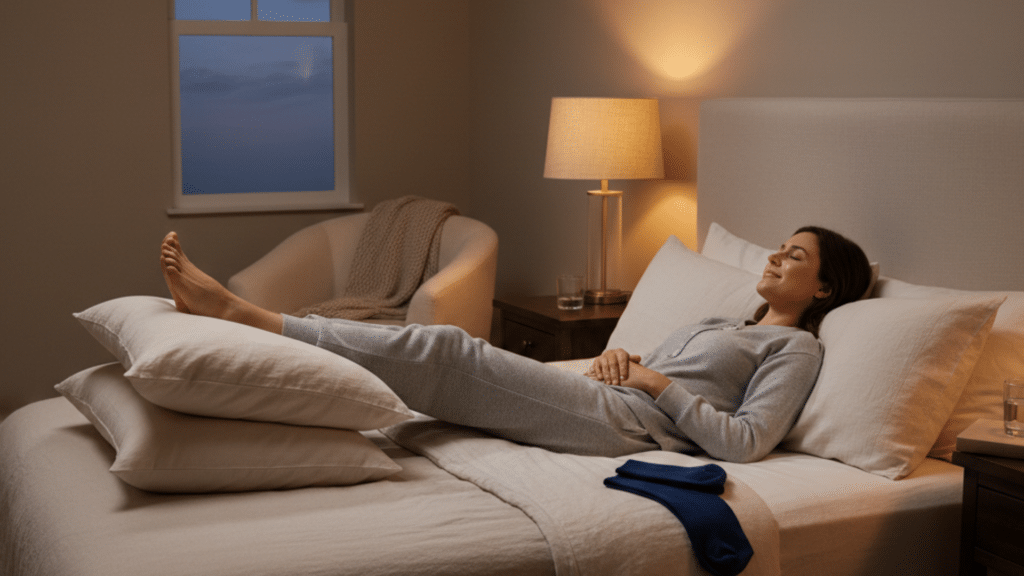
Instead of wearing compression socks overnight, many people find better relief by using simple habits that support circulation and comfort before and during sleep.
1. Leg Elevation Before Bed
Raising your legs before sleep helps fluid move away from the lower legs without added pressure. Elevation works best when done for fifteen to thirty minutes before lying down for the night.
Legs should be raised above heart level using pillows or a leg wedge. This position allows gravity to assist blood flow in a gentle way.
Many people notice reduced tightness and swelling after regular evening elevation. It is a low-effort option that supports circulation while allowing the skin and muscles to relax naturally.
2. Daytime Compression Consistency
Wearing compression socks consistently during the day often reduces the need for extra support at night.
Daytime use helps limit fluid buildup while sitting or standing, which lowers the chance of nighttime discomfort. When swelling is better controlled earlier, legs tend to feel lighter by bedtime.
Removing socks at night then feels less stressful. This approach supports circulation when it is needed most and allows the legs to rest freely during sleep without added pressure or warmth.
3. Light Evening Movement
Gentle movement in the evening can help blood circulate before rest. Short walks around the house or outside encourage muscle activity that supports vein function.
Simple ankle pumps while seated also help move blood upward without strain. These movements are especially helpful after long periods of sitting. Even a few minutes of light activity can reduce stiffness and heaviness before bed.
Many people find this routine easier to tolerate than overnight compression and more supportive of relaxed sleep.
4. Skin Care and Comfort
Healthy skin plays a role in nighttime comfort. Applying a mild moisturizer before bed helps reduce dryness and irritation caused by daytime compression use. Clean, dry skin also lowers the risk of itching or pressure marks.
Breathable sheets and socks made from light fabrics help manage warmth during sleep. Keeping the sleep environment cool and comfortable supports rest without adding pressure to the legs.
Small comfort changes often improve sleep more than overnight compression.
Is Nighttime Compression Right for You?
Nighttime compression is not a one-size choice. For most people, it is not needed and may cause more discomfort than benefit.
If leg swelling improves with daytime compression, light movement, or leg elevation, overnight wear is usually unnecessary. Sleep comfort, skin health, and circulation signals matter more at night than added pressure.
Night use may make sense only in limited situations, such as short-term care after a vein procedure or when a medical provider clearly advises it. Even then, it is often meant to be temporary and closely watched.
If compression socks feel tight, cause warmth, numbness, or disturb sleep, that is a sign to stop. When comfort improves without socks at night, daytime habits are usually doing enough work.
Paying attention to how your body responds helps guide the safest choice.
Conclusion
Sleeping in compression socks is rarely needed for everyday comfort. Daytime use, light movement, and leg elevation usually do more to reduce swelling and heaviness.
I shared how compression works, what medical sources explain, and what people often report after trying overnight wear. The biggest takeaway is to listen to comfort signals and avoid pressure that disrupts rest.
If nighttime use is suggested for a short medical reason, it should stay limited and watched closely. For most people, better habits earlier in the day lead to better sleep at night.
If you are still deciding should you sleep in compression socks, use what you learned here and explore other related blogs for more practical guidance.