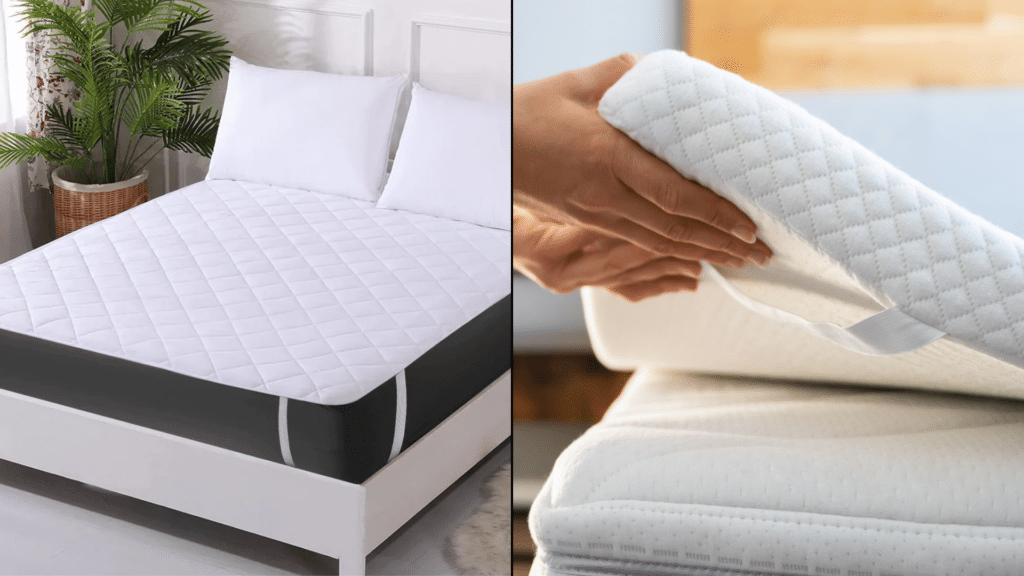
I once bought a thick layer for my bed, expecting instant comfort, and it only made my sheets slip all night. If you’re searching for a mattress pad vs a mattress topper, you likely want a clear answer before you spend money.
A pad is usually thinner and focuses on basic protection, plus a small softness boost.
A topper is thicker and can noticeably change firmness and support. That matters if your mattress feels too firm, too soft, or just not right anymore.
I’ll compare both options, point out the best uses for each, and help you pick what fits your sleep and cleanup needs with a mattress pad vs a mattress topper.
Quick Answer: What’s the Difference?
If you want to change how your bed feels, go with a mattress topper. It is thicker and can make a firm bed feel softer, or add a bit more support if your bed feels too squishy.
If you mainly want to protect your mattress from sweat, dust, and small spills, a mattress pad usually makes more sense. Pads are thinner, sit like a cover, and can add a small layer of softness without changing the bed a lot.
Many pads are easier to wash, too. Still unsure? Think about your main goal: comfort change means topper, protection plus light comfort means pad.
What is a Mattress Pad?
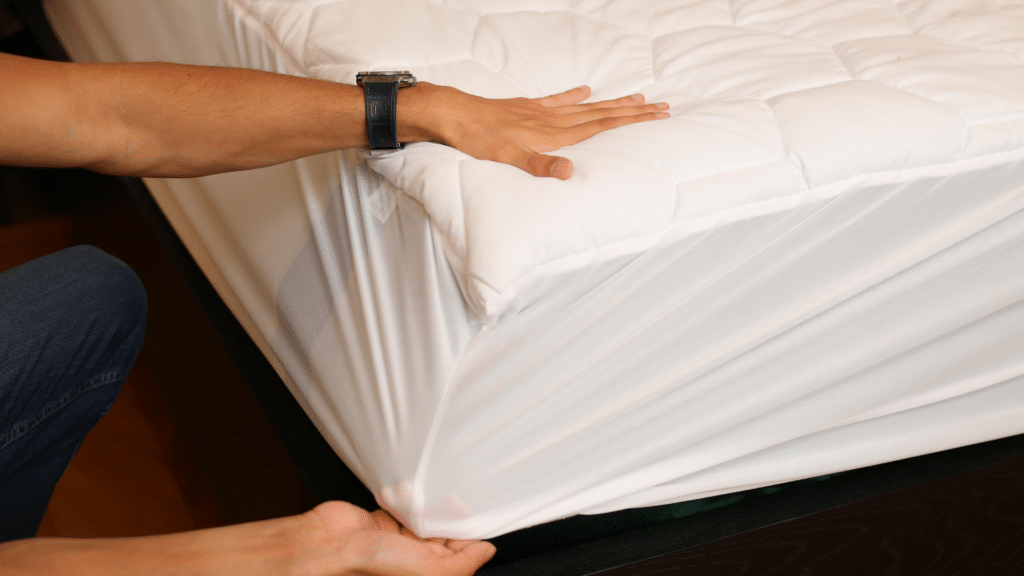
A mattress pad is a thin layer that goes on top of your mattress to add light softness and basic protection.
Best Uses
You’ll usually pick a mattress pad when you want simple comfort and easy cleanup, without changing the mattress’s feel much.
- Protects your mattress from sweat, dust, and small stains
- Adds a small layer of softness for everyday comfort
- Helps keep the surface smoother under your sheets
- Works well when you already like your mattress feel
- Makes dorm or guest beds feel a little better fast
Key Benefits
A good mattress pad gives you a comfort buffer and helps reduce daily wear, with less hassle than thicker layers.
- Often machine washable and simple to dry
- Some options are water-resistant or waterproof
- Can help with light temperature control, based on fabric
- Usually cheaper than a mattress topper
- Easy to remove, clean, and put back on quickly
Summary: You now know what a mattress pad does, when it helps most, and why many people choose it.
What is a Mattress Topper?
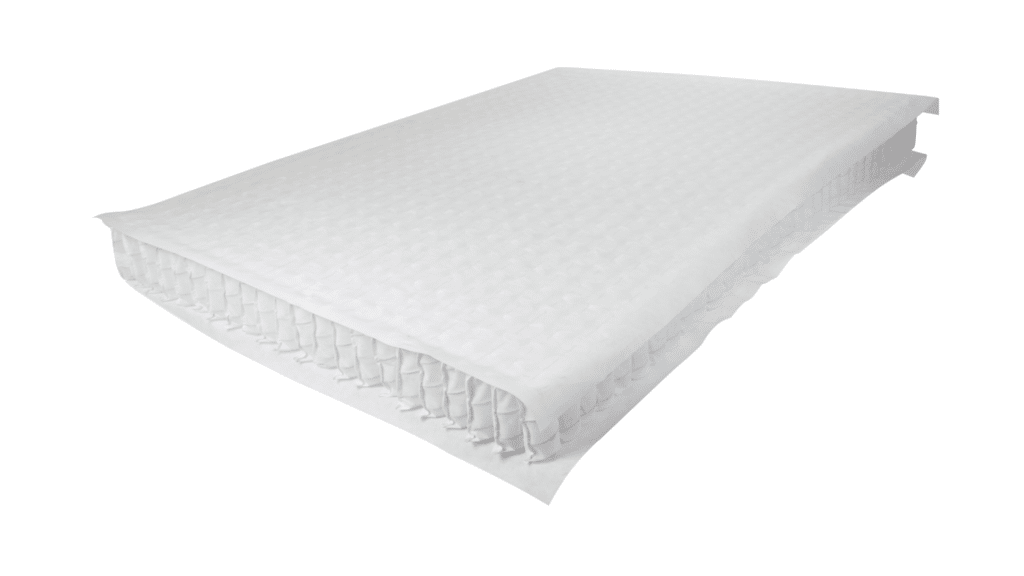
A mattress topper is a thicker layer you place on top of your mattress to change comfort, firmness, and support.
Best Uses
You’ll want a topper when your mattress feels wrong, and you need a clear comfort change without buying a new bed.
- Softens a mattress that feels too firm
- Adds support when a mattress feels too soft
- Adds cushioning for hips, shoulders, and joints
- Helps improve comfort on a dorm or guest bed
- Extends comfort on an older mattress with minor wear
Key Benefits
A topper can change how your bed feels right away, while helping your body rest with less pressure in key areas.
- Makes a bigger comfort change than a mattress pad
- Helps reduce pressure on sore spots while sleeping
- Can improve alignment, based on firmness and material
- Available in different materials for heat and feel control
- Offers a lower-cost comfort upgrade than replacing a mattress
Summary: You now know what a mattress topper does, when it helps most, and why people buy one.
Mattress Pad vs. Mattress Topper
If you want a fast, clear comparison, this table shows how pads and toppers differ in feel, thickness, care, and protection.
| Feature | Mattress Pad | Mattress Topper |
|---|---|---|
| Main Goal | Protects the mattress, adds light comfort | Changes how the mattress feels |
| Typical Thickness | Under 1 inch | About 1 to 4 inches |
| Feel Change | Small | Noticeable |
| Support Change | Minimal | Can add or reduce support |
| Protection Level | Often better (some are waterproof) | Limited (not usually waterproof) |
| Cleaning | Often machine washable | Often spot clean or cover washable |
| Best For | New mattresses, easy upkeep | Fixing comfort issues, older beds |
Use this quick snapshot to pick the layer that matches your goal, then use the next section to choose faster.
Which One is Best For You?

Use these quick rules to choose a pad or topper based on comfort, protection, cleaning, and how your mattress feels today.
Choose a Pad If You Want Light Comfort And Easy Protection
Pick a mattress topper when you want a real change in how the bed feels, not just a little extra softness. It works best when your mattress is supportive but uncomfortable on the surface.
A topper can soften a bed that feels too firm, or add a more supportive feel if your bed feels too squishy.
It is also a smart option if your mattress is getting older and you want it to feel better for a bit longer. Many sleepers also use toppers to reduce pressure on their hips and shoulders.
- Your mattress feels too firm or too soft
- You want more cushioning or a firmer feel
- You wake up with sore pressure spots
- Your mattress is worn on top, but not sagging
- You want a bigger comfort change without buying a new bed
Choose a Topper If You Want a Bigger Comfort Change
Pick a mattress pad when your main goal is protection plus a small comfort upgrade. A pad is thinner, so it will not change firmness much, but it can make the bed feel smoother and slightly plusher.
Pads are a good choice for a newer mattress you already like, because they help guard against sweat, dust, and everyday mess. They also work well if you want something easy to wash often.
If you deal with minor spills or want simpler care, a pad usually fits your routine better than a thick topper.
- You like your mattress’s feel already
- You want light softness, not a big change
- You want easy washing and simple care
- You want basic protection from sweat and dirt
- You want a thinner layer that stays in place well
If You Want Both Comfort And Protection
If you want better comfort and stronger protection, you can pair layers instead of choosing only one. Start with a topper when comfort is the main problem, then add a mattress protector on top to help with spills, sweat, and allergens.
If you only want a small comfort boost but still want better protection, use a pad plus a protector. In most cases, this order works best: mattress, topper, protector, then sheets. This setup helps keep the layers cleaner and helps the topper stay in place.
Summary: You can now choose the right option based on comfort, protection, and ease of care.
A 60-Second Chooser (Decision Tree)
If you want a fast pick, answer these three questions and follow the match. First, ask: do you want comfort change or just protection? If you want comfort change, you are already leaning topper.
Next, ask: Do you need spill or allergy protection? If yes, add a protector on top of your setup.
Last, check your mattress condition. If it has deep dips or feels uneven, a topper may not fix the real problem, so replacing the mattress may be the better call. This quick path helps you choose the right layer, without guessing or buying twice.
Mattress Protector vs. Pad and Topper
These three items sound similar, but they do different jobs. This table shows what each one is meant to do.
| Item | Main Job | Thickness | Changes Feel? | Spill Protection | Wash Ease |
|---|---|---|---|---|---|
| Mattress Protector | Blocks sweat, spills, dust, allergens | Very thin | No | High (often waterproof) | Usually easy |
| Mattress Pad | Adds light softness + basic cover | Thin | Slight | Medium (varies a lot) | Often machine washable |
| Mattress Topper | Changes comfort and support | Thick | Yes | Low | Often harder |
Use a protector for protection, a pad for light comfort plus easy care, and a topper for big comfort change.
Thickness and Sheets Reality Check
Before you buy anything, check the thickness and sheet fit. A mattress pad is usually thin, so most fitted sheets still fit the same way.
A mattress topper adds real height, often 2 to 4 inches, and that extra height can make your fitted sheet corners slip off at night. Start by measuring your mattress height from the bottom edge to the top surface.
Then add the thickness of any topper, pad, or protector you plan to use. Compare that total number to your fitted sheet pocket depth on the package label.
If your sheet depth is too small, choose deep-pocket sheets or use sheet straps to keep everything secure.
How to Prevent Sliding And Overheating
Sliding, noise, and heat are the three issues that frustrate people most after buying a pad, protector, or topper. If your layer slides, start with fit. Choose a style with deep pockets, strong elastic, or corner straps.
A fitted mattress protector over a topper can also hold it in place. If noise bothers you, the cause is often a waterproof layer. Look for a fabric-backed waterproof protector, since it tends to stay quieter than stiff plastic-like covers.
If you sleep hot, pay attention to the material. Memory foam can hold warmth for some sleepers. Latex and wool often feel less warm, and breathable cotton covers can also help. These small choices can prevent regret and returns.
Conclusion
Now you know the main difference: a pad is mainly for light comfort and keeping your mattress cleaner, while a topper is for a bigger comfort change.
If you like your mattress and just want simple protection, a pad can be enough. If the bed feels too firm or too soft, a topper usually makes a bigger impact.
One last tip: if your mattress is sagging or uneven, a new mattress may be the real fix.
If you want to make a smart pick without wasting money, keep this checklist in mind for mattress pad vs. mattress topper. Want more simple home sleep tips like this? Check out the other blogs and tell me what you’re using right now.