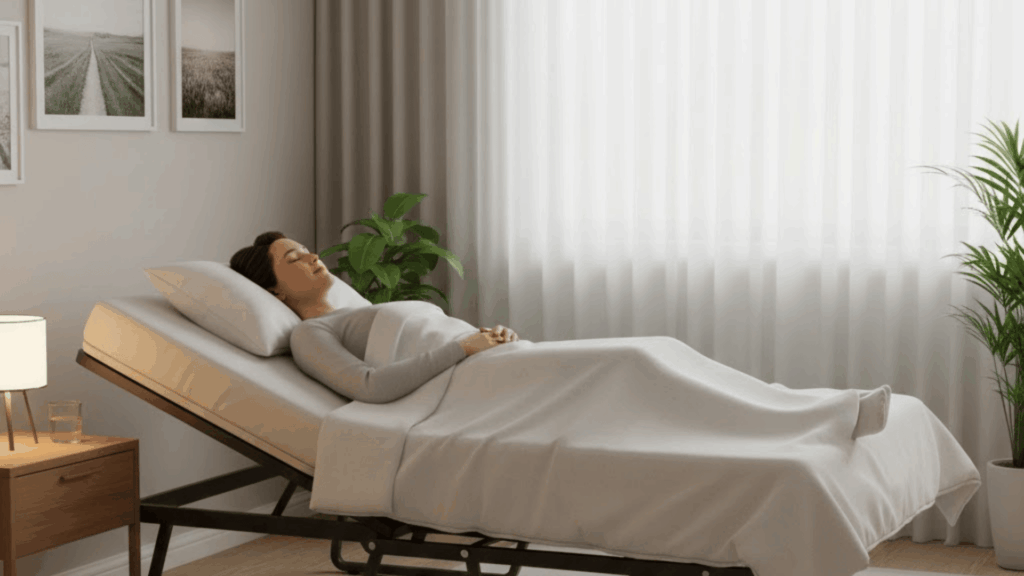
I know how frustrating it can feel when your body just won’t settle at night. You want real comfort that helps you relax instead of fighting with your mattress.
That’s why the zero-gravity bed position has become so popular. It gives your body a calmer way to rest.
In this guide, I’ll walk you through what the position is, how it works, and why many people use it for better sleep.
You’ll also find helpful tips, benefits, and simple steps that make it easy to try the posture at home. The goal is to give you clear, useful information so you can decide if this setup fits your needs.
What is a Zero Gravity Bed?
A zero-gravity bed is an adjustable bed that lifts your head and feet into the zero-gravity position.
The position refers to the posture itself, while the bed is the tool that helps you reach it with the press of a button. This makes it easy to get the right angles without stacking pillows or adjusting your body constantly.
A typical zero-gravity bed includes simple parts that work together to move the base smoothly.
Common components:
- A motorized base
- A remote or phone app
- Head and foot lift controls
- Preset buttons for quick adjustments
Many models also come with helpful extras that make the bed easier to use.
Popular features:
- Memory settings
- Massage functions
- Under-bed lighting
- Dual controls for couples
These details make the bed flexible, comfortable, and easy to adjust for sleep, rest, or reading.
Understanding the Zero Gravity Bed Position
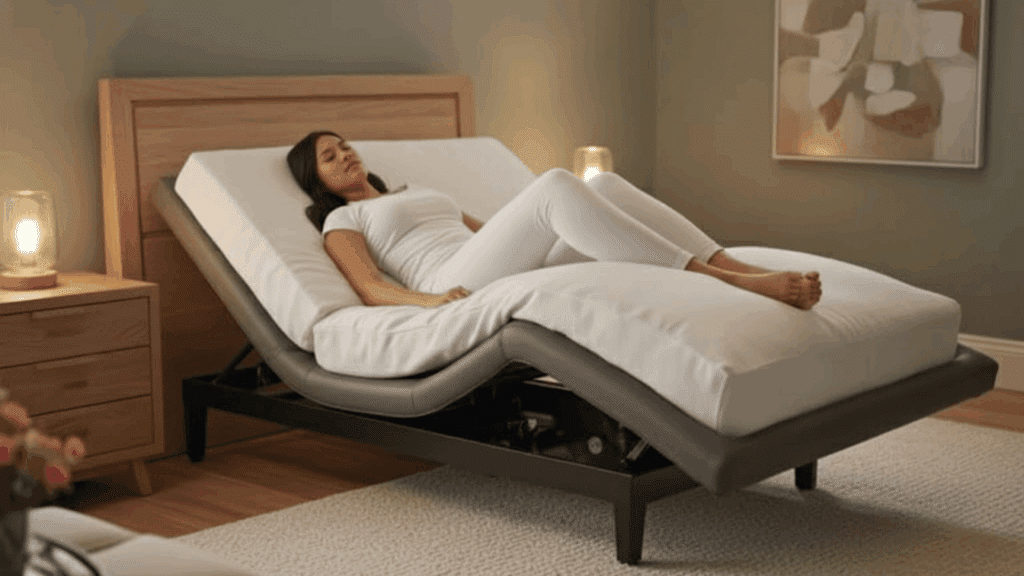
The zero gravity bed position lifts your head and legs at the same time, so your body forms a soft “V” shape. This posture helps your body rest in a balanced way with less pressure on your joints.
It comes from the relaxed posture astronauts use during launch to ease stress on the spine and muscles.
Key features of the position include:
- Your upper body rests at a slight incline
- Your knees sit above your heart
- Your spine falls into a natural curve
- Your thighs and torso form a gentle open angle
This setup feels different from lying flat because the raised angles spread out the weight instead of letting it collect in the lower back, hips, or neck. Many people say it feels calmer and easier on the body.
How the Zero Gravity Bed Position Works for Your Body
This posture changes how your body rests on the mattress, and each angle plays a role in your comfort, breathing, and circulation. Here’s a closer look at what happens when you use it.
1. Weight Distribution and Spine Relief
The zero gravity posture lifts your upper body and legs, which spreads your weight across the mattress instead of placing it on one pressure point.
This helps your spine rest in a natural curve and reduces strain in the lower back. Many people feel less tightness when the body is supported this way.
2. Circulation and Swelling
When your legs rest above your heart, blood can move through your body with less effort.
This position may ease swelling in your feet, ankles, or lower legs, especially after long hours of standing or walking. The gentle lift helps your body recover and relax more comfortably.
3. Breathing and Snoring
A small incline under your upper body helps keep your airway more open at night. This can ease snoring and make breathing feel smoother.
People who struggle with throat tension or blocked airflow may find that this posture gives them a calmer, easier breathing pattern during sleep.
4. Digestion and Acid Reflux
Raising your head and upper body can help prevent acid from moving upward while you rest. This gentle incline may bring relief if you deal with nighttime reflux or a burning feeling in your chest.
Keeping your torso slightly elevated often leads to fewer symptoms and more comfortable sleep.
5. Heart and Blood Pressure Notes
Some people feel less pressure on the heart in this posture because the raised angles support easier blood flow.
If you have a heart condition or blood pressure concern, speak with your doctor before using this setup every night. A slight change in angle can help you find a safer and more comfortable position.
Zero Gravity Bed Position Benefits Summed Up
This posture can support many parts of your body at the same time. The table below shows how each benefit works and why many people feel more at ease in this position.
| Benefit | How It Helps Your Body |
|---|---|
| Pain Relief and Spine Support | The raised angles ease pressure on your back, neck, and stiff joints. This helps your spine rest in a more relaxed position and may reduce daily discomfort. |
| Reduced Swelling | Lifting your legs above your heart helps fluid move through your body with less effort. This may lessen swelling in your feet, ankles, or legs. |
| Better Breathing and Less Snoring | A slight incline under your upper body keeps your airway more open. This can lower snoring and help you breathe with less strain. |
| Digestive Comfort | Raising your upper body can calm reflux and nighttime discomfort by helping stomach acid stay in place while you rest. |
| Better Overall Comfort | With less pressure on your joints and muscles, you may fall asleep faster and wake up with fewer position changes through the night. |
These benefits work together to create a calmer, lighter feeling in your body, which can make rest feel more peaceful and steady.
Is the Zero Gravity Bed Position Right for You?
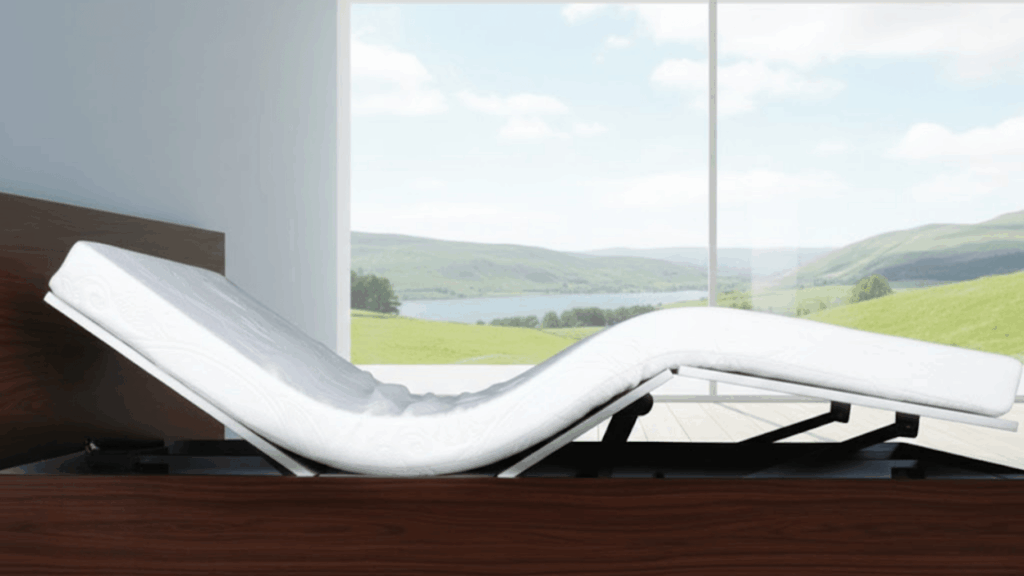
The zero gravity bed position can suit many sleep styles, especially back sleepers, who often feel the most natural support, while side sleepers may prefer softer angles, and stomach sleepers usually need a different setup.
People usually try this posture for back or neck pain, sore muscles, swollen legs, breathing issues, reflux, pregnancy comfort, or simple relaxation before sleep.
It’s important to talk to your doctor if you have a heart condition, severe reflux, major spine concerns, or have recently had surgery.
This posture may not fit your needs if you notice more stiffness, numbness or tingling, worse reflux, or ongoing difficulty getting comfortable at most angles.
How to Set an Adjustable Bed to the Zero Gravity Position
You can reach the zero gravity posture in a few simple ways, depending on the features your bed offers.
- Using a Built-In Zero-G Preset: Press the “Zero G” button on your remote or app. The bed lifts your head and legs automatically to a balanced version of the posture.
- Manual Setup: Raise your head until it feels slightly inclined. Lift your legs so your knees rest above your heart. Adjust both angles until your lower back feels supported.
- Fine-Tuning: Make small changes to the head or leg height. Aim for even pressure across your lower back, hips, and shoulders.
- Saving Your Favorite Positions: Most adjustable beds let you save presets. You can save a nighttime angle, a reading angle, and a more upright angle for relaxing.
These simple steps make it easy to reach a comfortable position that supports your body and helps you rest with less pressure.
How to Mimic the Zero Gravity Position Without a Zero Gravity Bed
If you don’t have an adjustable bed, you can still try a few easy methods to reach a similar posture.
| Method | How It Works |
|---|---|
| Using Pillows or Wedges | Place a firm wedge behind your upper body and a pillow under your knees. This creates a lifted angle that feels close to the zero gravity posture. |
| Zero Gravity Recliners | Some recliners raise your legs and tilt your upper body into a similar shape. This works well for resting or naps, but may not support full-night sleep. |
| Limits of DIY Setups | Pillows may shift, and recliners may not support your spine fully. These options are helpful for testing the posture before investing in a bed. |
These simple options give you a chance to feel how the posture works before deciding if you want a full adjustable setup.
Everyday Tips for Using the Zero Gravity Position
These quick tips help you use the posture comfortably in your daily routine.
- Start with short sessions: to let your body adjust before using it all night.
- Make small angle changes: until your lower back and legs feel relaxed.
- Use the posture during evening wind-down: to loosen muscles and settle your mind.
- Switch angles when needed: if you feel pressure in any spot.
- Pair it with a supportive pillow: so your neck stays comfortable at the incline.
- Lower the leg angle briefly: if your knees begin to feel tight.
- Raise the legs slightly more: on days when your feet or ankles feel swollen.
These simple habits make the posture easier to use and help your body stay comfortable as you settle into it each day.
Bottom Line
I hope this guide gave you a clear look at how the zero gravity bed position works and how it can support your body at night.
You learned how the posture eases pressure, improves comfort, and gives you simple ways to try it at home. You also saw how to adjust the angles so your body feels relaxed and steady.
If you’re trying to build better sleep habits, this position can be a helpful place to start. Take your time, make small changes, and pay attention to what feels right for your body.
If you want more support, I’d love for you to check out my other posts. You may find something that fits your needs and helps you even more.