
When I first started shopping for a bed, I quickly realized that getting the dimensions right isn’t just about fitting a mattress into a room; it’s about creating a comfortable, functional space.
That’s especially true with Twin beds, which have become my go-to recommendation for specific situations.
In this guide, I’ll walk you through everything you need to know about Twin bed dimensions in feet and show you how they stack up against other standard sizes.
Maybe you’re furnishing a child’s bedroom, setting up a cozy guest room, or maximizing space in a compact apartment. Understanding these measurements will help you make the smartest choice for your needs.
What are the Exact Twin Bed Dimensions in Feet?
A standard Twin mattress measures exactly 3.17 feet wide by 6.25 feet long (or 38 inches by 75 inches if you prefer).
I always emphasize these numbers because they’re crucial when planning your room layout.
Now, here’s something I’ve learned from experience: some manufacturers might have slight variations, maybe a half-inch here or there, so it’s worth double-checking the specs before you buy.
If you ever need to convert inches to feet yourself, just divide by 12. For instance, 38 inches ÷ 12 = 3.17 feet. Simple math that saves you from measurement headaches later!
Twin XL Bed Dimensions in Feet
The Twin XL mattress shares the same 3.17-foot width as a standard Twin, but here’s the game-changer: it’s 6.67 feet long (80 inches), giving you an extra five inches of legroom.
I can’t stress enough how important this difference is, especially for taller sleepers.
That additional length is exactly why Twin XLs are the standard choice in college dorms; they accommodate growing teenagers and young adults who’ve outgrown the standard Twin.
The width stays identical, so you’re only gaining length. If you’re over six feet tall or just like stretching out, this extra space makes all the difference in sleep quality.
Twin vs. Twin XL vs. Full: Dimensions Comparison

I’ve put together a clear comparison table so you can see exactly how Twin beds stack up against other popular sizes.
This side-by-side view makes it much easier to visualize what you’re working with.
| Mattress Size | Dimensions (Feet) | Dimensions (Inches) | Best For |
|---|---|---|---|
| Twin | 3.17 × 6.25 | 38 × 75 | Kids’ rooms, single sleepers, tight spaces |
| Twin XL | 3.17 × 6.67 | 38 × 80 | Taller individuals, college dorms |
| Full | 4.5 × 6.25 | 54 × 75 | Solo adults, couples in small rooms |
| Full XL | 4.5 × 6.67 | 54 × 80 | Taller solo sleepers need extra width |
The most striking difference here is the jump from Twin to Full; you gain over a foot of width, which completely changes the sleeping experience.
Meanwhile, the XL versions simply add length without affecting width, making them perfect solutions when height is your main concern.
Who is a Twin Bed Best For?
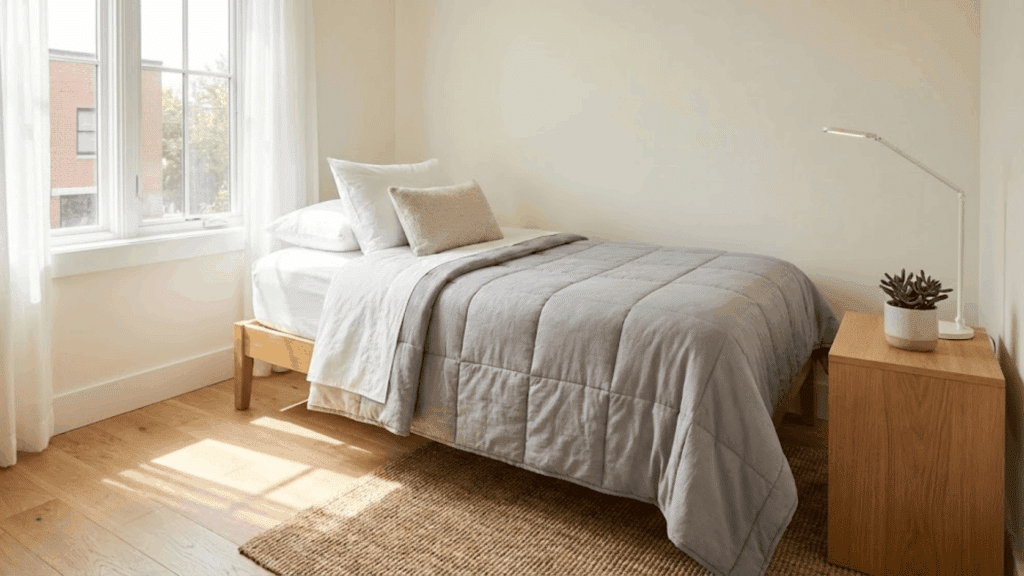
I always tell people that Twin beds aren’t just for children; they’re actually versatile solutions for several specific situations.
Here’s who benefits most from choosing a Twin mattress:
- Children and Teenagers: Perfect size for growing kids without overwhelming their bedroom space
- Solo Adults Under Six Feet Tall: Ideal for individuals who don’t need extra width and want to maximize floor space
- Bunk Bed Setups: Standard choice for stacked sleeping arrangements in shared rooms
- Small Apartments and Studios: Frees up valuable square footage for other furniture and living areas
- Guest Rooms With Limited Space: Accommodates overnight visitors without committing an entire room to a larger bed
If you fall into any of these categories, a Twin bed isn’t a compromise; it’s actually the smartest choice for your situation.
Room Size Requirements for a Twin Bed
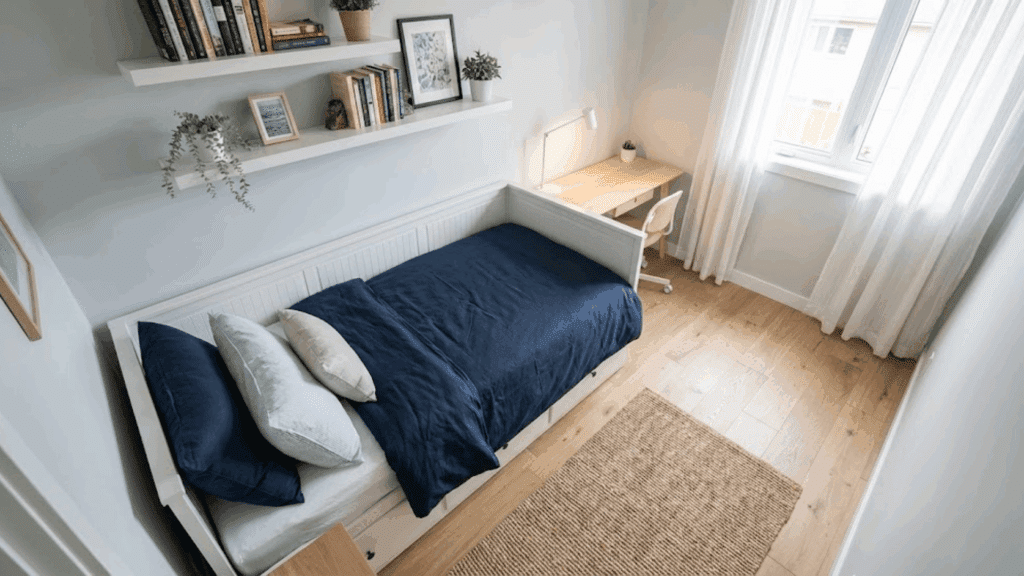
Getting the room dimensions right is just as important as knowing your mattress size. I’ve seen too many people cram a Twin bed into a space that technically fits, but feels claustrophobic once you add other furniture.
Minimum Room Size and Clearance Space
For a Twin bed, I recommend a minimum room size of 7 feet by 10 feet to ensure comfortable movement.
You’ll want at least two feet of clearance on the sides where you’ll be getting in and out of bed; this prevents that awkward shuffle against the wall.
If you’re placing the bed against a wall (which many people do with Twins), make sure the open side has adequate walkway space.
Don’t forget to account for opening drawers, closet doors, and any other furniture you’re planning to include.
Smart Layout Ideas for Maximum Space
I’ve tested countless configurations over the years, and these layout strategies consistently deliver the most functional and spacious feel:
- Position the Bed Against the Longest Wall: Creates maximum usable floor space in the center of the room.
- Try a Corner Headboard Placement: Works beautifully for kids’ rooms, leaving the majority of the floor open for play or study areas.
- Go Vertical With Storage Solutions: Wall-mounted shelves or lofted beds maximize your square footage without eating up floor space.
- Run the Bed Lengthwise in Narrow Rooms: Creates a clear pathway and makes the space feel larger than it actually is.
Benefits of Choosing a Twin Bed
I’ve always appreciated how Twin beds offer practical advantages that go beyond just their compact footprint.
Here are the key benefits that make them such a smart investment:
- Space-Saving Functionality: Frees up valuable floor space for desks, dressers, play areas, or workout zones.
- Most Affordable Mattress Size: A lower price point for both the mattress and bedding means more money for other furnishings.
- Light and Easy to Move: Simple to maneuver during cleaning, rearranging, or when relocating to a new home.
- Versatile Bed Frame Compatibility: Works seamlessly with bunk beds, trundles, and daybeds for multi-sleeper solutions.
- Perfect for Multipurpose Rooms: Allows rooms to function as both bedrooms and home offices, gyms, or hobby spaces.
These advantages make Twin beds one of the most practical choices you can make, especially when you’re balancing budget, space, and functionality.
I find that the easiest way to understand how Twin beds compare to larger mattress sizes is by looking at the actual numbers side by side.
A standard Twin measures 3.17 feet × 6.25 feet, so here’s exactly what you’re gaining with each size upgrade.
| Mattress Size | Width (Feet) | Length (Feet) | Width Difference from Twin | Length Difference from Twin |
|---|---|---|---|---|
| Full | 4.5 ft | 6.25 ft | +1.33 ft wider | Same length |
| Queen | 5 ft | 6.67 ft | +1.83 ft wider | +0.42 ft longer |
| King | 6.33 ft | 6.67 ft | +3.16 ft wider | +0.42 ft longer |
| Two Twins | 6.34 ft | 6.25 ft | +3.17 ft wider | Same length |
| Two Twin XLs | 6.34 ft | 6.67 ft | +3.17 ft wider | +0.42 ft longer |
Note: The common myth that two Twin mattresses equal a King is only true for Twin XLs, not standard Twins. If you’re considering pushing two beds together, make sure you account for that five-inch length difference or go with Twin XL mattresses instead.
Mattress Thickness: What to Expect?
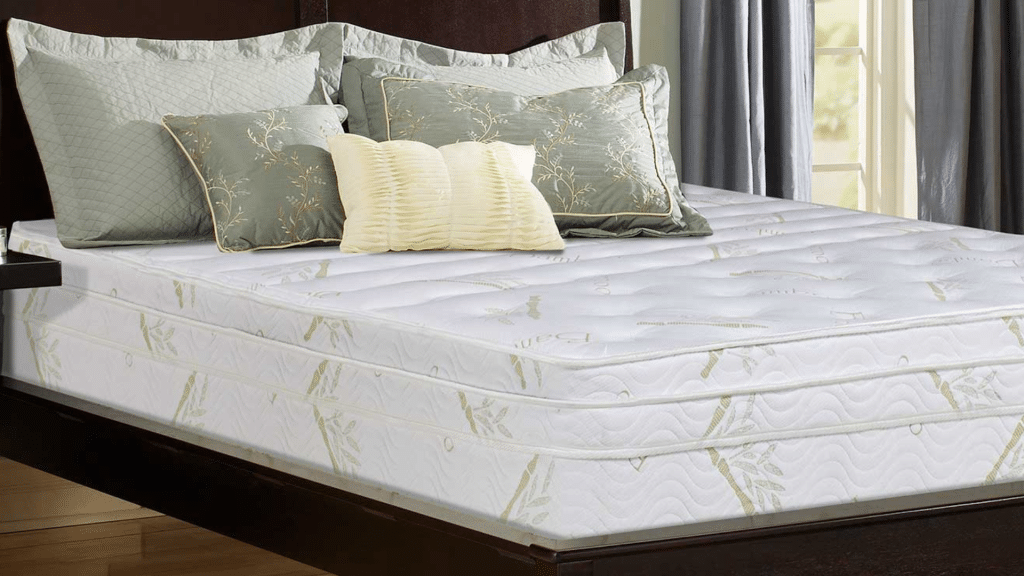
Most Twin mattresses range from 0.67 to 1 foot thick (8 to 12 inches), with some specialty models going even thicker.
I’ve noticed that this thickness directly impacts two important factors: your bedding fit and overall bed height. Deeper mattresses require deep-pocket fitted sheets; standard sheets simply won’t stretch over a thick mattress.
The thickness also affects how high your bed sits off the ground, which matters for kids climbing in and out safely or for adults who prefer easier access.
If you’re adding a mattress topper, factor that extra height into your measurements before buying sheets or bed frames.
Bedding Sizes for Twin and Twin XL
Getting the right bedding size prevents that frustrating moment when your sheets don’t fit.
Here’s what you need to know:
| Bedding Type | Twin | Twin XL |
|---|---|---|
| Fitted Sheet Depth | 0.67–1.17 ft (8–14 inches) | 0.67–1.17 ft (8–14 inches) |
| Comforter/Duvet | 5.67 ft × 7.17 ft (68 in × 86 in) | 5.67 ft × 7.17 ft (68 in × 86 in) |
The biggest mistake I see people make is buying Twin fitted sheets for a Twin XL mattress; they’ll pop off the corners constantly. Always check your mattress tag for the exact dimensions before shopping.
Measure your mattress thickness, too, then buy sheets with pocket depths at least one inch deeper than your measurement for a secure fit.
How to Choose the Right Twin Bed?
Choosing the right Twin bed goes beyond just getting the dimensions correct; you need to consider materials, support levels, and your budget.
Here’s what I focus on when helping people make this decision:
- Memory Foam: Contours to body shape and isolates motion, ideal for kids and lightweight adults who need pressure relief
- Hybrid Mattresses: Combine foam comfort with innerspring support, offering balanced performance for growing teens and adults
- Latex Options: Naturally breathable and durable, perfect for those seeking eco-friendly materials with responsive support
- Innerspring Mattresses: Traditional coil construction provides firm support at budget-friendly prices, great for kids and guest rooms
- Firmness Considerations: Kids do well with medium-firm, teens benefit from medium support, and adults should choose based on sleep position and weight
Budget-wise, Twin mattresses typically range from a few hundred to over a thousand dollars, making them the most affordable option compared to larger sizes.
This price advantage extends to bedding, frames, and accessories, giving you more flexibility to invest in quality where it matters most.
Wrapping It Up
I hope this guide has cleared up any confusion about Twin bed dimensions in feet and helped you understand which size works best for your situation.
The measurements might seem straightforward, but knowing exactly how a Twin compares to other options makes all the difference in creating a comfortable, functional space.
From kids’ bedrooms to compact apartments, the right mattress choice impacts daily comfort more than you might think.
Have questions about choosing your Twin bed, or want to share your own experience? Drop a comment below; I’d love to hear what worked for you and answer any lingering concerns you might have.