
I used to think any room could handle a king bed if I just shoved things around. Then I tried it and learned fast that inches matter.
If you are searching bedroom size for king bed, you probably want a straight answer, not guesswork.
The hard part is that a room can look big on paper, but doors, closets, and drawers can steal the space you need to walk and live in it.
I will break down the minimum sizes that work, what feels comfortable, and a quick way to test your layout before you commit. That way, the bedroom size for a king bed stops being a mystery and becomes a simple plan.
Quick Answer (Minimum vs. Comfortable)
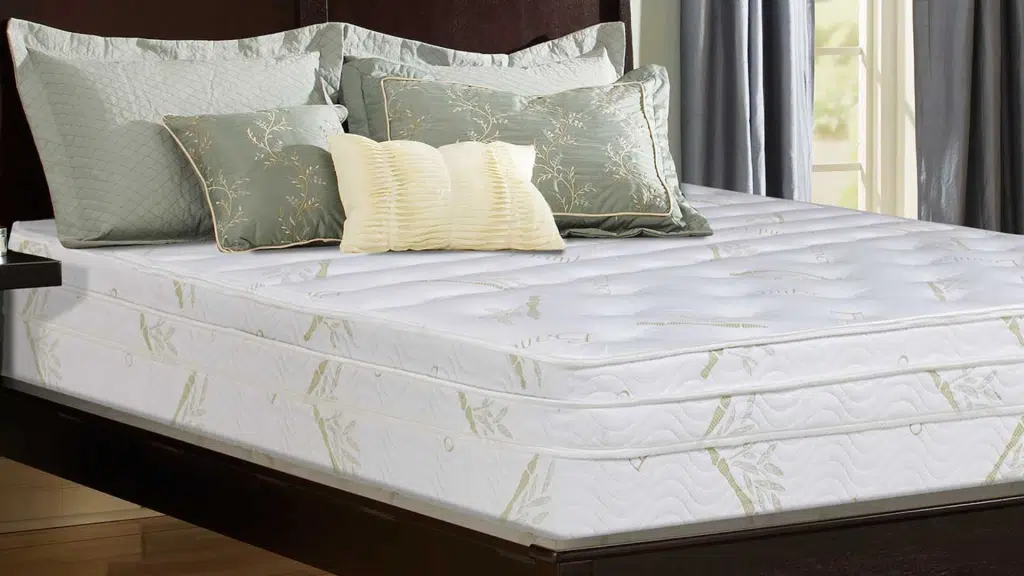
A standard king mattress is 76 inches wide and 80 inches long, so you need a room that gives you walking space, too. The tight minimum is about 12 ft x 10 ft, but it will feel cramped and limit furniture.
A common functional minimum is 12 ft x 12 ft, which usually lets you add nightstands and move around with less stress.
A comfortable target is 13 ft x 13 ft or larger, especially if you want a dresser or a small chair. Doors and closets can change what “fits.”
Minimum Room Size Guidelines (Based on Clearance)
When you plan for a king bed, the room size is only half the story. The other half is clearance. Clearance is the open space you keep for walking, making the bed, opening doors, and pulling out drawers.
Use the sections below as a simple size guide, then compare them to your room layout.
Absolute Minimum (Fits, But Tight)
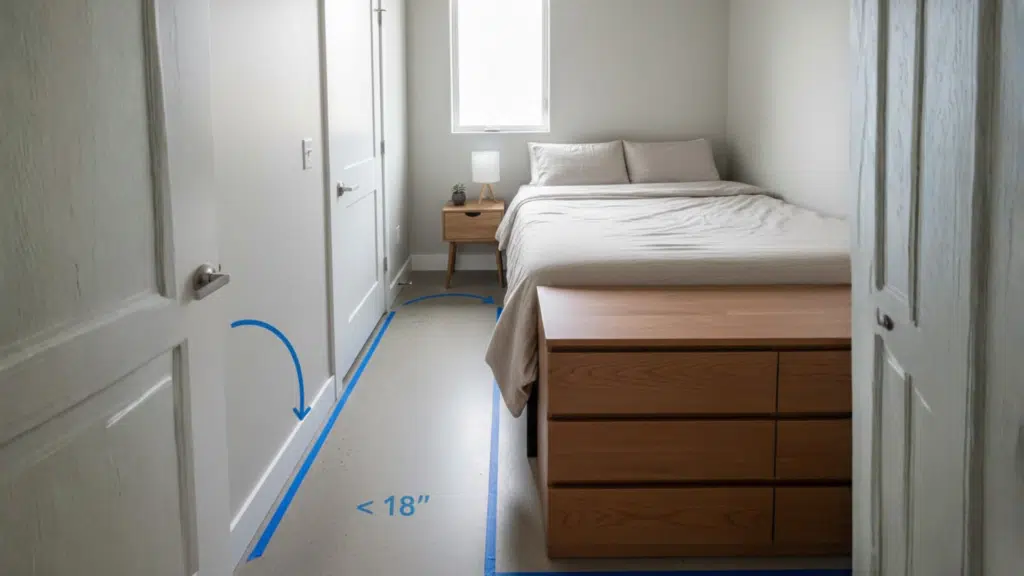
A 12 ft x 10 ft room can hold a king mattress, but it often forces tradeoffs. You may need to push the bed close to a wall, which can block one side. Nightstands may need to be very small, or you may skip them.
Walk space can feel narrow, and a dresser may not fit without blocking the path. Closet access and door swing can also become a problem quickly.
Functional Minimum (Works Day To Day)
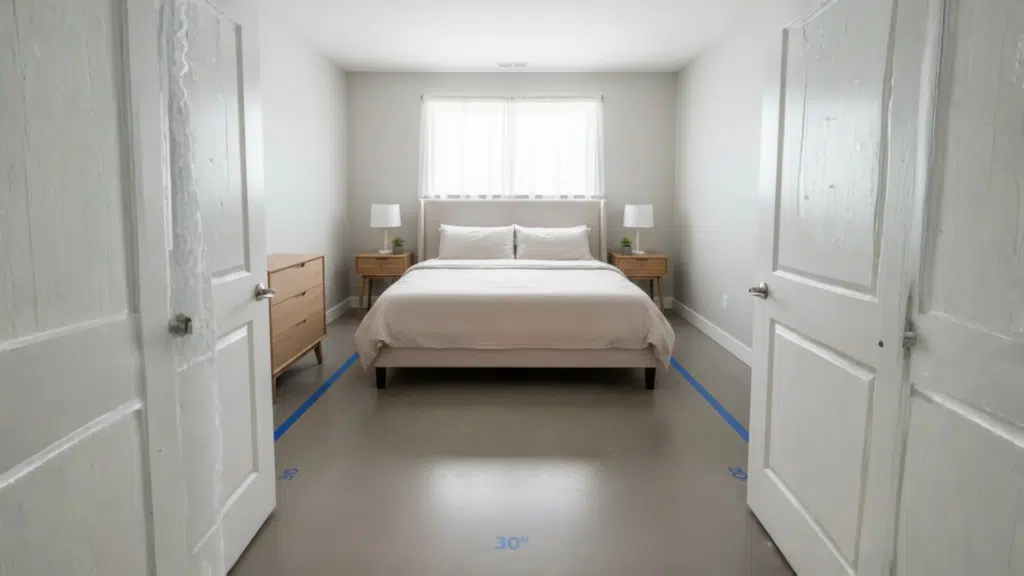
A 12 ft x 12 ft room is the common baseline that feels more usable. You can usually place the bed with space on both sides, add two small to medium nightstands, and still move around without constant bumping.
A dresser can work if it is not too deep and you plan drawer space. This size also gives you more options to center the bed, which helps the room feel balanced.
Comfortable Range (Best For Most Homes)
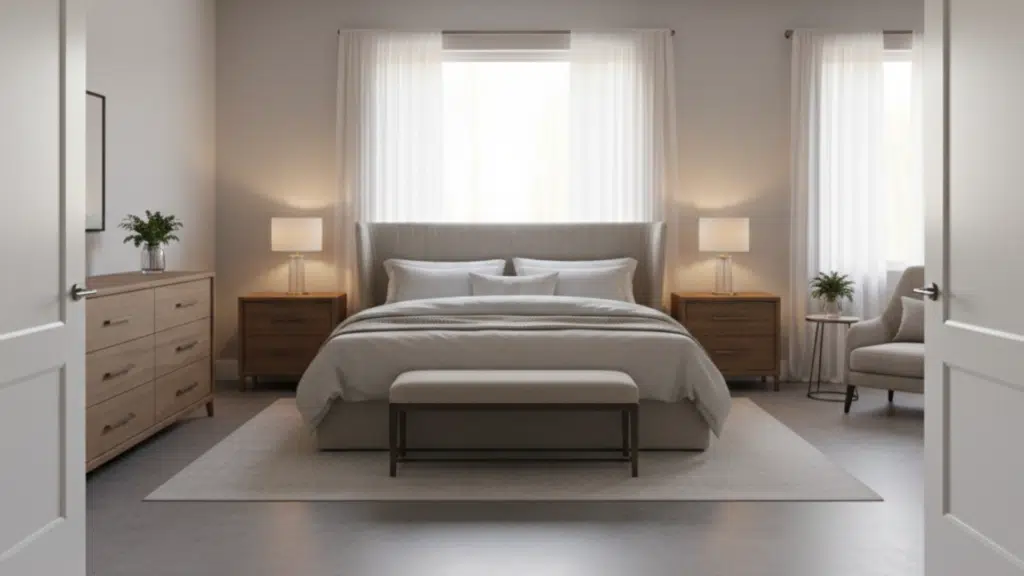
A 13 ft x 13 ft or larger room gives you the breathing room most people want with a king. You can keep wider walk paths, use normal-size nightstands, and fit a dresser with fewer layout compromises.
You may also have space for a bench at the foot of the bed or a small chair, depending on door and closet placement. This range makes daily use easier and keeps the room from feeling packed.
Clearance Rules That Matter Most
Clearance rules keep a king bed setup usable day to day, so you can walk, make the bed, and open doors and drawers.
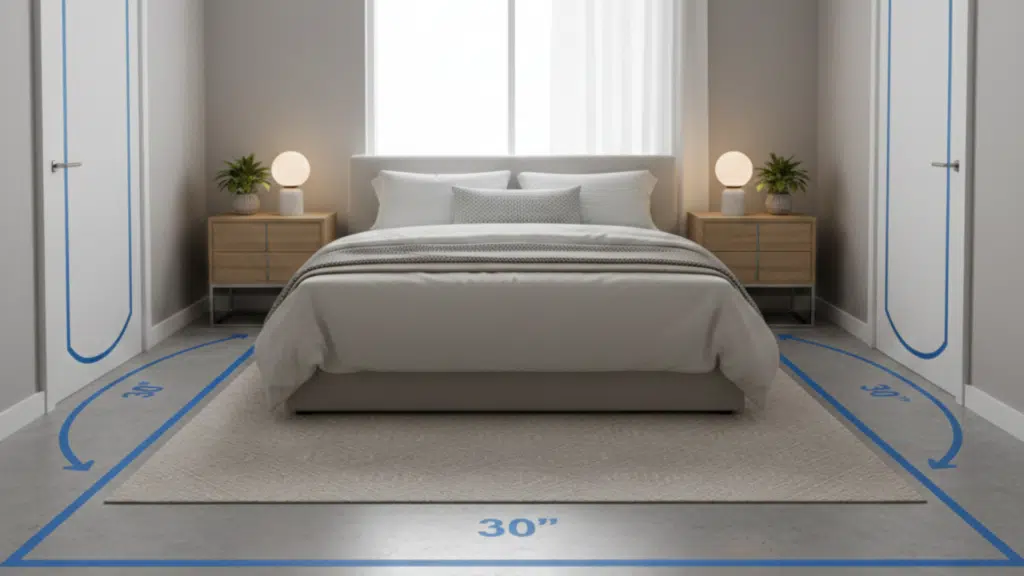
- Side Walk Space Rule: Keep 30 inches of open space on each usable side of the bed.
- One-Sided Bed Rule: If one side must go near a wall, keep the other side at 30 inches if possible.
- Foot of Bed Rule: Keep 24 to 30 inches open at the foot of the bed for walking and making the bed.
- Dresser Drawer Rule: Measure dresser depth plus fully opened drawer length, then keep a clear standing lane.
- Nightstand Rule: Pick nightstands that do not shrink your walking lane below your target clearance.
- Closet Access Rule: Leave enough space to stand and reach inside without the bed or nightstands blocking you.
- Door Swing Rule: Open the door fully and keep that swing area clear of bulky furniture.
- Two-Person Rule: If two people use the room daily, prioritize wider walk lanes on both sides.
King Bed Size Basics (Mattress vs. Frame)
A king bed can take up more space than you expect, since the mattress size is not the same as the full bed setup.
| Item | Standard King (Most Common) | California King |
|---|---|---|
| Mattress Width | 76 in (6 ft 4 in) | 72 in (6 ft) |
| Mattress Length | 80 in (6 ft 8 in) | 84 in (7 ft) |
| Best For | More width, shared sleeping space | Taller sleepers, slightly narrower rooms |
| Typical Frame Add-On (Each Side) | +2 to +6 in | +2 to +6 in |
| Typical Extra Length From Frame | +2 to +10 in | +2 to +10 in |
| Total Bed Footprint (Typical Range) | ~80–88 in wide / ~82–90 in long | ~76–84 in wide / ~86–94 in long |
Always measure the full outer edge of your bed frame, then plan a clear walking space using that number.
Calculate Usable Space In Your Room
Measuring usable space helps you avoid bad surprises, since doors, closets, and built-ins can shrink your real floor area.
Subtract Door Swing And Closet Lanes
Start by measuring your room wall-to-wall, then mark the areas that must stay clear. Open the bedroom door fully and note the swing path on the floor, since that space cannot hold a nightstand or dresser.
Do the same for any closet doors. Hinged closet doors need a clear pocket to open, while sliding doors still need a clear lane so you can stand there and reach inside.
Also mark window zones, radiators, and built-ins. These no-go zones often decide if a king feels tight.
Simple Usable Space Formula
Use a simple approach that matches real use.
- Measure your room length and width
- Multiply them to get the full room area
- Mark every zone you cannot block
- Subtract the door swing rectangle
- Subtract the closet access lane
- Subtract any built-in footprint
- The space left is your usable floor area
Formula: Usable Space = (Room Length × Room Width) − Door Swing − Closet Lane − Built-Ins
If your usable width cannot hold the bed footprint plus a walking lane, the room will feel tight. This method also helps you pick smaller nightstands or a slimmer dresser when needed.
Tape Test Method
The tape test helps you confirm fit before you buy anything. Use painter’s tape to outline your mattress size on the floor, then add another outline for the bed frame footprint if your frame is larger.
Next, tape your target walk lanes on both sides and at the foot of the bed. Mark door swing and closet zones so you see conflicts early.
Place boxes where nightstands and a dresser would go, then walk the paths like you will at night. If you bump into corners, revise the layout.
Layout Options For Smaller Rooms
Smaller rooms can still handle a king bed if you choose a layout that protects walking space and prevents door or drawer clashes.
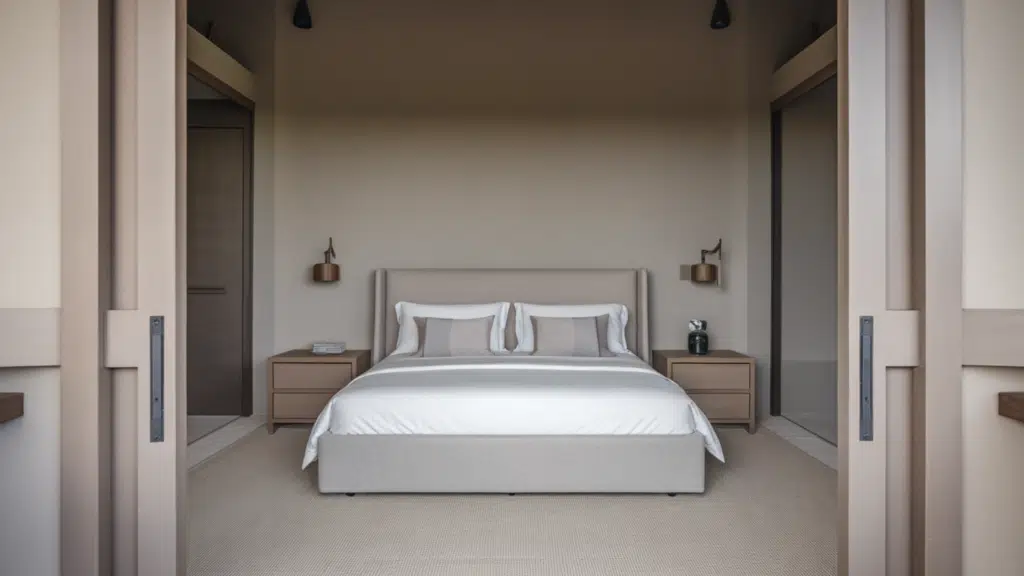
- Centered Bed Layout: Works best when you have enough width for two side walking lanes and two nightstands.
- One Side Against The Wall: Saves space fast, but one person loses easy access, and making the bed is harder.
- Diagonal Bed Placement: Can solve odd door or closet issues, but it often wastes corners and limits furniture.
- Floating Nightstands or Wall Shelves: Keep the floor clearer and make tight lanes feel less blocked.
- Wall-mounted lights: Free up nightstand space and help you avoid bulky lamps in narrow spots.
- Use a slim dresser or a tall chest: it reduces depth so drawers do not block your main path.
- Skip A Foot Bench If Tight: Keep the foot lane open first, then add extras only if space allows.
A good small-room layout protects your main walkway first, then fits furniture around that clear path.
Rug And Lighting
A rug and smart lighting can make a king bedroom feel easier to use without taking up extra floor space.
Rug Size Basics
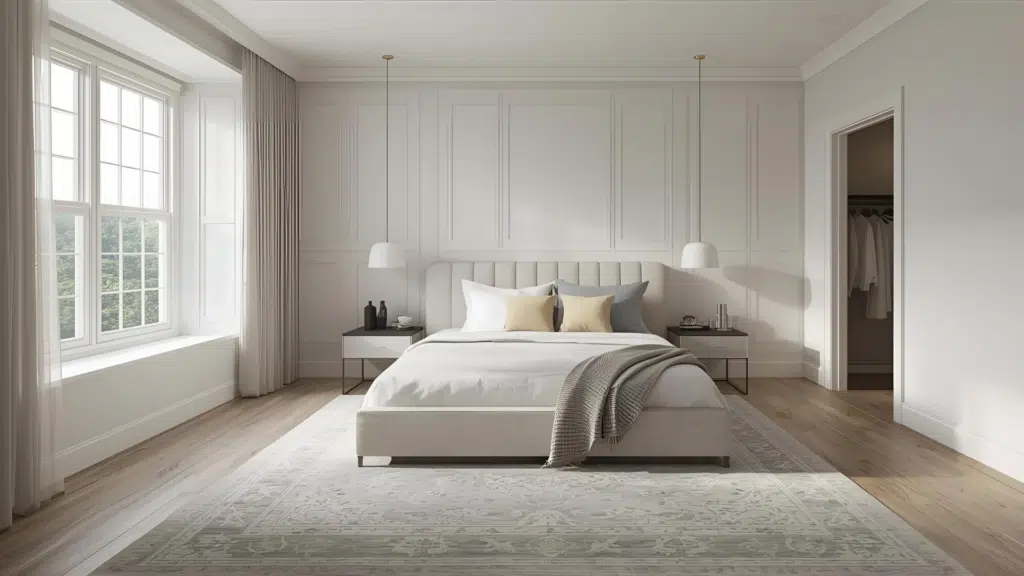
Start by picking a rug that reaches beyond the sides of the bed, so your feet land on it when you get up. In tighter rooms, a rug that sits under the lower two-thirds of the bed can work better than a huge rug that blocks doors.
If your room allows, choose a rug that extends past the foot of the bed, too, especially if you have a bench. Always check door swings, since a thick rug can catch doors.
Sconce Placement Basics
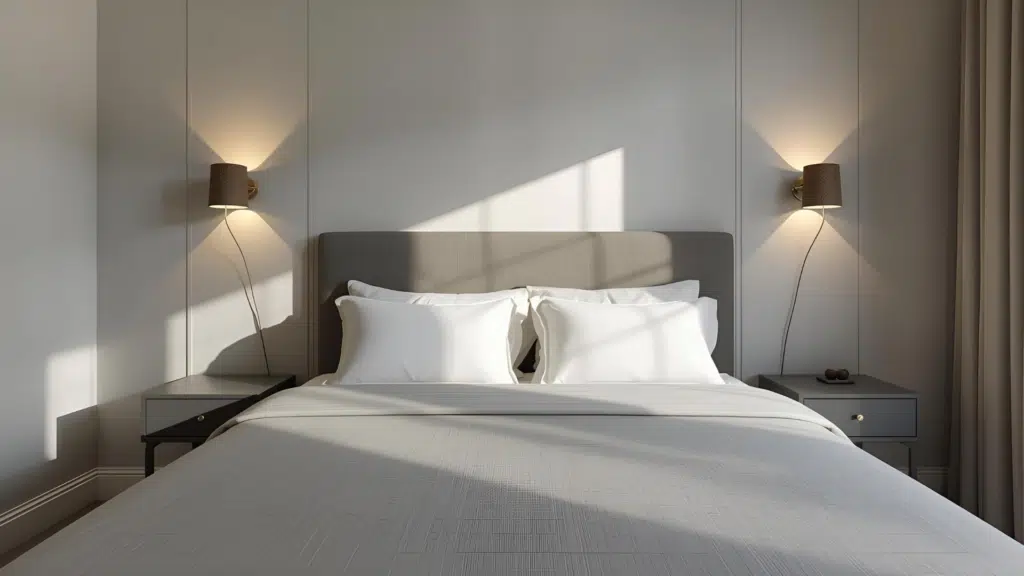
Wall lights help when nightstands are small because they clear tabletop space and reduce clutter. Place a sconce near the headboard so the light falls over your pillow and reading area, not straight into your eyes.
Aim to mount both sides at the same height so the bed looks balanced. If you do not want wiring work, plug-in sconces can still look neat when you hide the cord with a simple cover.
Conclusion
A king bed can work well, but the room has to support real walking space, not just the mattress.
If you remember one thing, it is this: plan for open lanes, door swings, and drawer space before you decide the bed is “fine.”
Once you measure your usable floor area and do a tape test, you can spot problems early and pick a layout that feels normal day to day.
I want you to feel confident when you place the bed, add nightstands, and choose a dresser that fits your space.
What is your room size, and where do your doors and closets sit? Before you go, check out my other bedroom layout blogs and keep building your plan.