
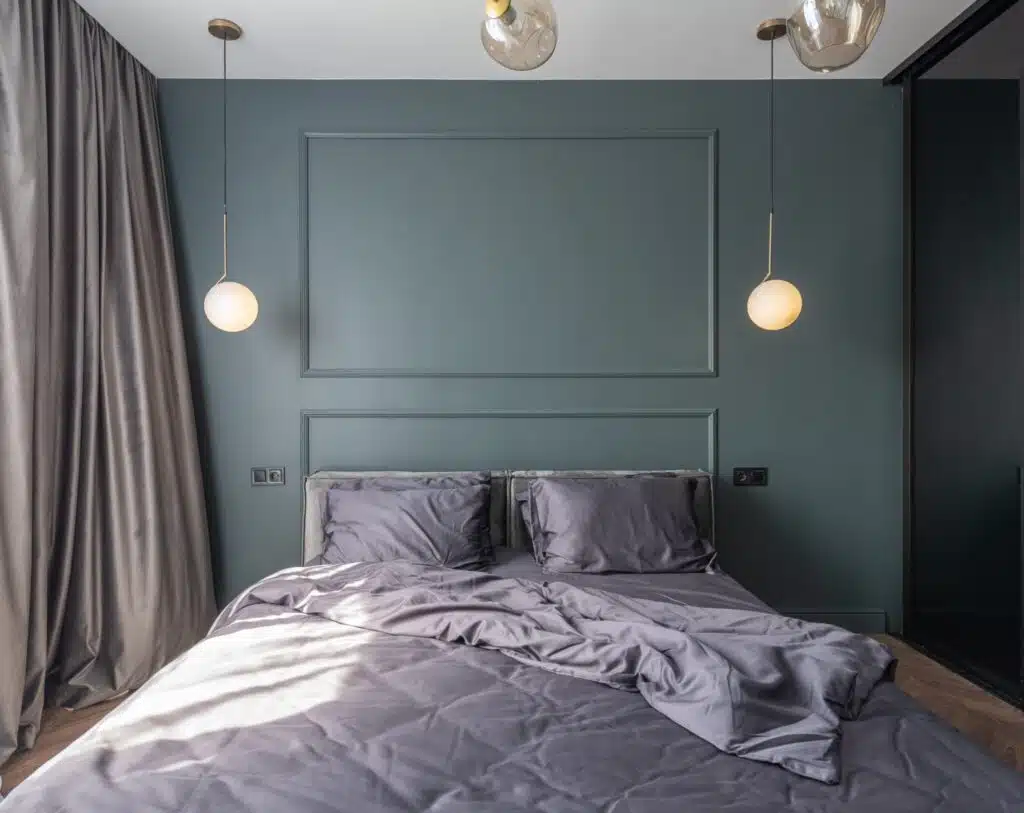
A noisy bedroom is one of the most common and most fixable sources of poor sleep, whether the disruption comes from street traffic, a neighbor’s television through a shared wall, or a household member’s schedule that doesn’t match the rest of the family’s. The good news for homeowners considering this project is that soundproofing a bedroom is one of the more affordable renovation categories available, and understanding what actually drives the cost helps set realistic expectations before getting quotes.
Soundproofing a standard 10 by 10 foot bedroom typically costs $300 to $1,500 for a basic to mid-range project, with most homeowners investing between $1,000 and $2,000 for a result that meaningfully improves comfort without extensive structural work. On a broader room-size basis, national averages put a full soundproofing project between $1,036 and $2,717, averaging around $1,864, or $10 to $30 per square foot of treated surface depending on materials and method.
ACON Engineering is a construction cost estimation and preconstruction consulting firm and its Renovation Estimating Services help homeowners understand exactly what a specific soundproofing project will cost before committing to materials or a contractor, particularly useful for projects that go beyond simple acoustic panels into wall, ceiling, or window modifications. This guide breaks down what drives bedroom soundproofing costs in 2026, which methods deliver the most value, what determines whether a project stays simple or becomes a bigger renovation, and how to get an accurate estimate before starting.
What Does It Cost to Soundproof a Bedroom by Method?
Soundproofing cost varies considerably depending on which surfaces and methods are involved, and understanding this breakdown is the most useful starting point for budgeting.
Walls typically cost $100 to $2,000 depending on method. The most affordable approach uses hung acoustic panels or heavy blankets, a straightforward and relatively inexpensive option. Upgrading the wall itself costs considerably more: standard drywall runs $1.50 to $3.50 per square foot installed, while specialized soundproof drywall costs $30 to $100 per 4 by 8 foot panel for materials alone, before installation labor.
Insulation is one of the more effective interventions for meaningful noise reduction. Spray foam insulation costs $1.50 to $5.00 per square foot installed, while blown-in fiberglass runs $1.00 to $2.80 per square foot, with open-cell spray foam and blown-in fiberglass both considered among the best materials specifically for sound dampening rather than just thermal performance.
Flooring adds $100 to $1,000 depending on material, with carpet and rugs representing the most effective and most affordable soundproof flooring options. Installing new carpet runs $2 to $8 per square foot, or $200 to $1,000 for a standard 10 by 12 foot room, and a simple area rug is one of the easiest and cheapest DIY soundproofing interventions available.
Ceilings average $150 to $1,200 depending on scope. A few acoustic tiles installed by the homeowner cost far less than a full ceiling removal and reinstallation with new insulation and drywall, which runs closer to $2 to $4 per square foot installed, or $300 to $600 for a standard 12 by 12 foot room.
Why Do Soundproofing Quotes Vary So Widely?
Two bedrooms of identical size can end up with meaningfully different soundproofing costs and meaningfully different contractor quotes, and the reason usually comes down to where the sound is actually coming from and how it travels, not just the room’s dimensions.
Sound moving through framing, joists, or connected building surfaces represents a genuinely different and more complex problem than sound leaking through a door gap or a thin window. A quote that only addresses visible surfaces without diagnosing the actual sound path can look inexpensive upfront and still fail to solve the underlying noise problem requiring a second round of work later. This is where getting an independent project specific estimate matters most.
Professional construction estimating services from ACON Engineering produce trade-level cost breakdowns for larger-scope soundproofing projects, particularly those involving structural transmission through shared walls, ceilings connected to floors above, or window replacement, covering framing, insulation, drywall, and window scope as a complete picture rather than a single bundled number.
For homeowners dealing with a persistent noise problem that basic acoustic panels haven’t solved, this level of diagnostic and cost detail is what separates a project that actually works from one that requires a second attempt.
What Determines How Much Soundproofing You Actually Need?
Not every bedroom needs the same level of intervention, and understanding the tiers helps avoid both underspending on a problem that needs more work and overspending on a room that only needs a modest fix.
For most homes, a noise reduction of 25% to 50% is genuinely sufficient for comfortable sleep, and this level is achievable without extensive construction. Investing $1,000 to $2,000 in targeted soundproofing, typically covering the noisiest wall, upgrading window coverings, and adding a door sweep or seal, delivers strong value and noticeable results for most bedrooms.
Basic soundproofing jobs run around $10 per square foot, meaning a standard bedroom might cost an estimated $1,300 for this tier. Intermediate soundproofing, which accounts for the average scope of most residential jobs and eliminates most noise from most spaces, runs closer to $15 per square foot.
Full soundproofing, designed to eliminate essentially all incoming and outgoing sound, can reach $30 per square foot or more, and represents a meaningfully larger investment reserved for situations with severe, persistent noise problems or specific use cases like a home recording space.
It is technically possible to soundproof a room almost completely, but doing so is cost-prohibitive for most homeowners relative to the marginal benefit. For a typical bedroom noise problem, be it street traffic, a shared wall, or a household member’s mismatched schedule, the intermediate tier usually represents the best balance of cost and comfort.
For homeowners who experience specific sleep disruptions related to timing or environment, understanding common patterns in disrupted sleep can help clarify whether noise is the primary issue worth addressing through soundproofing, or whether other factors are contributing as well.
When Does Soundproofing Become a Bigger Renovation Project?
Some soundproofing needs stay contained to a straightforward, single-weekend project. Others expand into genuine renovation territory, and knowing the difference upfront helps set an accurate budget rather than discovering scope creep partway through.
Window replacement is one of the more common ways a soundproofing project grows in scope and cost. If the primary noise source is street traffic or an outdoor source entering through existing windows, soundproof curtains or window inserts may solve the problem at minimal cost. But if the windows themselves are older, single-pane, or poorly sealed, genuine noise reduction may require full window replacement, which moves the project from a simple treatment into a meaningfully larger construction scope with its own permitting and installation considerations.
Structural transmission through connected building surfaces, shared walls in an attached home, floors connected to spaces above, or HVAC ductwork carrying sound between rooms, represents the most complex category of soundproofing project.
These issues typically cannot be solved with surface treatments alone and often require opening walls or ceilings to add mass-loaded vinyl, additional insulation, or resilient channel systems that decouple the wall or ceiling from the structure transmitting the sound. This is a meaningfully different scope than hanging acoustic panels, and the cost difference reflects that.
How Do You Get an Accurate Estimate for Your Specific Soundproofing Project?
Every figure in this guide represents a national average built from a wide range of room sizes, noise sources, and soundproofing methods. The specific bedroom a homeowner is trying to quiet has its own noise source, its own wall and window construction, its own connection to adjacent spaces, and its own severity of noise problem, all of which affect what genuinely solving it will cost.
ACON Engineering’s renovation estimating team produces a project-specific cost breakdown based on the actual scope required, whether that is a simple acoustic panel and door seal treatment or a more involved project addressing structural sound transmission through walls or ceilings.
This includes accurately diagnosing which surfaces are actually carrying the sound before pricing the solution, since treating the wrong surface is one of the most common ways homeowners end up paying twice for the same noise problem. For homeowners comparing quotes from multiple soundproofing contractors, this kind of independent estimate provides the reference point needed to confirm that a bid actually addresses the diagnosed sound path rather than just the most visible or convenient surface to treat.
Conclusion
Soundproofing a bedroom in 2026 typically costs $1,000 to $2,000 for a project that delivers meaningful, comfortable noise reduction, with basic treatments starting around $300 to $400 and full, near-complete soundproofing reaching $30 per square foot or more for the most extensive cases. The biggest cost driver isn’t room size, it’s correctly diagnosing where the sound is actually coming from and how it’s traveling into the room, since treating the wrong surface wastes money without solving the underlying problem.
For homeowners dealing with a persistent noise issue, particularly one involving shared walls, connected ceilings, or older windows, getting a project-specific estimate before committing to a contractor is the most reliable way to make sure the investment actually solves the problem. ACON Engineering’s renovation estimating and construction estimating services exist to provide exactly that level of accuracy for bedroom soundproofing projects of any scope.