
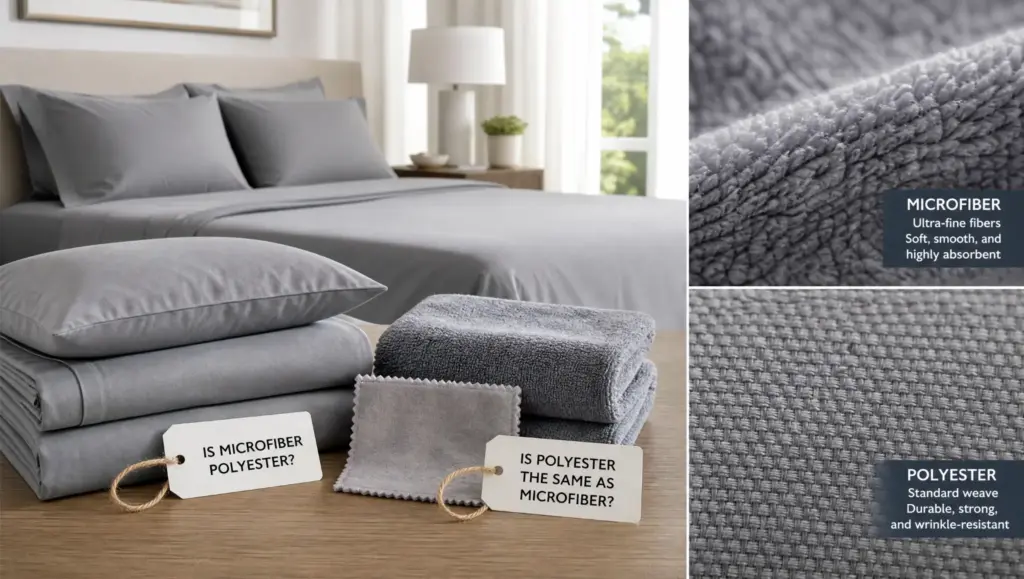
You check a soft sheet, towel, or cleaning cloth, and the tag says polyester. But the product name says microfiber, so the label suddenly feels confusing.
That is where is microfiber polyester comes in. Many microfiber items are made from polyester, but the words do not mean the same thing.
Polyester tells you the material. Microfiber tells you that the fibers are extremely fine. Once you know that split, it becomes easier to judge softness, absorbency, drying speed, heat, and care.
I like starting here because it helps you read labels clearly before choosing sheets, towels, clothing, or cleaning cloths without second-guessing the product name.
The Label Says Polyester, but the Product Says Microfiber
This confusion arises because product names and care labels serve different purposes.
A product page may say microfiber because that word tells you about the fabric’s fine fibers, soft feel, or cleaning power. A care label may say polyester because that tells you what the fibers are made from. Both can be true.
A sheet set can be sold as microfiber and still list 100% polyester on the tag. A cleaning cloth can be called microfiber and is made of polyester and polyamide. A blanket can feel soft because it is made from very fine polyester fibers. The same mix-up shows up with bath linens, since most people never stop to check how towels are made before assuming the softest option is automatically cotton.
So the key difference is simple: microfiber refers to fiber size, while polyester refers to fiber content.
Is Microfiber Polyester?
Yes, microfiber is often made from polyester. Many microfiber sheets, blankets, towels, and cleaning cloths use polyester because it is strong, light, affordable, and easy to wash. Anyone weighing softness against price is usually better off comparing sheet fabric options before settling on a set, since the fiber size can matter as much as the material itself.
Some microfiber products are made from 100% polyester. Others use polyester mixed with polyamide, which may also be listed as nylon. That mix is common in cleaning cloths because it helps the cloth hold moisture and pick up dust better.
Microfiber is usually synthetic. It is not the same as cotton, linen, wool, or silk. The word microfiber does not always tell you the exact material. It tells you the fibers are very fine, and in many home products, those fine fibers are polyester.
Is Polyester the Same as Microfiber?
No, polyester is not the same as microfiber. Polyester is the material. Microfiber is the fiber size.
That means polyester can be made into microfiber, but not every polyester fabric is microfiber. A polyester jacket, curtain, shirt, or bedsheet may use thicker fibers. A microfiber product uses much finer fibers, which changes how the fabric feels and works. The easiest way to remember it is this:
Polyester tells you what the fiber is made from. Microfiber tells you how fine the fiber is. That is why one product can use both words honestly. If you are still deciding between a synthetic and a natural fiber, remember that fiber size can change how either one performs, even within the same material.
What Is Microfiber Made From?
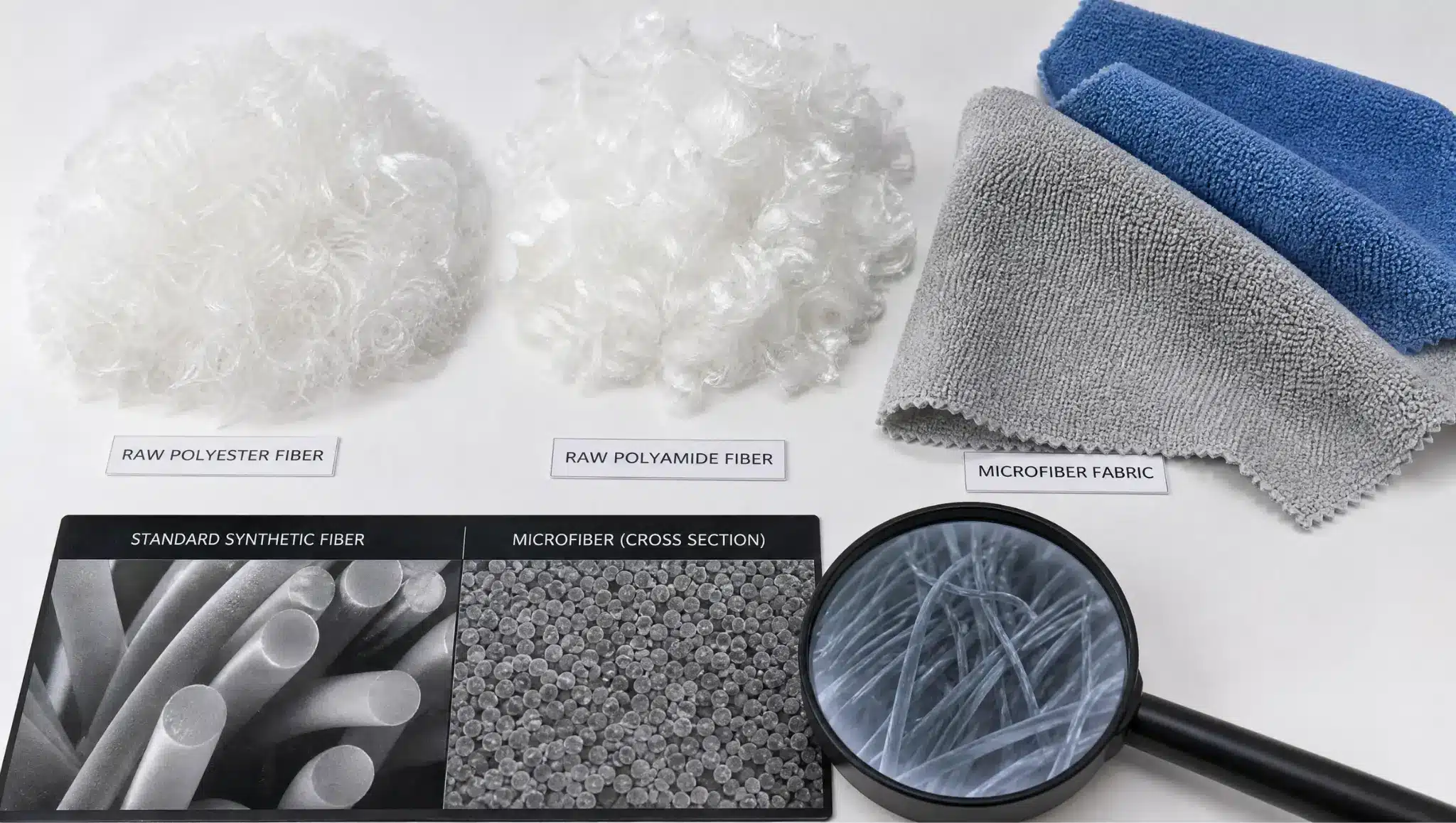
Microfiber is usually made from synthetic materials. The most common ones are:
- Polyester
- Polyamide
- Nylon
- Polyester with polyamide
- Polyester with nylon
In bedding, microfiber is often 100% polyester. That is why many microfiber sheet labels only mention polyester. Reading the fiber content this closely is worth the extra minute, especially if you are also picking sheet material wisely for a bedroom that runs warm or cold.
In cleaning cloths, microfiber often uses a polyester-polyamide mix. In many split microfiber cloths, polyester adds structure, while polyamide can help with absorbency and grip. This is why many cleaning cloths pick up dust, fingerprints, and light moisture well.
Microfiber is often defined as a fiber finer than 1 denier. In simple terms, each strand is much thinner than standard fabric fibers. That fine size is what gives microfiber its smooth feel and useful cleaning power.
Why Microfiber Feels and Performs Differently
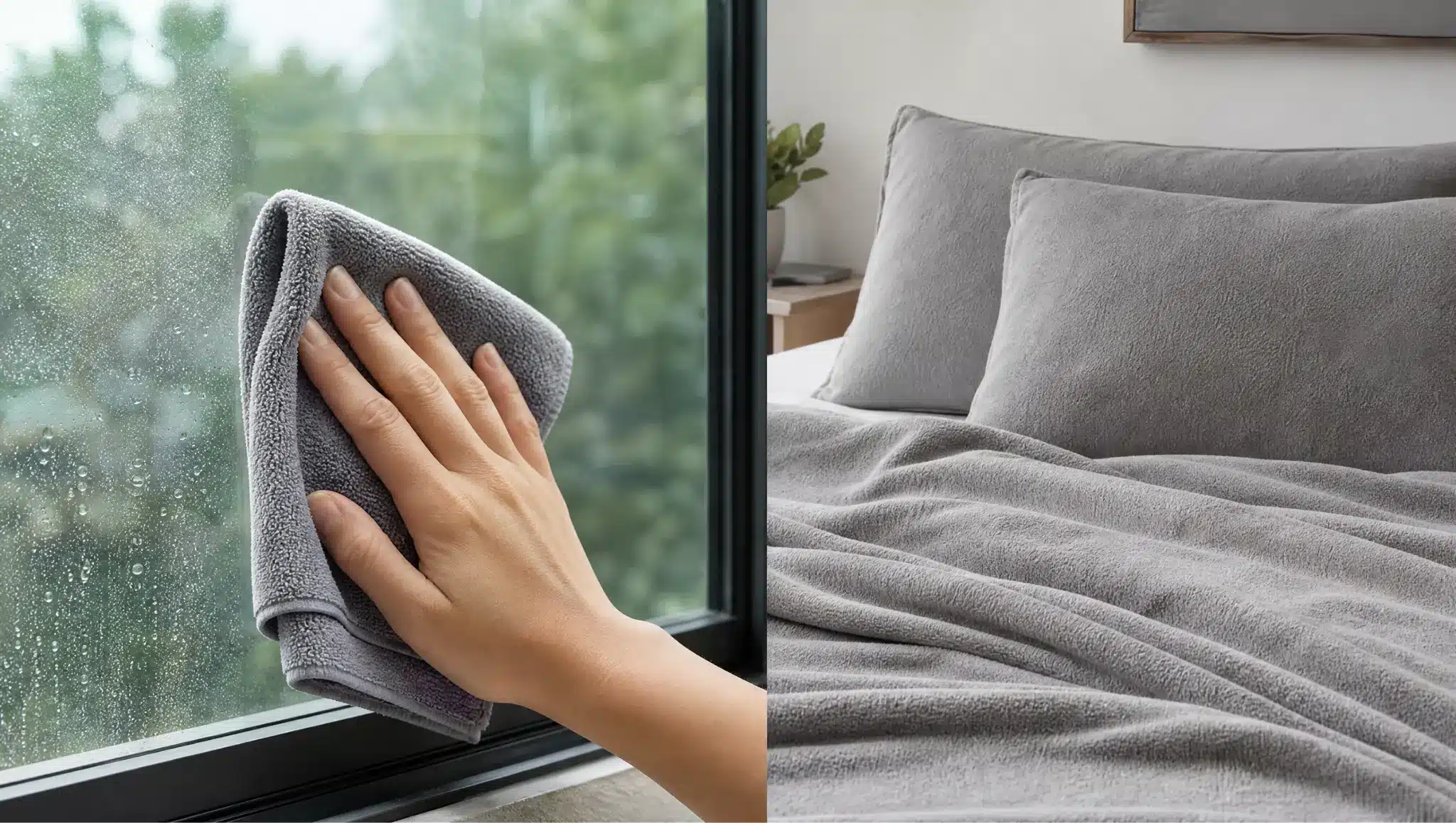
Microfiber performs differently because its fibers are very fine. This gives the fabric more surface area, so it can feel softer, hold moisture better, and grip dust more easily than many regular polyester fabrics.
1. Softness
Microfiber often feels smooth, soft, or brushed against the skin. That is why it is common in sheets, pillowcases, blankets, robes, and soft towels.
Quality still matters. A low-quality microfiber sheet can feel thin or slippery. A better one can feel soft without feeling heavy.
2. Absorbency
Microfiber can absorb well because the fine fibers help pull in moisture. This makes it useful for towels, hair wraps, gym towels, and cleaning cloths.
Polyester has low absorbency, and many polyester activewear fabrics are designed to move moisture across the surface so it can dry faster. That can help clothing dry quickly, but it is not always ideal for towels.
3. Drying Speed
Microfiber usually dries fast. That makes it useful for travel towels, gym bags, and hair drying.
Polyester also dries quickly, but drying speed still depends on the thickness of the item. A thin towel will dry faster than a thick blanket, even if both use synthetic fibers.
4. Heat and Airflow
Microfiber can feel warm in bedding because the fine fibers sit close together. This can feel cozy in cooler weather, but it may bother hot sleepers.
If you sleep warm, check the fabric weight and reviews before buying microfiber sheets. Look for comments about heat, sweating, and airflow instead of judging by softness alone.
5. Durability
Microfiber can last well when washed correctly. Still, high heat, harsh washing, and fabric softener can reduce softness and cleaning power over time.
Regular polyester is usually strong and wrinkle-resistant, but microfiber needs a little more care because its fine fibers can lose performance if coated or damaged.
Microfiber vs Polyester at a Glance
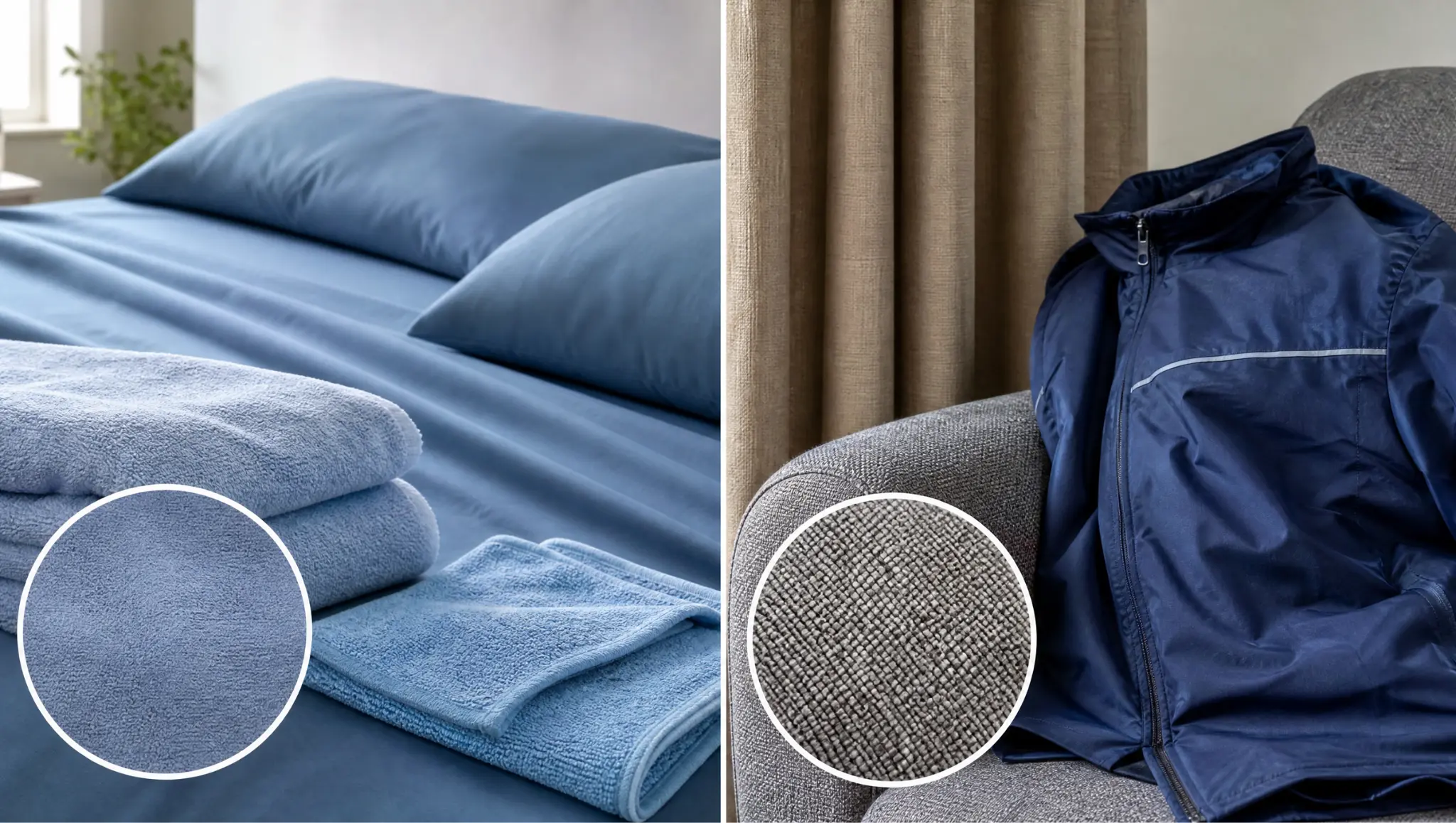
If the terms still feel close, this quick table makes the difference easier to see. Microfiber refers to fiber size, while polyester refers to the material.
| Feature | Microfiber | Polyester |
|---|---|---|
| What the term means | Very fine fiber size | Synthetic fiber material |
| Common material | Often polyester or polyester with polyamide | Polyester |
| Feel | Soft, smooth, brushed, or suede-like | Smooth, firm, crisp, or silky depending on fabric build |
| Absorbency | Often higher | Often lower unless made for moisture control |
| Drying speed | Usually fast | Usually fast |
| Heat control | Can feel warm in bedding | Can also hold heat depending on fabric build |
| Durability | Good, but quality varies | Usually strong and long lasting |
| Best use | Cleaning, soft sheets, towels, blankets | Clothing, bedding, curtains, upholstery, outdoor items |
| Label wording | May still say polyester | Usually says polyester |
This table gives you the quick difference, but the best choice still depends on the item. A sheet, towel, shirt, and cleaning cloth each require the fabric to perform differently.
So, Which One Should You Choose?
The better choice depends on the item, not the fabric name alone. Microfiber is usually the better pick when you want softness, absorbency, quick drying, or better dust pickup. That makes it useful for sheets, cleaning cloths, hair towels, travel towels, and light blankets.
Regular polyester makes more sense when you need strength, structure, and simple care. It works well for daily clothing, curtains, upholstery, bags, and outdoor items because it holds shape well and resists wrinkles.
Use the product type as your final check. Sheets, towels, clothing, and cleaning cloths each require different fabric performance characteristics.
If the label only says polyester and the product does not mention microfiber, the fibers may be thicker and may feel less soft or less absorbent.
Best Uses for Microfiber
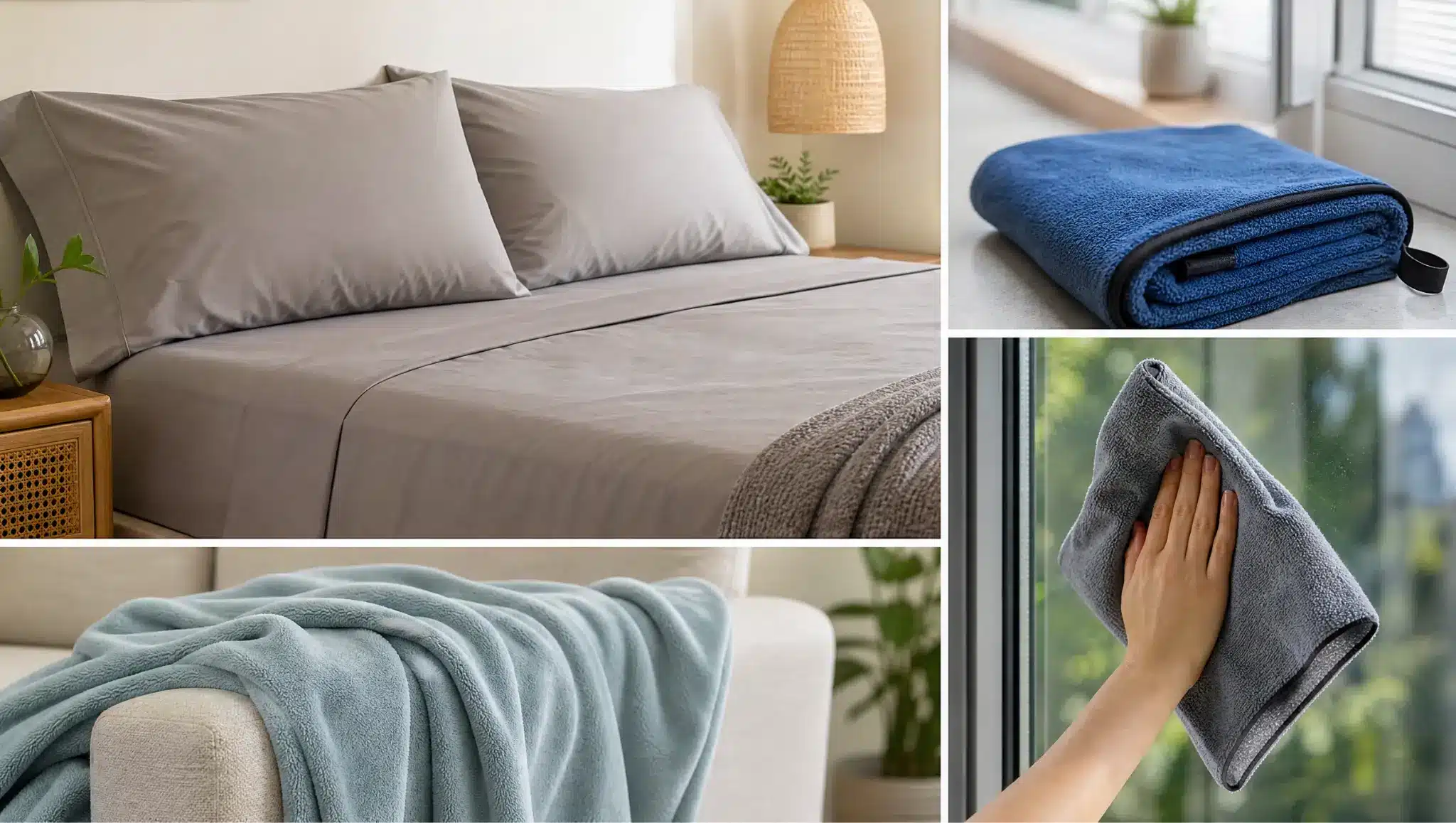
Microfiber works best when the fine fibers have a clear purpose. It is not only about softness. It is also about how the fabric grips dust, handles moisture, dries, and feels during daily use.
1. Sheets and Pillowcases
Microfiber sheets are often soft, smooth, and budget-friendly. They resist wrinkles and dry faster than many cotton sheets.
They can also feel warm because the fibers sit close together. If you sleep hot or your skin reacts easily, wash new sheets before using them, and check reviews mentioning heat, softness, and irritation.
2. Cleaning Cloths
Microfiber is one of the best fabrics for cleaning. Its fine fibers can pick up dust, fingerprints, and light moisture without leaving much lint behind.
Use separate cloths for glass, kitchen surfaces, bathroom areas, and car cleaning. This keeps dirt and cleaning residue from moving between spaces.
Some cleaning cloths are made for wet wiping, while others work better for dry dusting or polishing. Pick the cloth based on the surface and task.
3. Towels and Hair Wraps
Microfiber towels are light, compact, and quick-drying. They work well for travel, gym bags, beach bags, camping, and hair drying.
They are made to pull in moisture, so they should not be treated as waterproof. They may also feel less plush than cotton towels. If you like a thick bath towel, cotton may feel better.
4. Blankets and Throws
Microfiber blankets can feel soft and warm without much weight. They are easy to wash and often cost less than many natural-fiber options.
They may create static, especially in dry weather. If your skin is sensitive, choose a softer finish and avoid heavy fragrance or harsh detergent residue.
5. Clothing
Microfiber polyester can be used in activewear, linings, soft shirts, and light jackets. It can feel smooth and flexible.
For heavy sweating, look for clothing made for moisture movement. Some microfiber items may hold odor if they are not washed soon after use. If the item claims to block rain, look for terms like waterproof, water-resistant, coated, or laminated, as microfiber alone does not provide water protection.
Quick Fabric Label Checklist Before You Buy
A fabric label can tell you more than the product name. Before you choose microfiber or polyester, check the details that affect comfort, cleaning power, and long-term use.
- Fiber content: Look for 100% polyester, polyester mix, or polyester with polyamide.
- Product type: Sheets, towels, clothing, and cleaning cloths need different fabric strengths.
- For cleaning cloths: A polyester-polyamide blend often works better because it can pick up dust and retain moisture well.
- For towels: Check thickness, drying speed, and whether the towel feels too thin for your use.
- For sheets and bedding: Check softness, warmth, pilling, fabric weight, and how the material feels after washing.
- For clothing: Check stretch, odor control, airflow, and fabric weight.
- For water protection: Look for terms like waterproof, water-resistant, coated, or laminated. Microfiber polyester is not automatically waterproof.
- For sensitive skin: Look for labels such as OEKO-TEX Standard 100 if you want fabric tested for harmful substances.
The word microfiber alone does not prove quality. A better choice comes from matching the fiber content, product type, and fabric details to the way you plan to use the item.
How to Wash and Care for Microfiber
Microfiber is easy to maintain, but the wrong washing habits can reduce its softness, absorbency, and cleaning power.
- Wash with mild detergent in cool or warm water.
- Dry on low heat or air dry to protect the fine fibers.
- Avoid high dryer heat, as it can reduce softness and performance.
- Skip fabric softener and dryer sheets, especially for cleaning cloths.
- Wash cleaning cloths separately from lint-heavy towels.
- Keep greasy cloths separate from glass cloths.
- Avoid bleach unless the care label clearly allows it.
- Wash new microfiber items before first use.
- Use gentle cycles, full loads, and low heat to reduce fiber wear.
Small care changes can help microfiber stay soft, clean, and useful for much longer.
Frequently Asked Questions
Why does a cloth feel clingy on dry hands?
Very fine fibers can catch on dry skin because they have more surface area than standard fabric. That clingy feel is common with cleaning cloths and often means the fabric can grip dust better during use.
How do I choose one for pet hair?
For pet hair, pick a dense cleaning cloth or furniture cover with a fine surface. It should grab loose hair without spreading it around. Wash it often, and avoid fabric softener so the fibers keep working.
Can I use it on screens?
Yes, but use a clean, dry, low-lint cloth made for screens or lenses. Avoid rough dirt, heavy pressure, and harsh cleaners. Small grit trapped in any cloth can scratch glass or coated surfaces during wiping.
How often should cleaning cloths be replaced?
Replace them when they stop picking up dust, leave lint, smell after washing, or feel rough and thin. Heavy cleaning cloths may wear faster, especially if used with harsh cleaners or dried on high heat.
Final Verdict
By now, the label should feel easier to read. Is microfiber polyester? Often, yes. But is polyester the same as microfiber? No, because polyester names the material, while microfiber describes a very fine fiber size.
That small difference changes how fabric feels, dries, cleans, and handles daily care. I would choose microfiber for soft sheets, quick-drying towels, and cleaning cloths that pick up dust well.
I would choose regular polyester when strength, shape hold, and wrinkle resistance matter more. Before you buy, check the fiber content, product use, care label, and reviews about heat or pilling. Save this fabric check for your next sheet, towel, or cloth purchase. It can prevent a wrong pick.