
There are 100 large wildfires burning simultaneously on peak summer days across western states. When columns of heavy ash drift into your neighborhood, getting a restorative night of rest becomes a physical nightmare.
Fine particulate matter breaches residential barriers during these infernos, and it ends up keeping your nervous system on high alert. Your natural sleep cycles get fragmented.
To protect your respiratory health and improve rest throughout the night, you need a proactive, strategic approach to managing the immediate indoor sleeping environment.
Monitor Local Air Quality Index Shifts
Atmospheric conditions shift rapidly overnight as mountain winds die down and thermal inversions trap surface pollution. Relying on a quick glance out the window in the evening will not give you an accurate assessment of microscopic particulate levels.
Check your local air quality index app right before bed to understand exactly what your lungs are up against. Check the AQI monitor, compare indoor readings with outdoor conditions, ensure superior air quality all night long every day. Tracking these numbers helps you decide whether to rely entirely on internal filtration or alter your cooling strategy.
Seal Leaking Windows and Doors Fast
Ambient smoke forces its way through microscopic structural gaps, silently compromising your bedroom air while you sleep. You must establish a physical perimeter by securing every window latch and installing temporary weatherstripping along worn frames.
And it doesn’t just prevent fine ash from settling deep inside wall cavities. In a guide on how to prepare for wildfires in Boulder, home mitigation experts say that shutting entry points actually helps keep your home from igniting during wildfires.
Shoving a damp towel firmly against the base of your bedroom door blocks internal drafts from pulling smoky air from the rest of the house.
Run Portable HEPA Purifiers Effectively
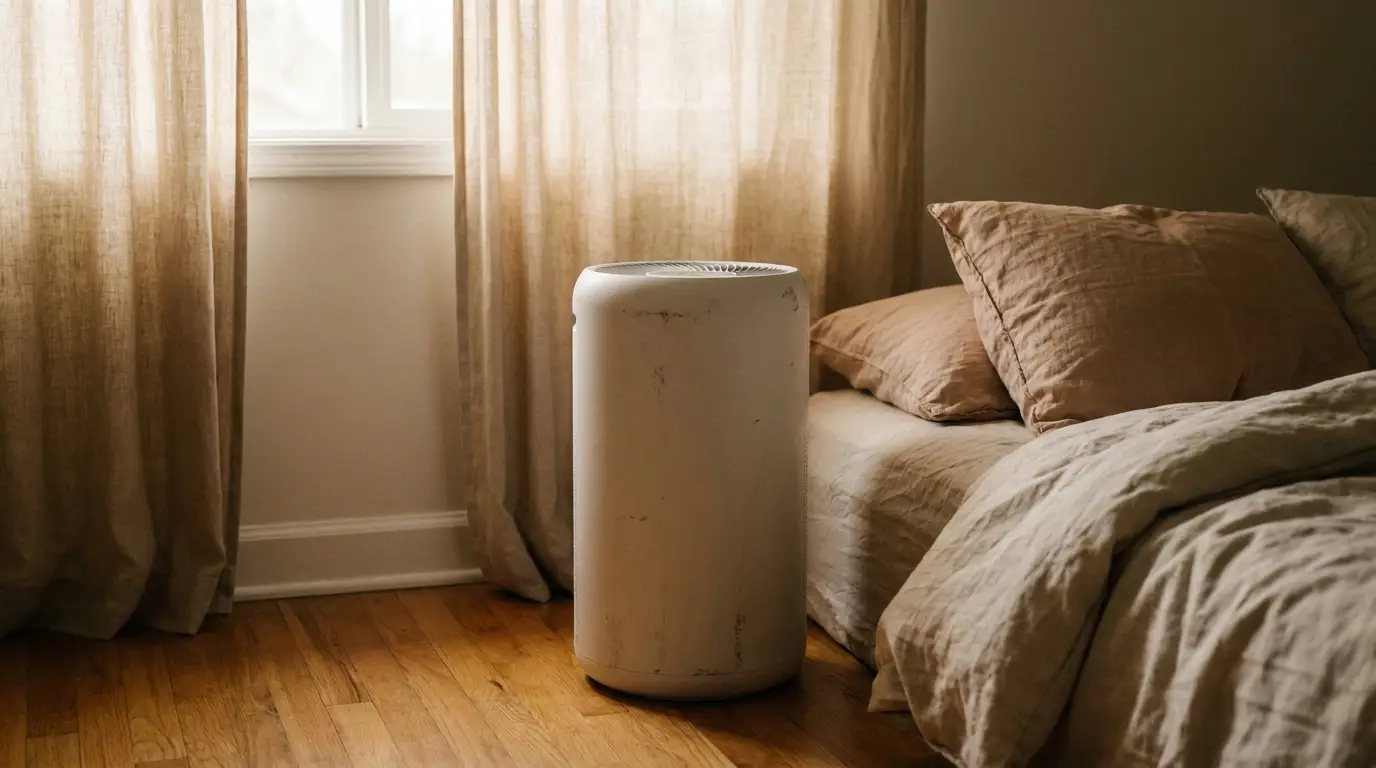
A dedicated air cleaner should run continuously on its maximum speed setting right next to your bed. Including an air purifier in your bedroom design helps promote deep sleep and lowers the mechanical burden on your lungs.
This localized filtration creates a clean breathing zone directly around your pillows where it matters most. According to a recent report on worsening wildfire emissions, modern smoke plumes carry highly reactive compounds that easily bypass basic cardboard filters. Keeping a true HEPA unit operating on high speeds prevents these specific microscopic irritants from remaining suspended in your sleeping space.
Upgrade to High Efficiency MERV 13 Filters
Relying solely on portable units is not enough if your central HVAC system continuously circulates air through a low-grade fiberglass screen. Standard residential filters are designed to catch dog hair and lint, completely missing the microscopic soot that ruins sleep.
You need to slide a MERV 13 rated filter into your furnace slot before smoke season peaks. This denser mesh captures fine particulates without suffocating the airflow of your system.
The physical filtration process requires a steady setup:
- Run the system fan constantly rather than setting it to auto
- Keep all outdoor intake fresh air dampers completely closed
- Change the filter immediately when the surface turns gray
- Inspect the perimeter edges for air bypassing the frame
Adjust Indoor Humidity Levels Wisely
During an extended smoke event, managing indoor moisture levels is crucial, and it requires a careful balance to protect your respiratory system. Altering the moisture content of your bedroom even slightly can change how your throat and nasal passages react to floating micro-pollutants over an eight-hour period.
Balance Air Moisture
Smoky air dries out mucous membranes, causing throat irritation that wakes you up mid cycle. Running a small cool mist humidifier keeps your respiratory tract lubricated, making it easier to filter out any stray particles you happen to inhale.
Prevent Over Saturated Environments
Excessive moisture creates a heavy environment that complicates breathing when the air is already thick with soot. Keep your indoor humidity levels hovering strictly between 40 and 50 percent to maximize physical comfort. This careful balance keeps your airways open and relaxed without encouraging the growth of mold spores in sealed rooms.
Maintain Calm Wind Down Habits Safely
Sustained environmental stress triggers a baseline cortisol spike that makes falling asleep incredibly difficult. Avoid rigorous physical workouts in the evening, as heavy breathing draws more particulate matter into your lower lungs.
A medical presentation detailing how exposure to wildfire smoke triggers widespread biological stress highlights the importance of keeping your resting heart rate low. Keep your emergency cell phone alerts active but dim the screen to avoid disrupting your natural melatonin production before bed.
Assemble a Nightstand Preparedness Kit
Fumbling through a dark, smoky house during a sudden midnight shifting wind event ruins your sleep security. Keeping essential protection gear within arm’s reach allows you to rest deeply, knowing you can react instantly to changing conditions.
Pack a respirator, illumination becomes instant, navigating unexpected midnight evacuations becomes much easier.
Secure Your Sleeping Sanctuary
Breathing clean air throughout the night keeps your immune system resilient when environmental conditions deteriorate outside. Protecting your home from drifting soot requires continuous adjustments as seasonal patterns shift over time. Explore the blog for more helpful articles on improving rest and practical guides you could use at home to enhance everyday living.