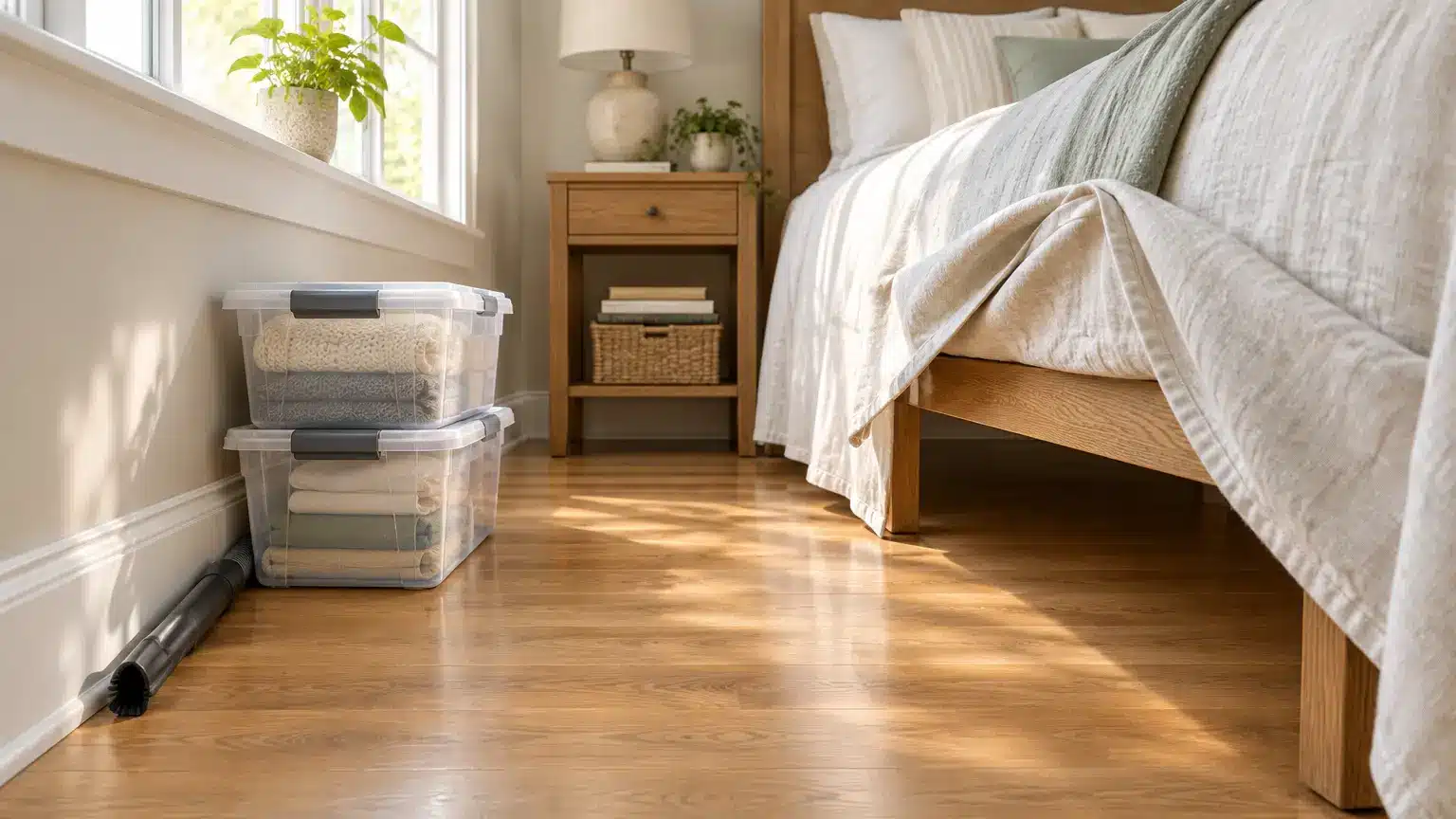

We obsess over what we eat and what we put on our skin, then climb into a bed that may be quietly off-gassing flame retardants, formaldehyde, and a cocktail of synthetic finishes for eight hours a night. It’s a strange blind spot. The bedroom is the room where your body does its most important repair work — and for many of us, it’s also the most chemically loaded room in the house.
The good news: you don’t need to gut-renovate or spend a fortune to fix it. A non-toxic bedroom is built in layers, and most of those layers can be swapped gradually, starting with the ones closest to your face. Here’s how to think about it, element by element.
Why the Bedroom Deserves Special Attention
Two things make the bedroom uniquely worth detoxing. First, exposure time. You spend roughly a third of your life in this one room, breathing the same air and pressing your skin against the same surfaces for hours on end. Low-level exposures that wouldn’t matter in a hallway add up here.
Second, the materials themselves. Conventional mattresses, bedding, and furniture are frequently treated with volatile organic compounds (VOCs), formaldehyde-based wrinkle-resistant finishes, and chemical flame retardants. These off-gas most aggressively when new and when warm — which is to say, exactly when you’re lying on them. You can’t always smell it, and “no smell” doesn’t mean “no emissions.”
None of this is cause for panic. It’s cause for a plan.
Start With the Mattress
The mattress is the single largest source of synthetic material you sleep on, so it’s the highest-impact swap — and usually the most expensive, which is why it’s worth doing thoughtfully rather than impulsively.
If you’re shopping, look past marketing words like “natural” and “eco” and go straight to certifications. For the foam and latex core, GOLS (Global Organic Latex Standard) verifies genuinely organic latex. For the overall product, GOTS (Global Organic Textile Standard) covers the textile components, and MADE SAFE or Greenguard Gold indicate low chemical emissions. A truly clean mattress will name these explicitly; a greenwashed one will lean on vague adjectives.
If a new mattress isn’t in the budget this year, you can reduce exposure from your current one with a tightly woven organic cotton mattress protector, which creates a physical barrier and is a fraction of the cost.
Then the Bedding — the Layer Touching Your Skin
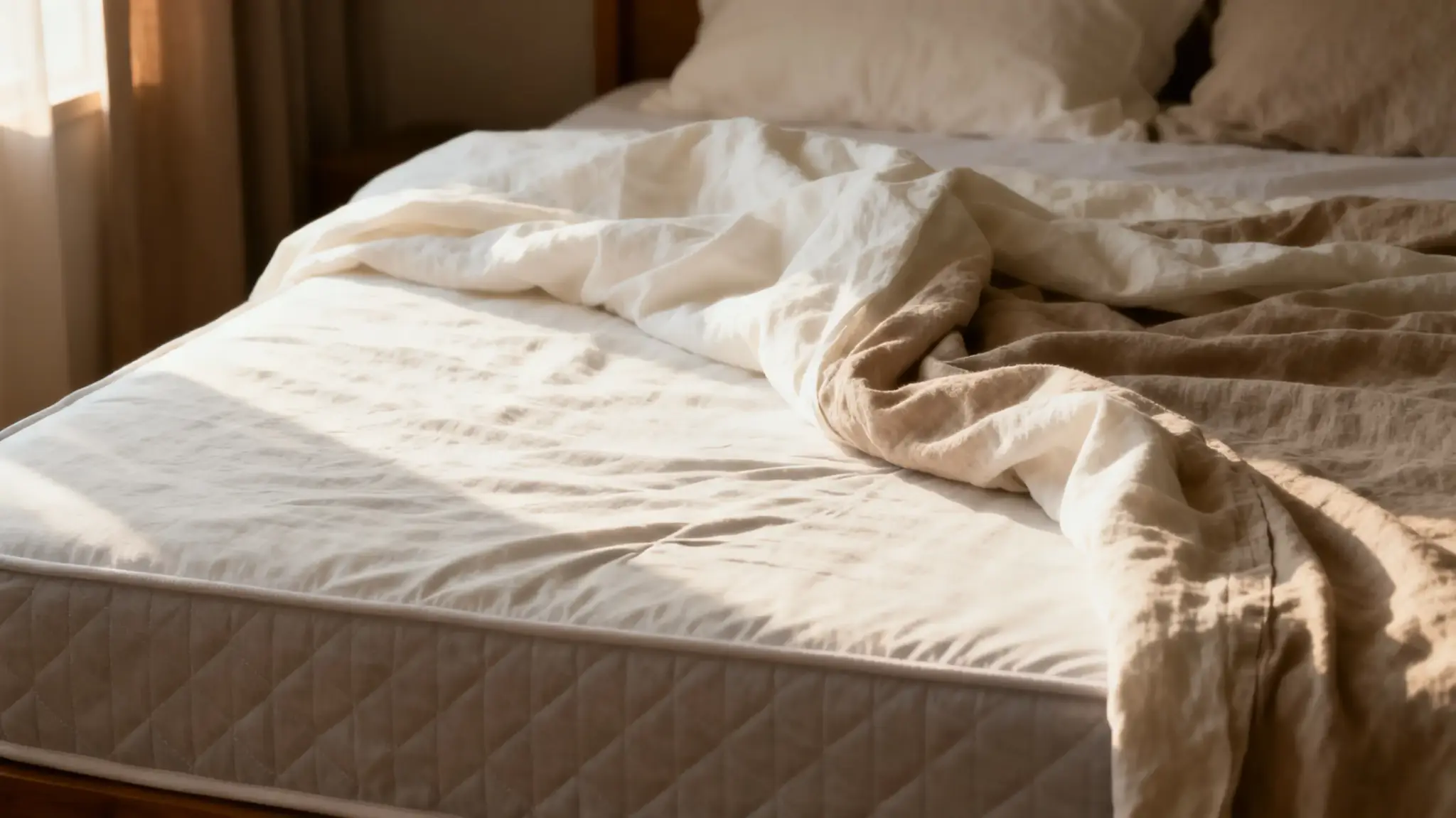
Your sheets, duvet cover, and pillowcases are in direct, all-night contact with your skin, which makes them the second priority and arguably the easiest win. Conventional cotton is one of the most pesticide-intensive crops on the planet, and “wrinkle-free” or “easy-care” bedding usually earns that label through a formaldehyde resin finish.
Switching to organic, certified bedding removes both problems at once — and because sheets are replaced more often than mattresses, it’s a swap most people can make immediately. The thing to watch for, again, is certification rather than vocabulary. The two that matter most for bedding are GOTS, which verifies organic fibre and a clean supply chain from farm to finished product, and OEKO-TEX Standard 100, which tests the finished textile for harmful substances. They’re not interchangeable, and a brand serious about either will show you the certificate.
If you want a plain-English breakdown of what those labels actually guarantee and how to choose between materials like organic cotton, linen, and bamboo, the sustainable bedding brand Or & Zon maintains a genuinely useful guide to selecting organic bedding that’s worth bookmarking before you buy.
A quick rule of thumb: natural fibres — organic cotton, flax linen, wool — breathe and regulate temperature far better than polyester blends, which is good for both your skin and your sleep.
Paint, Walls, and What’s Behind Them
If you’re repainting, choose a zero-VOC paint. Standard paint releases VOCs for weeks after it dries, and a bedroom is the worst place for that slow leak. Zero-VOC formulas have come a long way and now match conventional paint on coverage and durability, so there’s little reason not to switch.
The same logic applies to anything you’re adding to the walls — peel-and-stick wallpaper, adhesives, and some wall art finishes can off-gas too. When in doubt, let new materials air out in a garage or spare room for a few days before they enter the bedroom.
Floors, Dust, and the Things You Don’t See
Soft furnishings trap dust, and household dust is where a lot of indoor pollutants actually accumulate — flame retardants and other compounds shed from furniture and settle into carpet fibres. You don’t have to rip out your carpet. You do want to vacuum regularly with a HEPA-filter vacuum, which captures fine particles instead of redistributing them into the air.
If you’re choosing new flooring or a rug, natural materials — wool, jute, organic cotton — sidestep the synthetic backing and stain treatments common in conventional options.
The Air Itself
Bedroom air gets stale and concentrated overnight. Two cheap habits make a real difference: open a window for a few minutes daily to flush out accumulated VOCs and CO₂, and consider a HEPA air purifier if you live somewhere you can’t ventilate easily. A handful of resilient houseplants won’t replace ventilation, but they add a little humidity and a lot of calm — and a calmer room is a better sleep environment.
Laundry and the Finishing Touches
It’s easy to detox your bedding and then wash it in heavily fragranced detergent and dryer sheets, which coat fabric in synthetic fragrance and leave residue against your skin all night. Switch to a fragrance-free or naturally scented detergent and swap dryer sheets for wool dryer balls. It’s a small change that protects all the work you did on the layers above.
A Realistic Order of Operations
You don’t have to do everything at once — and trying to usually leads to doing nothing. Here’s a sane priority order:
- This month, cheaply: swap to fragrance-free laundry, add an organic mattress protector, start airing the room daily.
- This season: replace your sheets and pillowcases with certified organic bedding — the highest-contact, lowest-cost upgrade.
When the budget allows: the mattress, and zero-VOC paint if you’re redecorating.
The One Habit That Matters Most
If you take nothing else from this, take this: read the label, not the adjective. “Natural,” “eco-friendly,” and “green” are unregulated marketing words that anyone can print. GOTS, OEKO-TEX, GOLS, MADE SAFE, and Greenguard are independently verified standards that a brand has to earn. The gap between those two things is exactly where greenwashing lives.
A non-toxic bedroom isn’t about fear or perfectionism. It’s about making a handful of informed swaps in the room where your body is most exposed and least defended — and then sleeping a little easier, in every sense.