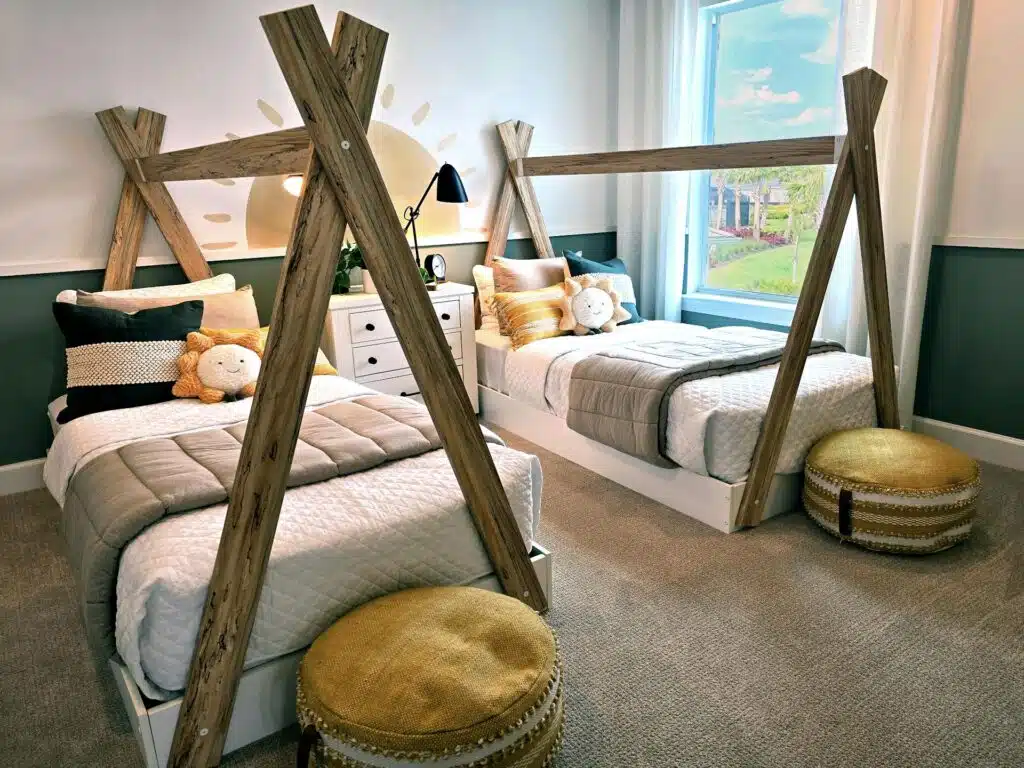
Let’s be honest: a kid’s room isn’t just for sleep — it’s basically their first little universe. And a Montessori bed? That’s like handing them the keys. No “wait till mom comes,” no barriers — just freedom. Think less Rapunzel in a tower, more Pippi Longstocking running the show.
The idea is simple: the lower the bed, the higher the independence. Kids climb in, climb out, explore — all on their own terms. It’s not just cute, it’s developmental gold.
And yeah, material matters. Natural wood isn’t just a Pinterest flex — it’s breathable, safe, and feels way better than anything synthetic. Basically, the difference between a good book by the fireplace and a plastic chair in a waiting room.
Key Benefits of a Montessori Bed for Child Development
First up — independence. With a Montessori bed, your kid decides when it’s bedtime. Sounds chaotic? Funny enough, it usually works better. Kids love control (tiny CEOs, honestly), and this builds confidence fast.
Safety? Covered. No high drops, no dramatic midnight “boom” moments. Even if they roll out, it’s more meh than the ER episode.
Psychologically, it’s also a win. No bars, no cage vibes. More open space = calmer kid = fewer bedtime negotiations that feel like hostage situations.
And bonus: it’s not just for sleeping. Today it’s a bed, tomorrow it’s a reading nook, next week it’s Hogwarts. Multifunctional like a Swiss army knife, but way cozier.
Why Material Matters: The Power of Natural Wood
Here’s the deal — solid wood (like alder or birch) beats MDF every time. It’s eco-friendly, sturdy, and doesn’t quietly fill your room with toxic fumes.
If your kid has allergies, this is a big deal. Safe, water-based coatings mean cleaner air and fewer worries.
Plus, durability. This isn’t “buy it, regret it, replace it.” A good Montessori bed handles years of jumping, playing, and the occasional “the floor is lava” mission without falling apart.
How to Choose the Right Model
Design-wise, you’ve got options. Minimal platform? Clean and modern. House bed? Cozy little Narnia entrance. Teepee style? Straight-up adventure mode.
But don’t get distracted by looks alone. Check the details: smooth edges, no sharp corners, solid finish. If it feels like something you’d trust in a Pixar movie, you’re on the right track.
Also — slats matter. Good ventilation keeps the mattress fresh and supports healthy sleep. Not flashy, but important.
Choosing the Right Manufacturer
Not all beds are created equal. Look for safety certifications — water-based paints, no sketchy chemicals.
Check the build. If it wobbles like a cheap IKEA hack, that’s your cue to walk away.
And go with people who actually know what they’re doing. Brands like BusyWood focus on natural wood furniture and real quality control — not mass-production roulette.
A Montessori bed isn’t just furniture — it’s a whole mindset. It turns a room into a space where a kid feels free, safe, and a little bit like the main character (as they should).
So yeah, choose something that looks good, feels solid, and actually supports your child’s development. Because childhood isn’t a draft — it’s the final version.