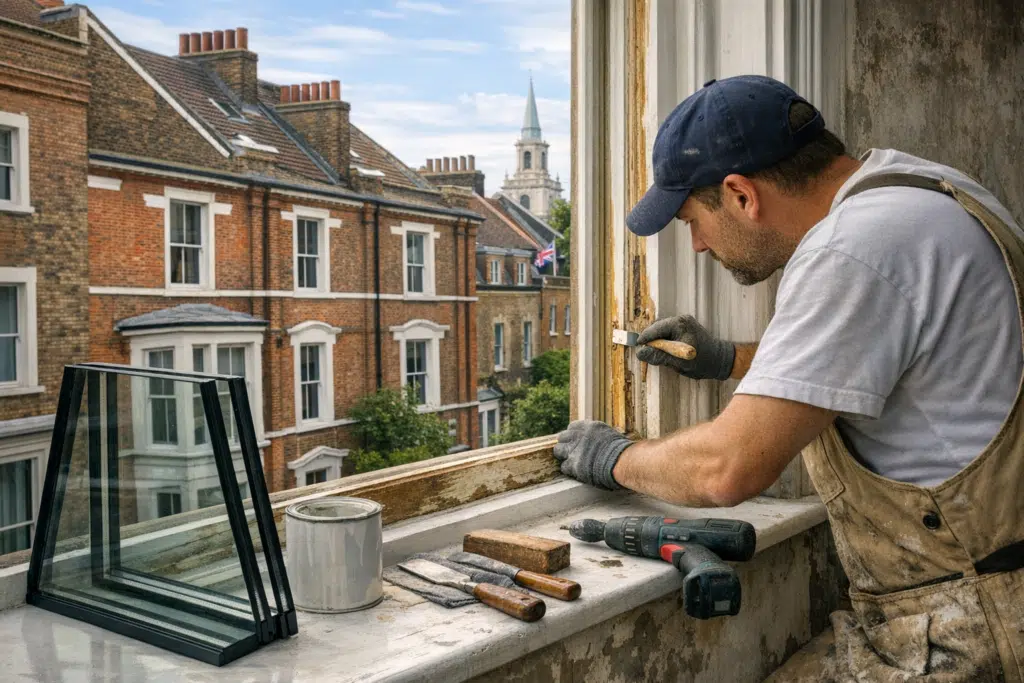
London has a talent for irony. You buy a stunning period home with perfect proportions and “character”, then winter arrives and you realise your sash window has been training for a career as a wind machine. Sit near it and you don’t just feel the cold, you practically get a personal relationship with it.
If you’ve got original timber sash windows, that doesn’t mean they’re “done”. It usually means they’re… due a bit of love. Years of paint layers, tiny shifts in the frame, tired cords, loose joints, and the occasional patch of rot all add up.
The window starts sticking, rattling, letting in draughts, and quietly leaking heat while you blame the boiler. Classic.
A proper refurbishment doesn’t just make things look nice for Instagram. It fixes what actually matters: it gets the sashes moving the way they should, closes up the gaps that let cold air sneak in, repairs decayed timber before it spreads, and brings the whole thing back to behaving like a window, not a decorative suggestion of one.
This guide breaks down what refurbishment really includes, why “repair first” is often the sensible option (especially with heritage homes), and which upgrades can make your place warmer and quieter without turning your period windows into something that looks like it belongs in a new-build brochure.
Why Sash Windows Feel Draughty (even when The Timber Looks “fine”)
Traditional sash windows work because everything moves exactly as it should. Cords or chains lift the sashes, counterweights hidden in the box frame keep them balanced, and the timber slides cleanly in its channels without scraping or snagging. When that mechanism stays tight, the window feels effortless.
Then real life happens. Decades of repainting add layers where they shouldn’t. The beads that guide the sash creep out of position. Dust and debris clog the weight pockets. Cords fray and stretch. Joints loosen.
One small issue on its own might seem harmless, but together they turn a smooth window into a stubborn one. It sticks, it rattles, and it leaves gaps you don’t just see, you feel on your face when the wind picks up.
And here’s the important bit: the biggest energy problem often isn’t the glass. It’s the air. Historic England points out that draughts, meaning air sneaking through those gaps, drive a huge chunk of heat loss and day-to-day discomfort in traditional windows.
That’s why the quickest, most noticeable improvement usually comes from stopping uncontrolled airflow first, before you even start obsessing over glazing.
What “sash Window Refurbishment” Includes (beyond a Coat of Paint)
A proper refurbishment is a combination of carpentry, joinery, and performance upgrades. The exact scope depends on the window’s condition, but it usually covers:
- restoring smooth opening/closing (addressing paint build-up, warped sashes, misaligned beads, pulley issues)
- repairing timber decay (commonly at sills and lower rails) and stabilising joints
- re-cording and balancing the weights so sashes don’t drop or creep up
- draught-proofing using discreet seals (often through upgraded parting/staff beads) to stop rattles and cold air leakage
- re-puttying and re-finishing, because protective paint systems are a major line of defence against timber decay
This is why “fresh paint” alone rarely solves the real problem. If the window doesn’t close tightly and move correctly, you’ll still have airflow and comfort issues.
Repair vs Replacement: What Heritage Guidance Actually Says
If you’ve ever been told that old sash windows are “beyond economic repair”, it is worth knowing what national heritage guidance says first.
Historic England doesn’t sit on the fence about this. Their advice to homeowners is straightforward: repair usually makes more sense than replacement.
It keeps the building’s character and original fabric intact, it’s typically the more sustainable route, and it often costs less than ripping everything out and starting again. Full replacement, in their view, belongs in the “only if you really have to” category, not the default setting.
They also make a point that catches a lot of people off guard: once you repair and sensibly upgrade older windows, they can perform just as well as new ones in energy terms. The trick is to focus on what actually drives discomfort and heat loss, especially air leakage, then use low-impact measures that improve performance without wrecking the window’s historic look and proportions.
Draught-Proofing: The “low Drama” Upgrade with Real Impact
If you want one improvement that tends to deliver comfort fast, it’s draught-proofing.
Historic England’s technical note describes draught-proofing as one of the most cost-effective and least intrusive ways to improve comfort and reduce heating energy, with little or no change to appearance. They cite research showing draught-proofing can reduce air leakage from windows by 33% to 50%.
For period homes, that matters because gaps make rooms feel colder, pushing you to turn the heating up and run it longer.
Can You Upgrade Glazing in Existing Sash Windows (especially in Listed Properties)?
Sometimes. But the right answer depends on your building, your window details, and what approvals apply.
Historic England explains that secondary glazing is often preferred in historic buildings, and that many of the “benefits of double glazing” are frequently overestimated because the comfort gains often come from reduced draughts rather than the sealed units alone.
Historic England does leave the door open for upgrades, just not the “rip it all out and hope nobody notices” kind. In some cases, if the existing glass isn’t historically important and the timber profiles have enough depth, you can fit slim-profile units or even vacuum double glazing into the existing sashes with only minor changes. So yes, sometimes you can improve performance without turning your windows into something that looks like it came from a showroom catalogue.
But here’s the bit people forget until it becomes a problem: glass has weight. And sash windows are basically a balancing act. Add heavier glazing and the whole system can throw a tantrum.
Suddenly the sash won’t stay up, drops like it’s got places to be, or starts moving like it’s wading through mud. That’s why glazing upgrades often need refurbishment alongside them, including rebalancing the weights and sorting the mechanics so the window still works properly.
And if you’re in a Georgian place with those delicate, slim glazing bars, you really can’t wing it. The Georgian Group has been pretty clear about this: don’t try to force individual double glazing into bars that physically can’t take two panes.
If the proportions are too fine, you’ll either butcher the original details or end up with a messy compromise that looks wrong and performs badly. That’s exactly why a lot of owners go for draught-proofing first, then consider reversible secondary glazing, and only explore slim units where the window design can genuinely handle them without sacrificing what makes it Georgian in the first place.
Don’t Ignore Ventilation and Condensation Risk
Reducing drafts is good. Accidentally creating a moisture trap is not.
Historic England doesn’t sit on the fence about this. Their advice to homeowners is straightforward: repair usually makes more sense than replacement. It keeps the building’s character and original fabric intact, it’s typically the more sustainable route, and it often costs less than ripping everything out and starting again. Full replacement, in their view, belongs in the “only if you really have to” category, not the default setting.
They also make a point that catches a lot of people off guard: once you repair and sensibly upgrade older windows, they can perform just as well as new ones in energy terms. The trick is to focus on what actually drives discomfort and heat loss, especially air leakage, then use low-impact measures that improve performance without wrecking the window’s historic look and proportions.
What Does Sash Window Refurbishment Cost in London?
Costs vary based on condition, access, detailing, and whether you’re adding upgrades such as draught-proofing or retrofit glazing.
One London-focused example is Six over Six Windows, which publishes transparent starting prices: refurbishment from £350 per average-sized sash window (including repairs and exterior-side painting), and sash window double glazing from £700 per sash window. They also list a “full package” from £1150 per window.
Treat these as starting points, not a universal rate card, but they help set expectations for what “professional refurb” pricing can look like.
Quick Checklist: Signs it’s Time to Call a Sash Window Specialist
If you recognise any of the following, refurbishment is usually worth exploring before you think about replacements:
- the sash sticks, jams, or won’t open/close without force
- you hear rattling or feel cold draughts around the frame
- cords look worn, snap, or the sash won’t stay where you leave it
- paint layers are so heavy the window doesn’t “run” correctly
- timber at the sill/lower rails shows decay, often from long-term moisture exposure
A Heritage-First Option in London: What Six Over Six Windows Specialises in
Not every company pushes the “brand new everything” routine, and Six over Six Windows in London takes a different approach.
They focus on what’s already there, working with existing sash windows, refurbishing them properly, and not making new ones at all. They’re also quite open about the kind of projects they handle most often: according to them, much of their restoration work involves Grade II listed properties, which is basically the window version of hard mode.
They also frame themselves as a second-generation, family-run business. The focus is clear: period and architecturally significant timber windows, brought back to life properly, not “tidied up until it looks okay from across the street”. And yes, they include retrofit double glazing in the mix, where it makes sense and where the windows can actually take it without being forced into something they’re not.
Coverage-wise, they pitch themselves as London-first, but not London-only. They list work across nearby areas too, including Surrey, Berkshire, Buckinghamshire, Cambridgeshire, Hertfordshire, Essex, Bedfordshire and Suffolk. So if you’re outside Zone 2 and still dealing with draughts that feel personal, you’re not automatically out of luck.
And honestly, the whole “refurbish first” mindset lines up with what heritage guidance tends to push anyway. Keep the original joinery if you can. Fix the mechanics so the window behaves like a window.
Stop the draughts because comfort matters more than pretending you enjoy living in a breeze. Then, if the details allow, consider glazing upgrades carefully, not as a default, but as a sensible next step when it genuinely improves the way the home feels day to day.
Expert: Adam Brick – contributor to the Six over Six Windows blog, where he shares practical expertise on sash window restoration, heritage-friendly upgrades, and retrofit glazing for period properties.