Home radiators play a crucial role in maintaining a comfortable indoor environment, particularly during the colder months. Among the various types of radiators available, electric radiators have gained popularity for their efficiency and convenience in heat distribution.
In this article, we delve into the mechanisms behind how home radiators distribute heat and explore the different types that enhance indoor comfort.
The Basics of Radiator Heat Distribution
At the heart of any home heating system is the ability to efficiently distribute heat throughout the living space. Radiators achieve this by using convection and radiation. Convection involves the circulation of air across the heated surfaces of the radiator, warming the air and causing it to rise.
As this warm air circulates, it displaces cooler air, creating a cycle of warm airflow throughout the room. Radiation, on the other hand, involves the emission of heat directly from the radiator’s surface, warming objects and bodies in its path.
Together, these processes ensure that warmth is evenly spread, eliminating cold spots and providing a uniformly comfortable environment.
Convection vs. Radiation: Understanding the Difference
While both convection and radiation are vital in heat distribution, understanding the difference between the two can help in selecting the right type of radiator for your home. Convection is often the dominant form in panel and convector radiators, where the primary focus is on heating the air. This can be particularly beneficial in rooms that require quick heat distribution.
Radiation, prevalent in designer and electric radiators, is more effective for providing direct heat, warming up objects and surfaces rather than solely relying on air circulation. This direct heat is preferred in spaces where consistent warmth is needed, such as bathrooms or bedrooms.
Types of Home Radiators
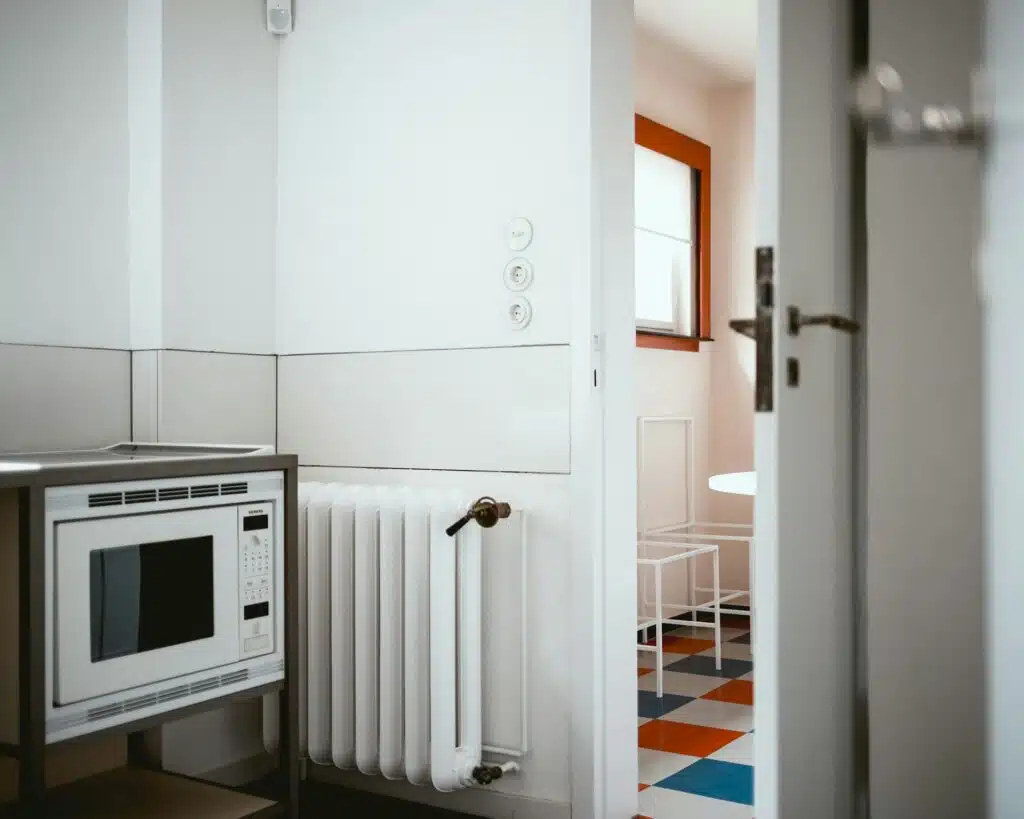
There are several types of radiators, each serving a unique purpose based on their mechanism and the specific needs of the space. Traditional central heating radiators are connected to a boiler and heat water to provide warmth.
Electric radiators, however, can function independently of a central heating system. They are ideal for supplementing warmth in rooms where the central system may not be as effective or for individual areas such as extensions.
Furthermore, designer radiators not only offer functionality but also enhance the aesthetic appeal of a room, with various shapes, colours, and materials available to complement modern home interiors.
The Role of Thermostatic Controls
An essential aspect of efficient heat distribution in home radiators is the use of thermostatic controls. These controls allow homeowners to regulate the temperature in individual rooms, ensuring that each space is heated according to personal comfort preferences.
By preventing overheating and reducing energy consumption, thermostatic controls contribute not only to improved comfort but also to significant cost savings on energy bills. Advanced smart thermostatic systems can even be programmed remotely, offering a greater level of control over the home heating system.
Maximising Indoor Comfort with Radiators
The combination of convection and radiation in home radiators provides a comprehensive approach to heat distribution, ensuring that every corner of the home receives adequate warmth. Whether using traditional central heating systems, electric radiators, or designer options, selecting the appropriate type with suitable thermostatic controls can dramatically enhance indoor comfort.
As technology advances, the options and efficiencies of home radiators continue to grow, offering more environmentally conscious and economical solutions to maintaining a warm and welcoming home environment. Ultimately, understanding the workings of these systems enables homeowners to make informed decisions, enhancing comfort while optimising energy use.