
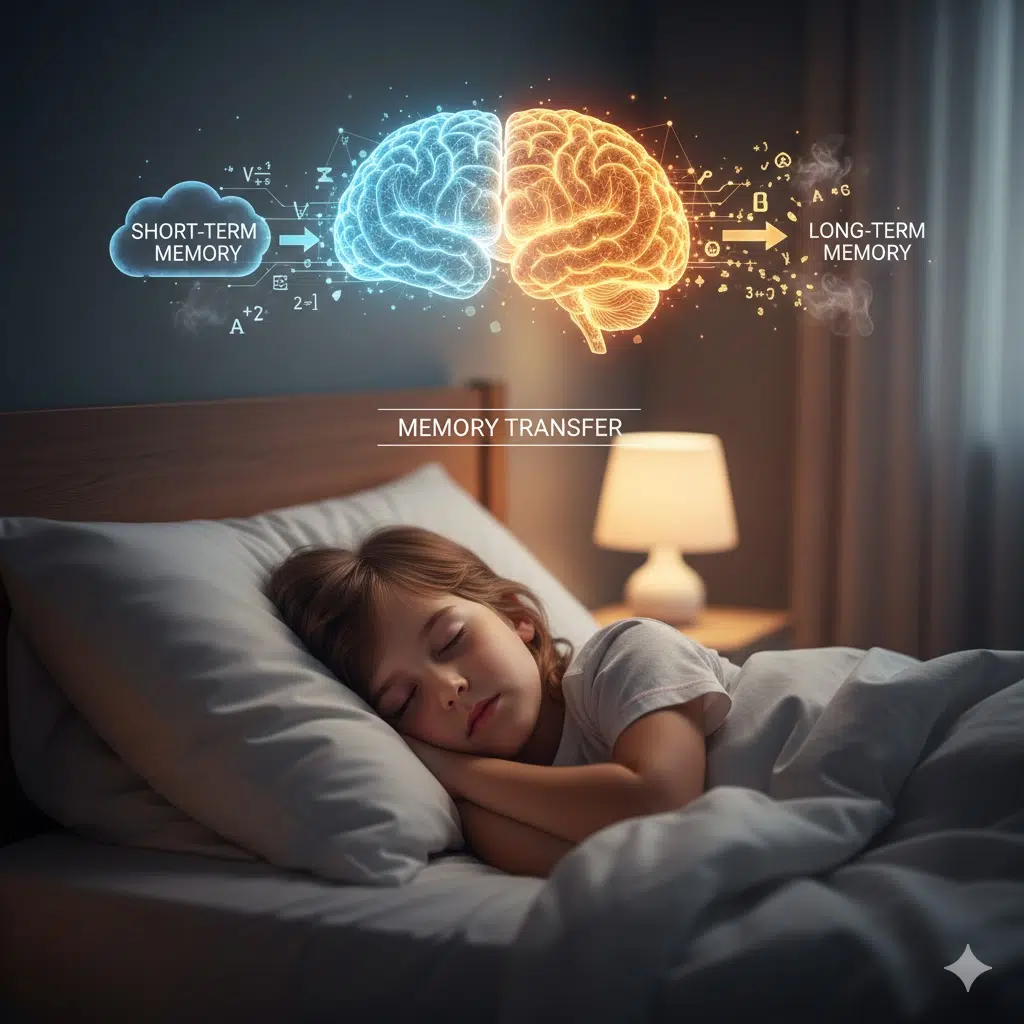
What if your child’s forgetfulness isn’t due to inactivity, but to lack of sleep? Throughout the day, children absorb a great deal of information: reading, solving equations, and memorizing.
During deep sleep, the brain performs a vital digital backup. It moves new memories from short-term storage into the permanent “hard drive” of the cortex. When a child misses out on rest, this essential transfer is interrupted.
Those hard-won math formulas and vocabulary words simply evaporate by morning. Without sleep, there is no room for the new day’s lessons to stick. So, what can we do to avoid it, and how interactive learning can help? Let’s find the answer together.
The Connection Between Sleep and the Developing Brain
Scientists call the brain’s ability to build new connections “plasticity.” During deep sleep, the brain is very active, moving “short-term” memories into “long-term” banks. When sleep is interrupted, this process fails. In education, this is known as “leaky bucket syndrome.”
Here’s how it happens: a child might learn a new rule with an elementary math tutor on Monday afternoon, but the knowledge “leaks” out overnight. By Tuesday morning, they have to start the lesson all over again.
The Role of Executive Function
A person’s executive function involves working memory, flexibility of thought, and self-control. Our daily lives depend on these skills, from learning in online math classes to working to managing our finances. Sleep deprivation directly inhibits the prefrontal cortex, the brain area responsible for these functions, which also affects:
- Attention Span. When tired, the brain has difficulty filtering out distractions.
- Impulse Control. It is more likely that children with poor sleep will act out or become frustrated with difficult tasks.
- Problem Solving. Sleep-deprived students often lack the cognitive flexibility to approach a math problem from a different angle if their first attempt fails.
How Sleep Quality Dictates Academic Success
Most people think that high grades can only be achieved by studying endlessly. However, research has shown that a child’s sleep quality greatly impacts their GPA (the average of their grades). Consider your computer’s sleep button as its “save” button. The file cannot be saved properly due to flickering power. It didn’t matter how long the computer remained “on” if the process was constantly interrupted.
Literacy and Language Acquisition
It takes a lot of effort for a child’s brain to read. As you look at letters, sound out words, and understand a story, the mind must do many things at once. Tired children’s brains simply move more slowly. The same paragraph might be read three or four times before they understand what it says. These words are processed more quickly and easily by the brain when it is rested.
Mathematics and Logical Reasoning
Mathematics requires higher-level abstract thinking than rote memorization. Despite understanding the underlying concept, sleep-deprived students make “careless errors” in calculations. As a result, the brain’s ability to monitor its own performance (called metacognition) is significantly diminished when it is not rested.
Beyond the Bedroom: Building a Foundation for Academic Excellence
Developing a “sleep-positive” lifestyle involves more than simply getting a good night’s sleep. To wind down, an environment must signal to the brain that it is time to do so. Cognitive engagement and physical rest are clearly interconnected here.
We must provide children with the right tools for learning, just as we do for sleep – like supportive mattresses and blackout curtains. Taking full advantage of modern educational resources is possible only when a child is well-rested.
Adaptive and Interactive Learning Environments
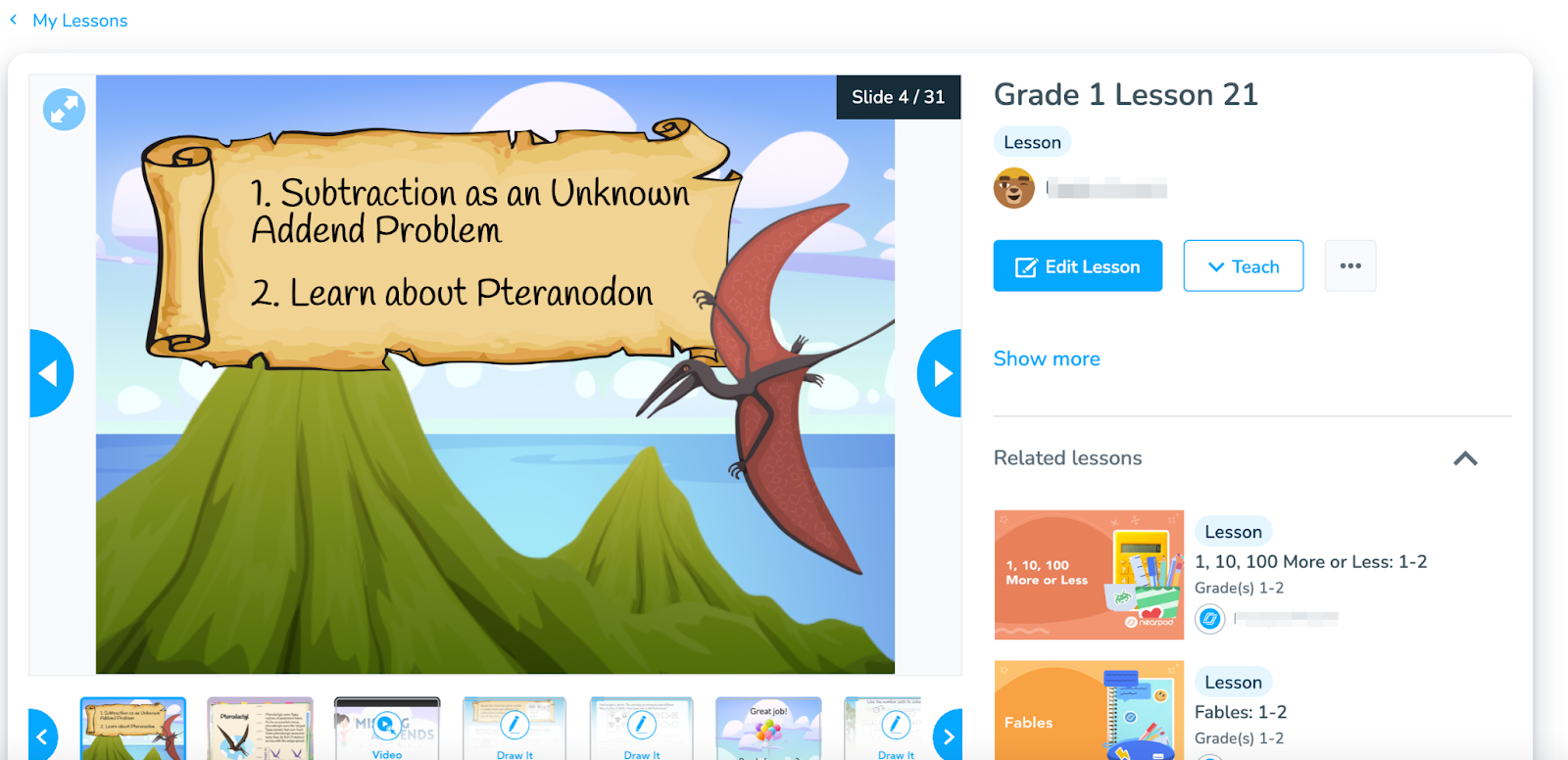
The goal of modern education is to adapt to the individual student, not the other way around. That’s why new learning tools and platforms appear. A good example is Brighterly. It is an adaptive learning platform that uses game-based learning to bypass cognitive fatigue.
Instead of boring lessons, children complete exciting “missions.” During these tasks, kids are kept engaged by interactive puzzles. By doing so, a tired brain can stay focused without getting overwhelmed. This makes a difficult subject more enjoyable.
Personalized Support and Tutoring
The use of personalized online tutoring enables educators to see signs of fatigue – like slower response times or repeated errors – that a recording would not be able to detect. The same system Brighterly’s tutors use:
- In Reading. The tutor can use simpler texts if the child has difficulty focusing.
- In STEM. Using interactive problem-solving online, tutors can identify “brain fog” and shift from complex theory to interactive problem-solving.
One bad night’s sleep won’t lead to a week of being behind schedule thanks to this human-digital hybrid.
Practical Tips for Improving Sleep Quality
Academic performance can often be improved by going to the linen closet instead of the library. The following steps can help you optimize their rest:
- Consistency is King. Sleeping and waking up at the same time every day (including weekends) regulates the body’s internal clock.
- The “Blue Light” Ban. A minimum of 60 minutes before going to sleep, screens should be turned off. Exposure to blue light from a tablet or phone suppresses melatonin, a hormone that regulates sleep.
- Optimize the Sleep Surface. The tossing and turning that occurs when a mattress does not provide adequate support can be very uncomfortable. It is crucial to choose the right bedding in order to ensure quality sleep. You can learn more about choosing the right sleep setup in this guide on 9 Steps to Calm & Better Sleep.
- Watch the Thermostat. Humans require a drop in core temperature to initiate deep sleep. By keeping the bedroom slightly cool (18-20°C), the brain is triggered to remain at rest.
- The “Quiet Hour” Routine. In addition to physical rest, the brain also needs sensory “ramp downs.” Reading or storytelling decreases cortisol levels, so the brain doesn’t enter sleep stressed.
Conclusion
A child’s physical well-being cannot be separated from their intellectual development. When a child struggles with reading classes or fails to keep up in online math classes, they may need more hours of sleep than more study time.
By combining a rigorous sleep routine with flexible, interactive learning and an elementary math tutor, parents create an environment where the child is always “ready to learn.” When the brain is rested, the potential for growth is limitless.