

Most people underestimate how different Mandarin really is from any language they’ve studied before. The tonal system alone trips up Western learners fast, and that’s before anyone mentions the thousands of characters required for reading.
The best Chinese classes do more than hand you vocabulary lists; they put you in front of real instruction that adjusts to how you actually learn. After reviewing the top platforms available today, this guide breaks down three strong options for anyone serious about building real conversational ability.
How this review was built
Public information drove every decision here. User reviews, platform features, and ratings pulled from directories and official websites were all examined before any option made the cut. Only platforms with a documented track record in language education were considered.
→ See the full research breakdown
- italki – Best for live one-on-one Chinese lessons with native-speaking tutors
- Memrise – Best for vocabulary retention and real-world language exposure
- FluentU – Best for learning Mandarin through authentic video content
Chinese Classes Selection: Why Choosing the Best One Is Important
Picking the wrong Chinese learning platform doesn’t just slow you down. It can actually set you back.
Mandarin’s tonal system is genuinely unfamiliar to most Western learners. A single syllable carries four possible tones, and getting one wrong changes the meaning entirely. That kind of precision requires more than passive exposure.
Then there’s the character system. Reading and writing in Chinese means recognizing hundreds, eventually thousands, of individual characters. A platform that skips structured character instruction leaves a real gap in your learning.
Good classes address both challenges directly. They pair you with instructors who can catch tone errors in real time and build character recognition through deliberate practice.
The payoff shows up in measurable ways: faster HSK level advancement, stronger pinyin and tone accuracy scores, and real progress in character recognition and writing proficiency benchmarks.
Top 3 Chinese Classes: What You Need to Know
Note: All data in this table is sourced from review platforms and the official websites of the listed companies.
Company Name | Years Operating | Headquartered In |
|---|---|---|
italki | Since 2007 | Hong Kong |
Memrise | Since 2010 | London, United Kingdom |
FluentU | Since 2011 | Hong Kong |
italki – Best for Live One-on-One Chinese Lessons
What Does italki Offer?
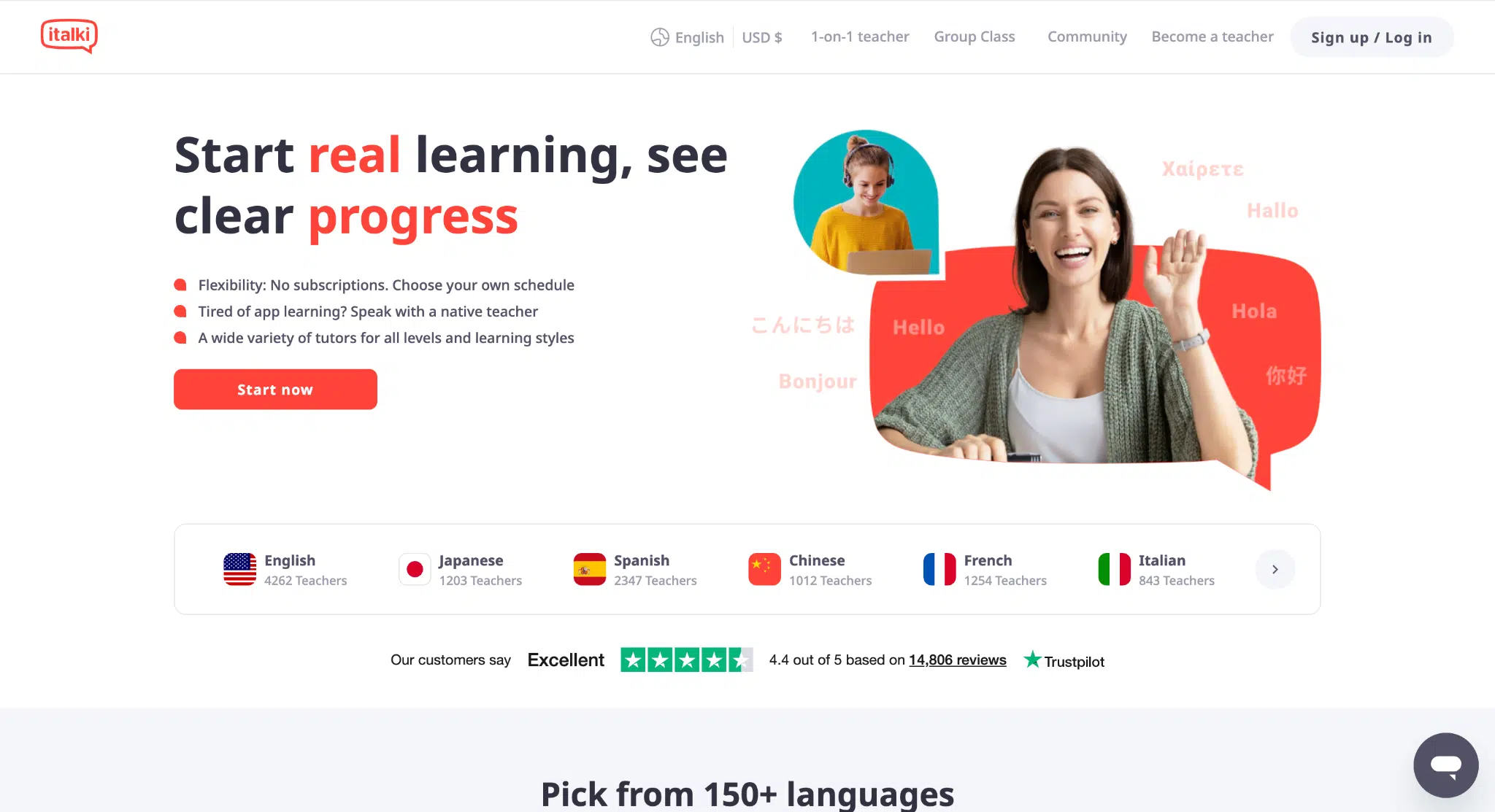
italki is a global online language learning platform that connects students with native-speaking tutors for one-on-one video lessons. The platform supports more than 130 languages and runs on a flexible pay-per-lesson model, so learners aren’t locked into subscriptions they don’t use. It offers both certified professional teachers for structured Mandarin instruction and community tutors for relaxed conversational practice. Writing correction, language partner matching, and discussion forums round out the experience, all aimed at building fluency beyond the lesson itself.
Why Does italki Earn Its Spot for Chinese Classes?
Speaking Mandarin without regular live correction means tone errors and pronunciation habits quietly become permanent. That’s exactly the problem italki addresses through its network of native-speaking instructors who can give real-time feedback. Platforms built around live human interaction tend to produce stronger speaking fluency outcomes than self-paced alternatives, and that gap gets wider the further learners progress.
What Customers Highlight:
italki has built a solid reputation as a go-to platform for live language learning. Reviewers frequently point to the depth of tutor options and the freedom to switch instructors until the right match clicks. Most learners appreciate the pay-per-lesson model because it removes the pressure of committing upfront. Lesson quality does vary by tutor, which is worth factoring in when browsing profiles.
Memrise – Best for Vocabulary Retention and Real-World Language Exposure
What Does Memrise Offer?
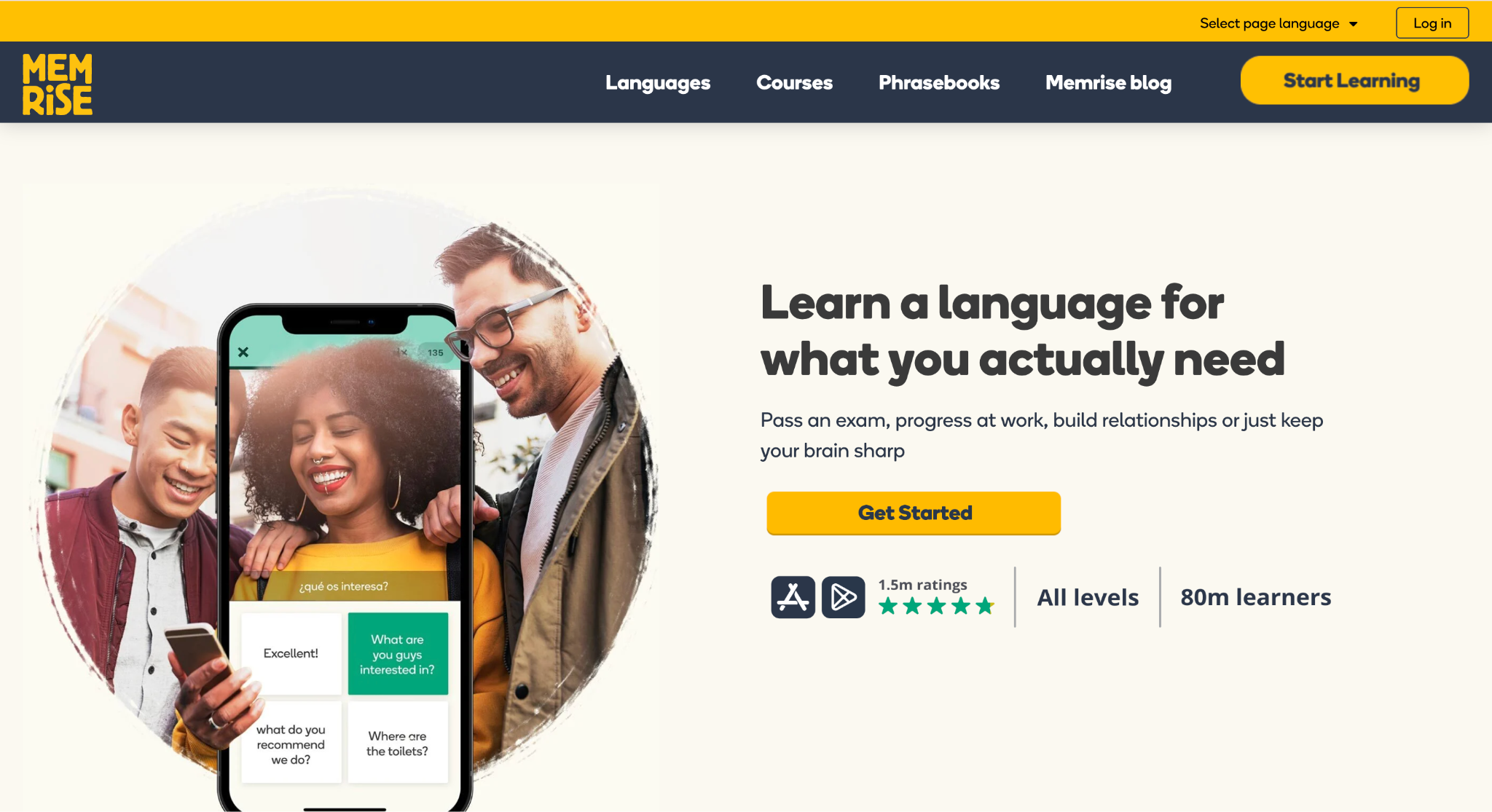
Memrise is an online language learning platform offering 200 language combinations across 24 languages through web and mobile apps. It uses spaced repetition and memory techniques alongside crowdsourced content from native speakers, making the vocabulary feel grounded in how people actually talk. With over 50 million users and several Google Play awards, Memrise combines audio, video, and interactive exercises to push language acquisition forward at a pace that adapts to how well material sticks.
Why Does Memrise Earn Its Spot for Chinese Classes?
Vocabulary dropout is one of the biggest reasons Chinese learners stall out early. Memrise targets that directly with spaced repetition built around authentic native speaker content rather than textbook sentences. Combining memory science with real-world language samples is one of the more practical ways to build vocabulary that actually transfers to conversation.
What Customers Highlight:
Reviewers consistently point to Memrise’s use of real native speaker video clips as a standout feature, noting that hearing actual people use words in context makes them stick differently than audio recordings alone. Casual learners and more serious students both find value here, which is fairly rare for a single platform. The Google Play recognition (including Best App of 2017) lines up with what users actually report.
FluentU – Best for Learning Mandarin Through Authentic Video Content

What Does FluentU Offer?
FluentU is an online language learning platform that teaches Mandarin Chinese (alongside Spanish, French, Japanese, German, and English) through real-world video content, movies, TV shows, music videos, news clips, and talks. The platform wraps interactive customized subtitles and a context-specific dictionary around each video, so learners aren’t just watching but actively building vocabulary and comprehension. An intelligent learning engine personalizes what gets reviewed next. FluentU works for both beginners and advanced learners through its curated content library.
Why Does FluentU Earn Its Spot for Chinese Classes?
One of the harder parts of learning Mandarin is hearing how the language sounds in natural, unscripted situations rather than in controlled classroom audio. FluentU addresses that by turning real video content into structured lessons with in-context definitions and example sentences. That kind of contextual exposure is genuinely hard to replicate with traditional study tools, and it builds the cultural familiarity that makes spoken Chinese actually make sense.
What Customers Highlight:
Learners tend to mention that FluentU makes passive video watching feel productive, which keeps motivation up in a way that grammar drills don’t always manage (not a small thing, when dropout rates in Mandarin study are as high as they are). The subscription model starting around $12 to $20 per month is frequently called out as fair for the amount of content available. The subtitle system is worth singling out; it’s interactive, clickable, and connected to a dictionary mid-stream.
The Methodology Behind Each Pick’s Place
What to Collect Before You Start
The starting point for this research was building a broad list of Chinese language learning platforms by pulling from directories, app review platforms, language learning forums, and official product websites. The goal at this stage was breadth, not filtering. Platforms were included in the initial longlist if they appeared consistently across multiple sources in connection with Mandarin instruction, conversational Chinese, or HSK preparation. Nothing was excluded at this stage based on size or approach alone.
Eligibility Review: Narrowing Down the Top Prospects
Once the longlist was assembled, each platform was checked against a set of eligibility criteria. Options without any verifiable presence in the language education space, or with review histories too thin to draw conclusions from, were removed. Review patterns were analyzed for consistency, and platforms with an unusually narrow spread of opinion or with feedback that didn’t match feature descriptions were flagged. Only platforms with enough documented user feedback to form a reliable picture moved to the next round.
Claims Evaluated for Credibility and Substantiation
Each platform’s stated features and instructional approach were cross-checked against actual user reviews and publicly available platform documentation. Where a company claimed a specific teaching method or outcome, those claims were tested against what learners reported in actual use. Discrepancies between marketing language and real-world results were noted. Platforms that closely matched their stated approach to what students actually described performed better in this evaluation step.
Reputation, Awards, and Original Work
Reputation signals were collected from multiple directions. Industry awards, mentions in language education publications, and original research or content produced by each platform were all factored in. A platform that has received recognition from credible third parties and contributes original thinking to the language learning space signals something beyond a standard product. These markers were treated as supporting evidence rather than deciding factors, but they consistently separated the stronger platforms from the rest.
Chinese Classes Service Page and Reviews Check
The final step involved a close review of each platform’s dedicated Chinese language instruction pages. These were examined for specificity; general language learning platforms that mention Mandarin as an afterthought were weighted differently than platforms with structured Chinese content, instructor profiles, or HSK-aligned course material. Verified user reviews specific to Mandarin study were read alongside general platform reviews, with particular attention paid to what learners said about tone correction, character instruction, and speaking fluency improvement over time.
The Right Chinese Classes for the Right Job
Not every Chinese learning platform fits every type of learner. A business professional preparing for HSK 4 has different needs than a beginner who just wants conversational basics. Here’s what to weigh when making a decision.
- Industry and Domain Experience: Look for platforms that focus on Mandarin instruction, not just general language learning. Experience with tonal language teaching and character-based writing systems matters more than broad language coverage alone.
- Features and Services: One-on-one live instruction, spaced repetition tools, authentic audio and video content, and writing feedback all serve different goals. Match the features to where you actually struggle most.
- Pricing Structure: Pay-per-lesson models work well for irregular schedules. Subscriptions suit learners who study consistently. Neither is objectively better; it depends on how you actually show up for study sessions.
- Results Measurement: Platforms that connect practice to measurable outcomes, like tone accuracy, HSK level progression, or character recognition benchmarks, give you a clearer picture of real progress.
- Industry Knowledge and Compliance: For exam-focused learners, check whether the platform matches its content with HSK curriculum standards and the CEFR language framework. That alignment makes preparation more direct.
Summary
Choosing the right Chinese class comes down to knowing what kind of learner you are and what outcome you’re actually working toward. Live instruction with native speakers, like what italki offers, builds the speaking fluency that apps alone can’t replicate. Memrise and FluentU fill real gaps in vocabulary retention and contextual exposure. As demand for Mandarin proficiency keeps growing across business and academic settings, having the right learning structure in place early makes every subsequent stage faster.